Modern Staircases in Kitsilano Character Home Renovations
What Kitsilano homeowners should know about stair replacement in 1920s-1940s character homes, from structure to code to design.
Kitsilano character homes often need structural review before a modern stair can replace the original. The framing, opening size, and landing constraints shape what is buildable.
Kitsilano’s housing stock spans a century of construction. Craftsman bungalows from the 1910s sit next to California bungalows from the 1920s, wartime builds from the 1940s, and mid-century apartments from the 1950s. When homeowners renovate these properties for open-concept living, the stair often becomes the centrepiece, and the primary structural question.
The structure defines what is possible
Most Kitsilano character homes were built with balloon framing, platform framing, or hybrid approaches that differ from modern stick-frame conventions. The original stair was typically enclosed, with stringers that bear on 2x blocking or rest in pockets cut into the joists.
Replacing that stair with a mono stringer, floating stair, or any open-riser design means answering several questions:
- Can the existing floor structure carry a different loadpath?
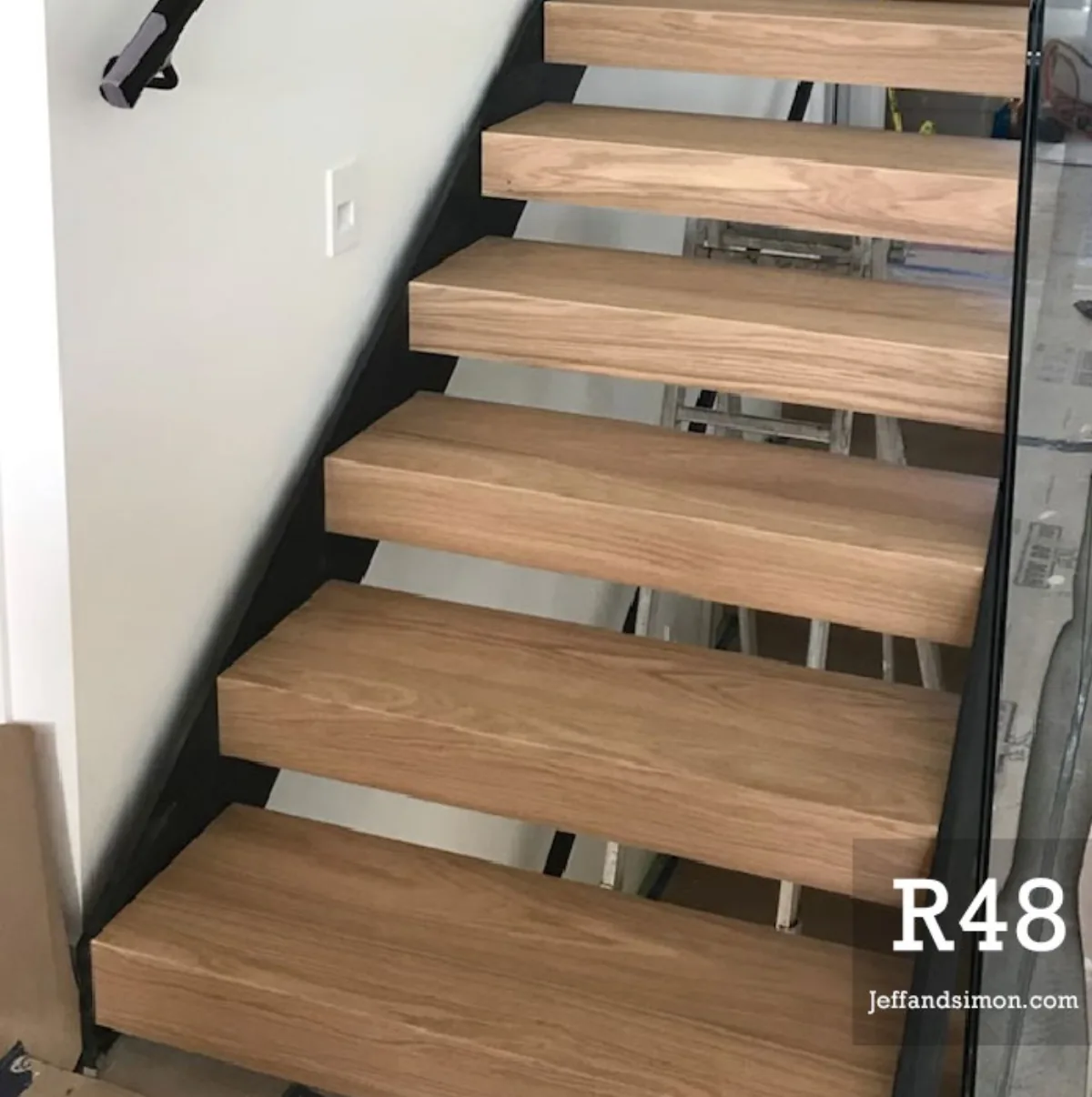
- Do the walls have headers strong enough to support cantilevered treads?
- Is there room to fit a code-compliant stair in the existing opening, or does the opening need to grow?
On Kitsilano streets between West 1st Avenue and West 12th Avenue, where Craftsman and California Bungalow styles concentrate, these constraints come up often. The homes were built well, but not for the open visual effect that modern stairs provide.
Opening size is rarely what it seems
Character homes were designed with steep, enclosed stairs. A 1920s stair might rise at 42-degree pitch with 7 ½-inch risers, tucked into a narrow opening with walls on both sides.
A modern mono stringer stair, with open risers and code-compliant headroom, needs more horizontal run. That often means enlarging the opening, which means cutting through existing joists and installing headers. The scope of work escalates before the steel is even quoted.
The most practical approach is to measure the opening carefully, compare it against the rise, run, and headroom requirements in the BC Building Code, and determine whether the opening needs modification before finalizing the stair design.
Guard height and handrail continuity matter
The BC Building Code requires guards on stairs and landings where the drop exceeds 600 mm. Guard height for residential stairs is a minimum of 900 mm. Handrails must be continuous and graspable.
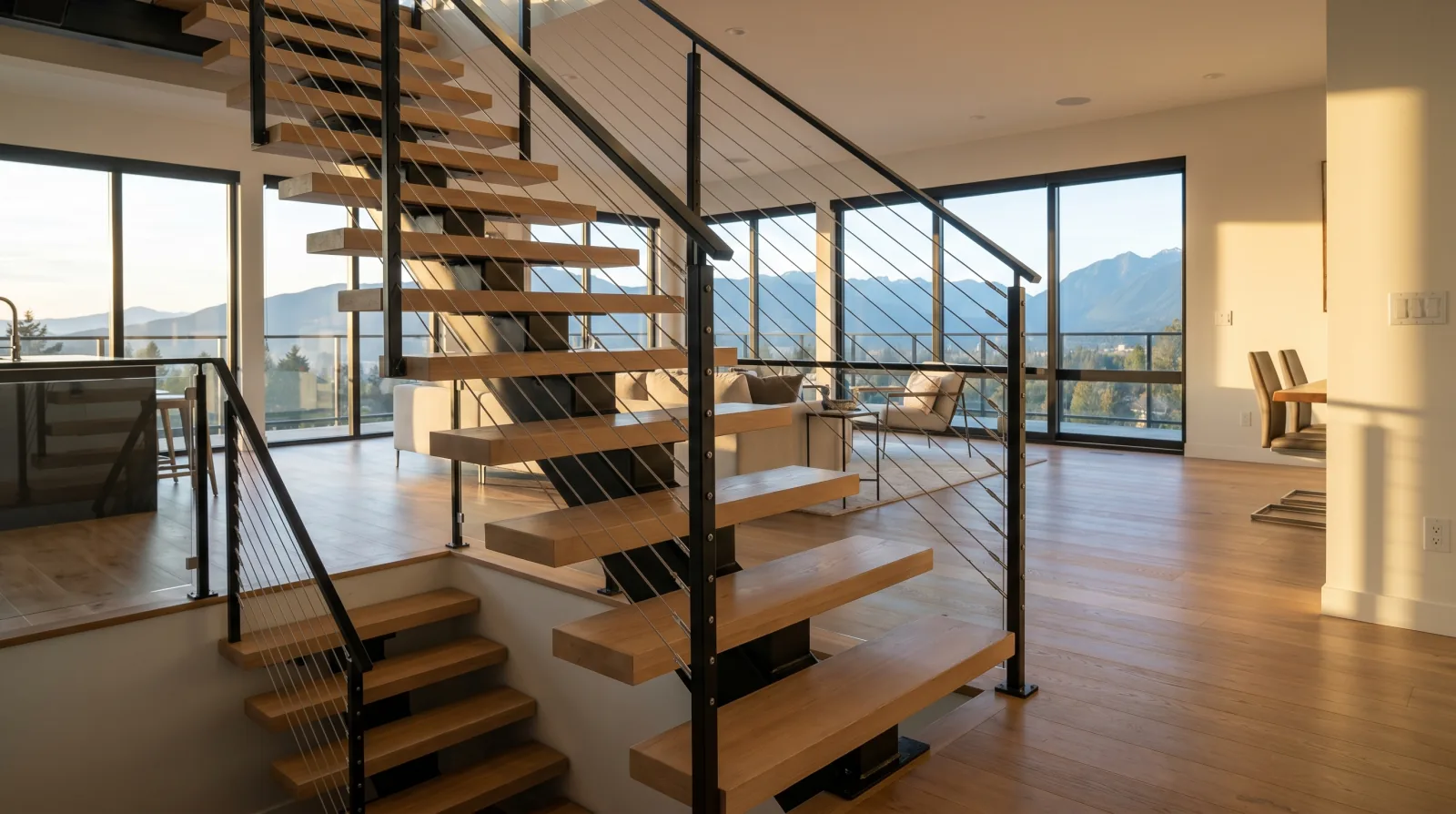
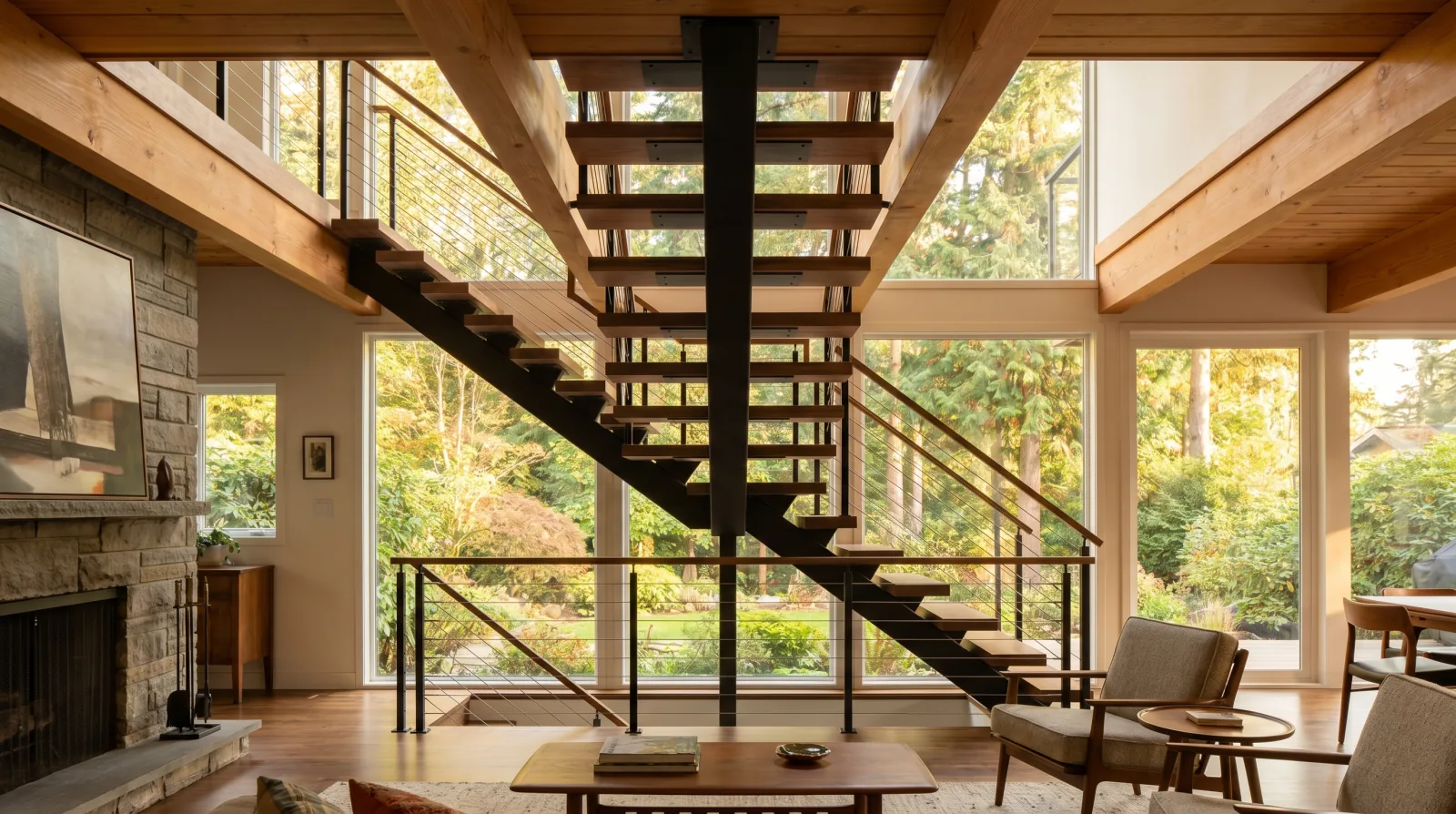
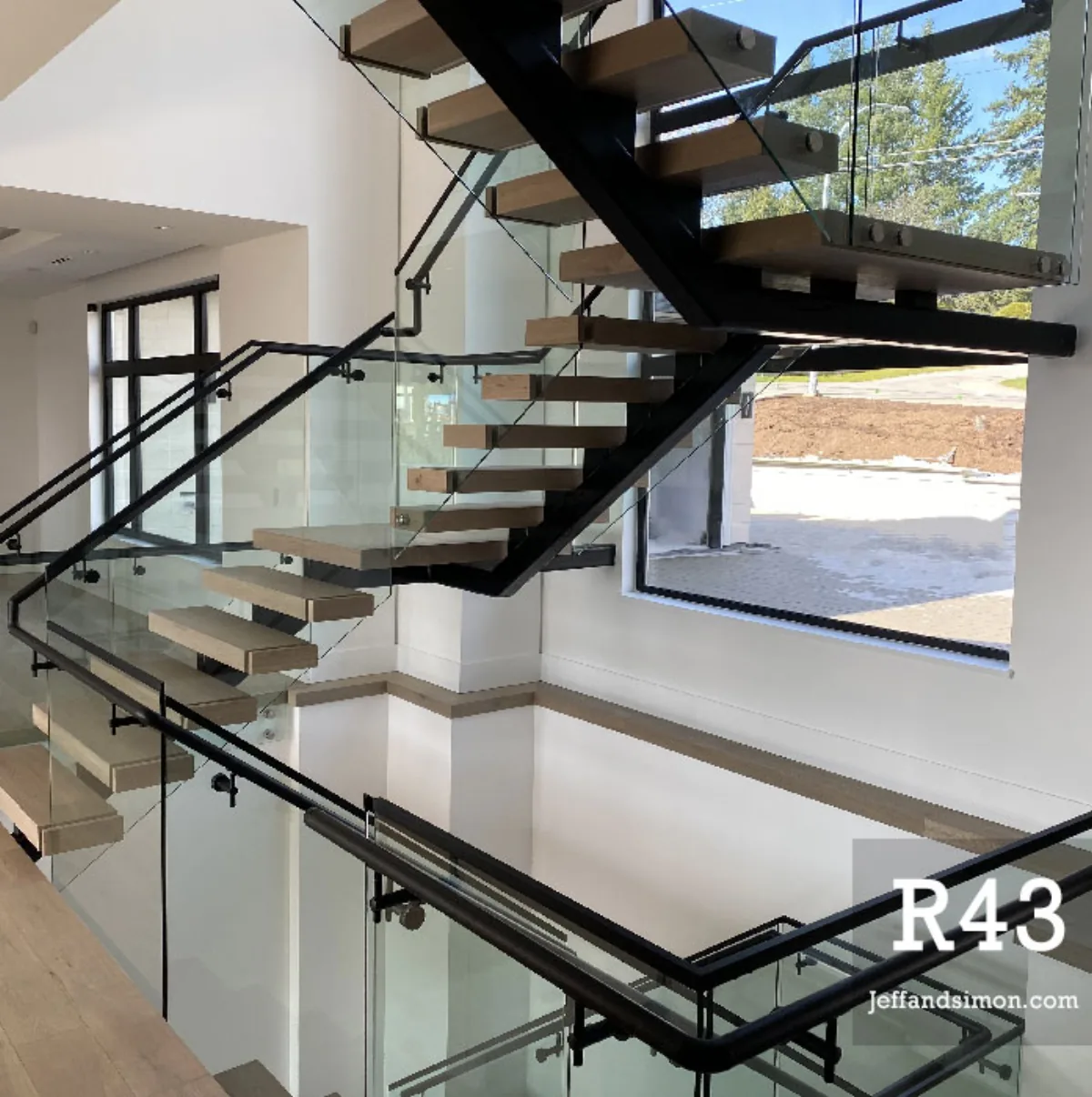
In a character home with low ceilings or tight landings, these requirements can affect the visual proportions of a modern stair. Glass guards help maintain sightlines in constrained spaces. Cable railings keep the upper portion open. Steel pickets or panels can provide privacy where needed.
The key is choosing the guard system at the same time as the stair structure, not after. Retrofitting a guard onto a stair that was not designed for it adds cost and often looks compromised.
Kitsilano’s architectural context shapes the design
The neighbourhood retains concentrated examples of Craftsman-style houses, particularly between Macdonald, Stephens, 5th and 6th Avenues. A row of intact California Bungalows lines the south side of 5th Avenue between Bayswater and Balaclava. The Delamont Park area preserves 22 pre-World War I houses that remain largely unaltered.
When a modern stair enters one of these homes, the design should acknowledge the context. That does not mean the stair should be faux-period, a clean mono stringer or floating stair can work well against wood millwork and period trim. But the proportions, finish, and visual weight should be considered in relation to the character of the house.
Powder-coated black steel, natural hardwood treads, and minimal hardware are common choices because they complement rather than fight with older architectural elements.
Coordination with other trades helps
Stair fabrication for a Kitsilano renovation works best when the fabricator coordinates with the general contractor, engineer, and architect (if applicable) early in the process. Field conditions in older homes often differ from drawings. Headers may be smaller than expected. Floor-to-floor heights may not match assumptions.
The fabricator should verify dimensions on site, confirm structural assumptions with the engineer, and sequence the stair delivery around flooring, drywall, and other finish work. These coordination steps do not add much time but prevent expensive surprises.
What to expect in terms of timing
A custom stair for a Kitsilano renovation, mono stringer, floating, or otherwise, typically moves through the following stages:
- Site visit and measurement (1-2 visits)
- Design development and shop drawing approval (2-4 weeks)
- Fabrication (3-6 weeks depending on complexity)
- Finishing: powder coating, galvanizing, or clear coat (1-2 weeks)
- Installation (1-3 days on site)
The total timeline from first meeting to installed stair is usually 8-14 weeks, longer if structural modifications or permit reviews are required. Starting the conversation before the opening is framed gives the project the best chance of staying on schedule.
What does a Kitsilano staircase replacement actually cost?
Costs vary significantly based on stair type, structural scope, and finish. A rough guide for a character home renovation in Kitsilano:
| Scope | Typical range | Notes |
|---|---|---|
| Mono stringer, 1 flight, cable railing | $22,000 – $38,000 | Standard powder coat, hardwood treads, no structural mods |
| Floating stair, cantilevered, glass railing | $35,000 – $55,000 | Back-plate or LVL wall reinforcement included |
| Floating stair with custom landing or offset | $45,000 – $75,000 | Complex geometry, larger opening, custom landing plate |
| Structural modifications (opening, header) | $4,000 – $15,000 | Depends on joist direction and existing header sizing |
| Engineering (structural letter) | $2,000 – $4,500 | Required for most structural stair changes |
| Permit coordination | $500 – $2,000 | Varies by project complexity and AHJ requirements |
These are rough guidance only and reflect 2025–2026 Metro Vancouver project costs. Every project is quoted after a site visit. Character homes regularly reveal surprises, older floor sheathing, subfloor layer stacking, unexpected blocking, that affect the final scope.
Finish choices that work in a character home context
The stair is usually visible from the main living area, so the finish has to work alongside existing millwork, flooring, and trim. In Kitsilano’s pre-war homes, the combinations that land consistently are:
Matte black powder coat with natural oak treads. A clean contrast that reads as contemporary without competing with older wood trim. Black absorbs light and makes the stringer visually recede.
Dark satin anthracite powder coat with walnut treads. Slightly warmer than true black. Pairs well with darker millwork and stained trim found in California Bungalow interiors.
Clear coat or patina on natural steel with whitewash oak treads. A warmer, more raw approach that suits homes with exposed wood beams or industrial-material renovations.
Avoid very high-gloss finishes on the stringer in character home settings, they date quickly and show fingerprints and scratches more than matte or satin.
The permit path for a Kitsilano stair replacement
A structural stair replacement in a character home typically requires a Building Permit from the City of Vancouver, not just a trade permit. If the project involves any structural work, changed headers, floor openings, new load paths, sealed structural drawings from a licensed engineer are required with the application.
Character-designated properties may also require review under the character home policies in the RS zoning, particularly if the stair change affects the façade or original character features. For typical interior stair replacements this usually does not apply, but confirm with the city before submitting.
Permit processing times in Vancouver have ranged from 6 to 20 weeks for residential interior alterations in recent years. Factor this into the project timeline, permitting has to close before installation begins.
Related reading: the mono stringer staircase deep dive, the staircase replacement permit guide for Vancouver, and the custom metal stair cost guide.
Sources
Related questions
Can a floating stair work in a 1920s Kitsilano home?
It depends on the wall and floor structure. Many Kitsilano homes have balloon framing or minimal headers that need reinforcement before a cantilevered or wall-supported stair is viable. We review the structure early, before drawings are finalized, to avoid surprises on site.
Will a new stair require a permit in Vancouver?
Structural stair changes in Vancouver typically require permit review. If the project involves new openings, altered loadpaths, or guard changes in a character home, the permit process is worth confirming before finalizing the design. The City of Vancouver Building Department is the authority having jurisdiction for most Kitsilano properties.
How much does a modern staircase replacement cost in a Kitsilano character home?
Mono stringer and floating stair projects in Kitsilano character homes typically start in the $22,000–$38,000 range for a single residential flight with cable or glass railing and standard powder coat finish. Structural modifications to headers, floor openings, or wall framing are additional and depend on the existing condition.
How do I know if my Kitsilano home's structure can support a cantilevered stair?
A structural engineer reviews the existing wall framing, header sizing, and anchor conditions before drawings are finalized. In most Kitsilano character homes, blocking or a hidden steel moment frame needs to be added before cantilevered treads can be anchored safely. This review happens during the design phase, before any steel is ordered.