Site templating
Template the exact stair pitch, deck edge profile, and post positions before any glass is ordered, glass panels are cut to the template and cannot be adjusted on-site.
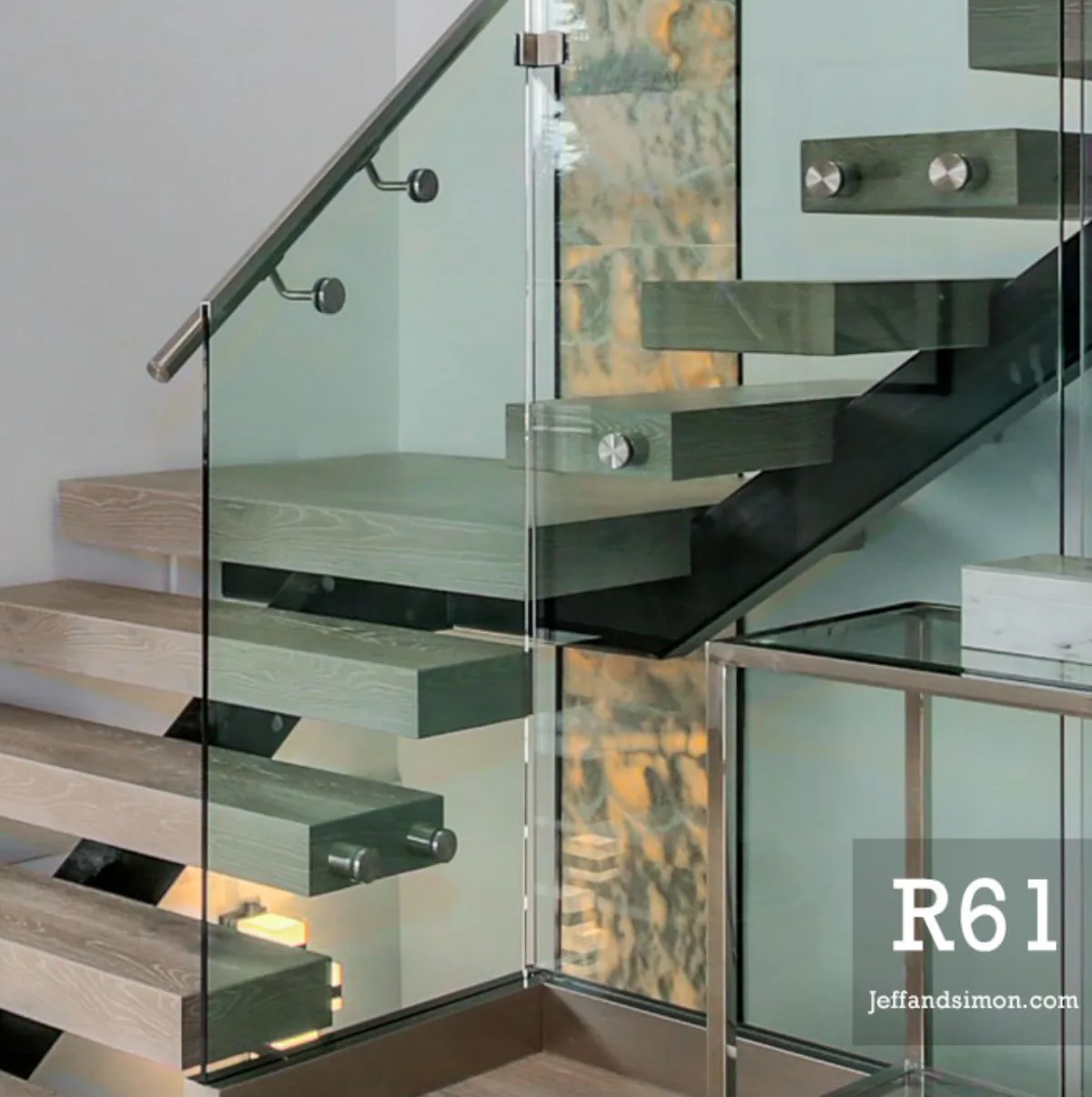
Vancouver glass railing projects run from Kitsilano deck upgrades to Yaletown penthouse balconies, East Vancouver stair renovations, and Coal Harbour waterfront guards where coastal hardware specification matters. Frameless systems with base shoe or standoff mounting give the cleanest sightlines; semi-frameless systems with steel posts are a practical choice where the deck edge or slab attachment point is less predictable. The city's mix of eras and property types means the hardware spec, the glass thickness, and the anchoring strategy all need to match the specific site, a Coal Harbour balcony and a Dunbar garden stair are different scopes.
Glass railings suit view lots, feature stairs, balconies, and commercial interiors. The clean look depends on accurate templating, correct glass thickness (12–15 mm), and hardware specified for the coastal exposure level of the site.
Vancouver projects often combine older home structure with modern design expectations, so stair and railing details need careful measurement and drawing coordination.
| Scope | Typical range | Notes |
|---|---|---|
| Semi-frameless glass railing | $225-$350/linear ft | Steel posts and glass panels |
| Frameless glass railing | $300-$525/linear ft | Hardware and panel sizes drive cost |
| Stair glass railing | $325-$575/linear ft | Angled templating and installation time |
Template the exact stair pitch, deck edge profile, and post positions before any glass is ordered, glass panels are cut to the template and cannot be adjusted on-site.
Specify base shoe or standoff system, glass thickness (typically 12 mm for residential, 15 mm for commercial), and hardware finish (stainless, powder-coated, or anodized).
Fabricate steel or stainless base shoe and any welded posts in the shop; finish before glass delivery so the panels can be installed immediately.
Order tempered safety glass panels to the confirmed templates; coordinate delivery timing around the installation window and site access for panel handling.
Set glass panels into base shoe or clamp systems, confirm guard height and panel-to-panel gap compliance, and install top rail or capping.
1.6 kPa reference value for early planning. Final engineering confirms project-specific assumptions.
moderate exposure. Finish and hardware choices should follow the exact site conditions.
Structural stair changes, guards, exterior stairs, and canopies typically require permit review, especially in heritage or multi-family settings.
The choice between frameless and semi-frameless glass railings comes down to three factors: visual priority, existing structure, and budget. Frameless systems, base shoe or standoff-mounted, deliver an unbroken glass plane that suits view properties in West Vancouver and Kitsilano where the point is to see through the guard. The engineering is more demanding: the glass thickness must be sufficient to span unsupported between post-free attachment points, and the base shoe anchorage must carry the full guard load through the glass into the substrate. Semi-frameless systems use fabricated steel posts at regular intervals (typically 900–1500 mm depending on glass panel size) and are a more forgiving fit on older Vancouver homes where the deck edge or slab attachment point is not perfectly uniform. Both systems meet BC Building Code guard requirements when specified and installed correctly.
The BC Building Code (BCBC) and the Vancouver Building By-law (VBBL) set the minimum guard height and opening limits that every glass railing system must meet. For most residential applications in single-family houses and small buildings, the minimum guard height is 910 mm measured from the deck or stair nosing. For commercial, assembly, and multi-family occupancies, the minimum is 1070 mm. The code also limits openings within the guard, glass panels satisfy this automatically, but the joints between panels and the gap at the base shoe must be within the allowed sphere-passage dimension. Point-fixed and base shoe systems must be engineered to confirm the load path from the glass into the substrate, particularly for balcony guards where the edge condition and the deck structure may not be uniformly strong.
Glass railings are one of the lower-maintenance exterior finishes in Vancouver's climate. The glass itself does not corrode, and tempered safety glass does not degrade from UV or moisture. The points that need attention are the hardware and the connections. In coastal exposures, Coal Harbour, Kitsilano, Point Grey, and any property within walking distance of Burrard Inlet or English Bay, stainless hardware should be inspected annually for surface corrosion and the fittings should be wiped down regularly. Powder-coated steel hardware in moderate-exposure locations should be checked at the same interval; nicks in the coating should be touched up with compatible touch-up paint before rust develops. The glass panels themselves require only periodic cleaning, rain tracks and mineral deposits from hard water are the common cosmetic issues.
Yes, for the hardware choice. A Kitsilano property close to the beach or along Kits Point warrants stainless base shoe and fittings, the coastal salt load is persistent enough that powder-coated steel hardware will streak and corrode faster than inland. An East Vancouver renovation five kilometres from the water can use high-quality powder-coated base shoe with a good primer. The glass panels are the same in either case; it's the metal that needs to match the site.
Well, as long as the hardware is specified correctly. Vancouver rooftop exposures are moderate coastal, stainless base shoe and fittings prevent the rust streaking that can happen with powder-coated steel in wetter conditions. The glass itself is unaffected by rain and UV; it's always the metal details that determine long-term performance.
Frameless glass railings use a base shoe or point-fixed standoffs to hold the glass panels directly, no vertical posts. The result is an uninterrupted glass plane and the cleanest visual. Semi-frameless systems use steel posts spaced at regular intervals with glass infill between them. Semi-frameless is a practical choice where the deck edge is uneven, where existing post spacing constrains the layout, or where the budget is tighter. Frameless costs more because the base shoe specification, the glass thickness (typically 12–15 mm), and the hardware tolerances are all more demanding.
Most residential Vancouver glass railing projects use 12 mm tempered safety glass for interior or protected exterior applications. For exposed outdoor conditions, rooftop decks, oceanside balconies, or tall guards, 15 mm is more common because it reduces panel deflection and is more conservative under the guard loading requirements in the BC Building Code. The engineer or the AHJ may require specific thickness depending on the guard height, the span between supports, and the occupancy.
Installing new glass railings or replacing existing guards with glass typically requires a building permit in Vancouver and most Metro municipalities when the work is on a balcony, exterior deck, or stairway. Interior guardrail replacements in existing suites are often exempt from permit, but interior stair guard changes in multi-family buildings may still require permit and schedule B engineering. Confirm with the City of Vancouver or the relevant municipality before ordering panels, permit approval affects the timeline.
Glass Railings pricing depends on dimensions, railing type, finish, access, and engineering. Current planning ranges on this page run from $225-$350/linear ft depending on scope.
Most glass railings projects run 6–10 weeks from a confirmed order: 1–2 weeks for shop drawings and engineer review, 3–5 weeks in fabrication, and 1–2 weeks for finishing and installation scheduling. Vancouver site access and permit timing can shift that window, so starting the quote early gives the most flexibility.
Floor-to-floor height or linear footage, site photos, any existing drawings, finish preference, and whether a permit has been applied for. For Vancouver's moderate coastal exposure, confirming the hardware specification early avoids changes after shop drawings are approved.
Send drawings, photos, or a rough scope and we will help define the practical next step.