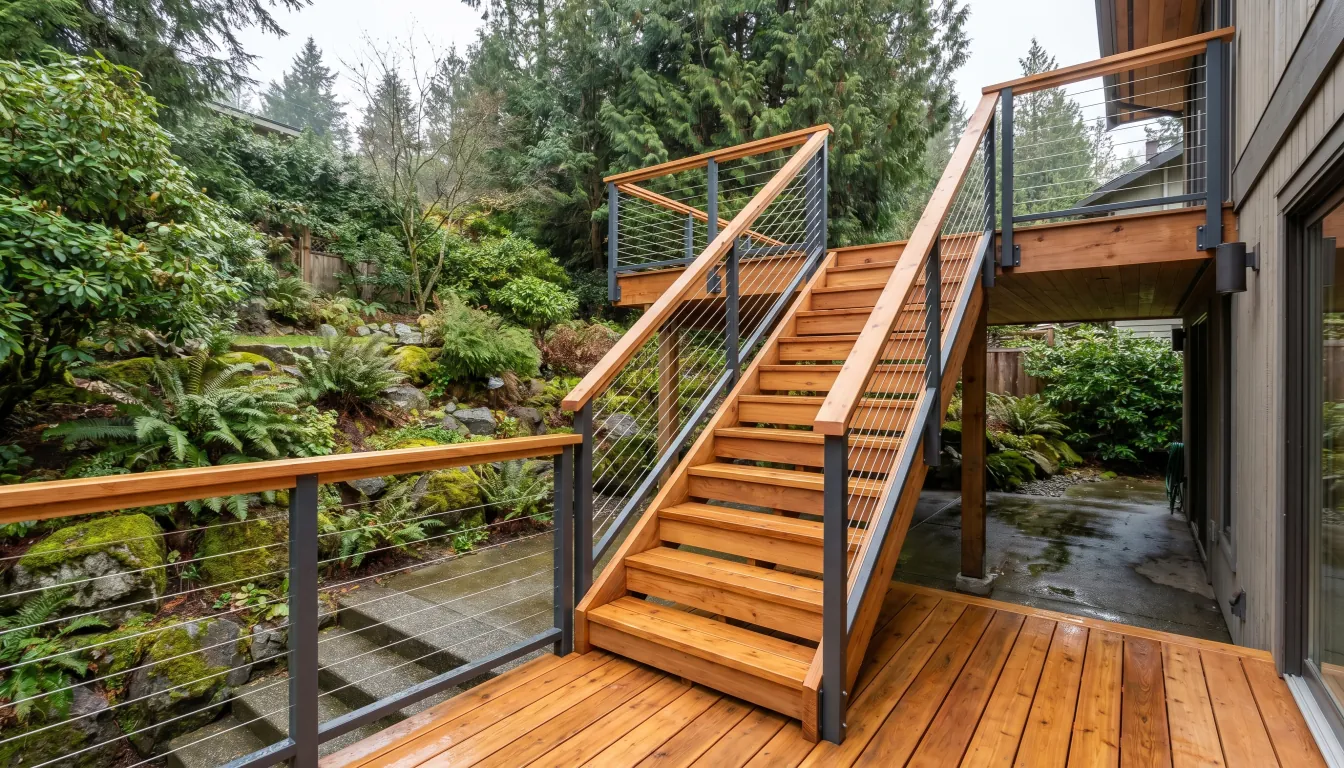
Metal stairs and railings in North Vancouver.
North Vancouver stair and railing work often serves steep lots, view homes, wetter weather, and waterfront exposure.
North Vancouver stair and railing work sits inside a city that is, on paper, two cities. The City of North Vancouver covers the dense waterfront strip around Lower Lonsdale and Central Lonsdale. The District of North Vancouver wraps around it on three sides and runs up into Lynn Valley, Edgemont, Upper Lonsdale, Deep Cove, and the hillsides under Grouse and Seymour. The boundary is not always obvious from the street, and confirming which office issues your permit is usually the first practical question on any project here.
That split shapes every other decision. Building stock, lot grade, exposure, snow load assumptions, and access constraints all change depending on which side of the line a property sits. A stair scope that is routine on a flat Lower Lonsdale townhouse can turn into a stepped exterior cascade with retaining structures three kilometres uphill in Lynn Valley. The goal of this page is to name the inputs that actually move cost and schedule on a North Vancouver stair, so the conversation starts with the right questions.
The two-municipality structure also affects how strata projects, multi-family additions, and infill builds get scoped. Owners often assume "North Vancouver" is one office. It is not. Calling the wrong department early in design adds a week of confusion that is easy to avoid by checking the address on a municipal property map before drawings start.
Building stock shapes the stair scope.
Lower Lonsdale and Central Lonsdale, both inside the City, are dominated by low-rise wood-frame and concrete condo buildings, townhouse rows, and a steady pipeline of multi-family redevelopment. Recent activity around East 3rd Street and the surrounding blocks, projects such as Innova, Founders Block, and Red Maple Residences, has put a lot of new common-area stairs, lobby guards, and amenity-deck railings into the neighbourhood (see [Vancouver New Condos](https://www.vancouvernewcondos.com/local/north-vancouver/lonsdale/) for current development listings). On the existing stock, strata buildings from the 1980s and 1990s are now hitting the age where exterior guards, balcony rails, and stair nosings need wholesale replacement rather than spot repair.
Move uphill into the District and the picture changes. Lynn Valley, Edgemont, Upper Lonsdale, and the Lynnmour-Seymour corridor are dominated by detached single-family homes, many of them 1960s, 1970s, and 1980s split-levels and ranch-style houses on larger lots. A lot of these homes are being heavily renovated rather than rebuilt, which puts main-stair replacement, feature stair insertions, and exterior stair-to-deck work at the centre of the scope. Split-level interiors in particular often get reworked around a new mono stringer or open-riser stair when the floor plan is opened up.
Deep Cove, Dollarton, and the slopes above Cates Park add a third pattern: view-driven homes on steep lots with significant grade change between the street and the front door. Stair work in these areas is usually exterior or part-exterior, with stepped landings, retaining structures, and guards that have to read against water and tree-line backgrounds. Connection details on these projects often matter more than the stair geometry itself, because the framing they tie into is rarely a simple flat platform.
A fourth pattern that crosses both jurisdictions is the post-and-beam house. The North Shore has a meaningful inventory of mid-century post-and-beam homes, and the stair is often the most visible structural element in the room. Replacing an aging wood stair in one of these houses with a steel mono stringer or a hidden-stringer floating stair is one of the recurring jobs for the shop, and the detail at the floor opening tends to drive the rest of the design.
Climate exposure decides the finish strategy.
North Vancouver is wetter than the airport plate on the south side of the inlet. Published averages for the District put annual precipitation in the range of roughly 2,300 mm per year ([Current Results, BC average annual precipitation](https://www.currentresults.com/Weather/Canada/British-Columbia/precipitation-annual-average.php)), which is materially more than central Vancouver. Precipitation also rises with elevation, by roughly an additional 100 mm of rain for every 100 m of climb up the slope per the same dataset, so a project at the top of Lynn Valley sees a wetter exposure than one at the base of Lonsdale. The wet season runs from October into March, and exterior steel installed in November is essentially commissioned in the weather it has to survive.
Coastal exposure along the Burrard Inlet shoreline, the Lower Lonsdale waterfront, and Cates Park is moderate to high. Salt air does not stop at the high-tide line, and exterior structural steel in these zones benefits from hot-dip galvanizing rather than paint alone. For visible exterior railings within sight of the water, 316 stainless cable infill holds up far better than 304, and 304 should be treated as a minimum for any stainless component near the inlet. Powder coat applied over a properly prepared galvanized substrate handles the wet season better than powder coat over bare steel.
Snow load on the lower elevation North Shore plate is typically set at 1.6 kPa as a baseline for residential design, but upper Lynn Valley, Grouse-adjacent properties, and the higher reaches of Mount Seymour can require a higher design load. The current snow load value for a specific address should be confirmed against the BC Building Code climatic data and the AHJ. Freeze-thaw cycling is also more frequent on the upper slopes than on the waterfront, which matters for exterior tread and landing details. Drainage, fastener type, and isolation between dissimilar metals all do more work in that climate than they do on the flat city plate.
Exterior tread choice in this climate is rarely a pure aesthetic call. Closed-bar grating sheds water and grit. Plate treads with a non-slip pattern look cleaner but have to drain at the back edge. Hardwood treads age fast in wet exposure unless they are oiled on schedule. Composite treads handle the moisture but expand and contract more than steel does, which means the fastener pattern has to accommodate movement. The right answer depends on the use, the exposure, and how much maintenance the owner is willing to commit to.
The scopes we see most in North Vancouver.
The most common interior scope on the District side is a feature stair as part of a major home renovation. Mono stringer staircases are a recurring request, a single central steel beam supporting open treads, often paired with cable or glass infill, because the look suits the open-plan changes owners are making to the 1970s and 1980s split-level layouts. Floating stairs, meaning open-riser visuals built using cantilevered, wall-stringer, or hidden-stringer support strategies, come up almost as often, especially on renovations that open up a stair to a kitchen or great-room volume.
On the City side, common-area work dominates. Lower Lonsdale strata buildings from the 1980s and 1990s are reaching the point where exterior guards, balcony railings, stair pickets, and stair nosings need full replacement rather than patching. Powder-coated aluminum guards are popular for cost and weight, but where original guards were structural steel, replacement-in-kind in galvanized and powder-coated steel is often the cleaner specification. That is especially true where the guard ties into a poured-in-place concrete slab edge that does not tolerate new anchor patterns well.
Exterior stair replacement is a recurring scope across both jurisdictions. Wood-tread exterior stairs on 1970s and 1980s District homes commonly fail at the stringer-to-tread interface where water has been sitting for decades. The replacement strategy depends on the supporting structure. A hot-dip galvanized stringer with hardwood or composite treads is often the right answer where the original detail was wood-on-wood, but where the stair lands on a retaining wall or a hillside footing, the connection redesign matters more than the tread choice. Steep lots in Edgemont, Upper Lonsdale, and Deep Cove also drive a steady stream of stepped exterior cascades with intermediate landings, often integrated with retaining structures or planters.
Strata-driven railing replacement on the City side is its own category. A 30-year-old painted-steel guard on a Lower Lonsdale building rarely makes economic sense to refinish in place. Sandblast, re-prime, and recoat costs can approach the cost of a new galvanized assembly, and the new assembly comes with a finish that lasts longer. When strata councils ask for a quote on matching the existing rail, the conversation usually shifts toward like-for-like geometry with a finish that will outlive the next paint cycle. Tread nosings and stair-edge details are usually addressed in the same project, since the bare steel under decades of paint is often where corrosion has done the most work.
Permit and AHJ workflow.
Permits in North Vancouver go to either the City of North Vancouver or the District of North Vancouver depending on the property's actual jurisdiction. The boundary is real and the offices are separate. The City processes applications for the Lower Lonsdale, Central Lonsdale, and waterfront strip ([City of North Vancouver Building Permits](https://www.cnv.org/Business-Development/Permits-Inspections/building-permits)), while the District handles Lynn Valley, Edgemont, Upper Lonsdale, Deep Cove, Lynnmour, and most of the slope ([District of North Vancouver Permits and Inspections](https://www.dnv.org/business-development/permits-and-inspections-building-and-renovating)). Confirming the AHJ before drawings are finalized avoids a routine source of project delay.
Both jurisdictions follow the BC Building Code and the BC Energy Step Code, and both will typically require structural Schedule B letters of assurance signed by a registered professional engineer for a custom stair that carries unusual loads, spans, or guard heights. The District's published permit guidance also references Schedule B for structural and, where the project sits within a slope or has a material new footprint, geotechnical review ([District of North Vancouver, Building Permit Requirements Questionnaire](https://docs.dnv.org/documents/building-permit-requirements-questionnaire.pdf)). This page is not a substitute for code review by the authority having jurisdiction, an architect, or an engineer. The specifics of what triggers Schedule B on a given project should be confirmed with the relevant office before drawings are issued for fabrication.
Hillside lots in either jurisdiction can also trigger development permit review tied to slope, riparian setbacks, or tree protection, separate from the building permit itself. These reviews do not change what gets fabricated, but they change the schedule. A project that needs both development and building permits should plan the stair drawings and the engineering coordination earlier than a flat-lot equivalent, so the steel package is ready to go when the permit clears.
Coordination, access, and delivery.
Drive time from the Burnaby shop is typically in the 25 to 50 minute range, but the spread depends almost entirely on the bridges. Both the Iron Workers Memorial (Second Narrows) and Lions Gate crossings back up sharply at rush hour, and the practical scheduling rule is that delivery and install runs work best mid-morning or mid-afternoon. A morning install on Lower Lonsdale starting at 8 a.m. usually means leaving the shop before 7. Crane and boom-truck operations have to be planned around the same constraint.
Site access on the District side is the other constraint that shapes schedule. Many Lynn Valley, Edgemont, and Deep Cove lots have narrow driveways, mature trees over the approach, and grade changes that make crane parking difficult or impractical on the street. For larger pieces, including a long mono stringer beam, a pre-fabricated guard run, or a full exterior cascade, the install plan has to account for how the steel reaches the opening. On steep streets, splitting a stair into smaller weldable sections that can be carried by hand is often the only path forward.
Lower Lonsdale and Central Lonsdale invert that problem. Access is easier on the flat, but loading zones, lane traffic, and adjacent active construction sites mean delivery windows have to be confirmed against the building's strata rules or the project's traffic management plan. Weekend install windows are common for occupied buildings, which has to be priced into both the fabrication schedule and the shop's labour plan.
How to start a North Vancouver project.
The strongest North Vancouver stair projects identify the AHJ, the exposure, and the access constraint in the first conversation. Photos of the existing condition, drawings if they exist, accurate dimensions, the site address, the preferred finish, and a realistic install window are usually enough to separate a simple replacement scope from a project that needs engineering, permit, or coordination work before steel can be ordered. On the North Shore, that early coordination is what keeps a job from stalling once the weather turns.
Neighbourhoods we work in.
Lower Lonsdale, Lynn Valley, Deep Cove, Edgemont, Upper Lonsdale, Dollarton.
City signals
Drive time: 25-45 minutes
Snow load signal: 1.8 kPa
Adjacent cities: West Vancouver, Vancouver, Burnaby
Shop: 2544 Douglas Road #106, Burnaby BC
Popular North Vancouver product routes.
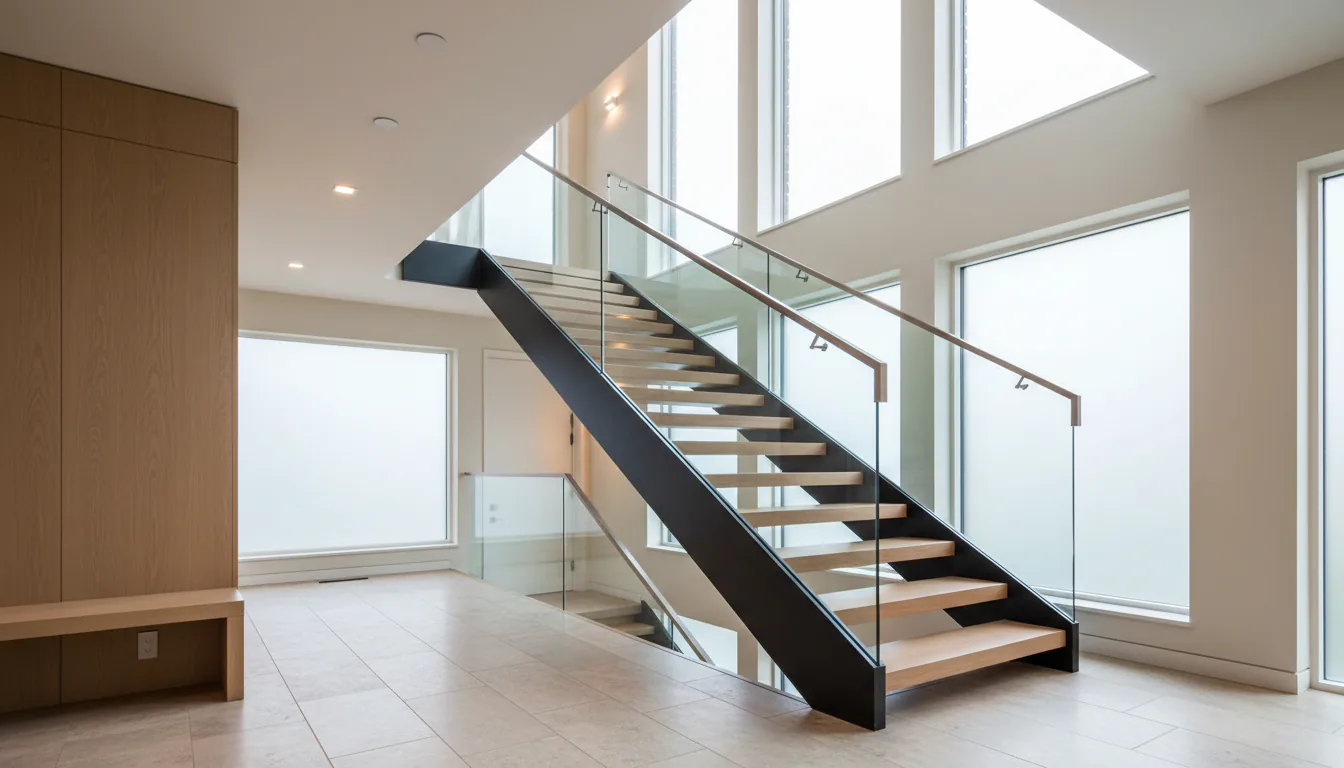
Residential Staircase
Designed for North Vancouver sites, pricing, local planning notes, and finish guidance on the product page.
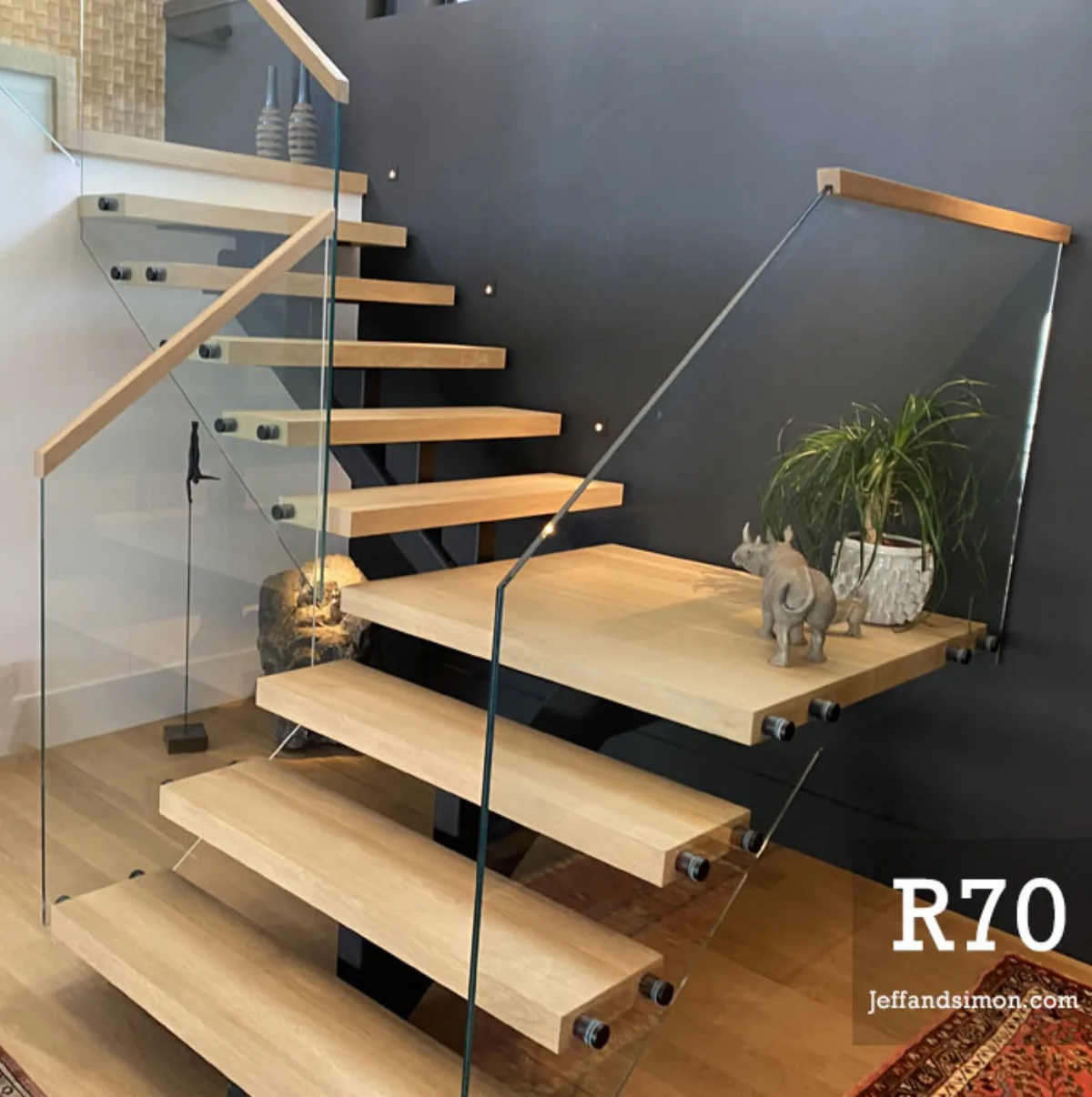
Mono Stringer Staircase
Designed for North Vancouver sites, pricing, local planning notes, and finish guidance on the product page.
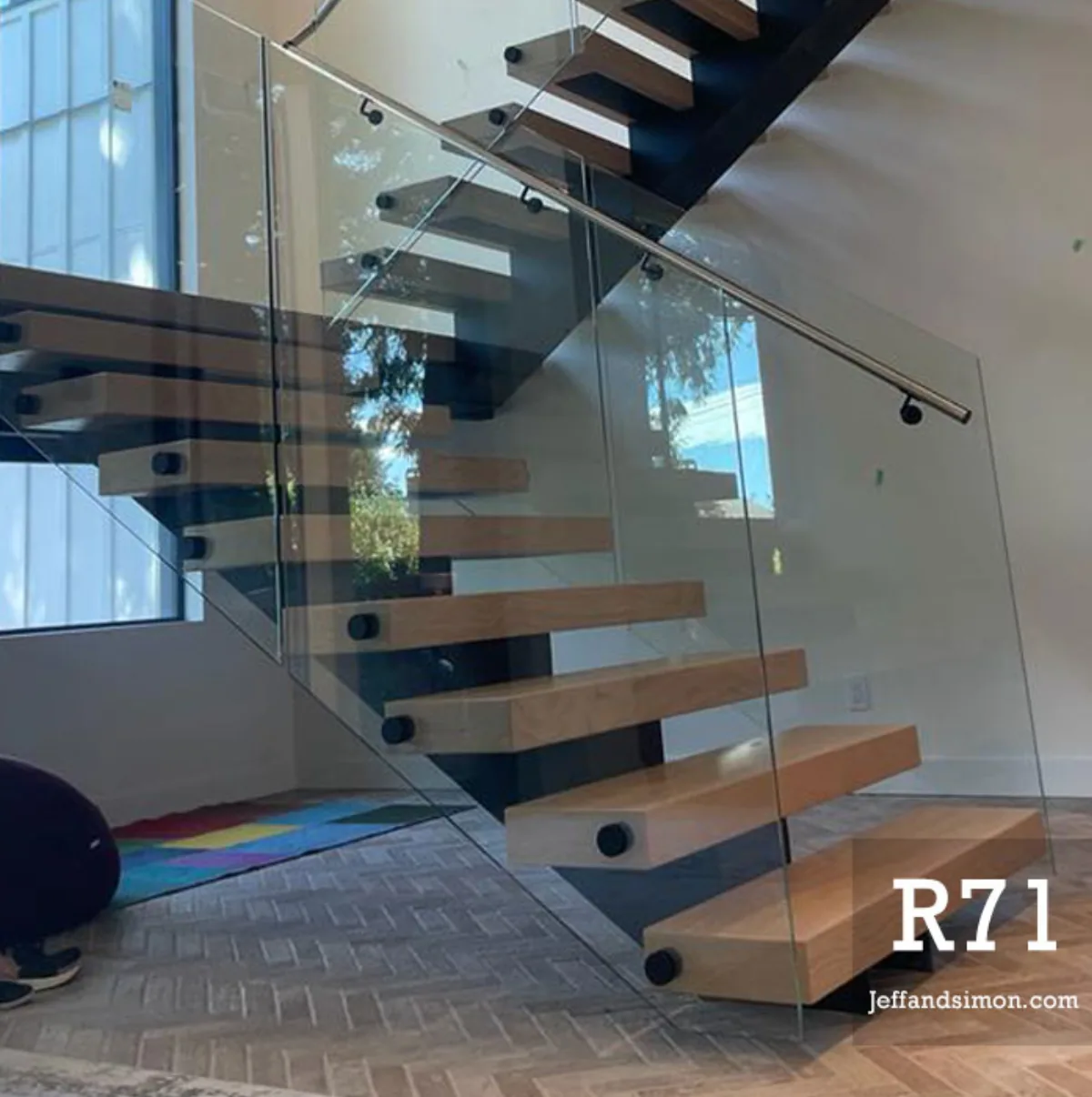
Floating Staircase
Designed for North Vancouver sites, pricing, local planning notes, and finish guidance on the product page.
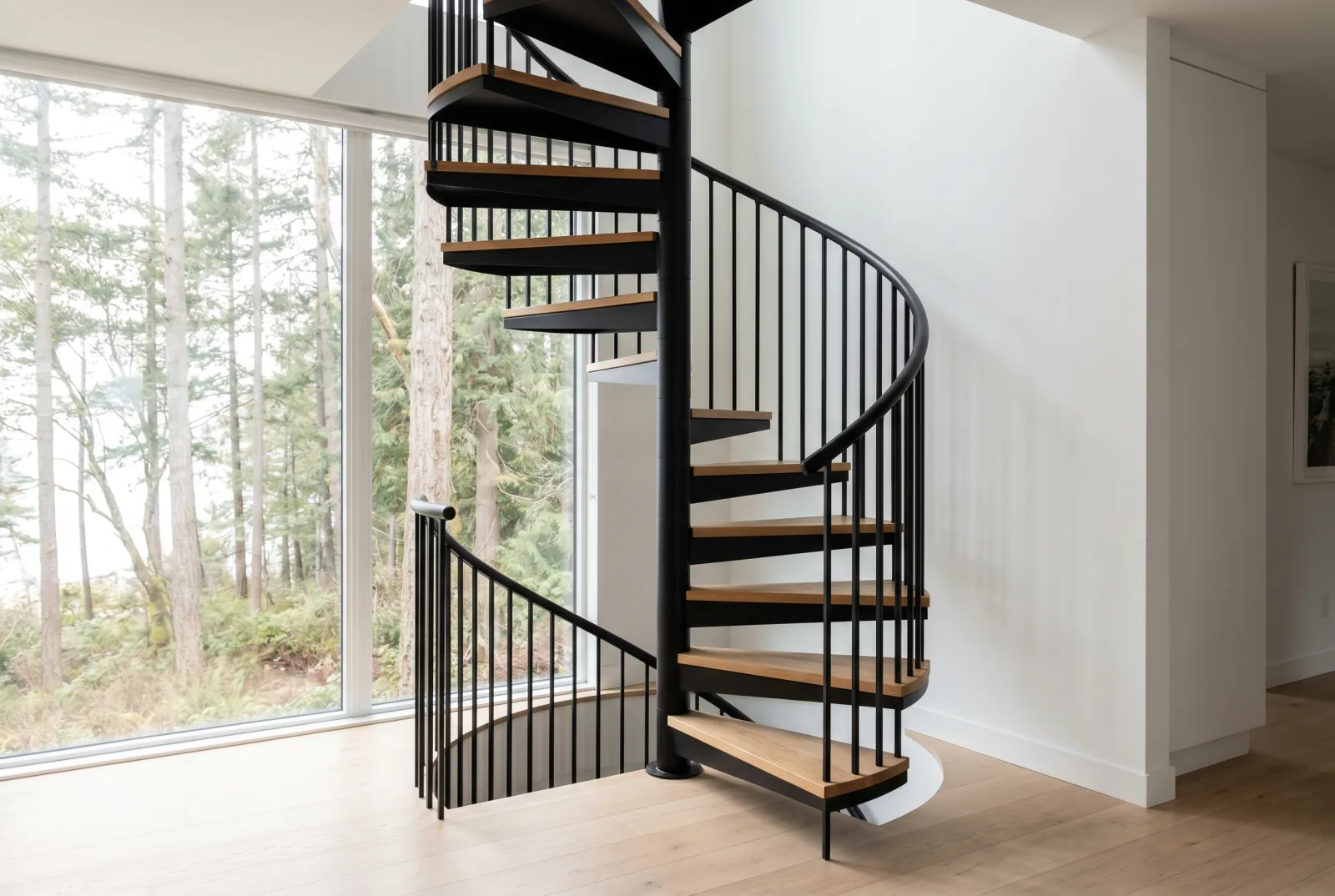
Spiral Staircase
Designed for North Vancouver sites, pricing, local planning notes, and finish guidance on the product page.
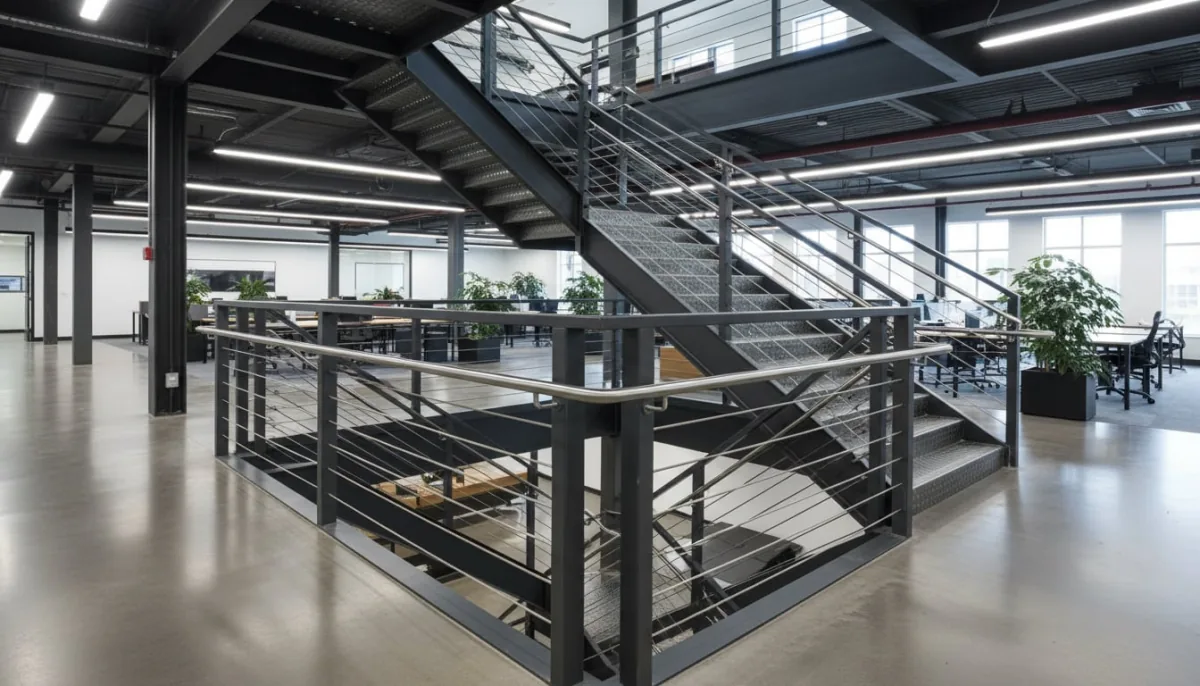
Cable Railings
Designed for North Vancouver sites, pricing, local planning notes, and finish guidance on the product page.
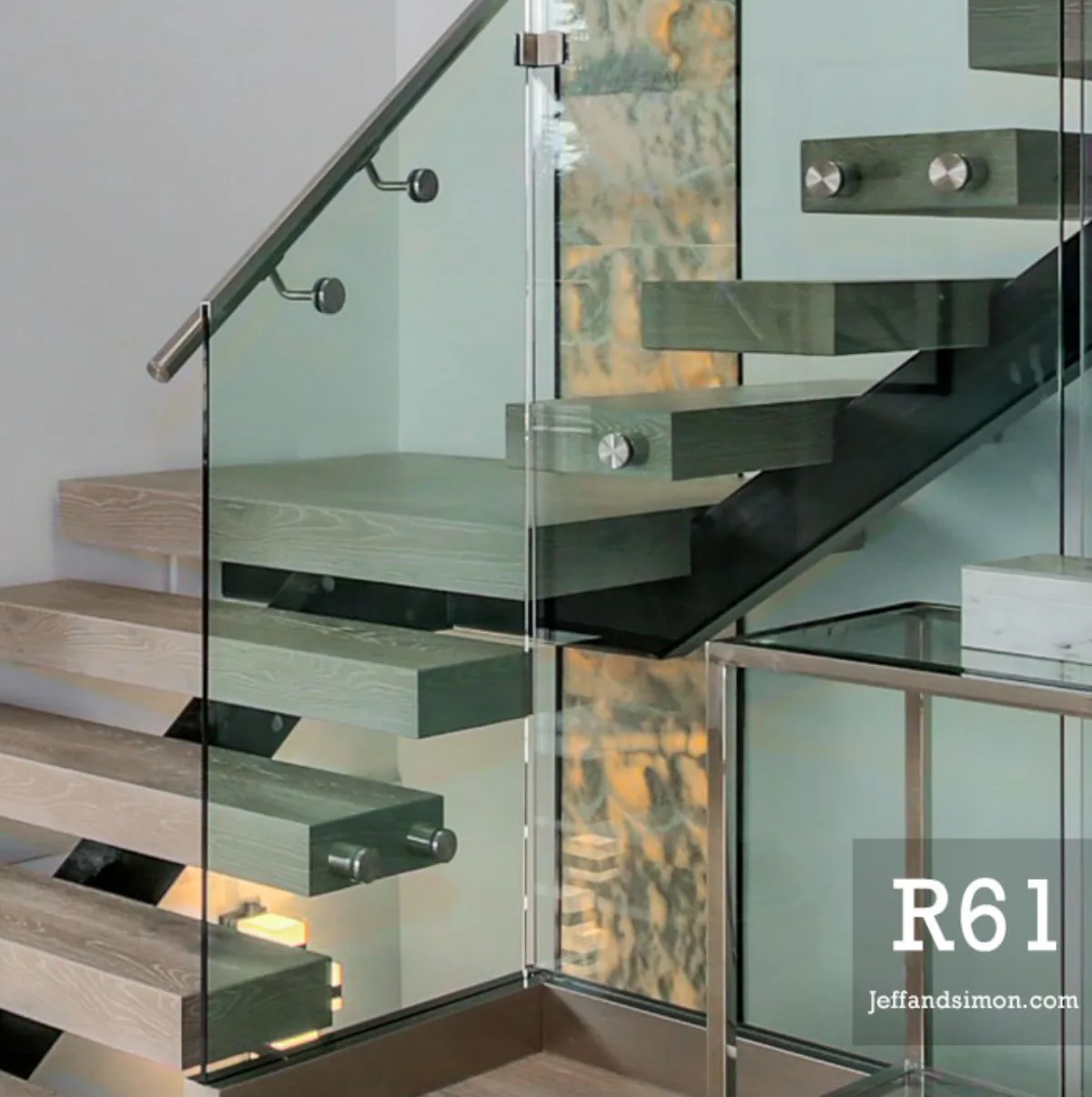
Glass Railings
Designed for North Vancouver sites, pricing, local planning notes, and finish guidance on the product page.
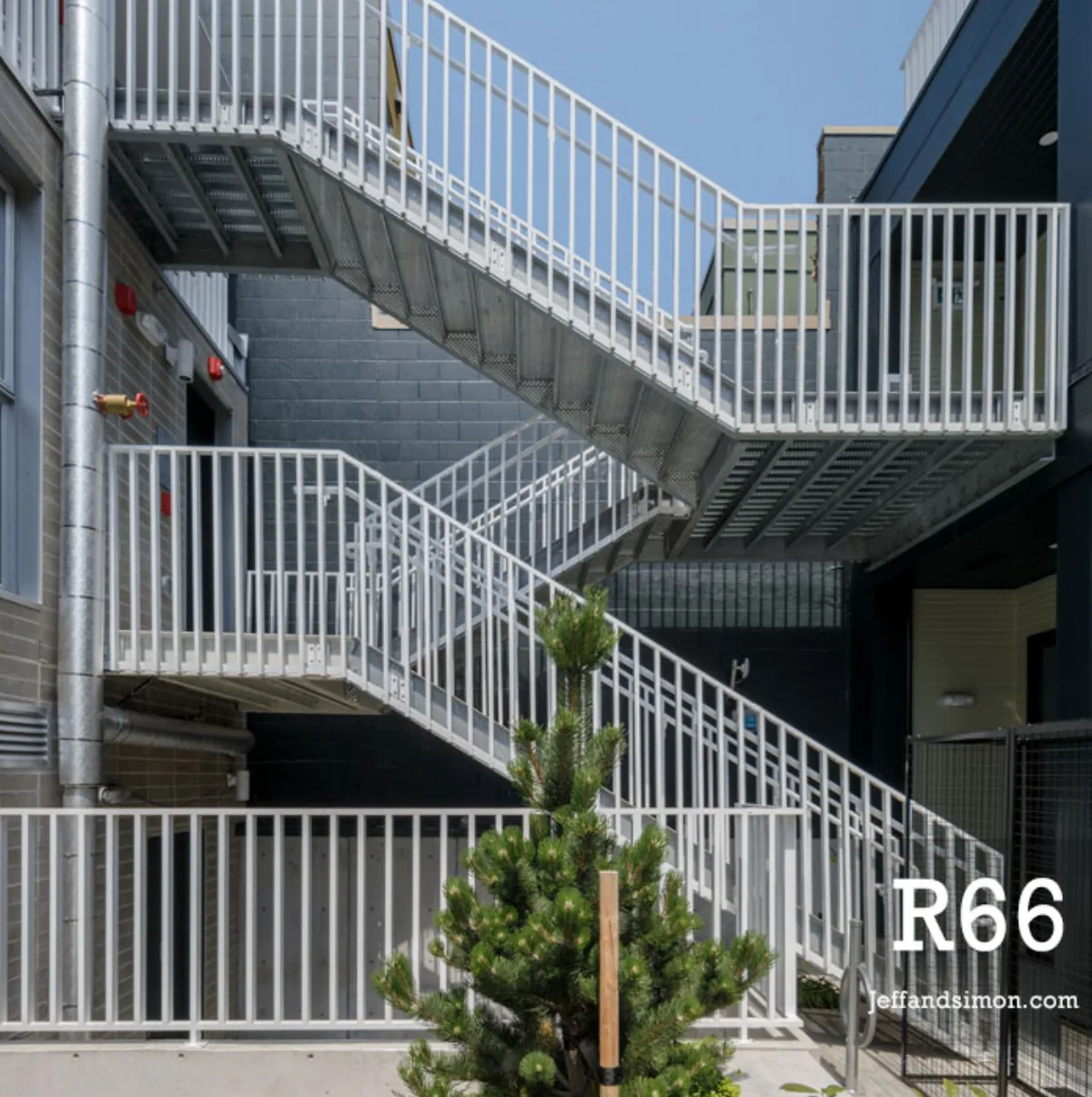
Strata Railings
Designed for North Vancouver sites, pricing, local planning notes, and finish guidance on the product page.
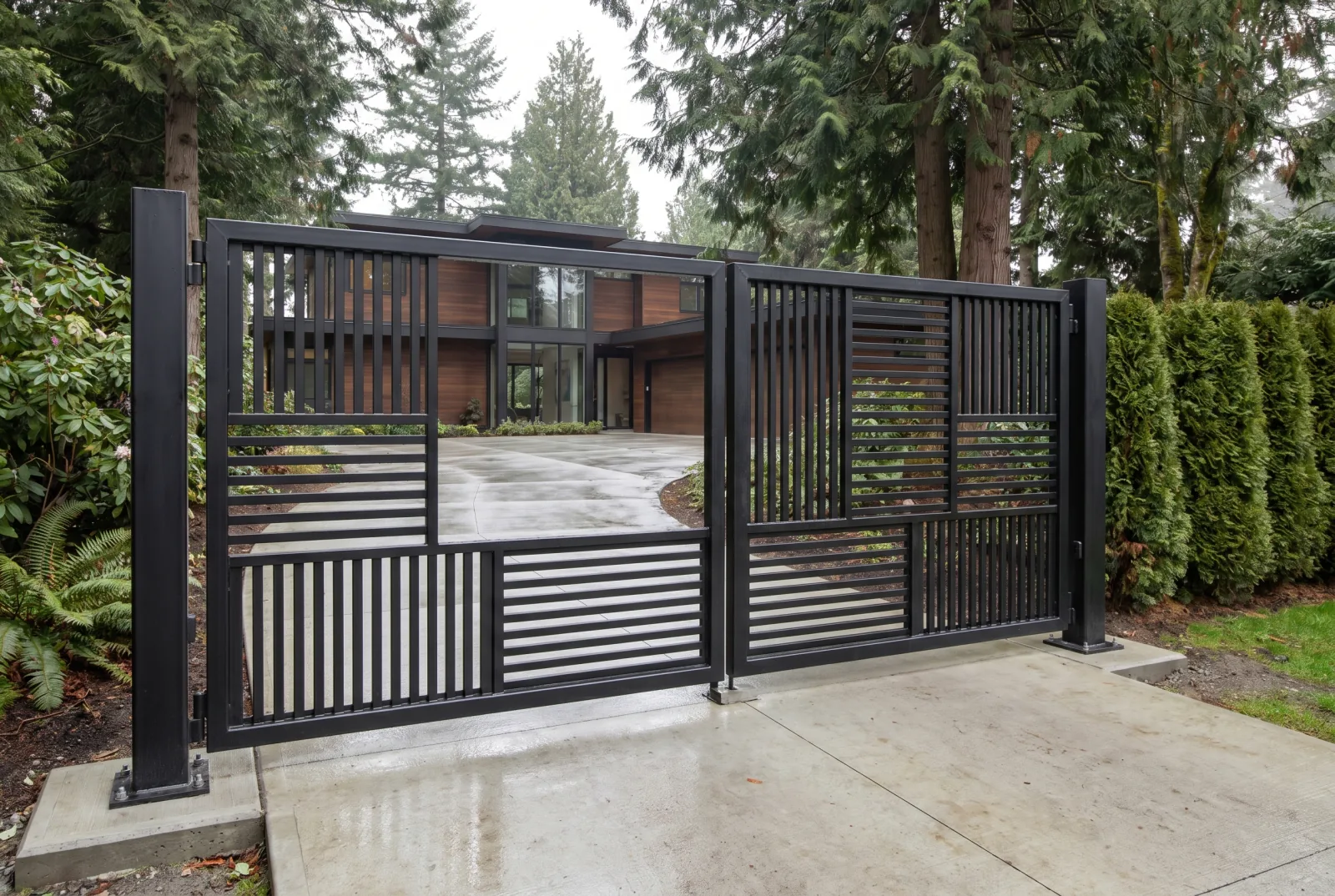
Driveway Gates
Designed for North Vancouver sites, pricing, local planning notes, and finish guidance on the product page.
North Vancouver project questions.
How does the North Shore's steep terrain affect stair installation?
Steep lots in Lynn Valley, Edgemont, and Upper Lonsdale can mean non-standard floor-to-floor heights, limited staging areas, and access conditions that affect delivery. We assess site access early and plan steel arrival in sections if the driveway or entry won't accommodate full-length pieces.
Is finish specification different for North Vancouver versus central Metro Vancouver?
Yes. The North Shore gets more rainfall than central Metro, and properties near the Burrard Inlet face moderate coastal salt exposure. We recommend stainless hardware for any waterfront-adjacent project and a more protective primer for exterior stairs and rails in North Vancouver compared to inland Lower Mainland sites.
Which North Vancouver permit office handles stair and railing work?
It depends on the address, the District and City of North Vancouver are separate jurisdictions with different offices. Structural changes, guards, and canopies typically need a permit from the applicable authority. We confirm the right office during the quote process and coordinate submission accordingly.
Other areas we serve.
Vancouver Stairs fabricates and installs from our Burnaby shop across the Lower Mainland, North Shore, Tri-Cities, Fraser Valley, and Sea-to-Sky.
Planning guides for your project.
Plan a metal stair or railing project in North Vancouver
Send drawings, photos, or a rough scope and we will help define the practical next step.