Custom Metal Stair Cost Guide for Metro Vancouver 2026
2026 budget ranges and cost drivers for custom metal stairs in Metro Vancouver, geometry, railing type, finish, access, and engineering. What moves the number.
Vancouver Stairs prices custom metal stairs on geometry, railing type, finish, access, engineering, and installation sequence. Here is what actually moves the number.
Custom metal stairs are not priced from a menu. Small decisions, how many flights, what finish, which railing system, whether engineering is required, compound into a final number that can range from $12,000 for a simple utility stair to well above $100,000 for a sculptural multi-flight installation. This guide breaks down what actually moves the price so you can plan a realistic budget before asking for quotes.
The geometry question
On a custom metal stair in Metro Vancouver, geometry is the first cost driver. Straight single-flight stairs move through fabrication most predictably: the stringer length is fixed, the connections at each end follow standard plate-and-anchor details, and the shop drawing set stays compact. Vancouver Stairs quotes straight single-flight stairs from a relatively stable base because the variables are known before steel is ordered.
Each deviation from straight adds cost:
Switchback or L-shaped stairs require a landing platform, additional stringer sections, and more connection work. The landing framing is a small structure in itself, it needs to carry load from both flights and attach to the building at a point that may require blocking or a steel ledger.
Curved and helical stairs are the most expensive geometry category. Curved stringers require rolling or press-bending in a jig. Tread brackets must be cut and positioned at a changing angle. Handrails follow a compound curve. Every operation takes longer and requires more setup. Curved stairs at this scale typically start around $45,000 for a single residential flight.
Split-level connections, stairs that land on a mid-level landing rather than a flat floor, require the landing height and position to be locked before fabrication. Any change after steel is cut is expensive.
Exterior vs interior location changes the finish and connection strategy but not the geometry cost directly.
The railing system
The railing adds roughly 30–50% to the stair cost for most residential projects. The choice affects both the unit cost and the fabrication complexity.
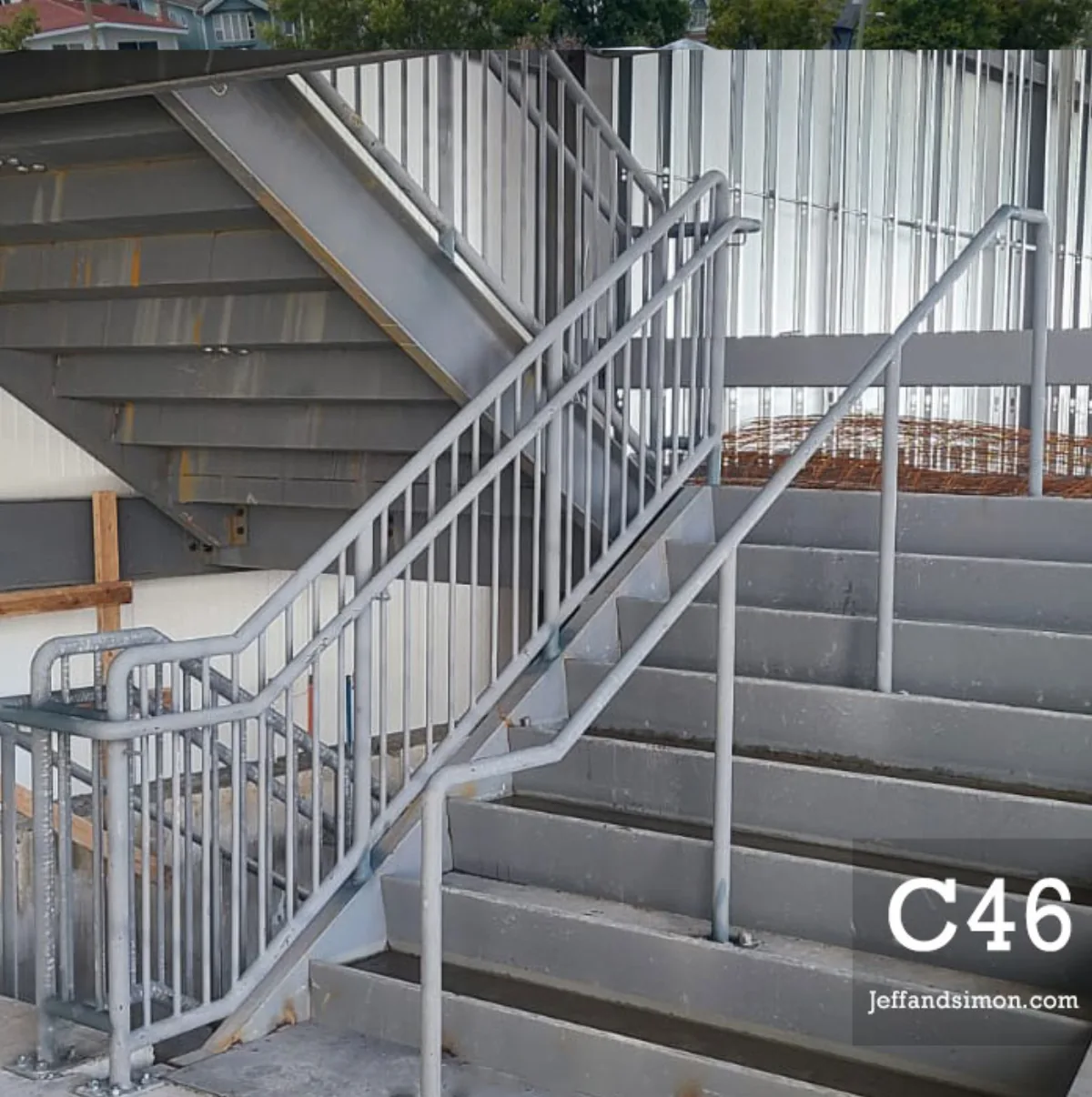
Steel pickets: The most economical option. Welded to the stringer or treads, powder coated to match. Simple to detail, durable, and code-compliant. On a standard single-flight stair, a steel picket railing adds $3,000–$8,000 to the stair cost.
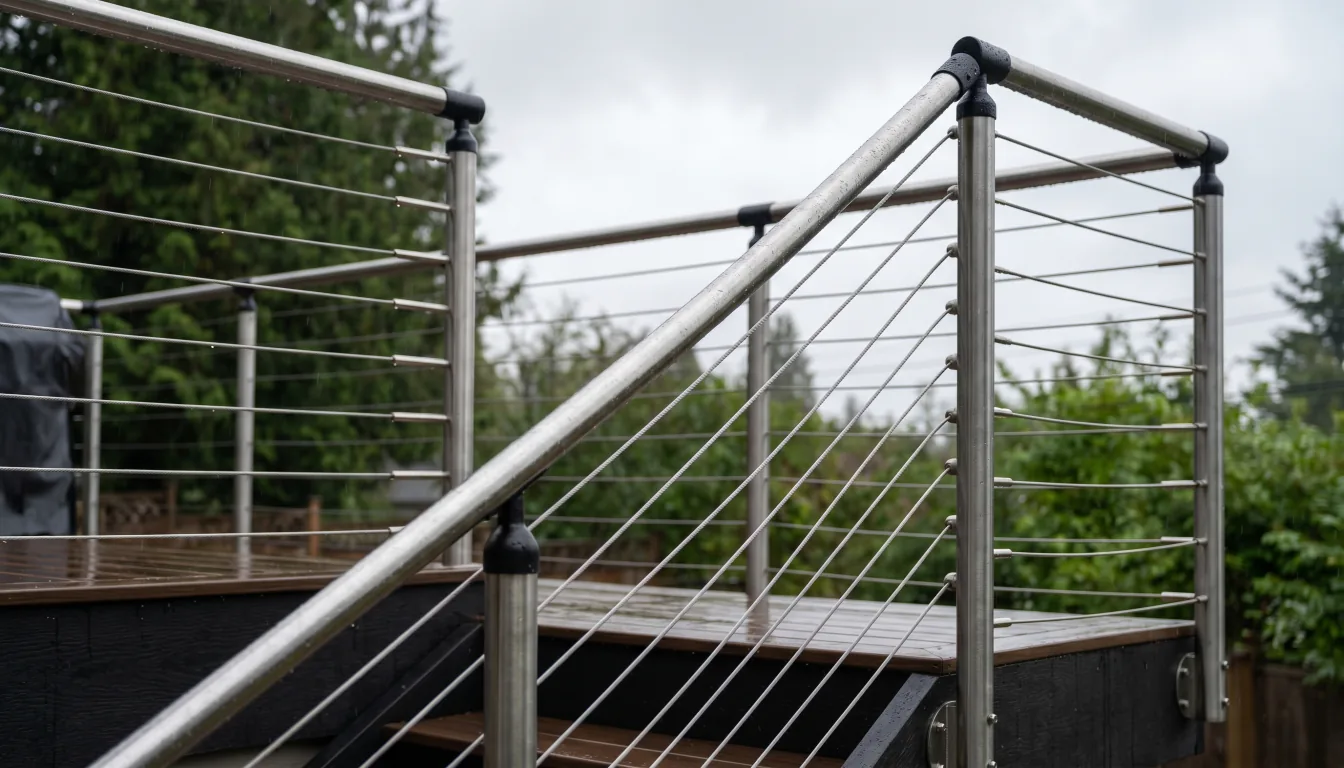
Cable railing: Horizontal stainless cable infill with steel end posts. Cable railing requires posts that handle significant horizontal tension, and those posts must anchor into something structural. On a floating stair with no wall behind the posts, the stringer must be wider or have outriggers. Cable railing typically adds $6,000–$14,000 to a stair, depending on the run length and number of posts.
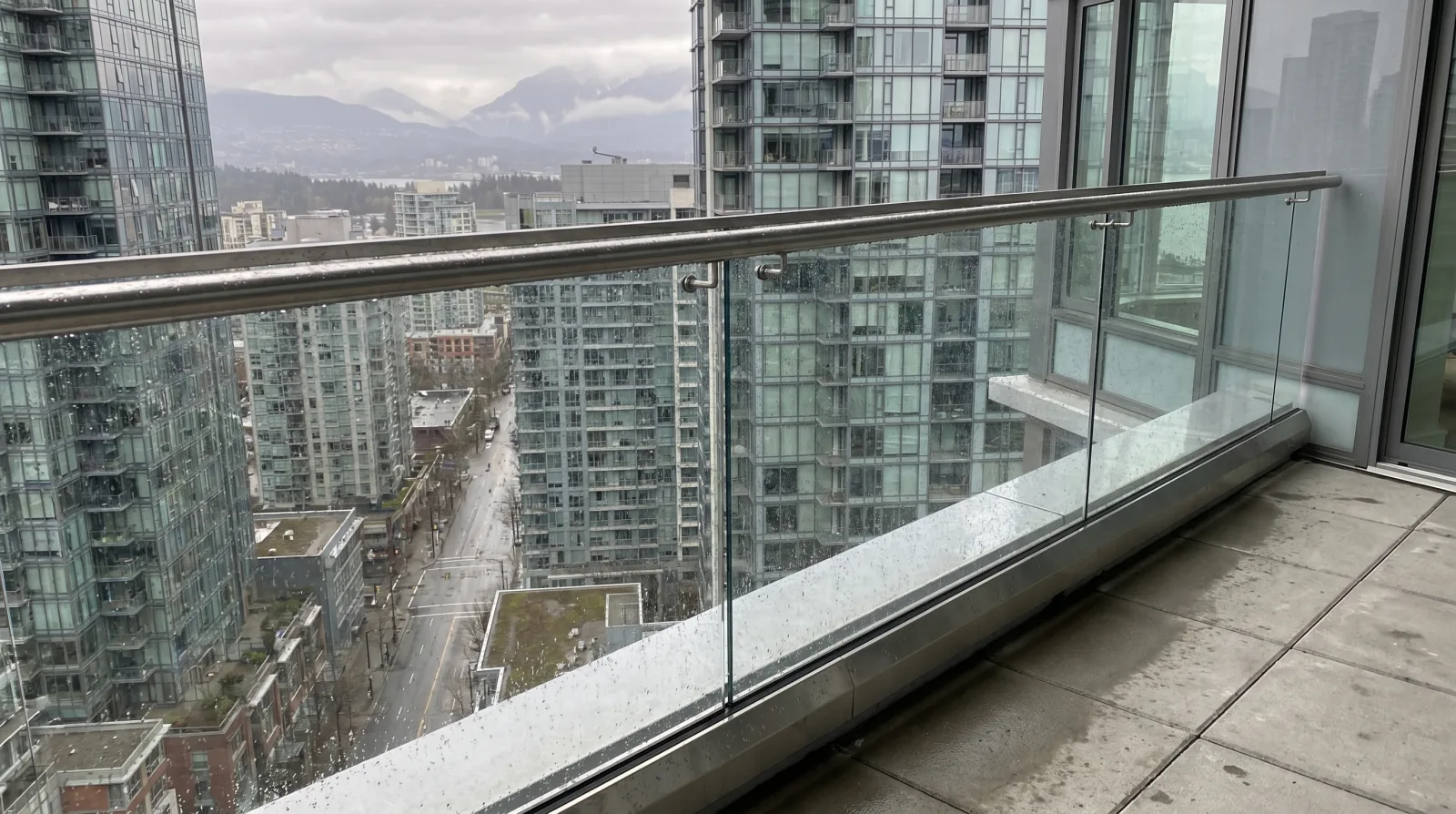
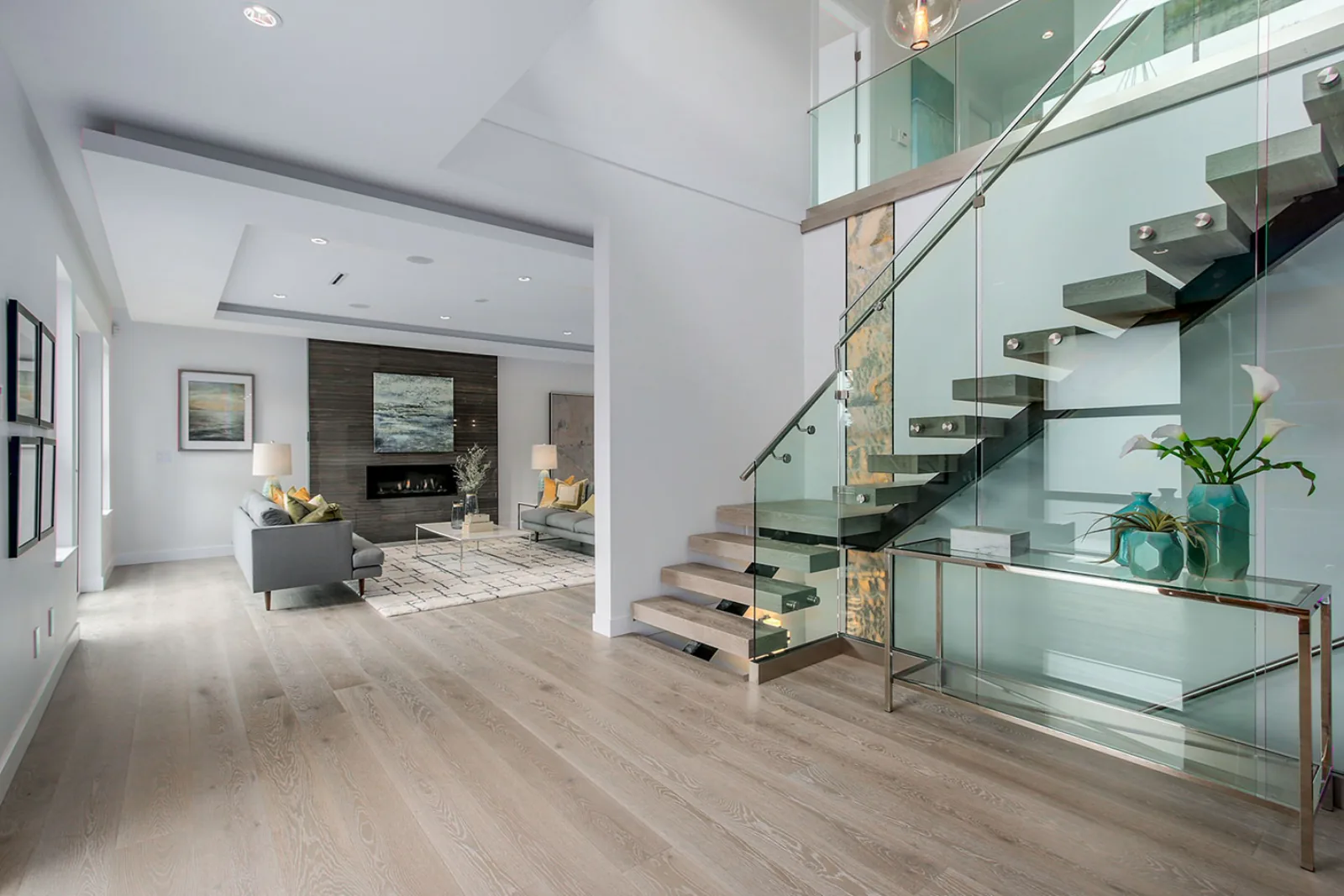
Glass guard: The highest cost railing option. Frameless glass guard systems use a base channel or post-and-glass combination. Tempered and safety-laminated panels are priced by the square metre, and the hardware, base shoe, clips, spigots, is not cheap. A glass guard on a standard residential stair typically adds $10,000–$22,000. The upper end of that range applies to frameless systems on long runs with custom panel shapes.
Top rail: A flat bar or round tube top rail on a cable or glass system adds less than a picket rail does, but the connection between the top rail and the upper floor structure is often the most detailed piece of work on the whole stair.
Finish and coating
Interior stairs typically receive a two-coat powder coating system, a zinc phosphate primer and a top coat in the specified colour. Standard powder coat is durable, cost-effective, and available in a wide colour range. It adds roughly $1,500–$3,500 to a residential stair depending on surface area.
Exterior stairs need more protection. Options from least to most durable:
Powder coat only: Acceptable on covered exterior stairs with limited exposure. Not recommended for stairs facing the weather directly, particularly on the North Shore or waterfront properties.
Two-coat industrial system: Epoxy primer plus a urethane top coat. Better UV and moisture resistance than standard architectural powder coat. Adds roughly $2,500–$5,000 over bare steel for a single flight.
Hot-dip galvanizing: The steel is dipped in molten zinc after fabrication. The zinc bonds metallurgically and protects against rust for decades even in wet conditions. Best option for fully exposed exterior stairs. Adds $1,500–$4,000 depending on weight.
Duplex system (galvanize then powder coat): The gold standard for exposed exterior metalwork. Combines corrosion protection with colour control. The total finish cost is higher but the lifecycle cost is lower, a galvanized and powder-coated stair in North Vancouver will outlast one that was powder coated only.
Tread materials and their cost impact
The stringer and railing are fabricated by the metal shop. Treads are sometimes included, sometimes specified by others.
Open steel grating: The most economical tread option. Common on exterior utility stairs and commercial egress stairs. Very low additional cost, grating is cut and welded at the shop.
Checkered plate (diamond plate): More common on industrial and exterior utility stairs. Welded to the tread brackets. Cost is modest.
Powder-coated steel pan with infill: A steel tread pan is fabricated as part of the stair, and the client fills it with wood, stone, or concrete. The pan cost is included in the stair fabrication. The infill material and labour are separate.
Hardwood treads: White oak, walnut, and maple are common residential choices. A white oak tread set for a 12-step stair might run $4,000–$8,000 for material and installation, separate from the stair fabrication.
Stone treads: Marble, quartzite, and porcelain are used on high-end residential floating stairs. Heavy, fragile, and expensive. A stone tread set adds $8,000–$20,000+ depending on material and the installer.
Engineering and permits
Structural engineering adds $1,500–$4,000 for a straightforward residential stair. Complex projects, cantilevered treads, non-standard connections, or stairs requiring a seismic review, may run higher.
Engineering is required by Metro Vancouver municipalities when:
- The stair is a new structure (not a like-for-like replacement)
- The stair changes the opening in the floor structure
- The design uses cantilevered treads anchored into framing
- The stair carries commercial live loads (4.8 kPa or higher)
- The building permit application requires structural drawings
Permit costs vary by municipality and by the value of the work. The City of Vancouver calculates permit fees based on construction value. A $40,000 stair project might carry a permit fee of $600–$1,200. The permit timeline is the variable, two weeks in some municipalities, eight weeks in others during busy periods.
Site access and installation conditions
Site conditions that most homeowners do not think about until installation day:
Elevator availability: In suites and condos, booking elevator access for steel delivery adds scheduling complexity. In walk-up buildings, steel may need to be carried up stairwells. In either case, the fabricator needs to know the access conditions before shop drawings are finalized, a long stringer section that fits easily into a house may not fit in a condo elevator.
Finished surfaces: If hardwood floors, painted walls, and millwork are already installed, the installation requires more protection and more careful handling. Rushing installation in a finished space increases the risk of damage. Some contractors quote a premium for installation in fully finished spaces.
Phased construction: When the stair is installed before surrounding finishes are complete, the installation is faster and easier. When the stair is the last thing to go in, coordination with other trades around the stair opening takes longer.
Hillside and slope access: On North Shore properties with steep driveways, getting steel to the site can require creative logistics. Long stringer sections may need to be broken into pieces and field-welded, which adds installation time.
Putting the numbers together
A residential mono stringer floating stair, single flight, steel cable railing, powder coat finish, wood treads by others, no engineering required, might land in the $22,000–$38,000 range.
The same stair with a glass guard adds $10,000–$18,000. Engineering and permit add another $3,000–$5,000. If the treads are stone, add $10,000–$20,000. On a hillside site with difficult access, add $2,000–$5,000 for installation complexity.
A full-featured glass-guard floating stair with stone treads, engineering, and difficult access can easily reach $60,000–$90,000 on a residential project. None of that is surprising when you know which decisions drove the number.
How to get a quote that reflects your actual project
Send the fabricator:
- The floor-to-floor height and the stair opening dimensions
- Photos of the existing structure (or framing drawings for new construction)
- The railing type you are considering (cable, glass, picket)
- The tread material preference
- Whether the stair is interior or exterior
- The target finish
- The project address (affects permit jurisdiction)
- Your target completion date
The more information you provide upfront, the more accurate the first quote will be. Fabricators who have to estimate unknown conditions will price conservatively, and you may be comparing an accurate quote from one shop against a low-assumption quote from another.
Sources
- BC Building Code 2018 Division B Section 9.8, Stairs, Handrails and Guards
- Engineers and Geoscientists BC, Designated Structural Engineer
- Province of BC, 2018 Guide to Letters of Assurance (Schedules A, B, C)
- Jeff and Simon Ironworks, Floating Staircase Vancouver: Design, Cost, Engineering, comparable market pricing reference for floating stair projects in Metro Vancouver
Related questions
Why do custom metal stairs vary so much in price?
Geometry, site access, finish, railing type, engineering, and installation risk can all change the fabrication scope. A straight mono stringer stair is a predictable fabrication. A curved cantilevered stair with glass guards and stone treads on a hillside site is not.
What is a realistic starting range for a feature metal stair?
Many feature mono stringer or floating stair projects start in the $18,000–$25,000 range for a simple single-flight residential stair with steel or cable railing and powder coat finish. Glass guards, wood treads, and complex geometry push the number higher.
Does engineering add a lot to the cost?
Structural engineering for a residential stair typically runs $1,500–$4,000 depending on complexity. For cantilevered treads or stairs with non-standard connections, it is money well spent, catching a connection problem on paper is far cheaper than modifying fabricated steel.
Is galvanizing more expensive than powder coating?
Hot-dip galvanizing for an exterior stair typically adds $1,500–$4,000 over interior powder coating for a standard flight, depending on the stringer size and weight. Duplex coating (galvanize then powder coat) costs more but outlasts either finish applied alone.
How much does a cable railing add to a custom metal stair?
Cable railing on a standard residential stair typically adds $6,000–$14,000 to the stair cost, depending on run length and post count. Posts must anchor into something structural, and on a floating stair with no adjacent wall, the stringer often needs to be sized wider or fitted with outriggers to handle the horizontal cable tension.
Do I need a permit for a custom metal stair in Metro Vancouver?
In most Metro Vancouver municipalities, a new metal staircase or any replacement that changes the opening in the floor structure requires a building permit. Permit fees vary by municipality and construction value; they typically run a few hundred to a couple of thousand dollars for a residential stair project. The permit timeline ranges from two weeks to eight or more weeks during busy periods, confirm with your municipality before finalizing the schedule.
How does tread material affect the overall stair cost?
The stringer and railing are the main metalwork scope. Treads are sometimes included, sometimes sourced separately. A hardwood tread set for a 12-step residential stair can run $4,000–$8,000 for white oak, plus installation. Stone treads add $8,000–$20,000 depending on material and the number of steps. Steel grating and checkered plate are the lowest-cost tread options and are welded directly by the fabricator.
What information should I send a fabricator to get an accurate quote?
The most useful starting package is: floor-to-floor height, stair opening dimensions, photos of the existing structure or framing drawings, the railing type you are considering, tread material preference, whether the stair is interior or exterior, target finish, the project address, and your target completion date. Fabricators who have to estimate unknown conditions will price conservatively, complete information produces a more accurate first number.