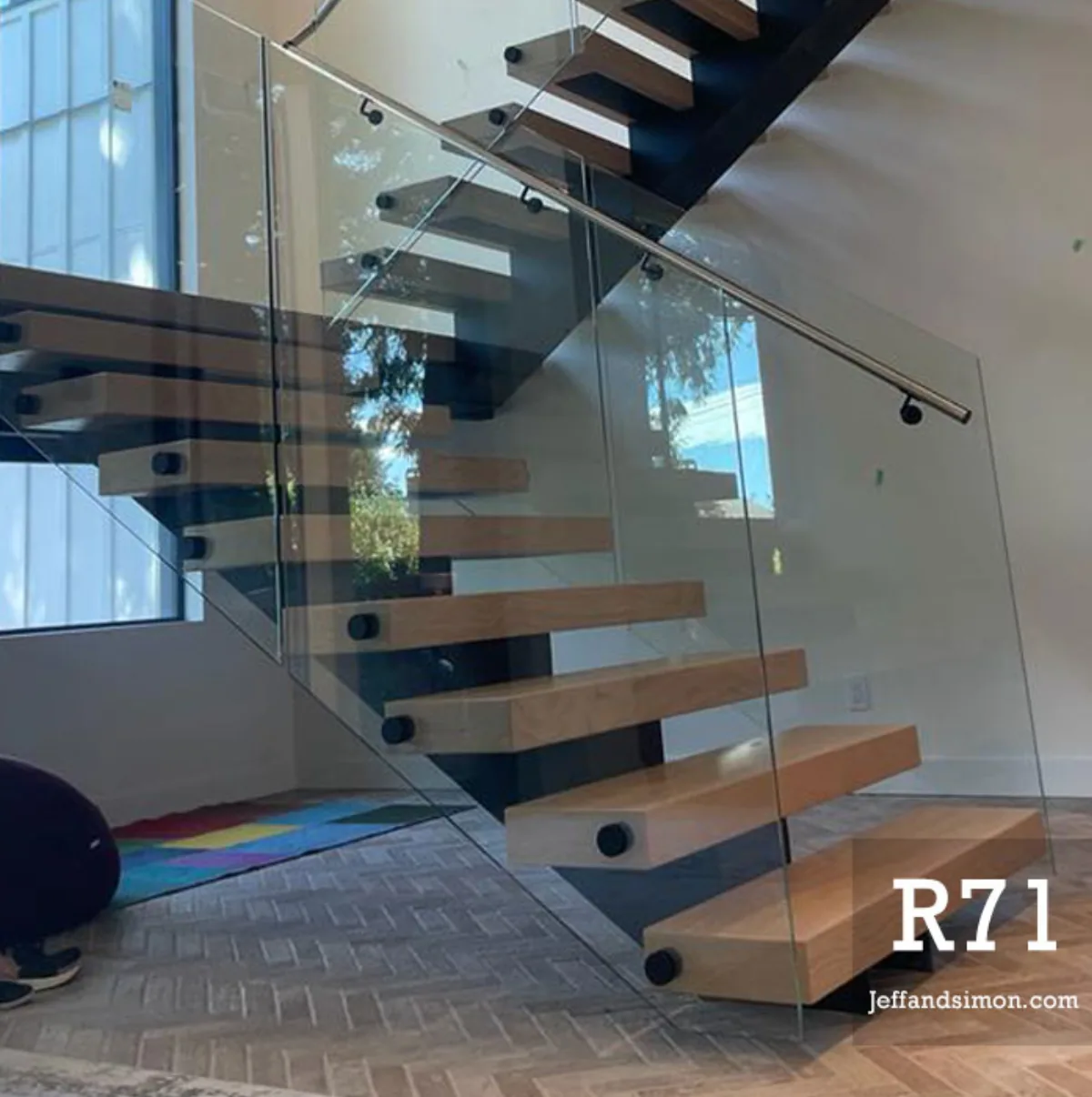
Floating stairs are defined by how light they feel, but the steel support still needs to be real, inspectable, and coordinated with the building. The support strategy, mono stringer, cantilevered, hidden double stringer, or suspended, is the decision that changes every other detail. The complete floating stairs hub is at /floating-stairs/.
What makes a stair look like it floats?
Open risers and no visible side stringers. The treads appear to hang in space without a back panel or closed structure. Most floating stairs in Metro Vancouver use a mono stringer (single central beam) or a cantilevered system (treads anchored into the wall). Both can read identically in a finished photograph. The structural difference behind them is significant.
Mono stringer vs cantilevered: the real comparison
A mono stringer keeps the structural element inside the stair, one beam, two anchor points, visible spine. A cantilevered stair moves the structural element into the wall, where steel back-plates or stud-packs carry each tread. Cantilevered is the cleanest visual result; mono stringer is the most predictable to price and schedule.
- Mono stringer: engineering contained in the stair package.
- Cantilevered: engineering extends into the wall framing, must be confirmed before drywall.
- Both require sealed engineering for a building permit in most Metro Vancouver municipalities.
BC code: open risers and guards
Open risers are permitted in most Part 9 residential buildings in BC, subject to sphere-passage rules between treads. Guards must meet height and opening requirements under the BCBC or the Vancouver Building By-law. Floating stairs in commercial or assembly occupancies face stricter rules on open risers. Confirm the applicable code provisions and the sphere dimensions with your AHJ before fabrication.
Cost: what moves the number
Floating stair cost in Metro Vancouver depends on the support strategy (mono stringer is typically more predictable), the tread material (wood, steel, stone, glass), the railing system (cable, glass, or steel picket), the finish, and installation access. Most residential floating stair projects range from $20,000 to $70,000+ installed. Every project is quoted after a site review.
Related questions
Are floating stairs allowed in BC?
Yes, in most residential settings. Open risers are permitted under the BC Building Code Part 9 for houses and small buildings, subject to sphere-passage limits between treads and guard requirements. Larger buildings and commercial occupancies have stricter rules. Confirm with your local authority having jurisdiction before committing to an open-riser design.
How much does a floating stair cost in Vancouver?
Most residential floating stair projects in Metro Vancouver run $20,000–$70,000+ installed, depending on the support strategy, tread material, railing system, and site access. Mono stringer floating stairs are the most predictable to price; cantilevered floating stairs typically cost more due to framing and engineering scope.
What is the difference between a floating stair and a mono stringer?
Floating stair is a visual category: any open-riser stair where treads appear to hang in space. Mono stringer is one specific support method that produces a floating appearance. A mono stringer has a visible central beam; a cantilevered floating stair has no visible support at all.
Discuss floating stair fabrication vancouver | support types, code & process for a real project
Send drawings, photos, or a rough scope and we will help define the practical next step.