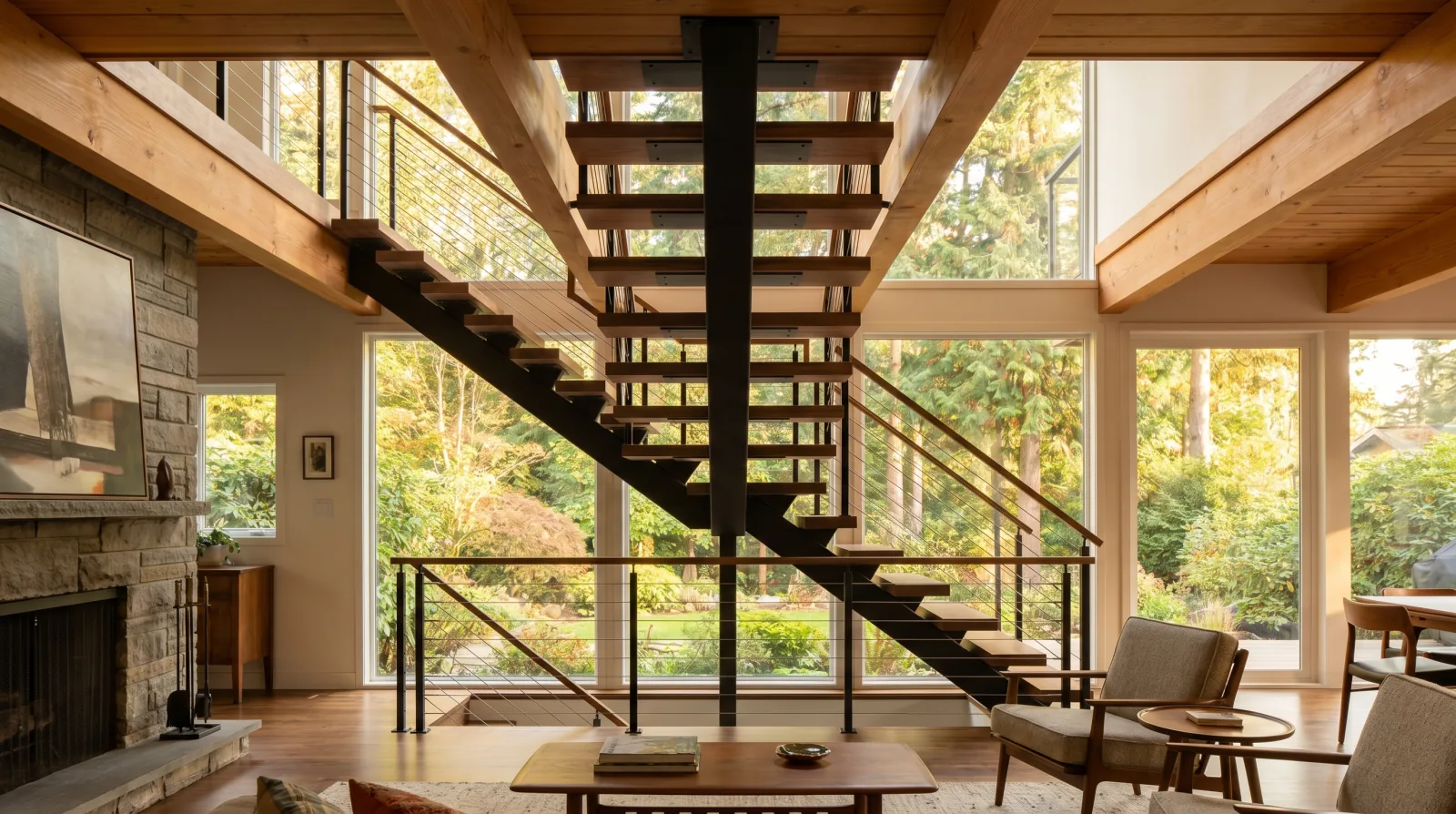
Metal stairs and railings in Burnaby.
Burnaby mixes custom homes, strata towers, institutional projects, and commercial spaces, which makes it a strong fit for both residential stairs and repeatable railing packages.
Burnaby is home for Vancouver Stairs. The shop sits at 2544 Douglas Road, between Brentwood and Deer Lake, which puts almost every Burnaby address within a 0 to 20 minute drive of the saw, the bender, and the welding bay. That proximity changes how a Burnaby stair project actually runs. A site visit can happen the same day a builder calls. A re-measure after framing changes does not eat a half-day in traffic. A short run of glass clips that came in the wrong colour can be swapped between the shop and the site before the installer leaves. The fabrication context is the same as the rest of the Lower Mainland, but the operational reach is tighter than anywhere else on the map.
Burnaby is also one of the most varied stair markets in Metro Vancouver. The city carries everything from heritage character homes around Deer Lake to post-war Vancouver Specials on the Heights, modern Brentwood and Metrotown towers approved at heights that now lead Western Canada, mid-rise wood-frame strata in Edmonds, and Part 3 institutional projects on Burnaby Mountain. A typical week of Burnaby work might cross all four of those building types. The rest of this page works through the structural quirks, climate detail, and permit routing that shape stair scopes in each of those settings.
Building stock shapes the stair scope.
North Burnaby, the Heights, Capitol Hill, and Westridge, is mostly post-war detached housing. Around a third of the homes were built before 1960, with the rest filling in across the 1960s through the 1980s, including a strong representation of the Vancouver Special: roughly 2,400 sq ft, low-slope roof, full-height basement, central scissor stair on a single straight run. The same retrofit problem that shows up on East Vancouver Specials shows up here. The original opening was sized for a closed-stringer wood stair with bullnose treads, the headers and trimmers were sized for that dead load, and a modern mono stringer or floating stair retrofit usually pushes the opening into new framing. The fix is rarely just a steel swap.
Central Burnaby is where the high-density redevelopment is concentrated. Brentwood and Metrotown carry the bulk of the new tower work, including the Brentwood Block master plan, where Grosvenor and Westerkirk are building roughly 3,500 homes across six towers anchored by a 41-storey strata condominium phase next to Brentwood SkyTrain (renx.ca, dailyhive.com). Lougheed Town Centre and the Kingsway corridor in Metrotown have approved towers reaching well above the 60-storey mark. The stair work that flows out of these developments tends to be repeatable: commercial lobby stairs, level-change stairs into amenity floors, and strata railing packages that have to land on a mock-up before the floor-by-floor rollout starts. Architectural one-off work is rare on these sites. Repeatability and shop-drawing discipline matter more than they do on a custom home.
South Burnaby, Edmonds, Royal Oak, the South Slope, and the slope down toward New Westminster, is dominated by newer mid-rise wood-frame and concrete-podium strata, townhouse rows, and infill multi-family. Exterior egress stairs are common here, as are glass and stainless cable guards on rooftop amenity decks and townhouse stoops. The west of the city around Deer Lake and Buckingham Heights carries the heritage and design-led custom work. The Deer Lake area has a recognised heritage character, large lots, and renovation projects that often run with an architect from the first sketch. Floating stair retrofits, sculptural mono stringers, and custom guardwork on character homes are normal scopes in this pocket. The four quadrants of the city, north, central, south, and west, each pull on a different part of the shop's catalogue in a given month.
Climate exposure decides the finish strategy.
Burnaby sits on the same wet-coastal weather system as the rest of the Lower Mainland, but there is no direct salt exposure. The city has no waterfront on the Strait of Georgia, only a freshwater frontage on the Fraser at Big Bend and on Burrard Inlet at Burnaby Heights. That matters for finish selection. The chloride load on a Burnaby exterior install is meaningfully lower than on a Dundarave waterfront install or a Steveston dock-side guardrail. The corrosion driver is rain, not salt. Annual precipitation across the city varies with elevation, readings on Burnaby Mountain run materially higher than at the airport benchmark in Richmond, so finish details on a Capitol Hill exterior should be planned with the upper-elevation rain pattern in mind, not the flat-city number.
For exterior structural steel, hot-dip galvanizing to ASTM A123 is the default. The phosphate-and-powder-coat finish used inside is not enough for an exterior stringer, base plate, or canopy support that has to live through a Burnaby winter unprotected. Galvanizing gives the substrate a sacrificial zinc layer that does the work even after a topcoat scratches in service. A duplex coating, galvanizing plus a sweep-blasted powder coat or polyurethane topcoat, is the right detail when the colour matters and the assembly is exposed. Bare painted steel without galvanizing will show rust bloom along welds and edges within the first wet season.
Interior steel is finished differently. The common detail is a phosphate pre-treatment over blasted steel followed by a polyester powder coat in a flat or satin sheen. Black is the most-requested colour by a wide margin, with bronze, warm grey, and a darker charcoal coming up on design-led Deer Lake and Buckingham Heights projects where the stair sits next to oak or walnut. Mill-scale-visible finishes are occasionally asked for in industrial-loft conversions in older Burnaby manufacturing buildings on Boundary Road or Lake City. They need a clear matte sealer to stop transfer onto socks and hands, and the look depends heavily on what the scale actually shows up like, that has to be approved on a sample, not on a drawing.
The scopes we see most in Burnaby.
Mono stringer stairs, a single central steel beam with treads cantilevering equally on both sides and open risers, are the most-requested feature stair in residential Burnaby work. On Heights retrofits, the stringer is often an HSS section sized by the engineer for the run, the cantilever depth, and the tread spec the architect has picked. The same beam shows up in central-Burnaby townhomes and infill multi-family where one open feature stair connects the main floor to a roof deck. The connection at the floor opening drives the schedule. If the existing trimmer joists cannot carry the new point loads, the wood scope grows before the steel is ordered, and that conversation needs to happen during framing, not after drywall.
Floating stair retrofits show up on character renovations around Deer Lake, Buckingham Heights, and the higher pockets of the Heights. Floating is a visual category, not a single structure. The support strategy might be wall-anchored treads embedded into a steel-reinforced stud bay, a hidden stringer concealed behind a finish wall, or a structural spine inside a feature wall. Each option pulls on a different drawing set. The wall-anchored option needs the support wall agreed and engineered before drywall is closed, it cannot be retrofitted to an already-finished wall. The hidden-stringer option is more forgiving in older houses and faster through engineering review, which is often the right call on a renovation budget.
Commercial and strata work is the other half of the Burnaby calendar. Lobby stairs in Brentwood and Metrotown towers, level-change stairs into amenity floors, and exterior egress stairs at townhouse podiums fall under BC Building Code Part 3 as buildings over 3 storeys or over 600 m² in area (bccodes.ca, confirm with the authority having jurisdiction). Strata railing replacement programs across older Metrotown and Brentwood high-rises are a steady scope: mock-up approval on one unit, depot logistics for the building, phased per-floor installation, and occupied-unit notice cycles that the property manager has to run. Institutional work on Burnaby Mountain and at Burnaby Hospital adds a welding-procedure layer. CWB certification to CSA W47.1 is the baseline for any structural welding on Part 3 institutional sites, and the procedure data sheets have to be submitted with the shop drawings before steel is cut.
Permit and AHJ workflow.
The City of Burnaby issues building permits through its Building Division at 4949 Canada Way and through the My Permits Portal online (burnaby.ca, confirm with the authority having jurisdiction). New stairs, alterations to existing stair openings, structural connections to floor framing, and most exterior stair and guard work need a building permit. Burnaby has also moved to a fully digital permit submission and issuance process for applications filed on and after January 1, 2026, with all permits issued on or after March 31, 2026 provided in digital format only (burnaby.ca). That changes how shop drawings and engineer's letters are packaged. PDF stamping with a digital seal from the engineer of record is the path; paper-stamped drawings have to be re-issued digitally before submission.
For structural stair geometries, cantilevered, floating, mono stringer, and any Part 3 commercial stair, a Schedule B Letter of Assurance from a registered professional engineer is the standard route. The Schedule B confirms structural design and field review of the stair as installed, and a Schedule C-B is signed off after the final site review. In practice the engineer needs to be on the drawings before fabrication, the Schedule B is sealed with the permit application, and the field reviews are scheduled around install milestones. Heritage and character protections in Burnaby are lighter than Vancouver's First Shaughnessy overlay, but Deer Lake heritage properties and any designated heritage building can trigger additional review on exterior stair, canopy, or guard changes. The right move on a designated site is to confirm the path with the City before drawings are finalized.
Coordination, access, and delivery.
The Vancouver Stairs shop on Douglas Road puts almost every Burnaby address within a 0 to 20 minute drive. Brentwood, Willingdon, and the Lougheed corridor are five to ten minutes north. Metrotown and Edmonds are ten to fifteen minutes south. Deer Lake and Buckingham Heights are around the corner. Capitol Hill and the Heights are fifteen to twenty minutes over the SkyTrain line. That proximity is the practical advantage of working with a local fabricator on a Burnaby project. Same-day site visits during pre-construction, fast re-measures after framing changes, and rapid swap-outs of mis-finished hardware all stay inside one workday rather than spanning two.
Site access varies more than drive time. Brentwood and Metrotown high-rise installs run on the building's loading-bay schedule and an elevator booking, with the install crew arriving inside whatever window the property manager has issued. Lougheed corridor and Edmonds mid-rise sites are usually more flexible, a long-bed truck and Hiab will fit in the laneway or parking lot, and traffic-control cones are enough on the side streets. Heights and Capitol Hill single-family work uses the driveway when there is one and the lane when there is not. Strata railing programs in older Metrotown towers run on a per-floor depot model: the panels are staged on one floor, installed across two or three units, then re-staged on the next floor up, with the building's freight elevator booked for the duration. Occupied-unit notice, typically 24 to 48 hours in writing, varying by strata bylaw, has to be coordinated with the property manager before each move, and the swing space on the corridor side of each unit has to stay clear of cars and tradespeople on install day.
How to start a Burnaby project.
The strongest Burnaby projects bring the fabricator into the conversation while the floor framing, opening size, and finish floor are still on paper. Send the architectural drawings, structural drawings if they exist, the site address and neighbourhood, the finished-floor build-up, the preferred finish, and the target install window. Photos of the existing stair opening and the surrounding framing help separate a straight swap from a project that needs structural re-framing first. On strata and Part 3 work, the mock-up requirements, mechanical and electrical coordination at the stair core, and the property manager's notice window should be flagged in the first call. With the Burnaby shop a short drive from almost every neighbourhood, the path from first site visit to stamped shop drawings and a confirmed install date is usually shorter than the engineering review behind it, which is the right way around for a project to run.
Neighbourhoods we work in.
Metrotown, Brentwood, Deer Lake, Burnaby Heights, Edmonds, Capitol Hill, South Slope.
City signals
Drive time: 0-20 minutes
Snow load signal: 1.6 kPa
Adjacent cities: Vancouver, New Westminster, Coquitlam, Port Moody
Shop: 2544 Douglas Road #106, Burnaby BC
Popular Burnaby product routes.
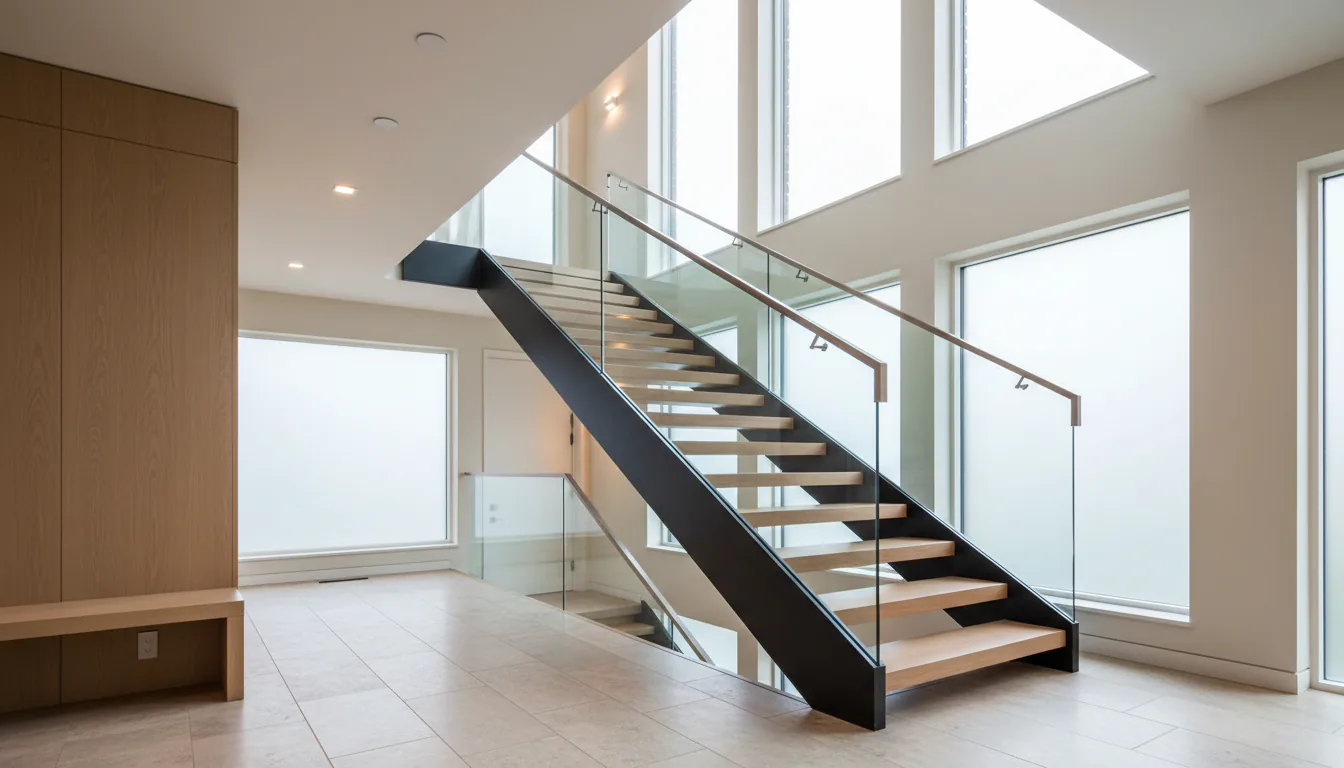
Residential Staircase
Designed for Burnaby sites, pricing, local planning notes, and finish guidance on the product page.
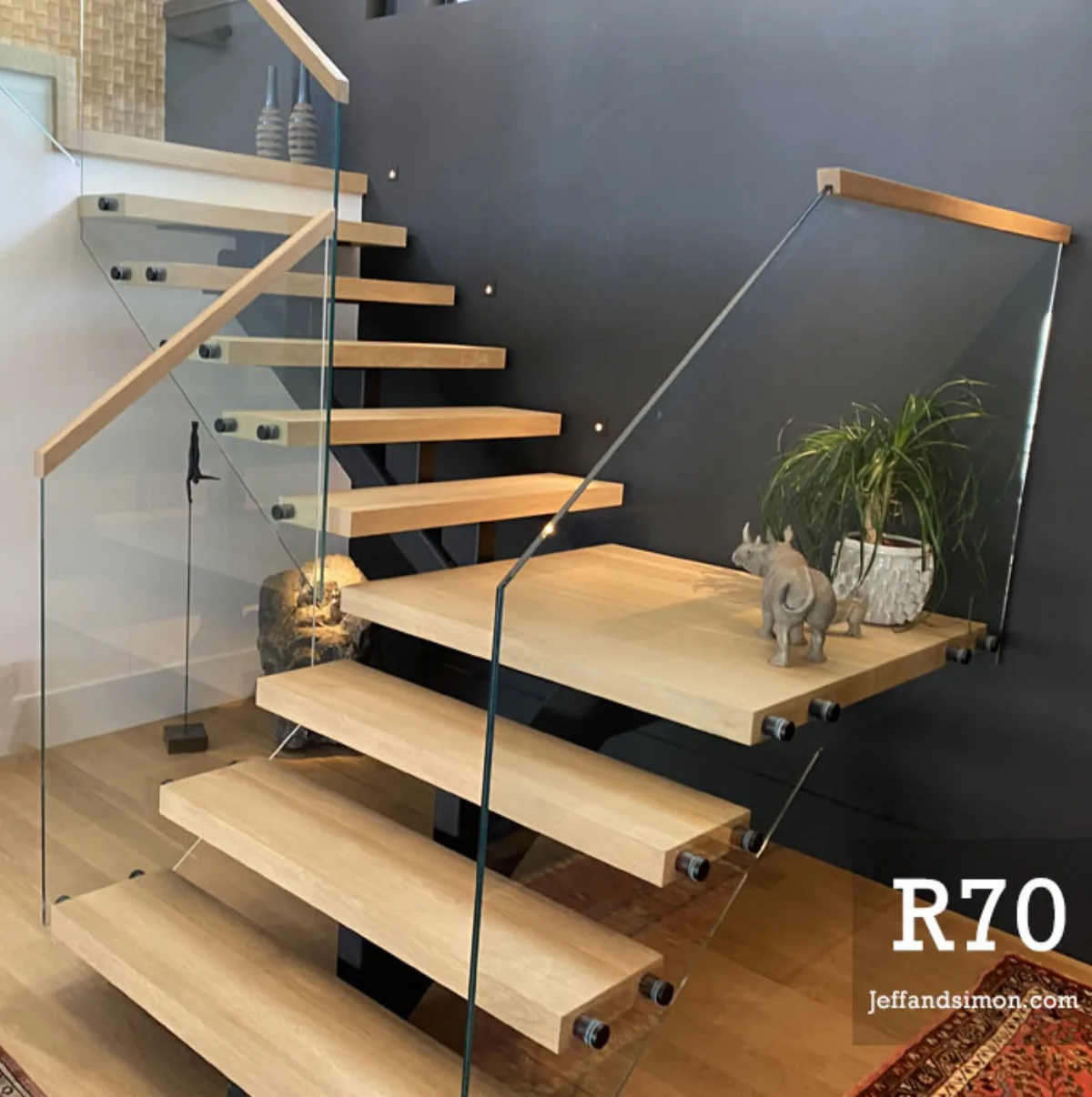
Mono Stringer Staircase
Designed for Burnaby sites, pricing, local planning notes, and finish guidance on the product page.
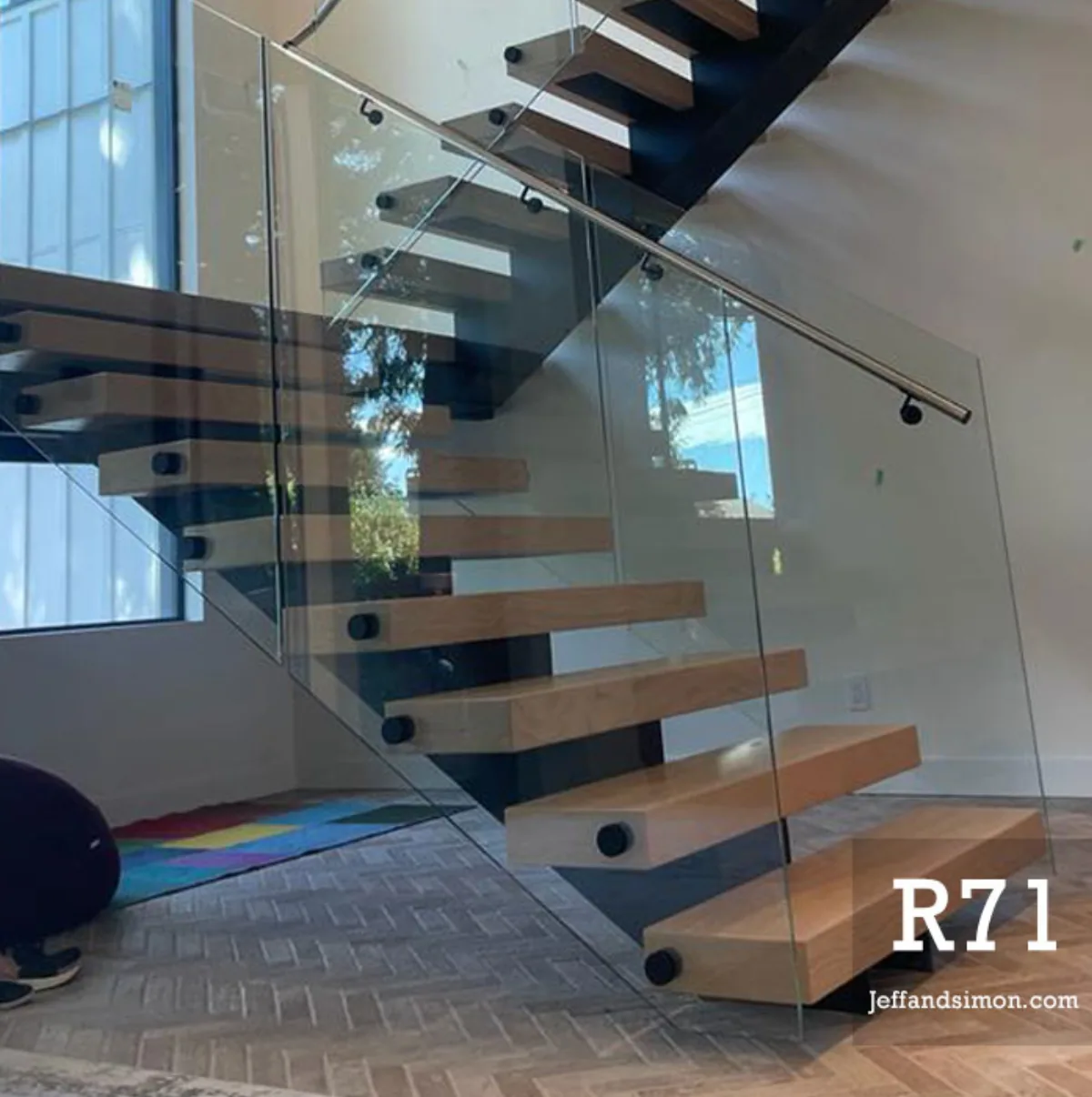
Floating Staircase
Designed for Burnaby sites, pricing, local planning notes, and finish guidance on the product page.
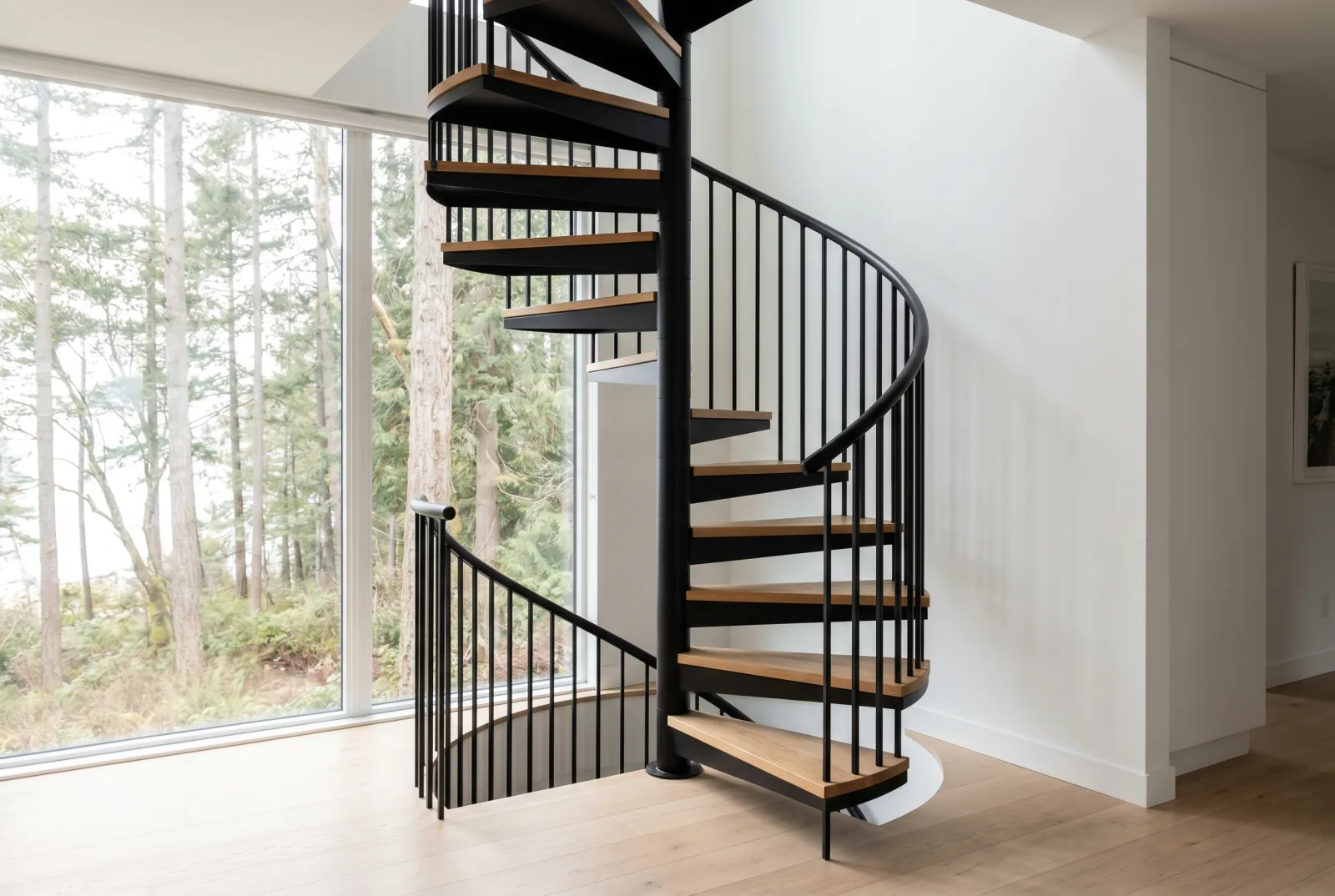
Spiral Staircase
Designed for Burnaby sites, pricing, local planning notes, and finish guidance on the product page.
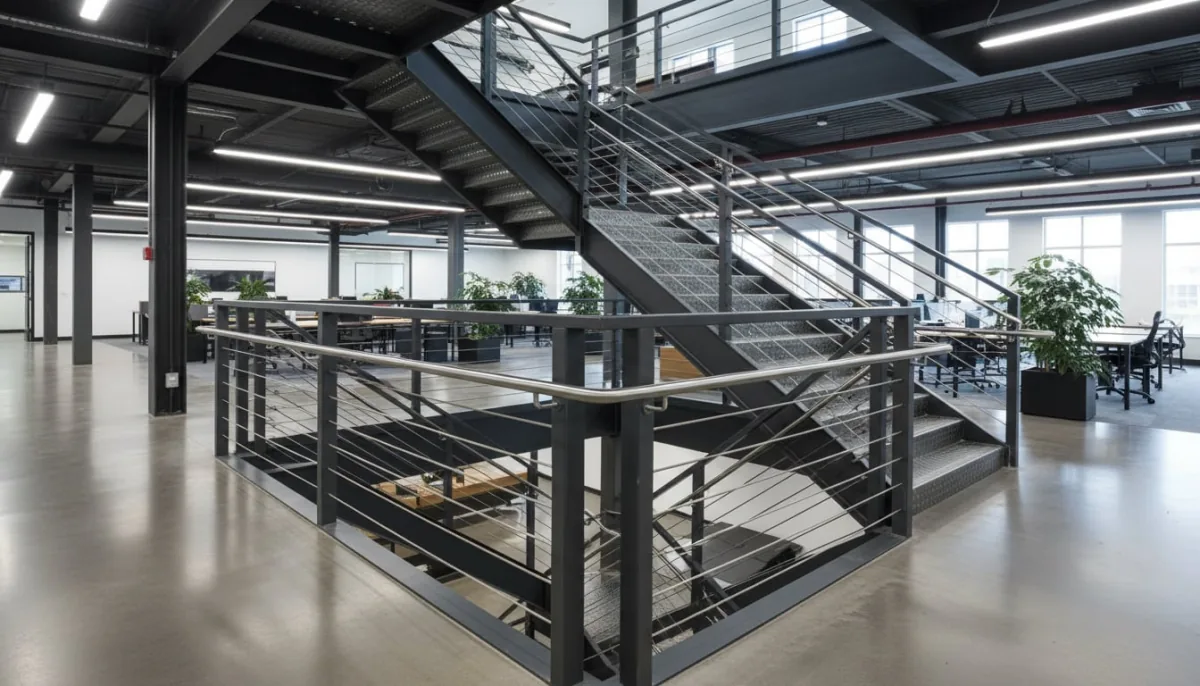
Cable Railings
Designed for Burnaby sites, pricing, local planning notes, and finish guidance on the product page.
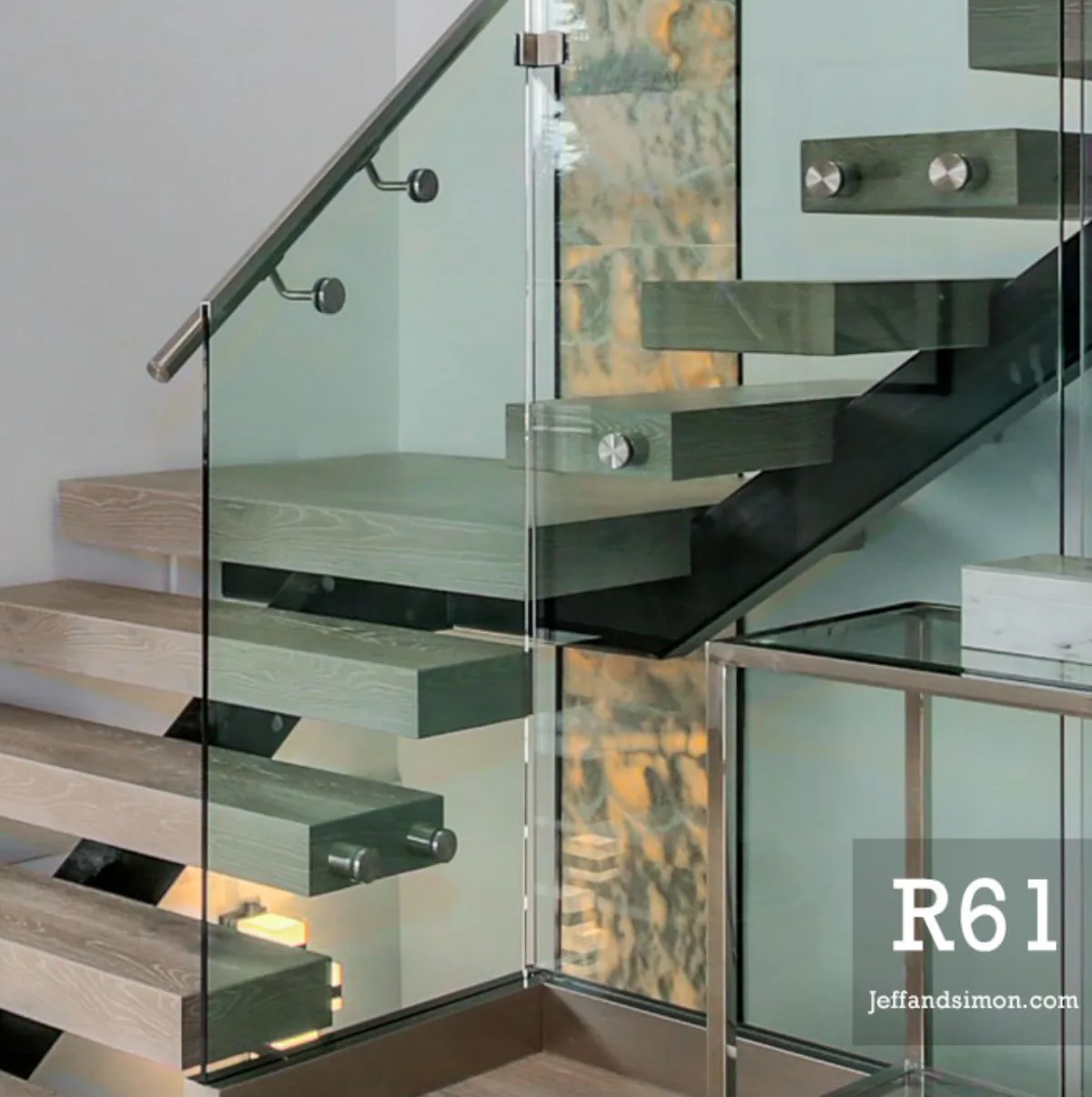
Glass Railings
Designed for Burnaby sites, pricing, local planning notes, and finish guidance on the product page.
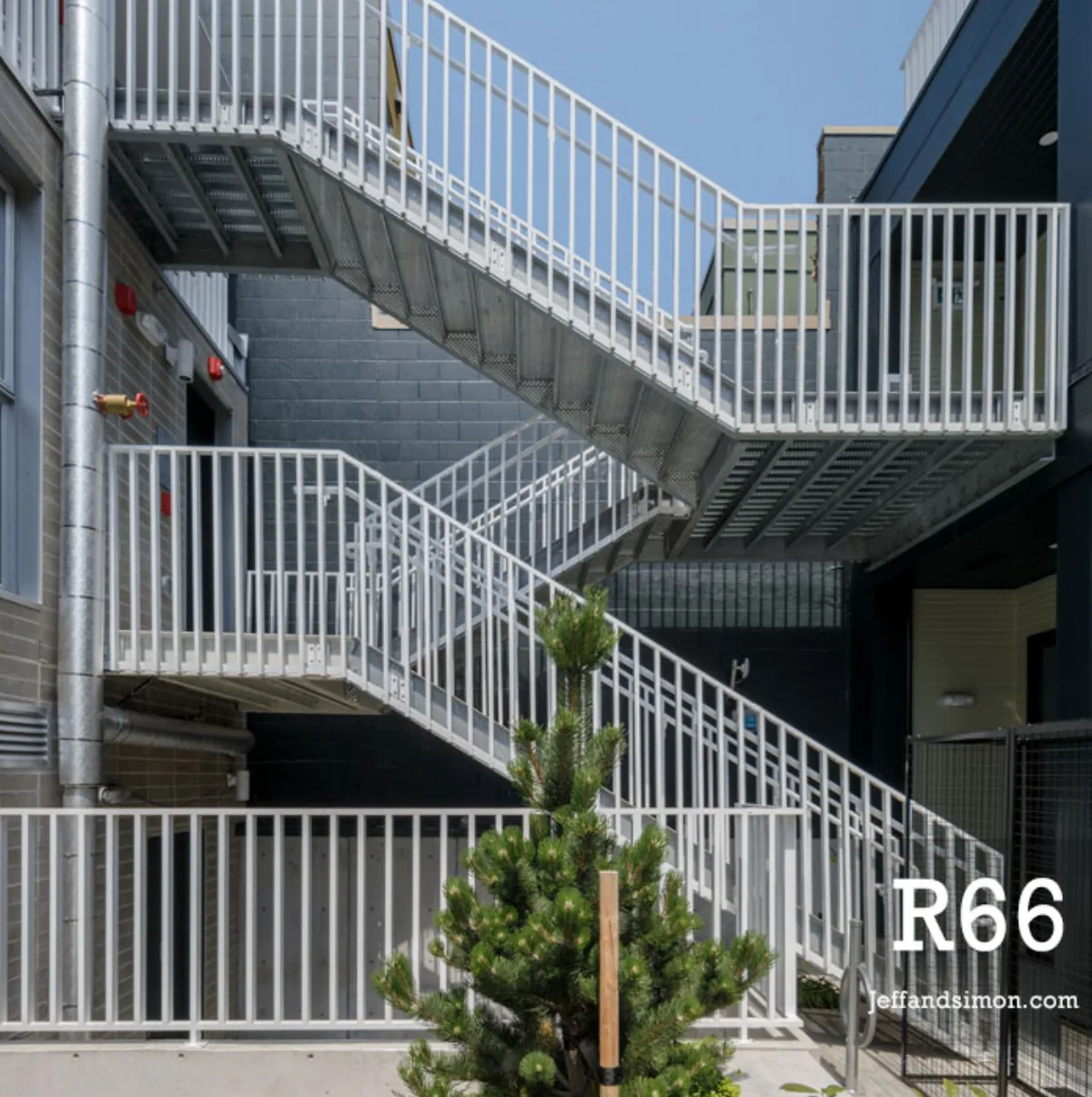
Strata Railings
Designed for Burnaby sites, pricing, local planning notes, and finish guidance on the product page.
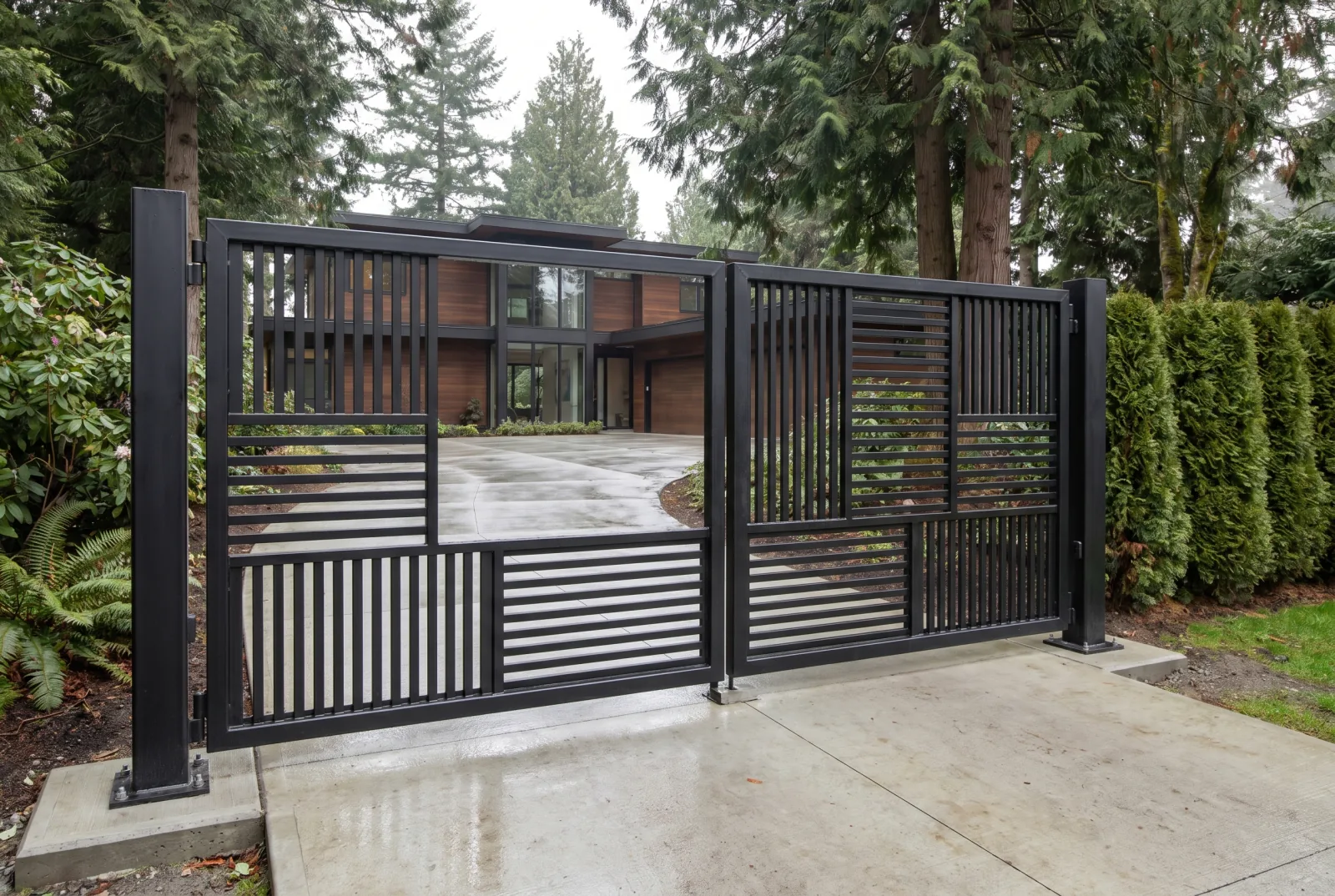
Driveway Gates
Designed for Burnaby sites, pricing, local planning notes, and finish guidance on the product page.
Burnaby project questions.
Does Vancouver Stairs fabricate stairs for Burnaby's newer high-density buildings?
Yes. Burnaby's Brentwood and Metrotown corridors produce a steady volume of strata, mixed-use, and custom residential stair projects. We handle both one-off residential installs and repeatable railing packages for multi-unit buildings, the documentation and detail requirements differ between the two.
What are the permit requirements for stair work in Burnaby?
New stairs, altered guards, and structural steel attachments generally need a building permit and sometimes an engineer's review. The City of Burnaby follows standard BC Building Code process, we coordinate shop drawings and permit submission as part of the project scope.
Can Vancouver Stairs handle strata railing replacements in Burnaby?
Yes, and it's a project type we do regularly in Metrotown and Brentwood. Strata programs require phasing, resident notice coordination, and finish consistency across buildings. We provide a detailed phasing plan and colour-matched samples so the strata council can approve the program before work begins.
Other areas we serve.
Vancouver Stairs fabricates and installs from our Burnaby shop across the Lower Mainland, North Shore, Tri-Cities, Fraser Valley, and Sea-to-Sky.
Planning guides for your project.
Plan a metal stair or railing project in Burnaby
Send drawings, photos, or a rough scope and we will help define the practical next step.