Strata Railing Replacement in Burnaby Towers
What Burnaby strata councils should know about planning and executing balcony guardrail replacement projects in high-rise and mid-rise buildings.
Burnaby strata railing replacement is a capital project that needs 18-24 months of planning, depreciation report alignment, and coordinated installation across multiple units.
Burnaby has more high-rise towers than any city in British Columbia outside Vancouver, 57 buildings taller than 100 metres, with dozens more under construction in Metrotown and Brentwood. The city also has 809 registered strata corporations, many of them mid-rise and low-rise buildings from the 1970s, 1980s, and 1990s where balcony guardrails are approaching or past their original design life.
For strata councils in these buildings, railing replacement is not a quick maintenance decision. It is a capital project that requires depreciation report alignment, engineering review, owner approval, and phased installation across multiple units.
The depreciation report drives the timeline
As of July 1, 2024, BC strata corporations can no longer defer depreciation reports. Buildings with five or more lots must obtain a new report at least once every five years. For Burnaby stratas in Metro Vancouver, the compliance deadline for buildings without current reports is July 1, 2026.
The depreciation report should already identify the guardrail lifecycle with a replacement timeline. If it does not, or if the condition assessment is out of date, the strata may need an engineering review before scoping the replacement project.
After the project is complete, the depreciation report should be updated to reflect the new guardrail lifecycle. This can reduce reserve fund contributions for that line item over the following 30+ years.
Guardrail replacement is a capital project
The distinction between maintenance and capital matters. A capital project needs planning that starts 18-24 months before the work begins, funding approval that may require an owner vote, engineering that produces sealed drawings, and project management that coordinates fabrication, installation, and access to multiple households.
For a typical Burnaby mid-rise with 50-100 units, the project involves:
- Engineering assessment of existing guardrail condition
- Drawings and specifications for replacement guardrails
- Owner vote on project scope and special levy (if contingency reserve is insufficient)
- Contractor selection and bid coordination
- Installation phased by building section or unit access
- Final engineering sign-off and depreciation report update
Skipping steps, especially the engineering assessment and sealed drawings, creates risk. Metro Vancouver strata insurance has tightened, and some underwriters now ask specifically about guardrail condition during renewal. Buildings with documented but unaddressed deterioration may face coverage conditions or premium increases.
Metrotown and Brentwood have different building profiles
Metrotown’s older towers, including buildings like Sovereign (156 m, completed 2014) and the Station Square complex (completed 2022), range from 1980s concrete construction to 2020s glass-and-steel high-rises. The guardrail condition, attachment details, and replacement approach vary significantly by building age and original design.
Brentwood’s skyline is newer. Since 2024, all six of Burnaby’s tallest buildings have been in Brentwood, including Two Gilmore Place (216 m, BC’s tallest building). These towers have modern guardrail systems that may not need replacement for decades, but the townhome strata clusters in the surrounding areas include older buildings with aging railings.
For strata councils evaluating a railing replacement, the first question is whether the existing guardrail system is standard across all units or varies by building section or elevation. Older buildings sometimes have different guardrail types on different floors, which complicates both engineering assessment and replacement coordination.
Material selection affects durability and cost
Burnaby’s climate, wet but without the direct salt exposure of waterfront cities, allows more flexibility in guardrail material selection than coastal North Shore properties.
Common options include:
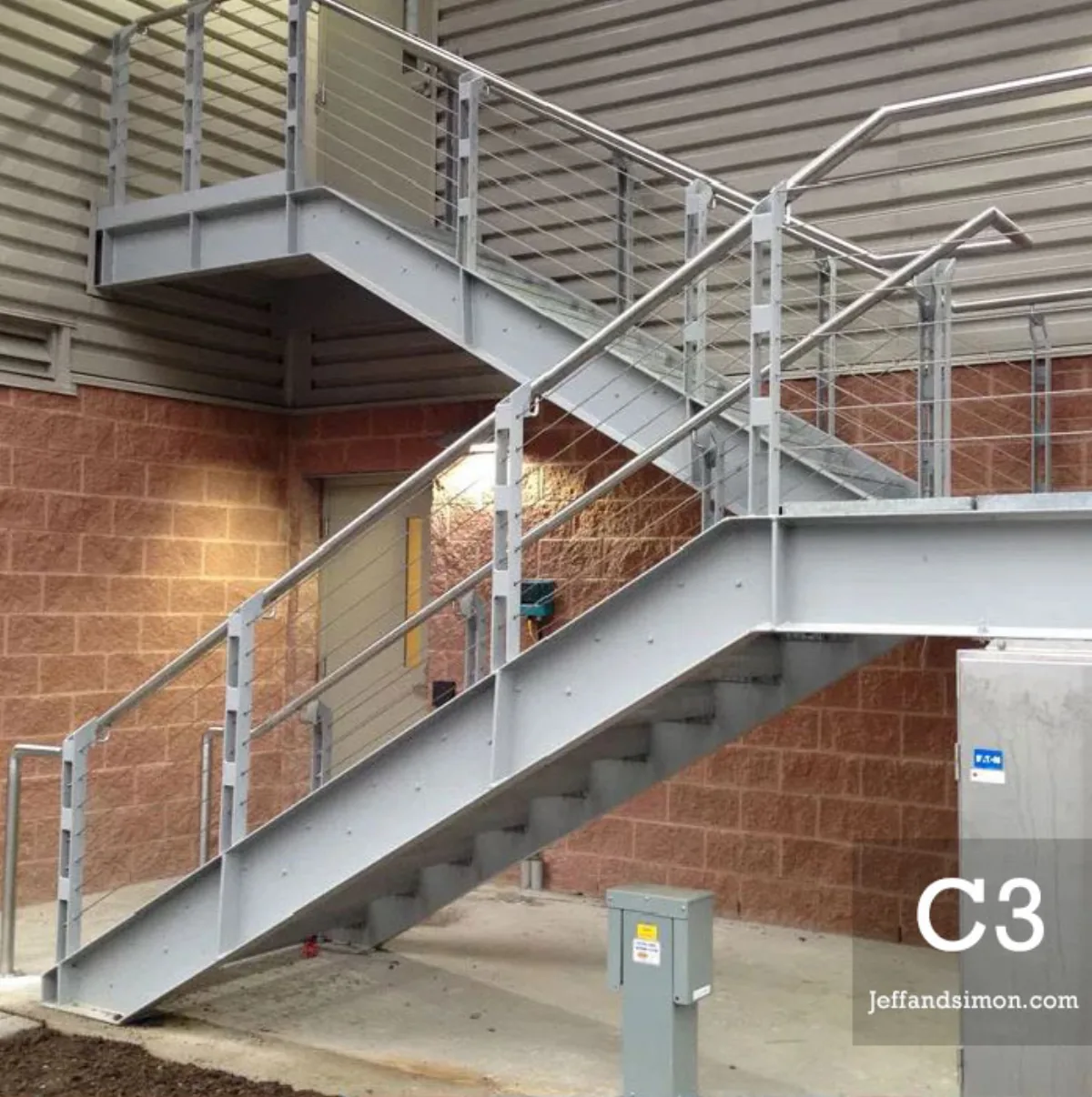
- Powder-coated steel: Cost-effective, wide colour range, reasonable durability with proper prep. Typical lifespan 15-25 years depending on exposure.
- Galvanized steel with powder coating: Better corrosion resistance under the finish. Appropriate for exposed balconies with southern or western exposure.
- Aluminum: Lighter weight, no corrosion, but less stiff than steel. Often used for glass-infill systems.
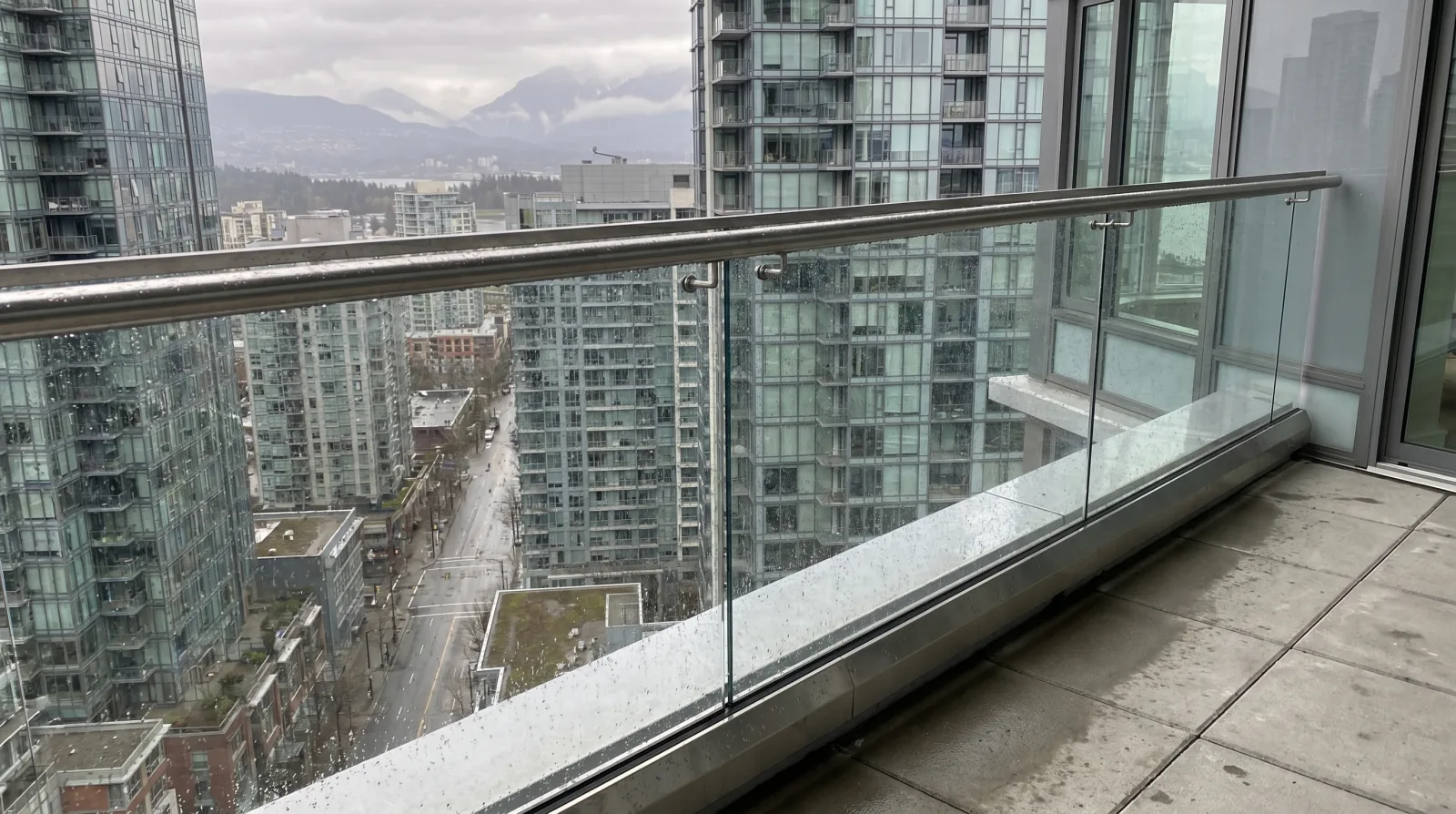
- Glass panels: Popular for view-oriented buildings. Requires base shoe or standoff hardware rated for exterior use.
The strata should specify material and finish requirements in the bid documents, not leave them to contractor discretion. Colour matching should be approved with physical samples, not digital swatches.
Resident access and noise coordination
Guardrail replacement means crews working on or near balconies across multiple units, often over several weeks. The project plan should include:
- Resident notification with dates and access requirements
- Storage or relocation of balcony items (plants, furniture, grills)
- Noise hours aligned with municipal bylaws and strata rules
- Coordination with other common-area work if scheduled concurrently
Most strata councils assign a project manager, either a council member, property manager, or external consultant, to handle resident communication and contractor coordination. The cost of clear communication is low compared to the cost of owner complaints and schedule delays.
What to expect in terms of scope
For a typical Burnaby strata railing replacement:
- Small project (8-20 units): $25,000-$75,000 depending on railing type and access
- Mid-rise (50-100 units): $150,000-$400,000 depending on complexity
- High-rise tower: $500,000+ depending on unit count and material selection
These figures cover engineering, fabrication, installation, and project management. They do not include special levy administration, contingency reserve adjustments, or depreciation report updates, which the strata should budget separately.
The most efficient projects start early, allow adequate time for engineering and owner approval, and select a fabricator with experience in strata-scale work. Rushing the process often costs more than planning it properly.
How to select a fabricator for a strata project
Strata railing replacement is not the same project type as a residential stair or a single-unit balcony railing. A fabricator with experience in strata-scale work brings different capabilities:
- Phased delivery: A strata project cannot dump 60 railing panels on site simultaneously. The fabricator needs the capacity to deliver in building-section batches coordinated with the installation crew.
- Consistent production: All 100 units need to look the same. A shop that can maintain colour consistency, dimensional accuracy, and surface finish across a 6–8 week production run is different from a shop set up for one-off residential work.
- Documentation: Strata projects require documented engineering, material certifications, and as-built drawings. The strata council needs records for the depreciation report update and future insurance audits.
- Insurance: Confirm the fabricator and installation contractor carry a minimum of $2M commercial general liability, and that they are named on the strata’s project permit if required.
Ask fabricators for references from comparable strata projects, not residential project portfolios. A fabricator who has done 10 Burnaby strata railings knows the Burnaby Building Department’s inspection requirements, can coordinate with property managers, and has solved the access scheduling problem before.
Working with the Burnaby Building Department
Burnaby administers its own building permit process separately from the City of Vancouver. For strata guardrail replacement projects, the general requirements are:
- A building permit is required for guardrail replacement on any storey above grade.
- Sealed structural drawings are required for any new guardrail system on a permitted building.
- The permit is issued to the owner (the strata corporation) or their authorized agent.
- Inspections are required at rough-in and final installation stages.
Burnaby’s Building Services department can confirm current requirements and fees. The city also publishes a bulletin on exterior guardrail replacement that addresses the most common strata project questions. The contractor should be familiar with Burnaby’s inspection process, projects in Metrotown and Brentwood high-rises have their own site-access logistics that differ from suburban mid-rises.
Frequently asked questions from strata councils
Can the strata replace guardrails without an owner vote? Under the BC Strata Property Act, a special levy for a capital repair requires a 3/4 vote of all owners if the amount exceeds a threshold set in the strata’s bylaws (often 5–10% of the annual budget). Large guardrail replacement projects frequently exceed this threshold. Confirm your strata’s bylaw requirements before proceeding.
Who owns the balcony guardrail, the owner or the strata? This depends on the strata plan. In most Burnaby towers, the balcony slab and the guardrail attached to it are common property, meaning the strata is responsible for their maintenance and replacement. Review the strata plan and the title documents with a strata lawyer if there is any ambiguity.
What if some units have different railing styles from previous individual owner installations? Non-standard railings installed by individual owners without strata approval complicate a replacement project. The strata should confirm in the owner vote resolution that all balconies will be brought to the new standard specification, and may need individual owner agreements if previous installations were permitted alterations.
Related reading: the strata railing cost guide for Vancouver and the Burnaby service area page.
Sources
Related questions
How long does a strata guardrail replacement take to plan?
Most strata guardrail replacement projects need 18-24 months of planning before the work begins. This includes depreciation report review, engineering assessment, owner voting, contractor selection, and installation scheduling.
Can individual owners opt out of strata railing replacement?
No. A properly approved guardrail replacement is a common-property maintenance project. The strata corporation has authority under the BC Strata Property Act to access and perform maintenance on common property, which includes balcony guards in most strata plans.