Floating Stairs with Cable Railing: When the Pairing Works
Why cable railing pairs cleanly with a floating stair, what the BC Code requires, and the tension and corrosion decisions that make the install last.
Cable rail recedes the same way a mono stringer does. The two read as one open frame, which is exactly the appeal.
BC Code references in this article reflect fabrication context. Code interpretation and compliance confirmation belong with the authority having jurisdiction and the project’s licensed professionals.
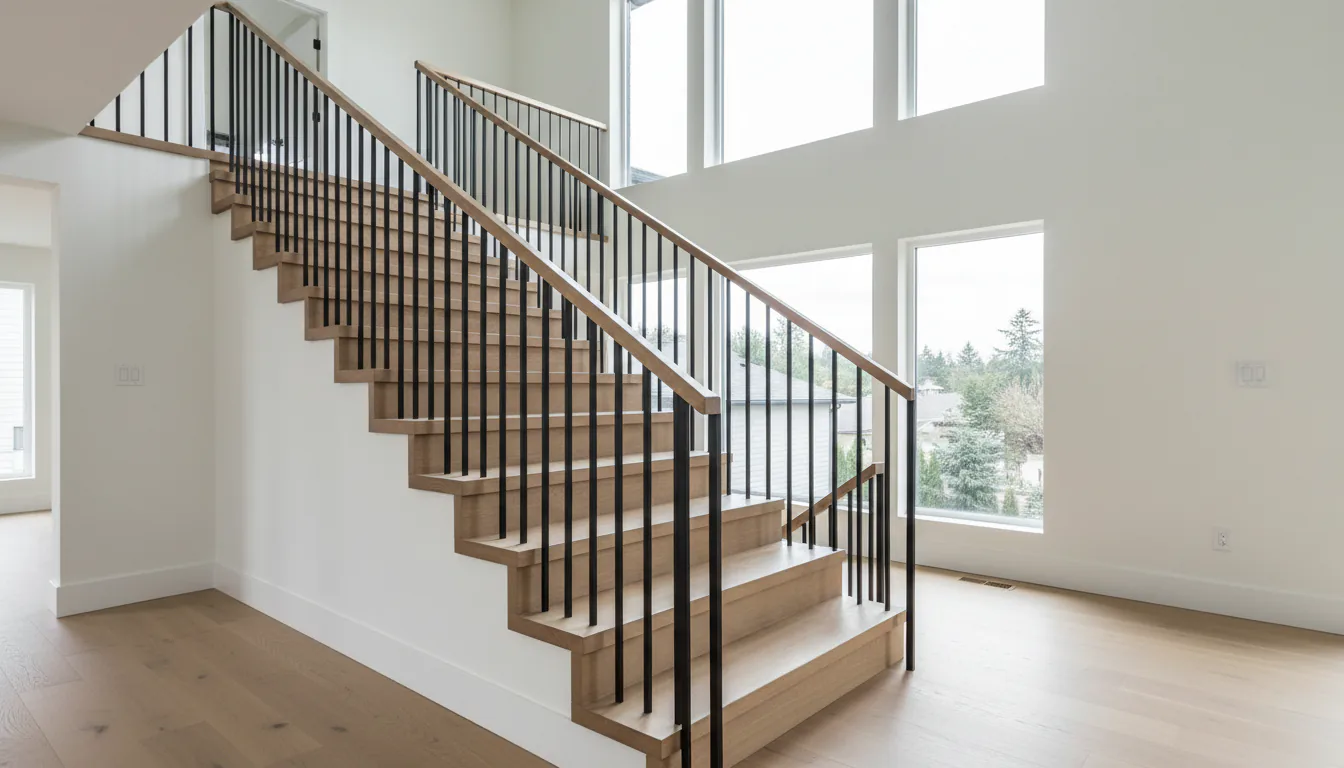
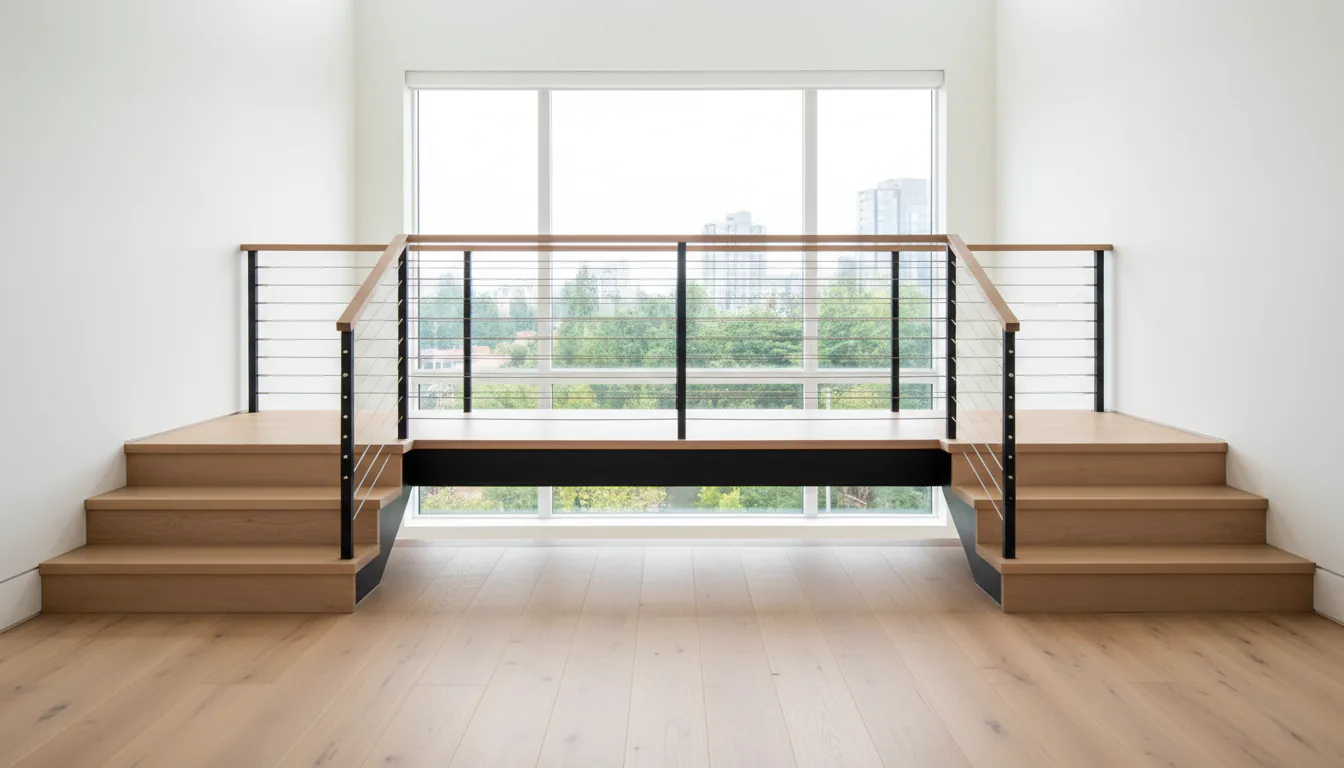
A floating stair with cable railing reads as one continuous open frame because both elements are detailed to recede. The mono stringer or hidden stringer holds the treads up without showing structure on the sides; the cable infill holds the guard requirement without showing a solid panel. The two work because they share a visual logic, and the pairing is one of the cleanest answers to the question of how to railing a floating stair.
The visual case for cable on a floating stair
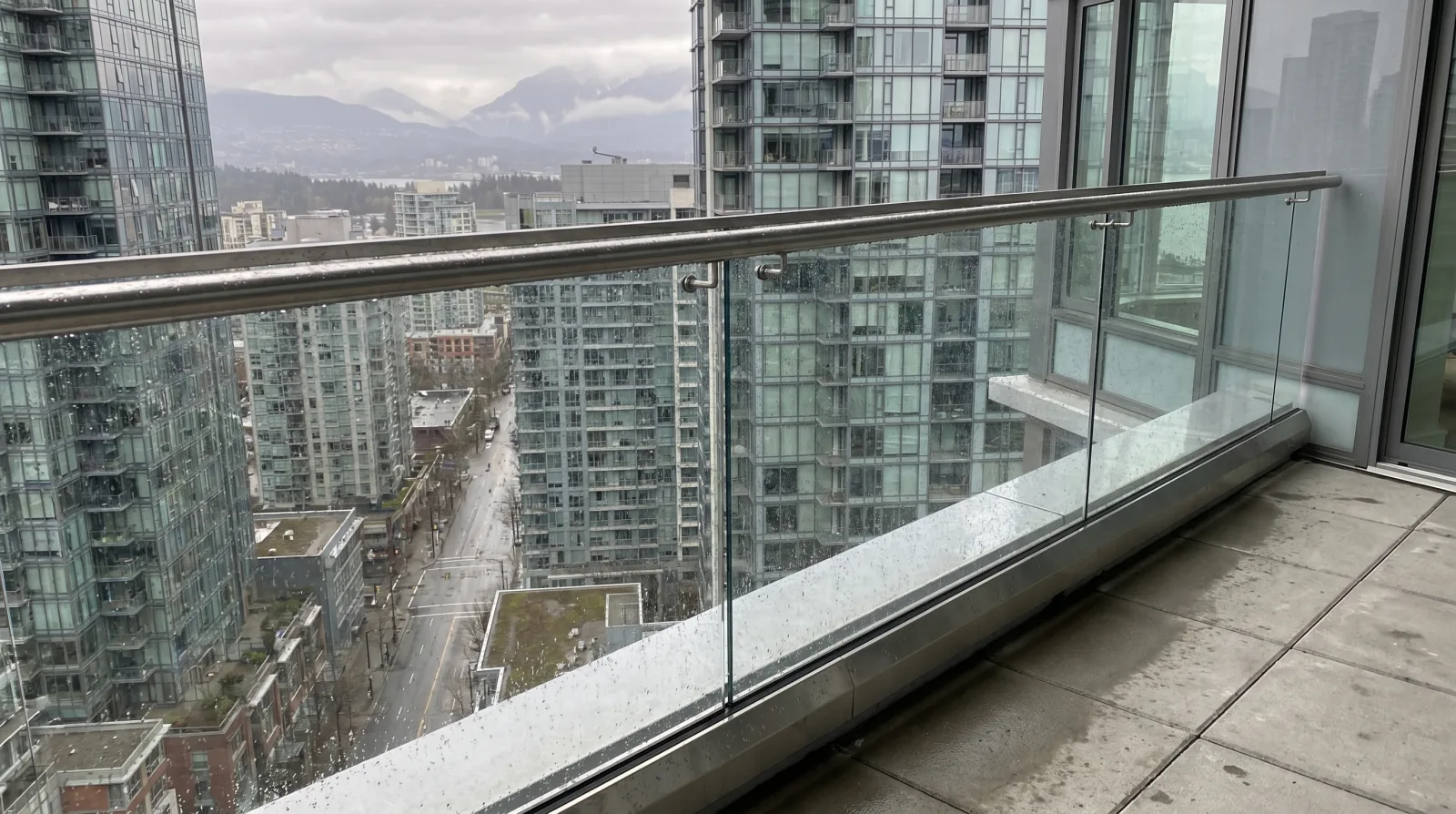
Glass infill on a floating stair makes the guard disappear; cable infill makes the guard recede in a different way. Glass leaves a visible frameless or semi-frameless plane between the user and the open side of the stair. Cable leaves a series of thin horizontal lines that read almost as a screen. On a mono stringer or hidden-stringer floating stair, cable lets the eye travel through the guard the same way it travels along the open riser, which is why the pairing photographs so consistently in modern Vancouver homes.
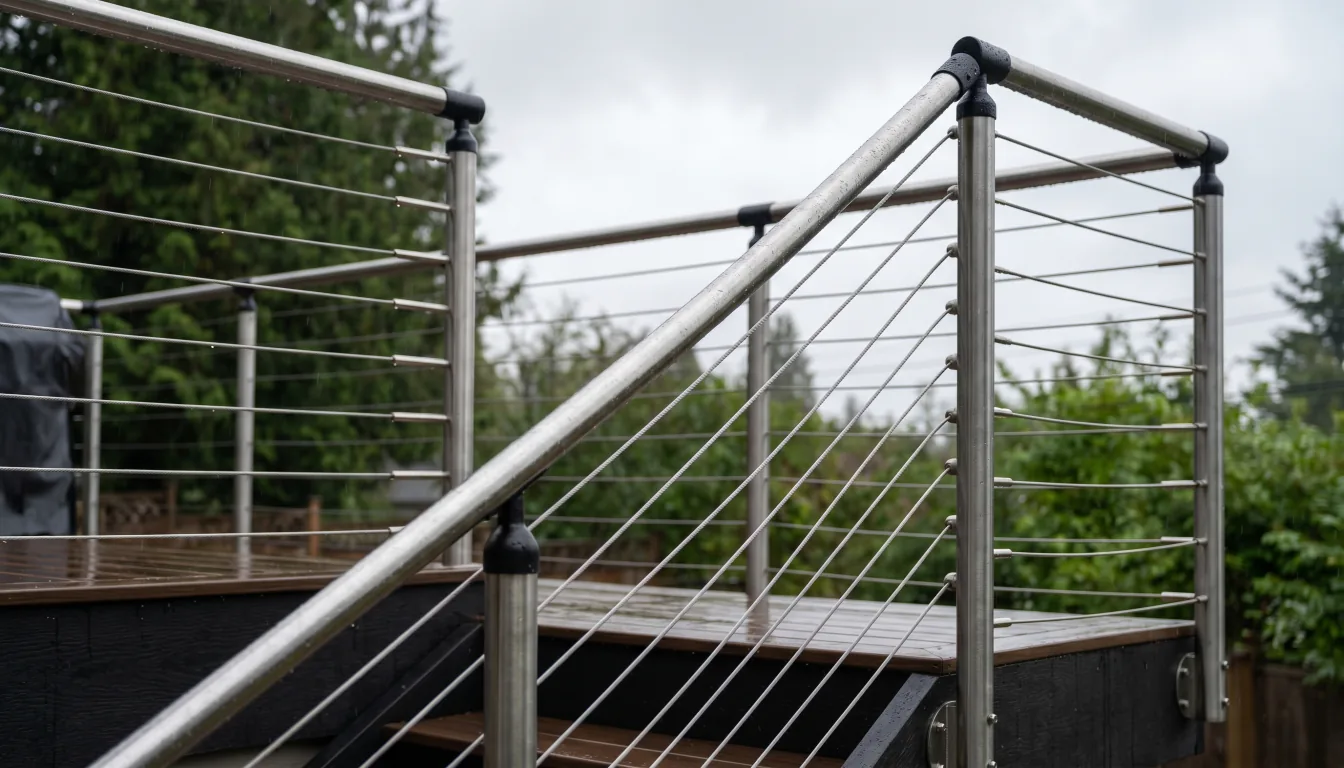
The other half of the visual case is the post-and-rail proportion. A clean cable system uses slim square or round posts at controlled spacing, with a continuous top rail that ties into the floor and ceiling structure cleanly. When the post is too heavy or the spacing too close, the screen effect is lost. When the post is too light, the cable tension pulls the post into a slight bow. The proportion is a fabrication conversation, not just a finish conversation.
Cost compares well against glass
HomeGuide’s 2026 cable railing cost data puts professionally installed stainless cable systems at $100–$160 per linear foot, with materials in the $60–$90 range and labour at $40–$70. HomeGuide’s 2026 glass railing data puts frameless and semi-frameless glass systems at $150–$600 per linear foot installed depending on hardware and panel thickness. On a typical residential floating stair run with railings on both sides, that delta adds up to several thousand dollars. Indicative only, confirm pricing with a current quote.
The cost case is not just about the running foot. Cable systems are also less sensitive to geometry, a bend in the run or a transition from stair to landing requires a corner post and a re-tension, not a custom-cut panel. On curved or unusual-geometry stairs, the cost gap between cable and glass widens because the glass has to be templated and bent or segmented while the cable just routes around the bend.
BC Code controls the openings
Section 9.8.8 of the BC Building Code 2018 controls openings in guards. Inside dwelling units, openings cannot allow a 100 mm sphere through. Outside dwelling units the same rule generally applies. For cable systems, that translates to cable spacing tight enough to prevent a 100 mm sphere from squeezing through a properly tensioned cable line, which usually means cable centres at roughly 75 to 80 mm with appropriate tension to control deflection.
Guard heights themselves are 900 mm in dwelling units and 1070 mm elsewhere, with the height measured from the leading edge of the tread on a sloped guard. Continuous handrails along the stair are required separately, the cable system handles the guard requirement, but the handrail is its own element with its own height range. This article is not a substitute for code review by the authority having jurisdiction.
The second BC Code conversation is climbability. Horizontal cable infill is climbable in theory, the same way a horizontal-rail guard would be, and some homeowners with young children prefer glass or vertical pickets for that reason. BC Code does not prohibit horizontal cable infill in dwelling units, but the household decision is real and should be made before fabrication.
Stainless 316 is the Vancouver baseline
Cable systems live and die by the stainless grade. Type 316 stainless contains molybdenum that resists chloride pitting; type 304 does not. For any exterior or near-exterior application, covered porch, exposed mudroom, lakeshore home, multi-family deck, 316 is the right call. For fully interior stairs, 304 is acceptable, but the cost delta to 316 is small and 316 buys insurance against humidity, future exterior exposure, and the slow corrosion that can develop on coastal interiors over decades.
AGS Stainless and Feeney CableRail are two of the manufacturer datasheets we cross-reference on cable railing specifications, both of which document the corrosion data behind the 316 versus 304 decision. The terminal hardware, fittings, threaded studs, tensioners, needs to match the cable grade. Mixing 316 cable with 304 hardware is the most common spec mistake and the one that surfaces years later as a stained terminal at the post connection.
Tension hardware and post anchorage are the install conversation
The mechanical end of a cable system is the tensioner. Each cable has a fitting at one end and a tensioner at the other, and the install sequence is cable-through-post, fitting-mounted, tensioner-tightened to a specified tension. The tension specification matters because under-tensioned cable sags and reads loose, and over-tensioned cable can pull intermediate posts into a slight bow. Manufacturer guidance and a torque or tension value on the install spec is what gets the assembly right.
Post anchorage is where the floating-stair detail meets the cable-rail detail. The post has to anchor into the stair structure, usually a steel base plate welded to the stringer or a through-bolted connection into a hidden steel embed, and the connection has to take the cumulative cable tension across all the lines plus the BC Code guard load. In our shop, we resolve the post anchorage in shop drawings before steel is fabricated, because adding a hidden embed after fabrication is much harder than including it from the start.
Where cable is the wrong call
Cable is not always the right answer on a floating stair. Households with young children sometimes find horizontal cable too climbable; the better answer there is frameless glass or a vertical-picket guard. Stairs where the surrounding finishes are particularly dark or busy can lose the screen effect, cable reads best against a clean, light background. Stairs in heavy salt-spray environments, open oceanfront, marina-adjacent, sometimes need a heavier finish package than even 316 cable can offer; for those, a fully encapsulated stainless system or a glass infill is more durable.
The cable conversation is also worth re-running for stairs that double as a feature visible from the ground floor. Cable disappears into the background; glass becomes a plane that reflects the room. Both can be the right answer depending on what the stair is supposed to do in the space.
What the cleanest cable-and-floating-stair projects share
The cleanest projects we see resolve four decisions before steel is fabricated: the floating stair structural type (mono stringer, hidden stringer, cantilevered), the post anchorage detail, the cable spec and tensioner type, and the household climbability decision. With those four locked, the install runs cleanly, the BC Code review goes smoothly, and the stair-and-rail combination reads as one object the way the photographs suggest.
For the structural side of that conversation, the floating stair process in Vancouver covers the sequencing. For the cable spec details, cable railing specification for Vancouver decks and stairs covers the hardware decisions in more depth.
For support strategies and cost drivers across every open-riser type, see our overview of floating staircases in Vancouver.
Sources
Related questions
How much does cable railing cost on a floating stair in Vancouver?
Professionally installed stainless cable systems sit around $100–$160 per linear foot in 2026 industry data. On a typical residential floating stair run, the cable is meaningfully cheaper than glass infill, which sits at $150–$600 per linear foot. Pricing depends on post detail, hardware spec, and stair geometry.
Does BC Code allow horizontal cable infill on a stair?
BC Building Code 9.8.8 controls openings in guards, a 100 mm sphere cannot pass through. Cable systems meet that requirement when the cables are properly tensioned and spaced. The climbability concern is the bigger conversation; some homeowners with young kids choose glass or vertical pickets instead.
Stainless 304 or stainless 316 for cable on a Vancouver stair?
Stainless 316 for any exterior or near-exterior application, covered porches, mudrooms, lakeshore homes. Stainless 304 is acceptable for fully interior runs, but the cost delta to 316 is small and 316 buys insurance against humidity and any future exterior exposure.
Why do cable railings sometimes look slack a year later?
Cables stretch under tension and the stair structure can deflect slightly under load. Properly tensioned at install with the right hardware, the system holds, but the install allowance for a one-time re-tension after the building has settled is a smart spec line.