Floating staircases in Metro Vancouver.
Mono stringer, cantilevered, and suspended floating stairs, custom fabricated and installed in Metro Vancouver by a CWB-certified shop. From $20k to $70k+.
Floating staircase is a visual category, not a structural method.
The same finished photo can hide four very different stairs. A mono stringer carries the treads from a single central steel beam. A cantilevered stair anchors each tread into the wall behind it. A hidden double stringer tucks two stringers inside the tread profile. A suspended stair hangs from the upper structure. Each one demands a different conversation with the framer, the engineer, and the budget.
In our Burnaby fabrication shop we've built all four, mono stringers in West Vancouver custom homes, cantilevered stairs in Kitsilano character home renovations, hidden double stringers where architects needed clean sightlines without structural wall work, and suspended systems in open-concept lofts on Main Street. The support strategy determines every downstream decision: how the framer preps the wall, where the engineer spends their review time, and what the install day looks like.
This hub keeps those decisions organized so a Vancouver project team can pick the right support method, plan the framing and engineering early, and finish the stair without rework.
Want a single-product deep dive on the most common option? Read the Mono Stringer Stairs guide.
In this hub
See also: Floating Stair Fabrication guide, Metal Stair Fabrication hub.
Floating staircases we have built.
A cross-section of mono stringer and floating stair projects fabricated and installed across Metro Vancouver.
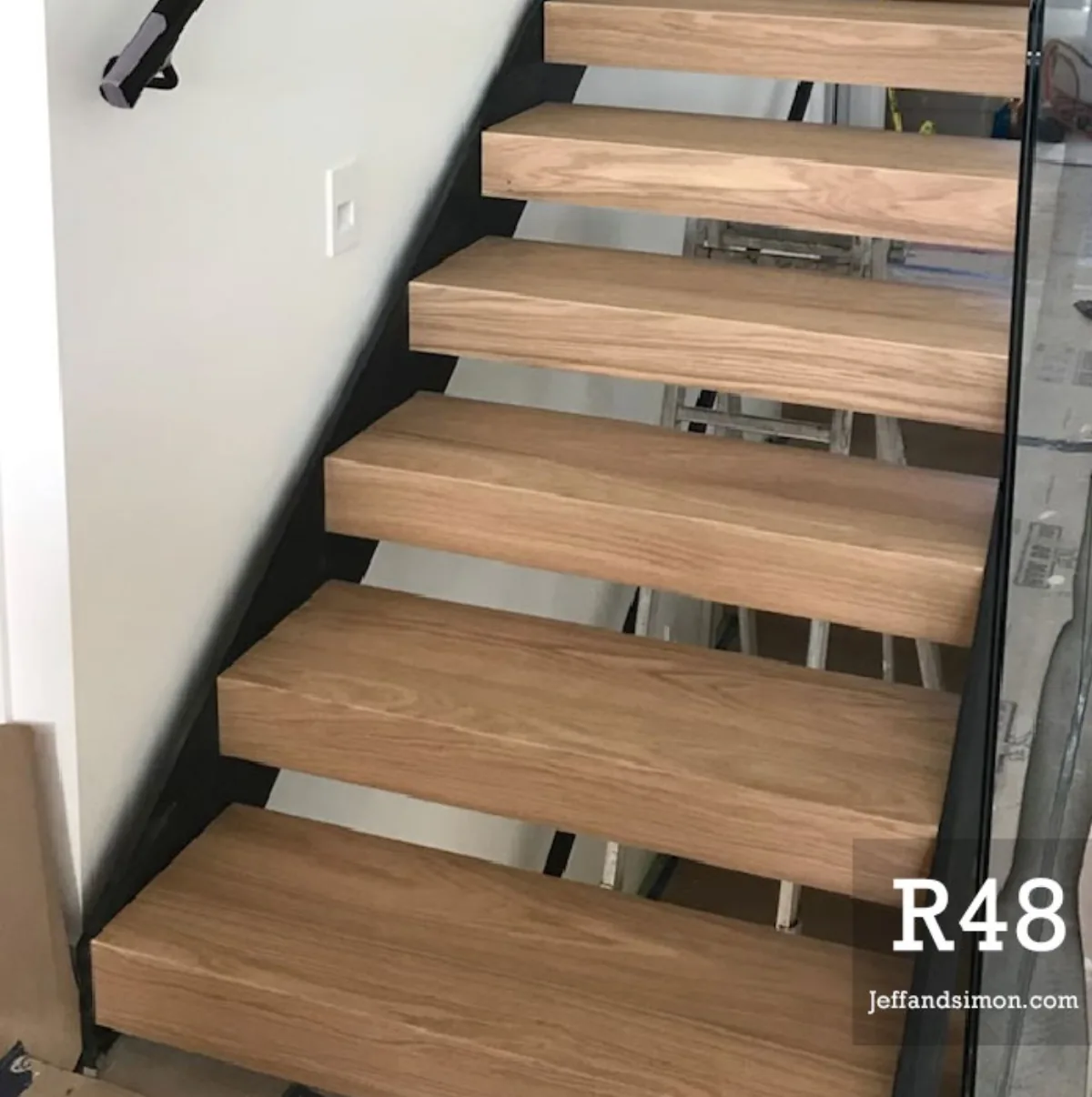
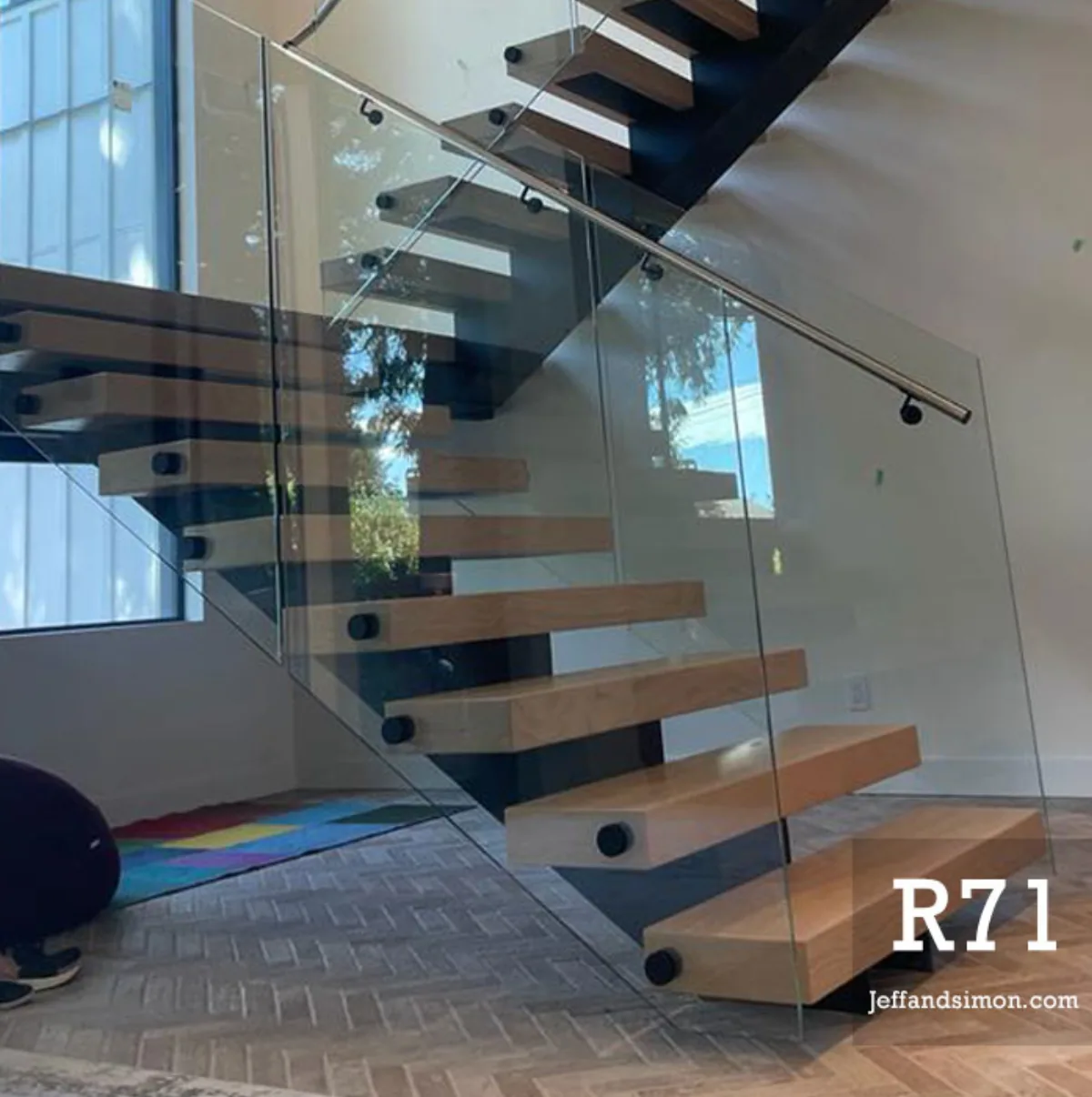
Oak treads, glass guard, black powder-coat stringer.
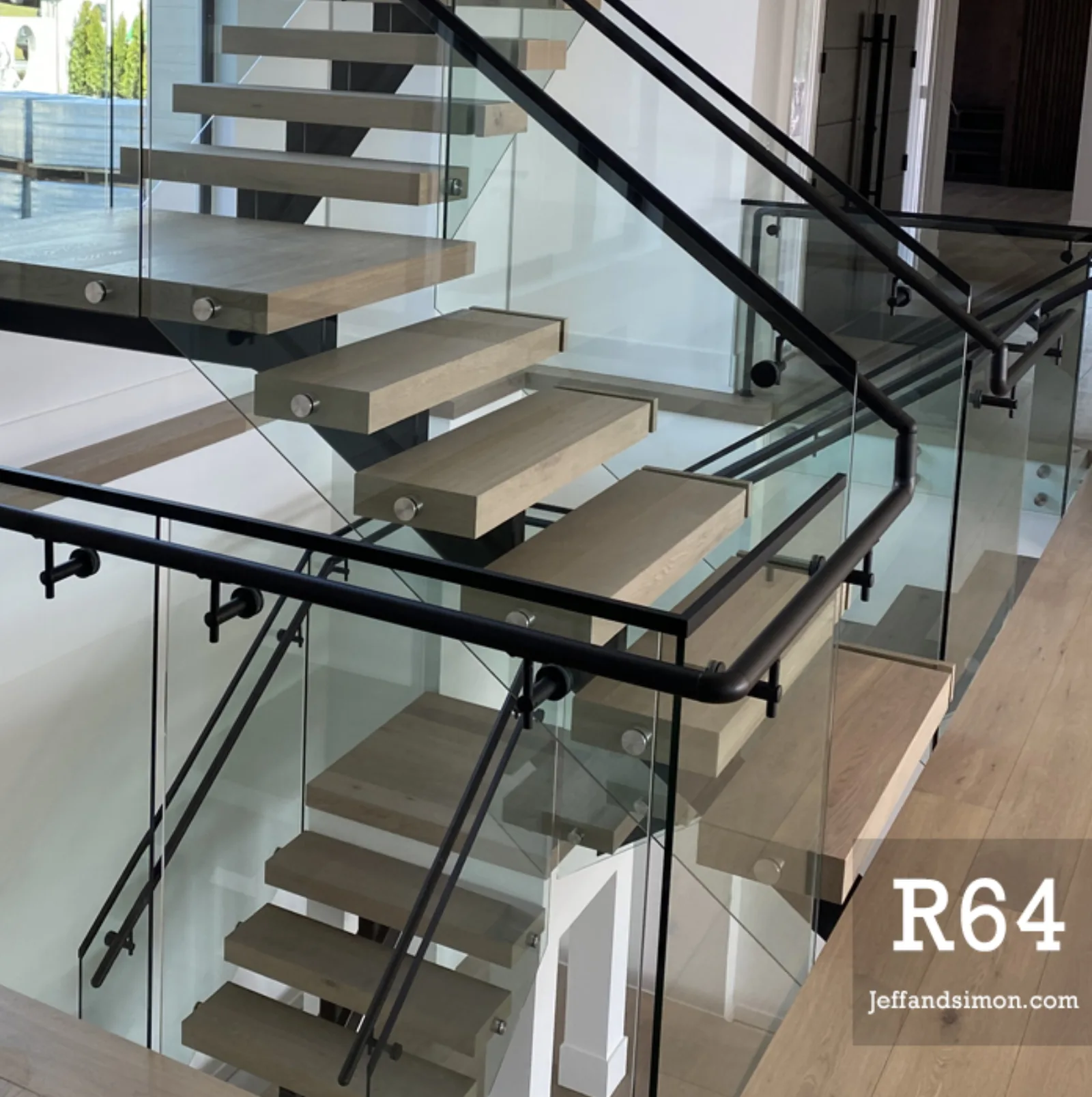
Frameless glass, black continuous handrail.
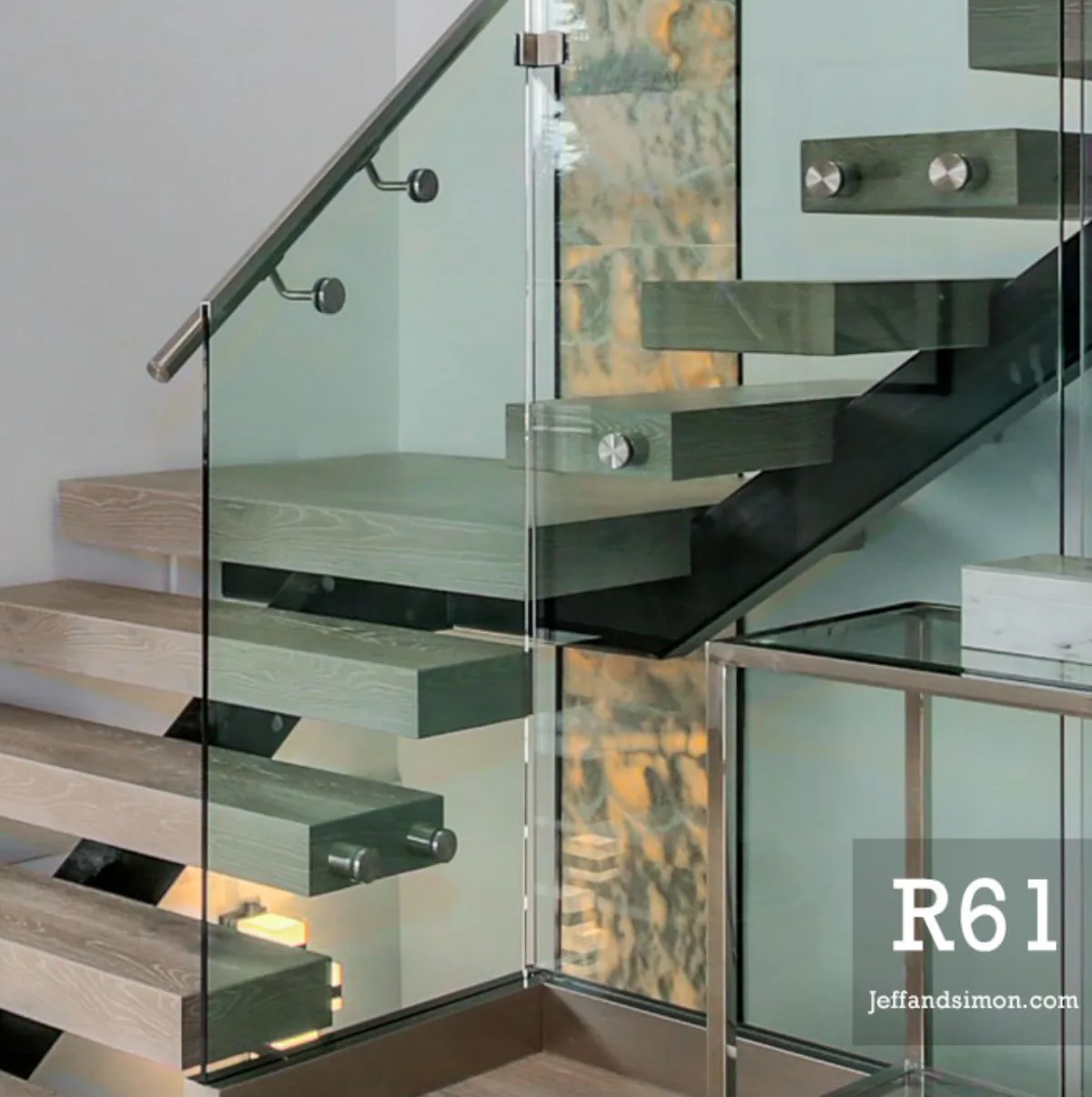
Glass railing with stainless standoffs, open-riser treads.
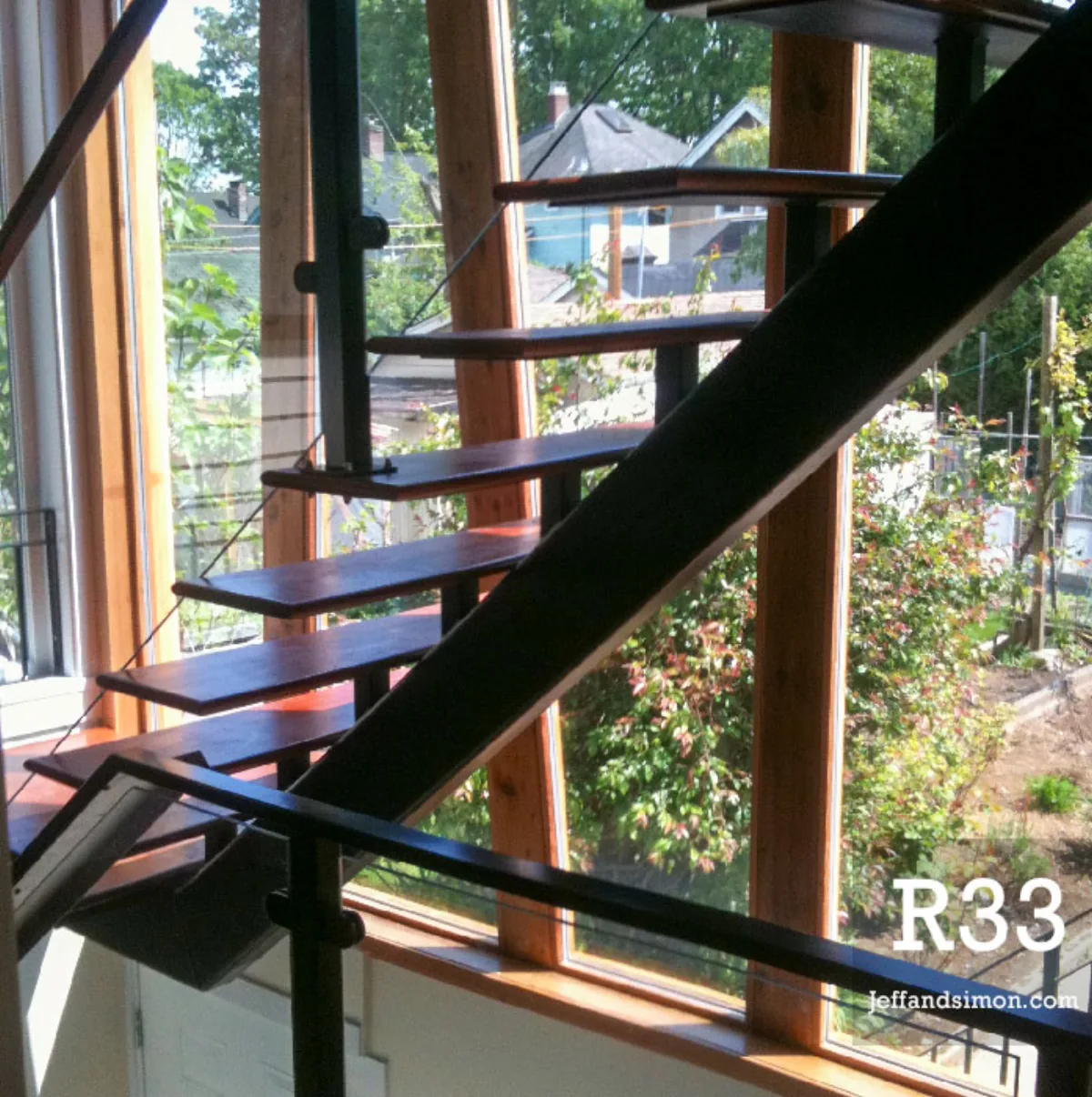
Cable guard, wood treads, natural light focus.
Frameless glass panels, clean sightlines from both sides.
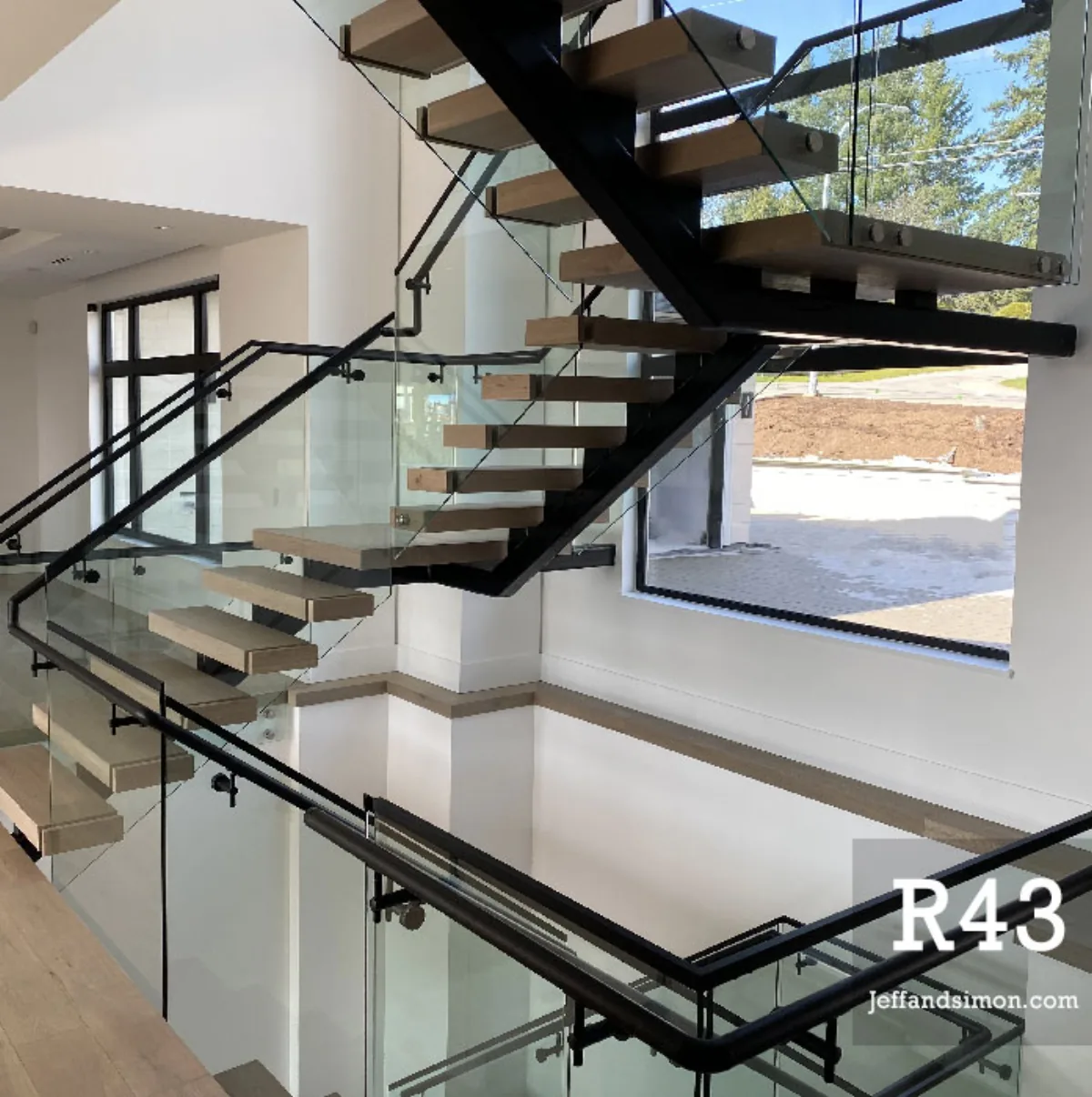
L-shape with landing, oak treads, glass guard.
Four ways a floating stair stays up.
The aesthetics follow the structure, not the other way around. Choose the method before drywall.
Mono stringer
A single central steel beam carries the treads from beneath. Treads cantilever equally on both sides. Visible spine, open risers. Most predictable to price and coordinate.
Cantilevered
Treads anchored into the wall through hidden steel back-plates or stud-packs. No visible stringer at all. The wall must be engineered before drywall.
Hidden double stringer
Two stringers tucked inside the tread thickness. Reads as floating without committing to an engineered cantilever. Honest middle ground.
Suspended
Treads hang from steel cables or rods anchored to a structural beam, ridge, or concrete deck above. Beautiful in the right space, expensive when the upper structure was not planned for it.
What this hub answers.
A floating stair is delivered into a building that is mostly finished. The decisions that matter happen long before install day.
Support Strategies Compared
Mono stringer vs cantilevered vs hidden double stringer vs suspended, what each method demands of the building.
Cantilevered vs Mono Stringer
A direct comparison of the two most common floating stair methods, what changes for the wall, the engineer, and the budget.
BC Code: Open Risers & Guards
What the BCBC and the VBBL say about open risers, guard sphere-passage, and handrail continuity. Confirm the current edition with your AHJ.
Tread Materials & Finishes
Wood, steel, stone, glass, microcement, how each tread choice changes the bracket detail and the finished feel.
Structural Prep Checklist
Anchor locations, embeds, opening tolerances, inspection windows, the conversation we have before fabrication starts.
Cost Drivers
What actually moves the price on a floating stair, support strategy, tread material, railing, finish, and access. Every project quoted after a site review.
Related reading from the Trends journal.
Vancouver-specific floating stair posts that pair with this hub:
Related products and city pages.
What does a floating staircase cost?
Every project is quoted after a site measure. These ranges reflect recent Metro Vancouver residential projects with standard permit scope.
Mono stringer, straight run
$22k – $38k
10–13 risers. Powder-coat steel stringer. Wood or steel treads. Cable or glass guard. Standard permit scope.
Mono stringer, L-shape with landing
$32k – $48k
Direction change at a mid-landing. Two stringer segments, one landing plate. Engineer coordination required.
Cantilevered, wall-anchored
$38k – $58k
No visible stringer. Treads anchor into a structural wall. LVL or steel armature inside the wall. Framing coordination required before drywall.
Architectural feature stair
$50k – $70k+
Glass guards. Custom tread inlays (stone, walnut, microcement). LED integration. Complex geometry. Structural engineer of record required.
Pricing is CAD, fully installed, and includes shop drawings and standard Metro Vancouver permit coordination. Heritage buildings, tight urban sites, and complex wall framing carry additional coordination costs. See the cost drivers guide for a full breakdown.
What Vancouver floating stair projects actually cost, and why.
These patterns come from quoting and building floating stairs across Metro Vancouver. Every project is different; these are the variables we see move the price most often.
Wall framing surprises
The most common cost escalation on cantilevered stairs is a wall that can't accept structural embeds without a redesign. On a Kitsilano character home renovation, the architect's elevation showed a clean wall run, but once the framer opened it up, the existing fire-blocking pattern conflicted with four embed locations. We rescheduled the fabrication start and added three weeks to the overall timeline. Build the structural survey into the project schedule before committing to cantilevered.
Tread material drives bracket design
On a West Vancouver custom home with 75mm white oak treads, we designed the bracket to sit flush inside the tread profile, no exposed steel at the edge. The same bracket on a 38mm steel tread would have read visibly. Tread thickness is not a finish decision; it changes the whole bracket package. Lock in the tread material before shop drawings go to the engineer.
Permit timeline varies by municipality
A floating stair in the City of Vancouver typically requires a Schedule B engineer's letter and a permit application. In Burnaby and North Vancouver, the same stair sometimes clears with a simplified structural review if the stringer connection is into a concrete slab. The difference can be 3 weeks vs 8 weeks on the permit path. We flag the likely review track at the quote stage so the client can align their construction schedule.
BC Building Code: what matters for floating stairs.
Floating stairs are code-compliant in BC when the structural design, open-riser provisions, guard system, and handrail configuration meet the applicable edition of the BC Building Code (BCBC) and the local building by-law. Key thresholds for residential occupancies:
- Guard height: Minimum 910mm in residential occupancies (BCBC 9.8.8.3). Commercial and institutional occupancies require 1,070mm.
- Open risers: Opening size is limited so a 100mm sphere cannot pass through the open riser (BCBC 9.8.4). This is the main constraint on tread-to-tread spacing for open-riser designs.
- Tread depth: Minimum 235mm run, measured horizontally (BCBC 9.8.4.1 for Part 9 buildings).
- Maximum rise: 200mm per riser for Part 9 residential occupancies.
- Handrail continuity: Handrails must be continuous the full length of the flight. Floating stairs with a glass guard panel system still need a graspable rail.
- Schedule B engineering: Required in most Metro Vancouver municipalities for floating stairs where the stringer or treads connect into the building structure. Confirm with the AHJ before fabrication.
Code requirements change with each BCBC edition and vary by municipality. Confirm specific requirements with your local authority having jurisdiction (AHJ) before locking in the design. The full guide is at BC Code: Open Risers & Guards.
What makes a floating stair project work in Metro Vancouver.
Most floating stair problems are a coordination problem, the stair arrives on site and the building isn't ready for it. The framing wasn't engineered for cantilevered loads. The slab wasn't thickened for the base plate. The landing height changed after shop drawings were approved.
The conversations that prevent those problems happen before fabrication starts: structural system confirmed with the engineer, framing trades briefed on embed requirements, finish and tread material locked so bracket details are finalized before steel is cut.
Vancouver Stairs is CWB-certified to CSA W47.1 (Canadian Welding Bureau) and has fabricated floating and mono stringer stairs across Metro Vancouver, including projects in Vancouver, Burnaby, North Vancouver, West Vancouver, and the North Shore.
Common questions before quoting.
What is a floating staircase?
A floating staircase is any open-riser stair where the treads appear to hang in space without obvious support. It is a visual category, not a structural method. Floating stairs use four common support strategies: a mono stringer (single central beam), a cantilevered system (treads anchored into the wall), a hidden double stringer, or cable-and-rod suspension from the upper structure.
How much does a floating staircase cost in Vancouver?
A floating staircase in Metro Vancouver typically costs $20,000–$70,000 installed. A mono stringer straight-run (10–13 risers, powder-coat steel, wood treads) runs $22,000–$38,000. An L-shape mono stringer with landing runs $32,000–$48,000. A cantilevered wall-anchored stair starts at $38,000 and rises with engineering complexity. An architectural feature stair with glass guards and custom tread inlays runs $50,000–$70,000+. Every project is quoted after a site measure, dimensions, wall framing, tread material, railing type, and finish system all move the number.
Are floating stairs allowed in BC?
Floating stairs are permitted under the BC Building Code and the Vancouver Building By-law when the structural design, the open-riser provisions, the guard system, and the handrail meet the applicable code edition. For residential open risers, the BCBC limits opening size so a 100mm sphere cannot pass through (Section 9.8.8). Guards must be at least 910mm high in residential occupancies. Confirm current requirements with your local authority having jurisdiction (AHJ) before fabrication.
Which floating stair option is most cost predictable?
A mono stringer floating stair is usually the most predictable to price. The single central beam, the brackets, and the connection details all live inside the stair package and can be reviewed by the engineer from a single section drawing. Cantilevered stairs unlock additional coordination with the framing trade, the wall armature has to be engineered before drywall, which means the stair is being quoted while the rest of the house is still being framed.
Do floating stairs need an engineer in Vancouver?
Most custom floating stair projects require sealed engineering for the tread connections, the central beam or wall embeds, and the anchor points. Cantilevered and suspended stairs almost always need a structural engineer of record. A Schedule B engineer's letter is required under the BC Building Code for any stair where the connection anchors into the building structure. We coordinate with the project engineer or define the information an engineer needs to review the stair scope.
Can a floating staircase be retrofitted into an existing Vancouver home?
Yes, but the retrofit scope depends on the support method. A mono stringer requires a properly detailed base plate into the slab or a thickened slab pour, and a connection at the upper landing. A cantilevered stair requires opening the wall to install an LVL or steel armature, then re-drywalling. The wall framing determines feasibility before anything else. A site measure and an engineer's preliminary review are usually worth doing before committing to a support strategy in a retrofit.
How long does a floating staircase project take from quote to installation in Metro Vancouver?
Most residential floating staircases take 8–12 weeks from a confirmed order to installation. The breakdown is typically: site measure and shop drawing preparation (1–2 weeks), engineer review and permit submission (2–6 weeks, varies by municipality and occupancy), shop fabrication (3–5 weeks), finishing (1–2 weeks), and installation (1–2 days for a single residential flight). Starting the permit process early compresses the overall schedule. Cantilevered stairs with wall framing modifications require the framing trade to complete their work before installation day.
What is the difference between a floating stair and a mono stringer stair?
A mono stringer is one specific support method, a single central steel beam carrying the treads. Floating stair is the broader visual category that can use a mono stringer, a cantilevered system, a hidden double stringer, or a suspended system. Most floating stairs in Vancouver custom homes are mono stringers. The terms overlap frequently but are not interchangeable: a cantilevered stair with no visible spine is floating but is not a mono stringer.
Other staircase fabrication resources.
Steel Staircases
Residential, artistic, and feature steel stairs, straight-run replacements to sculptural mono stringers.
Metal Stair Fabrication
The full fabrication workflow, shop drawings, CWB welding, finish systems, and cost guide.
Commercial Stairs
BC code egress, pan-formed treads, galvanized finishes, and TI coordination for commercial projects.
Plan a floating staircase with the right support strategy.
Send drawings, photos, or a rough scope and we will help define the practical next step.