Floating Staircase Cost Vancouver 2026: $16K–$70K+, What Drives the Price
Floating staircase cost in Vancouver: $16K–$28K mono stringer, $30K–$60K glass railing, $60K+ cantilevered. Real price ranges from a CWB-certified shop.
Four things move the price of a floating staircase in Vancouver, the support structure, tread material, railing type, and condition of the opening. Here's how each one shifts the number.
A floating staircase in Vancouver costs $16,000–$28,000 for a straight mono stringer run, $30,000–$60,000 with glass railings or curved geometry, and $60,000–$80,000+ for true cantilevered work in custom homes. At Vancouver Stairs, we quote floating stairs across Metro Vancouver every week, these ranges reflect 2026 project data from our Burnaby shop, not list prices. Four things move the number, the support structure, the tread, the railing, and the condition of the opening, and a small geometry change can bump a project into the next bracket.
What is a floating staircase, and what support structures are available?
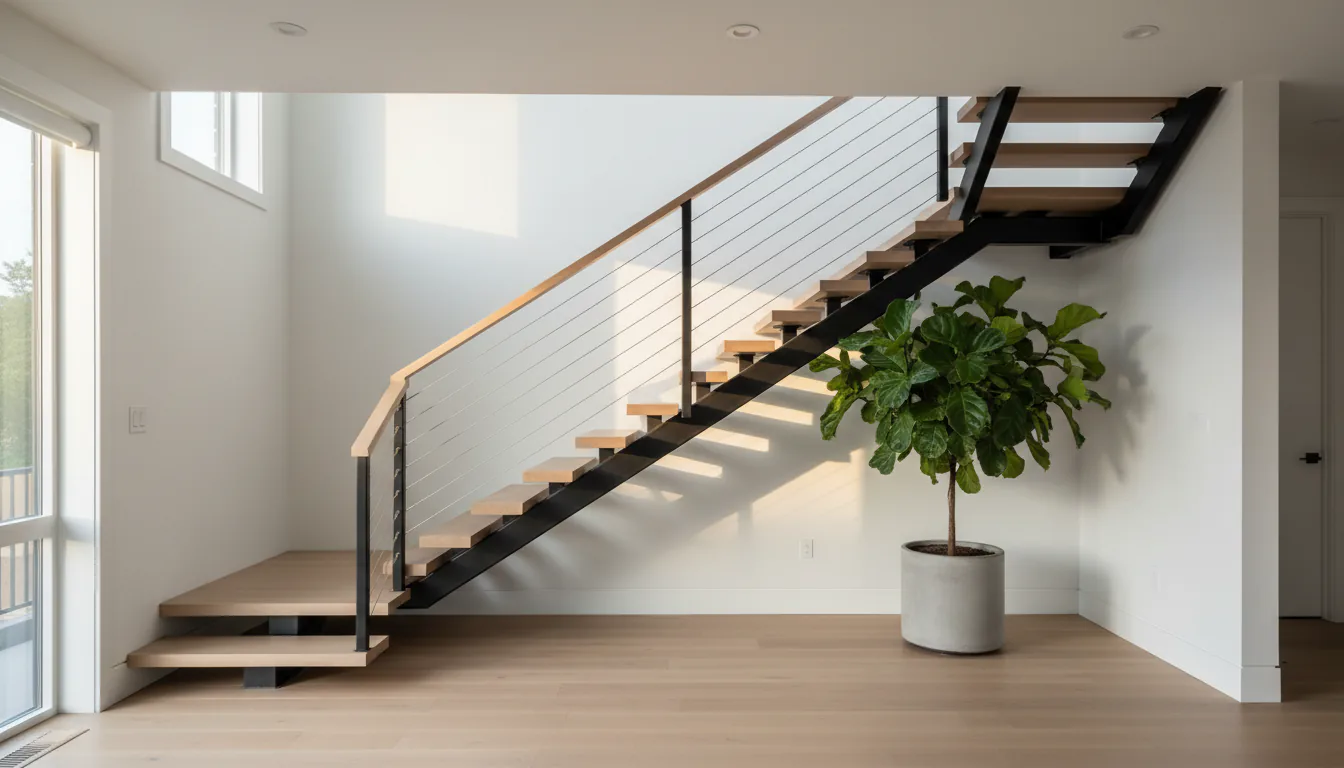
“Floating stair” is a visual category, not a structural one. The treads have no risers and no visible side stringers. What actually carries them varies. It might be a single central beam (mono stringer), two beams hidden inside the treads (hidden double stringer), wall-anchored cantilever brackets, or some combination. Each path has its own fabrication cost and its own engineering story.
Pricing gets clearer the moment you name the support. A hidden-stringer floating stair with steel-pan-and-wood treads sits at the low end of the band. A true cantilevered stair, where treads extend from a hidden beam or from the wall framing itself, sits at the top, because it usually needs a P.Eng-stamped design and reinforced framing that the hidden-stringer version does not.
What does a floating staircase cost in Vancouver in 2026?
For a straight-run residential floating stair fabricated and installed in the Lower Mainland, here are the bands we see most often. $16,000 to $28,000 covers a steel-and-wood-tread floating stair with steel guards. $30,000 to $60,000-plus covers a statement stair with curved geometry, glass railings, or premium tread material. Past $60,000 is cantilever-heavy luxury work in custom homes. Industry breakdowns of floating stair pricing in 2026 from Senmit and Elevated Stairs show similar tiering across North America once you account for Canadian dollars and local labour. Indicative only. Confirm pricing with a current quote.
These numbers cover fabrication, finish, delivery, and a typical residential install. They do not cover permits, structural engineering on the surrounding framing, or any GC scope outside the metalwork itself.
Which support structure (mono stringer, hidden double stringer, or cantilever) costs the most?
Mono stringer versus hidden double stringer is usually the biggest fabrication-side line item. With a mono stringer, every tread connection lives on one beam, so the beam itself, the brackets, and the tread-to-beam joint have to be detailed and engineered together. A hidden double stringer spreads the load across two beams and the connection gets simpler. In our shop, mono stringer projects run a premium over an equivalent hidden-stringer build for that reason. The steel package is not really bigger. The engineering and the welding are tighter.
True cantilevered stairs add another premium on top of that. Cantilevers push the tread load into a hidden beam or straight into the wall framing, and almost every BC project we see goes through a P.Eng review for guard load, tread deflection, and the framing connection. That review, plus the extra steel embeds and the reinforced framing, costs real money before the first tread shows up.
Mono stringer vs cantilevered floating stair, where the cost difference is
Both look like floating stairs. The cost gap comes from what actually carries the treads. A mono stringer puts a single central beam under every step. The beam is visible in profile (one spine, treads projecting symmetrically on each side), and the engineering is concentrated in that beam and its two anchor points. In most Metro Vancouver projects, a straight mono stringer floating stair lands in the $16,000–$45,000 range depending on finish and railing.
A cantilevered floating stair hides or eliminates the stringer entirely. Treads anchor into a hidden beam embedded in the wall, or into individual steel brackets bolted through the framing. The look from the side is cleaner because there is no stringer at all. The engineering is more complex because each tread bracket carries its load independently, and the wall or beam behind it has to be designed for that load. Almost every cantilevered floating stair in BC goes through a P.Eng review. Projects at the true cantilever end typically run $45,000–$80,000 or above for a standard residential flight once engineering, framing reinforcement, and installation are accounted for.
The hidden double stringer sits between the two: two beams tucked inside the tread depth, no central spine visible, but the structure is simpler than a full cantilever. Pricing usually falls in the $22,000–$50,000 range for a straight residential run, depending on glass vs cable and tread spec.
How do tread material and railing type affect floating staircase cost?
Tread material can move a floating stair budget by thousands of dollars. White oak is the common high-end residential tread today. Walnut and quartersawn options sit a notch above. Full steel-pan treads with concrete fill, or steel-and-stone combinations, sit at the top. Tread thickness and overhang also change the bracket detail you see from the side, which feeds back into how the beam and brackets get proportioned.
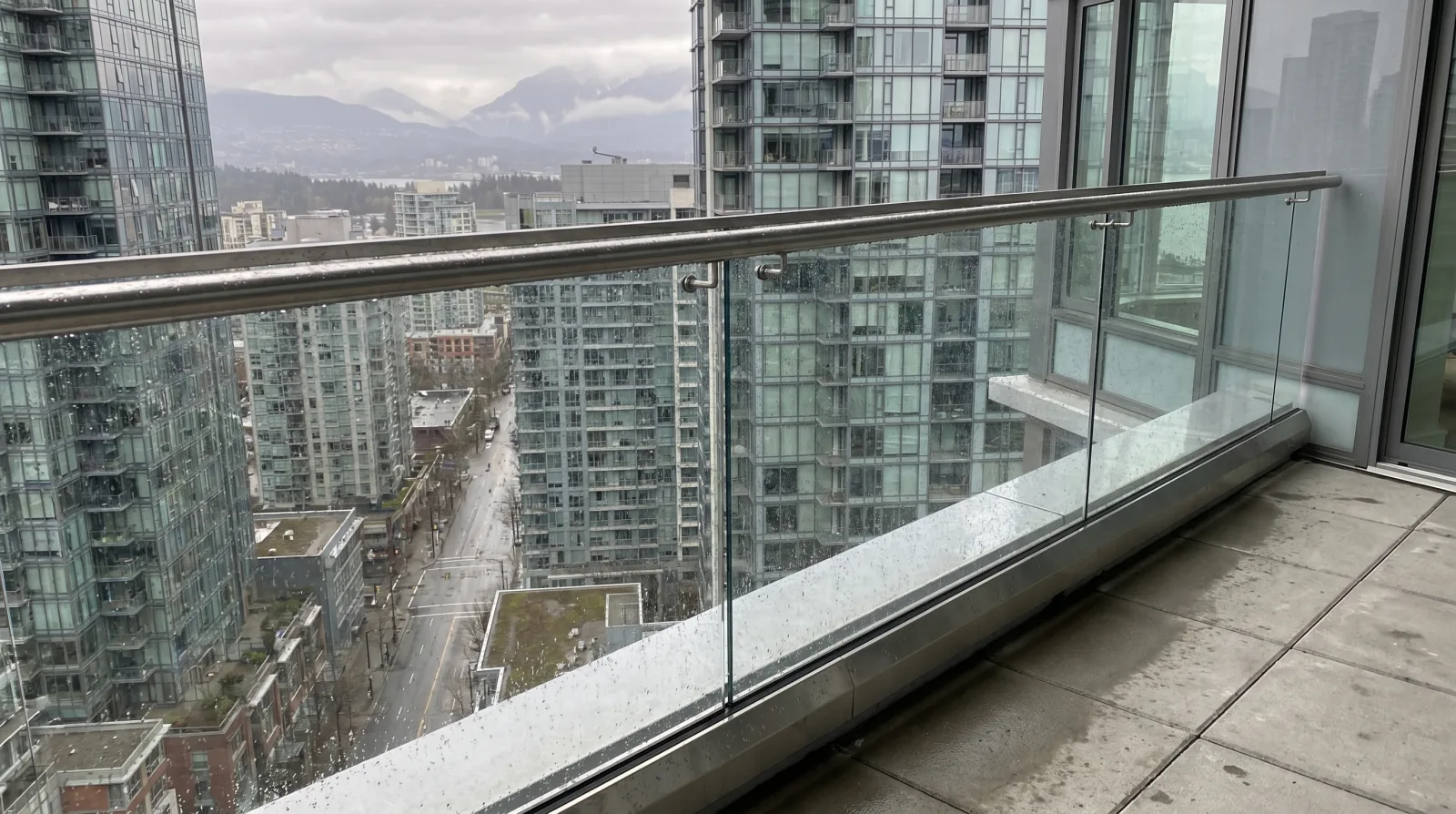
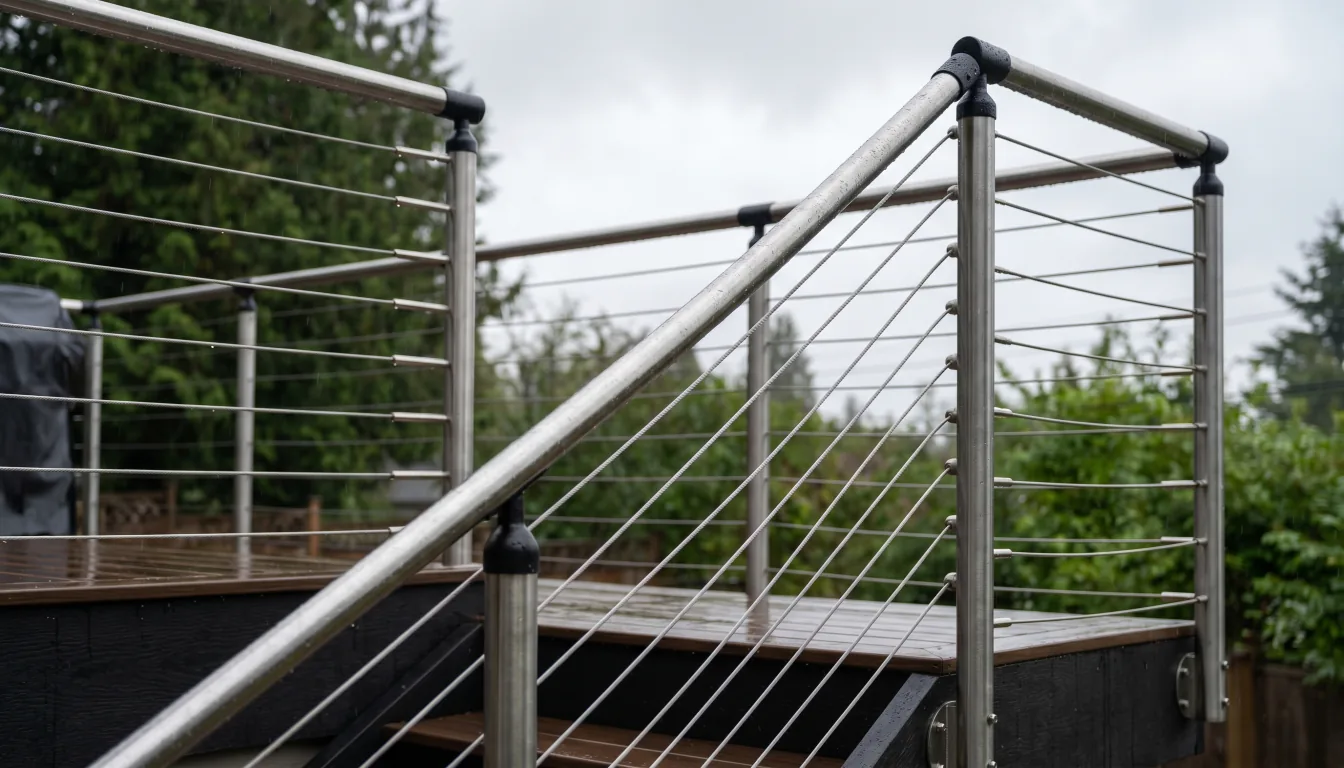
Railing pricing scales with system, panel count, and post detail. For 2026, HomeGuide’s cable railing cost data puts professionally installed stainless cable systems around $100 to $160 per linear foot, and HomeGuide’s glass stair railing data puts frameless and semi-frameless glass at $150 to $600 per linear foot installed depending on hardware and panel thickness. On a 14-foot run that is the difference between roughly $1,400 and $8,400 in railing alone, enough to bump a floating stair into a different pricing tier without touching the steel.
The cable-vs-glass call also has a coastal-humidity angle. For exterior or near-exterior installs (covered porches, exposed mudrooms), 316 stainless on the cable and the hardware holds up much better than 304. The American Galvanizers Association data on hot-dip galvanizing in coastal environments makes the parallel argument for the structure itself once the stair reaches outside air.
How much extra does a floating staircase retrofit cost versus new construction?
Retrofits almost always cost more than new construction. The opening usually needs reinforcement to carry the new beam or anchor the cantilever framing. Finished floors and walls around the work need protection. Demolishing the existing stair eats time. The install window is tighter because the rest of the house is already lived in.
In most retrofits we see, the structural reinforcement allowance is the swing factor. A 1980s home with engineered floor joists usually needs blocking, extra framing, and sometimes a new steel beam to carry the opening. A post-2010 modernist home where the opening was already sized for a feature stair often needs much less. Drawings and a site walk are what tell us which one a project is. There is no way to guess this from a photo.
How long does it take to fabricate and install a floating staircase in Vancouver?
Lead time rarely steals the headline in a floating stair budget, but it shapes how the project sequences and when the surrounding finishes go in. A floating stair in our shop runs through engineering review, shop drawings, fabrication, finish, and install. Any one of those can be the long pole. Finish drags hardest when the spec is hot-dip galvanized then powder coat (a duplex system), or when the steel ships out for blackening.
The most useful thing a homeowner or GC can do early is lock the finish before steel is ordered. Changing finish after fabrication restarts the schedule, full stop. For a full phase-by-phase breakdown of what happens between signed contract and installation day, see the custom staircase timeline guide.
Do floating staircases in Vancouver require a building permit and structural engineer?
Any cantilevered or floating stair in Vancouver that touches structure usually needs a building permit and a P.Eng stamp. The general guidance from the City of Vancouver’s building permit page is that structural alterations and new openings trigger a permit, and stair replacement falls into that category the moment the framing changes. Section 9.8 of the BC Building Code 2018 is the residential reference for stair geometry, headroom, and guard heights, including the 900 mm guard height inside dwelling units and the 1070 mm guard elsewhere.
Permit and engineering costs vary by project. They usually land in a few thousand dollars for the engineering review and drawings, plus the municipal permit fee. None of what is above replaces a code review by the AHJ, an architect, or an engineer.
How should you approach the budget conversation with a fabricator?
The best pricing conversations start with four things on the table: a sketch of the opening, the floor-to-floor height, the support strategy you want, and the railing system. Once those four are settled, fabrication, finish, and engineering each become a line item instead of one round number at the bottom of the page. Treat a 2026 Vancouver floating stair budget as a range until those four are pinned down. The range usually closes fast once a fabricator walks the site and sees the framing for real.
For more on the structural call, the mono stringer staircase deep dive explains how the central beam shapes the rest of the detail. For the install side, the floating stair process in Vancouver walks through the sequencing that protects finished floors and the schedule.
Related guides
- Cantilevered vs mono stringer floating stairs, 2026 cost comparison, side-by-side budget and framing trade-offs for the two real options behind a “floating” look.
- Floating stairs and BC Building Code: open risers, guards & the 100 mm rule, the code provisions a floating stair has to clear before fabrication.
- Floating stair tread thickness: 50–75 mm hardwood, 12–20 mm steel, how tread material drives the rise calculation and bracket reveal.
Sources
- Senmit, 2026 Floating Stairs Cost: Budget & Planning Guide
- Elevated Stairs, Floating Stairs Cost in 2026: Complete Price Breakdown
- HomeGuide, How Much Does Cable Railing Cost To Install? (2026)
- HomeGuide, How Much Do Glass Railings Cost in 2026?
- BC Building Code 2018, Section 9.8 Stairs, Ramps, Handrails and Guards
- American Galvanizers Association, Hot-Dip Galvanizing in Coastal Environments
- City of Vancouver, Building Permit
Related questions
How much does a floating staircase cost in Vancouver in 2026?
Most floating stairs we see in Vancouver land between $16,000 and $28,000 for a straight run with steel and wood treads, climb to $30,000–$60,000 once glass railings or curved geometry are involved, and pass $60,000 for true cantilevered statement stairs in custom homes. Final pricing depends on geometry, finish, and access.
Why is a true cantilevered floating stair more expensive than a hidden-stringer one?
A true cantilever transfers the tread load through a single hidden steel beam or through the wall framing, which usually requires a P.Eng-stamped design and reinforced framing. A hidden-stringer floating stair carries the load through two stringers concealed inside the treads, so the engineering and the steel package are simpler.
How much does a retrofit add to floating staircase pricing?
In our shop, retrofits typically run a noticeable premium over a new-build install because the structure around the opening usually needs reinforcement, the finished floors need protection, and the install window is tighter. The exact number depends on what the framing reveals once the old stair is out.
Are these prices firm?
No. Treat any number in this article as illustrative until a fabricator measures the site, reviews drawings, and confirms structural assumptions. Pricing for custom metalwork is not a menu and small geometry changes can shift the cost in either direction.