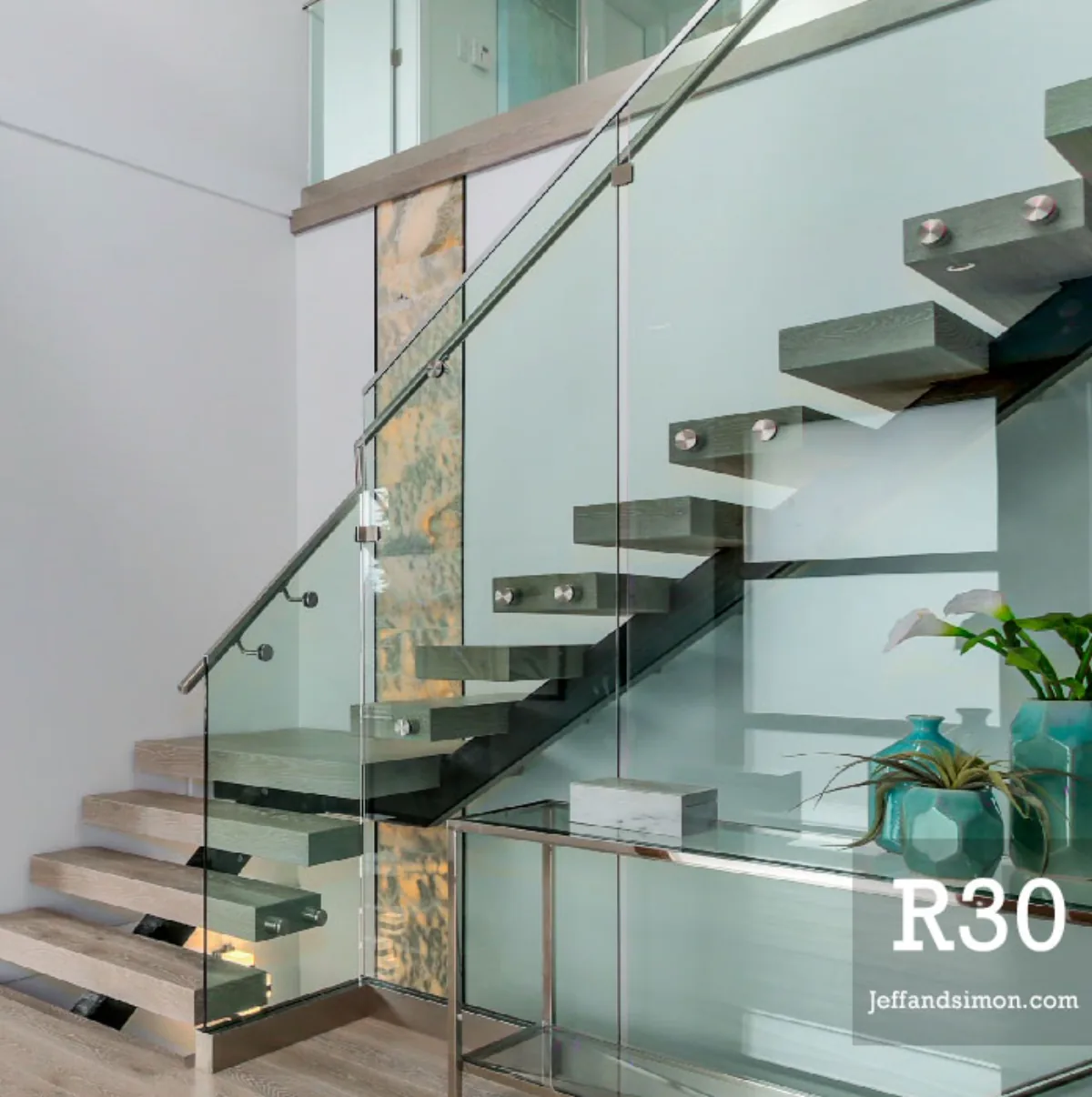
Floating stair quotes vary widely because the inputs vary widely. Two stairs that look similar in finished photos can be priced very differently because the structural strategy, the tread material, the railing system, and the site access are different. This guide explains the levers, without quoting numbers, because every project is quoted after a site review.
The five real cost drivers
Once you understand which inputs move the budget, you can have a useful conversation with the design team about where to push and where to hold.
- Support strategy: mono stringer, cantilevered, hidden double stringer, and suspended stairs each carry different fabrication and engineering scopes.
- Tread material: solid hardwood, steel, stone, microcement, and glass each price differently and demand different bracket detail.
- Railing system: cable, glass, steel picket, and rod-infill each have different per-linear-foot fabrication and installation costs.
- Finish: powder coat is the baseline. Specialty coatings, blackened steel, brushed stainless, and bronze finishes each add cost and lead time.
- Site access and installation complexity: tight openings, finished interiors, and lift requirements all change the install plan.
Support strategy carries the structural cost
A mono stringer keeps the structural cost inside the stair package. A cantilevered stair pushes structural cost into the wall framing, the engineering, and the inspection coordination. A suspended stair depends on whether the upper anchor structure was already engineered for the load. The support strategy is usually the single biggest budget lever, even before tread material.
Tread and railing combinations carry the finish cost
After the support strategy, the tread-and-railing combination is the next big lever. A wood-tread, cable-railing stair sits at one end of the spectrum. A stone-tread, glass-guard, blackened-steel stair sits at the other. The path between them is mostly material choices, not labour.
Engineering and shop drawings are real line items
Sealed engineering, shop drawings, and the time spent coordinating with the project engineer or the AHJ are real costs on a custom floating stair. They are usually a smaller share of the total than the steel and the finishes, but they are not zero, and skipping them is not an option on a structural stair scope.
Site access and schedule
Stairs delivered into finished interiors, projects with strict noise windows, projects on steep lots, and renovations into occupied homes all change the install plan. A new-build with site access still open is the simplest case. A renovation into a finished home is more involved.
What we do not do
We do not quote floating stairs from a price-per-step formula. Two stairs with the same step count can be very different scopes. Every project is quoted after a site review or a thorough drawing review. If you need a budget number to take to a design conversation, we can frame the order of magnitude on a call once we understand the scope, but we do not publish menu pricing for custom work.
Related questions
Can you give a rough budget range without a site visit?
Once we understand the support strategy, the tread material, the railing system, the finish, and the access, we can usually give a useful order-of-magnitude range over the phone or after reviewing drawings. We do not publish menu pricing for custom floating stairs because the scope inputs vary too widely to be honest about a published number.
Why are floating stairs more expensive than traditional stairs?
Floating stairs concentrate structural load at fewer points, demand more from the engineering review, and have less tolerance for fabrication or installation error than a traditional closed-stringer stair. The visible parts are also finish-quality, which raises the bar on welds, coating, and tread fit.
Where can budget be saved on a floating stair?
The most common levers are the railing system (cable instead of glass, or glass without specialty hardware), the tread material (white oak instead of walnut or stone), the finish (standard powder coat instead of specialty coatings), and the support strategy (mono stringer instead of cantilevered when both work for the project).
Do you offer financing or staged payments?
Custom fabrication projects are usually structured as a deposit at order, a progress payment at fabrication start, and a balance at installation. Specific terms are confirmed in the contract. Talk to us about your project and we will outline the schedule that fits the scope.
Continue planning
- Floating stairs hub overview
- All four support strategies
- Mono stringer staircase deep dive (Trends)
- Floating stair fabrication guide
Plan floating stair cost drivers for a real Vancouver project
Send drawings, photos, or a rough scope and we will help define the practical next step.