A floating stair is delivered into a building that is mostly finished. Anything the framing crew got wrong before drywall becomes expensive after drywall. This checklist is the conversation we have with the GC and the engineer before a single tread is fabricated.
Confirm the support strategy first
Mono stringer, cantilevered, hidden double stringer, and suspended stairs each need a different prep package. Document the support strategy in writing before site framing for the stair area starts. Once the support method is locked, the prep package follows.
- Mono stringer: confirm anchor locations at the lower landing and the upper floor edge.
- Cantilevered: confirm wall structure (steel back-plate, LVL, or stud-pack), embed locations, and inspection windows.
- Suspended: confirm the upper anchor structure (steel beam, ridge, or concrete deck) is engineered for the load.
- Hidden double stringer: confirm tread profile clearance and side-stringer pocket dimensions.
Lock the opening dimensions
Stair opening dimensions are measured from finished surface to finished surface. Confirm the opening width, the headroom, and the distance from the lower landing to the upper floor with the framer in writing before drywall. A 25 mm (1 inch) variance can be the difference between a stair that drops in and a stair that needs field rework.
Coordinate the engineer early
If the project has a structural engineer of record, the floating stair package should be reviewed by that engineer before fabrication. If there is no engineer of record, the stair scope often needs its own sealed review. Either way, the engineer wants tread positions, anchor positions, finished floor heights, and the support strategy on a single drawing.
Plan the inspection window
Cantilevered floating stairs often need an inspection by the engineer or the AHJ before drywall closes the wall. Schedule that inspection before the framer leaves the site for the area. Drywall installed over un-inspected embeds is the most common avoidable rework on a floating stair project.
Plan the delivery and install access
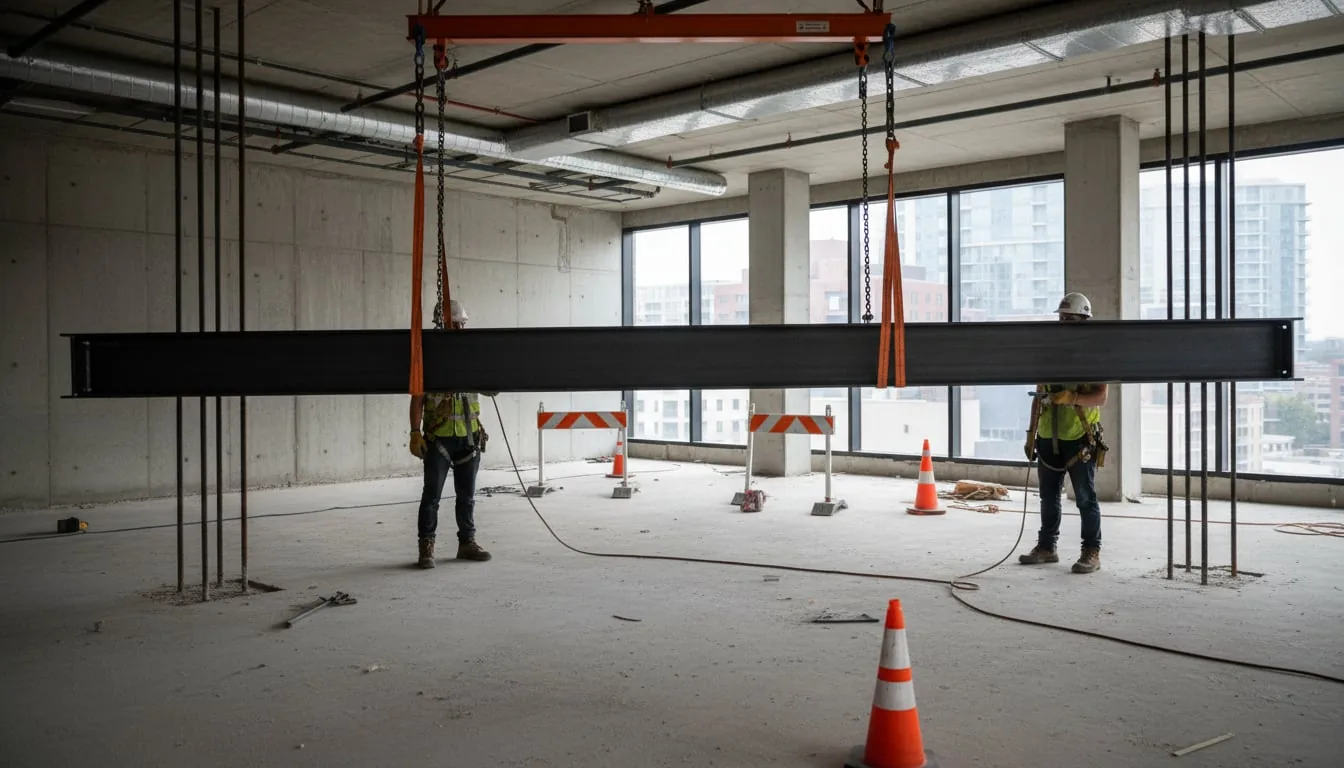
A finished mono stringer beam can be 4–6 m long and heavy. Confirm site access, door widths, finished floor protection, parking for the install truck, and the lift method. We almost never want to discover an access problem on install day.
Related questions
When is the right time to start the stair package?
Start the stair package at the same time as the structural drawings for the floor that the stair lands on. Anchor locations, opening dimensions, and the support strategy all need to be in the structural set before framing begins.
What if the framer has already framed the stair area without coordinating?
It depends on the support strategy. A mono stringer can sometimes be adjusted to match what was framed. A cantilevered stair almost always requires re-framing the wall behind the stair. Catch the problem before drywall.
Who arranges the engineer?
On most projects with a structural engineer of record, that engineer reviews the stair scope. On smaller residential projects, we can refer engineers familiar with floating stairs in BC, or work to a project-supplied engineer's specifications.
What documentation does the AHJ usually want?
Most municipalities want sealed structural drawings, the manufacturer's shop drawings, and confirmation that the stair complies with the relevant BC Building Code or Vancouver Building By-law provisions. Confirm specific requirements with the AHJ at permit application.
Continue planning
- Floating stairs hub overview
- All four support strategies
- Mono stringer staircase deep dive (Trends)
- Floating stair fabrication guide
Plan floating stair framing checklist: what gcs must confirm before install for a real Vancouver project
Send drawings, photos, or a rough scope and we will help define the practical next step.