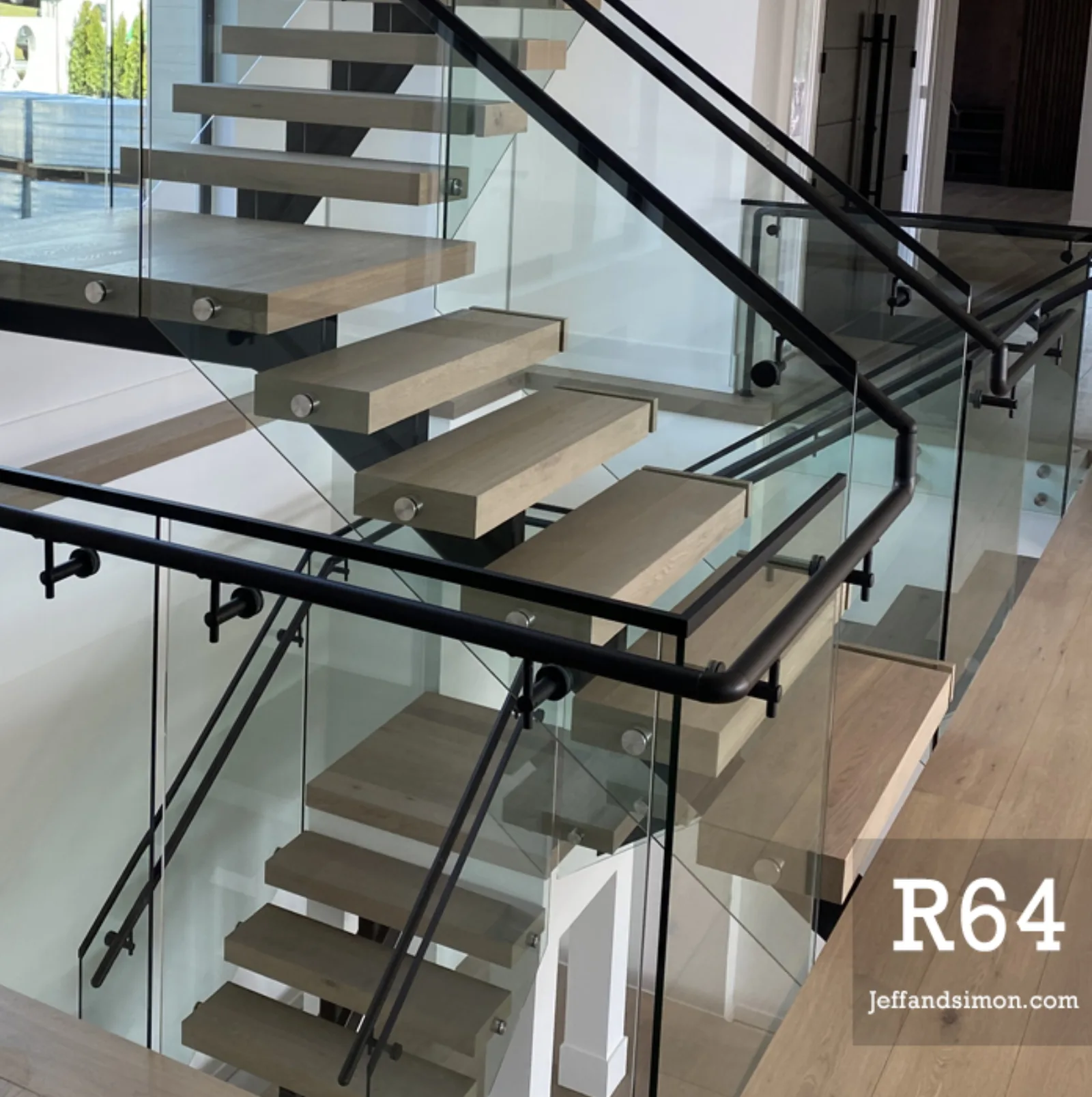
Treads are the most visible part of a floating stair, but they are also the most structural. Tread material, thickness, and edge profile drive bracket geometry, fastening strategy, finish coordination, and the feel of the stair underfoot. Choose the tread early, it changes more details than people expect.
Solid hardwood: the warm default
Solid hardwood treads, white oak, walnut, maple, hickory, remain the most common choice for residential floating stairs. They feel warm underfoot, they age well, and they coordinate with most flooring schedules. Tread thickness is usually 50–75 mm (roughly 2–3 inches) so the bracket is hidden in the tread and the side profile reads as a slab.
- Engineered cores with a solid wood wear layer reduce movement risk in heated homes.
- Pre-finishing the tread top before installation is almost always faster than site finishing.
- Coordinate the tread finish with the floor finish, same species rarely means same colour.
Steel treads: contemporary and unforgiving
Pan-formed steel treads, perforated steel, or solid plate treads create a strong industrial or contemporary look. They are unforgiving, every weld and every coating defect is visible in raking light. Powder coat is the typical finish; for exterior floating stairs, hot-dip galvanizing under a topcoat is the durable answer.
Stone, porcelain, and engineered slab
Stone treads on a steel pan, large-format porcelain bonded to a substrate, and engineered slab treads all give a heavy, finished look. They demand more from the bracket and the structure: weight is real, the tread cannot flex, and the finish must be installed over a fully engineered substrate. Slip resistance is the conversation no one wants to have, but it matters.
Glass treads: visual drama, narrow window
Laminated glass treads exist, and they look spectacular. They also need a specified glass build-up (usually multi-ply laminated tempered glass), engineered support points, slip resistance built into the top surface, and replacement plans if a tread is damaged. They are a small fraction of projects, but they are real.
Concrete-look and microcement
Concrete-look finishes, microcement on a steel pan substrate or polished concrete on a structural slab tread, give the monolithic look that is currently fashionable in custom Vancouver homes. The substrate has to be stable. Microcement applied over a flexing pan will crack at the weld lines.
Related questions
What tread thickness should a floating stair use?
For wood treads on a mono stringer or cantilevered stair, 50–75 mm (2–3 inches) is typical. Thinner reads more delicate but starts to expose the bracket. Thicker reads more solid but eats into the rise. The right answer depends on the bracket geometry and the design intent.
Are wood treads slippery?
Smooth, finish-grade wood treads can be slippery, especially in socks. Pre-finished treads with a slightly textured topcoat are common, and stair nosings in a contrasting finish are an option. For households with mobility considerations, slip resistance should be designed in from the start.
Can I change tread material after the stair is built?
Sometimes. Wood treads can occasionally be replaced in kind. Switching from wood to stone after the fact is rarely practical because the bracket geometry and tread weight are different. Decide tread material before fabrication.
Do tread materials affect the price meaningfully?
Yes. Tread material is one of the largest line items on a floating stair. Solid hardwood, steel, stone, and glass each move the cost in a different direction. We discuss tread material at the quoting stage so the budget is set on the right footing.
Continue planning
- Floating stairs hub overview
- All four support strategies
- Mono stringer staircase deep dive (Trends)
- Floating stair fabrication guide
Plan floating stair tread materials and finishes for a real Vancouver project
Send drawings, photos, or a rough scope and we will help define the practical next step.