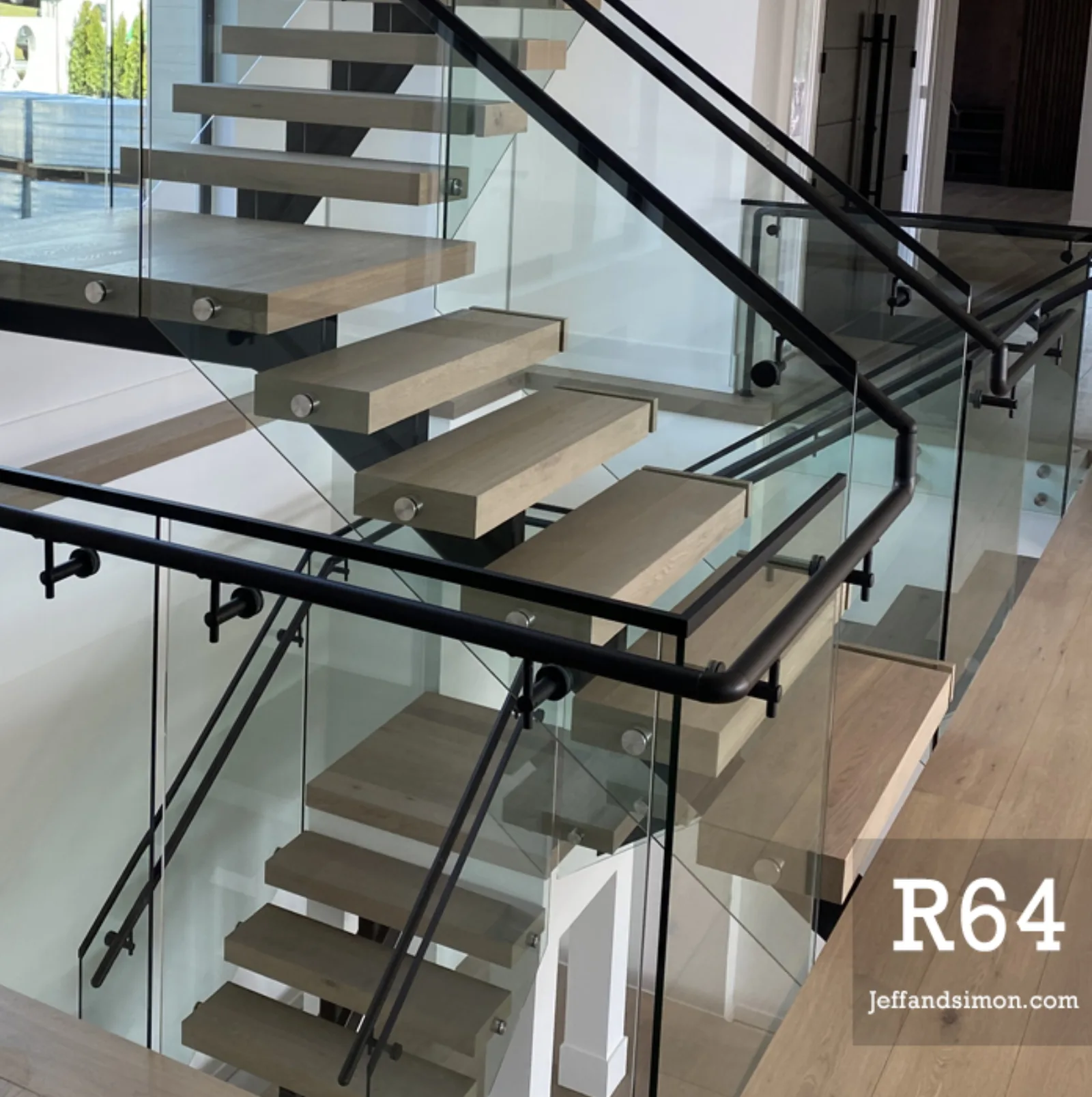
Most Vancouver homes are built with wood stairs. Most custom home renovations end up replacing them with steel. The reasons for that shift are practical, not just aesthetic. This guide compares steel and wood staircases across the dimensions that matter: durability, cost, design range, permit requirements, and long-term maintenance.
Durability: steel wins outright
A well-fabricated steel stair does not warp, creak, swell, or shrink. Wood stairs in BC move seasonally, the stringers shift, the treads loosen at fasteners, and squeaking is near-universal in older homes. Steel eliminates the seasonal movement. A powder-coated or properly finished steel stair requires almost no maintenance beyond cleaning for decades.
Cost: wood starts cheaper, steel lasts longer
A standard wood staircase in a new build costs less than a custom steel stair of the same run. But a mid-grade wood stair that needs refinishing, riser repair, or full replacement in 15–20 years ultimately costs more over the building's life. Custom steel stairs have a higher upfront cost and a much lower ongoing maintenance cost.
- Wood stair (builder-grade, new construction): $3,000–$8,000 installed.
- Wood stair (custom oak, feature quality): $10,000–$20,000 installed.
- Steel stair (straight-run, cable railing): $18,000–$35,000 installed.
- Steel stair (feature mono stringer, glass guards): $35,000–$65,000+ installed.
- Long-term replacement and maintenance: wood costs more over 30 years.
Design range: steel is broader
Wood stairs are limited by the geometry of the material, solid stringers, closed or open risers, treads of consistent depth. Steel can take any geometry: curved, helical, cantilevered, suspended, split-level, platform landing, or any custom shape that engineering supports. If the design calls for a statement element, steel is the material that delivers it.
Maintenance: steel requires almost none
A finished steel stair needs wiping down. That is the maintenance program. No sanding, no refinishing, no tightening. Wood stairs require periodic refinishing of treads, tightening of fasteners, replacement of damaged nosings, and eventualy replacement of worn risers. For homeowners who want a staircase they do not have to think about, steel wins.
When wood still makes sense
Wood stairs are the right choice when budget is the primary constraint, when the project is a straightforward replacement in an older home with standard framing, or when the architectural intent is traditional and a steel stair would look out of place. Not every house needs a feature stair.
Related questions
Is steel or wood better for a Vancouver home staircase?
For custom homes and renovations where budget allows, steel is the better long-term investment, more durable, lower maintenance, wider design range. For new builds and budget-driven projects, wood remains a reasonable choice. The right answer depends on the house, the budget, and how long the owners plan to stay.
Can I replace my wood staircase with steel?
Yes. Replacing a wood stair with a custom steel stair is one of the most common residential projects we do. The scope includes field measurement, fabrication drawings, permit coordination, removal of the existing stair, and installation of the new steel stair. Most projects run 6–10 weeks from approved drawings to installation.
Does replacing a wood stair with steel require a permit?
Usually yes. Changing the structural stair system, modifying the stair opening, or altering the guard system triggers a building permit in most Metro Vancouver municipalities. Confirm the specific requirements with your municipality before starting.
Discuss steel vs wood stairs for a real project
Send drawings, photos, or a rough scope and we will help define the practical next step.