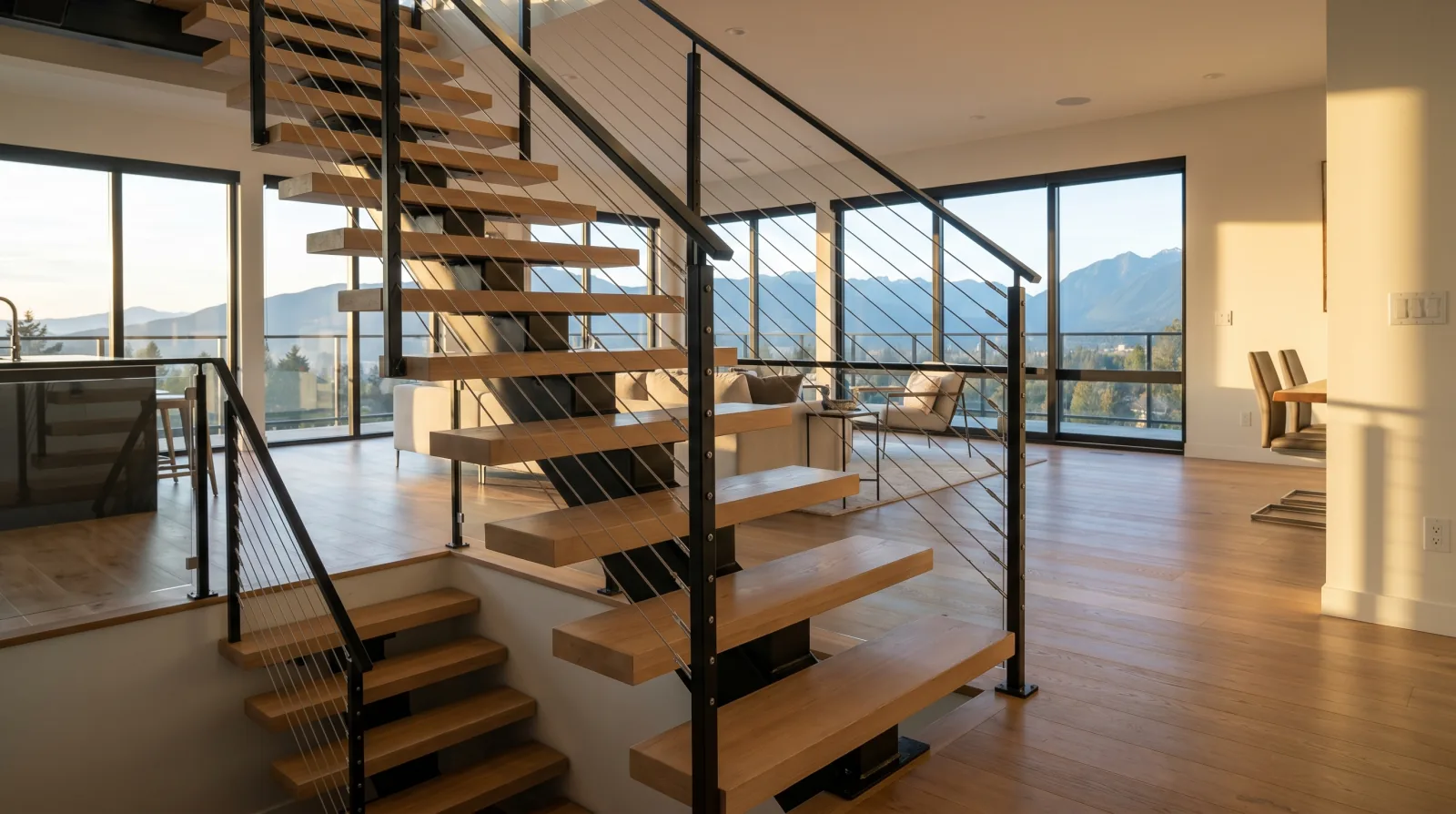
Metal stairs and railings in Coquitlam.
Coquitlam has active new-build and renovation markets, especially for modern stairs, glass railings, and exterior metalwork.
Coquitlam is a wide city. The drive from the Vancouver Stairs shop on Douglas Road in Burnaby out to a Burke Mountain framing site is materially longer than the drive to Lougheed or to a Coquitlam Centre lobby. That distance changes how a Coquitlam stair project is run, not whether it can be run. Site visits are batched, re-measures are scheduled rather than walked in cold, and the install crew brings the long list of tools for the site instead of trusting a quick run back to the shop. The fabrication standard is the same as the rest of the Lower Mainland. The logistics are tuned for a city whose neighbourhoods sit on very different slopes and ages of building stock.
Coquitlam is also one of the most active stair markets in the Tri-Cities. Burke Mountain is in the middle of a multi-year build-out of large hillside single-family homes that lean on feature staircases as the design anchor. Coquitlam Centre is becoming the city's downtown through transit-oriented redevelopment around the Evergreen Line stations. Maillardville is an older francophone neighbourhood with smaller lots and renovation work on character houses. Westwood Plateau and Como Lake have a steady drumbeat of upmarket renovations on homes built in the 1990s and the 1960s respectively. The rest of this page walks through how each setting changes the stair scope.
Building stock shapes the stair scope.
Burke Mountain is the newest part of Coquitlam and the busiest part of the residential stair market. The neighbourhood sits at the northeast edge of the city on a hillside above the Coquitlam River. The build-out is ongoing, recent additions include Argyle by Infinity Properties, a 64-home single-family community with plans ranging from roughly 3,168 to 3,863 sq ft, and Versant by Infinity, 66 three-storey townhomes near Victoria Drive and Baycrest Avenue (burkemountainhomes.com, vancouvernewcondos.com). Lot grading is steep across most of the Partington Creek and Smiling Creek catchments, which means split-level layouts, double-height entries, and two or three full storeys above grade are normal. Feature staircases, mono stringer, cantilevered, and visually floating, sit in the entry or the great room on most of these floor plans, and the architect is involved from the first drawing set.
Coquitlam Centre is the urban core. Recent development clusters around the Evergreen Line stations, Coquitlam Central, Lincoln, and Lafarge Lake–Douglas, which opened in 2016 (translink.ca). Morguard is leading a phased redevelopment of the Coquitlam Centre mall site into a mixed-use district with up to nine towers in the first phase next to Lincoln Station (urbanyvr.com, dailyhive.com). TransLink has separately announced a long-term plan for the Coquitlam Central park-and-ride with towers reaching toward the 60-storey range (dailyhive.com). The stair work that flows out of this corridor is repeatable: commercial lobby stairs, level-change stairs into amenity floors, glass and stainless guard packages on rooftop decks, and strata railing programs in the older 1990s and 2000s towers that already line the corridor. Shop-drawing discipline and a clean mock-up matter more on these sites than custom geometry does.
The rest of the city carries a different stock. Westwood Plateau is upmarket detached housing from the late 1990s and 2000s, with deep lots and the kind of two-storey foyer that supports a feature stair retrofit. Como Lake and Austin Heights are 1960s and 1970s detached neighbourhoods where renovation activity has been steady; the original stairs there are usually closed-stringer wood on a single straight run, and the opening was framed for that load. Maillardville is the historic francophone community south of Lougheed Highway, founded in 1909 around the Fraser Mills workforce (coquitlam.ca). Lots are smaller, character protections are real, and the renovation work tends toward exterior stair replacement and guard upgrades on older homes. The Riverview site at the southeast edge of the city, renamed səmiq̓ʷəʔelə in 2021 in recognition of the Kwikwetlem First Nation, is being planned by BC Housing and kʷikʷəƛ̓əm for a long-horizon mixed-use community including a healthcare district and housing (bchousing.org). When that site moves into construction it will reshape the southeast quadrant.
Climate exposure decides the finish strategy.
Coquitlam sits on the same wet-coastal weather system as the rest of the Lower Mainland, but it has no direct salt exposure. The city is well inland of the Strait of Georgia; the closest open water is Burrard Inlet at Port Moody and the Fraser River along the south edge. The corrosion driver for exterior steel here is rain, not chloride. That makes the finish system simpler than a West Vancouver or Steveston job, but it does not change the need to galvanize anything structural that lives outside. Hot-dip galvanizing to ASTM A123 is the default for exterior stringers, base plates, anchor frames, and canopy supports. The American Galvanizers Association documents long service-life data for hot-dip galvanizing in temperate wet climates, which is the regime Coquitlam falls under.
Burke Mountain adds an elevation factor. The upper-slope lots sit several hundred metres above the flat-city benchmark, and rainfall, fog, and snow accumulation all run higher at that elevation. Snow load is the design driver to talk to the engineer about. Coquitlam falls under the BC Building Code Climatic Data tables, and the right ground-snow value for an exterior stair, deck, or canopy on Burke Mountain is the upper-elevation value, not the lower one (confirm with the authority having jurisdiction). For a long exterior stair with intermediate landings, that changes the framing detail at the landing and the anchor pattern at the base. Interior stairs are unaffected by snow load, but the entry-mat detail and the threshold flashing on a Burke Mountain front door run wetter than they would on a Maillardville flat lot.
Interior finish work in Coquitlam follows the standard Lower Mainland system. Blasted steel, phosphate pre-treatment, and a polyester powder coat in a flat or satin sheen is the common detail. Black is the most-requested colour by a wide margin in residential work; bronze and warm grey come up on design-led Burke Mountain feature stairs where the steel sits next to oak, walnut, or rift-cut white oak treads. Strata railing replacement work in the older Coquitlam Centre and North Road corridor towers usually carries forward the original anodized aluminum or painted black finish, since matching across a partially-replaced building is the point of the program. Mill-scale-visible finishes show up occasionally on loft conversions and on the few industrial-style spaces near United Boulevard, and they need a clear matte sealer the same way they do anywhere else.
The scopes we see most in Coquitlam.
Burke Mountain feature staircases are the headline residential scope. The most-requested geometries are the mono stringer, with one central steel beam, treads cantilevering equally on both sides, and open risers, and the visually floating stair, which is a category rather than a single structure. A mono stringer on a Burke Mountain entry usually runs as a long single flight or a flight plus a quarter landing, with an HSS section sized by the engineer for the run, the cantilever depth, and the tread material. Treads are commonly solid oak or rift-cut white oak at 50 to 75 mm thickness, and the bracket-to-stringer connection has to be coordinated with the tread thickness before fabrication. The guard is the second decision: cable infill, glass with standoffs, or a steel picket pattern. Each detail runs back to a different point load at the stringer.
Floating stair retrofits are the second-most-common feature scope. Floating is a visual category, not one structure. The support strategy might be wall-anchored treads embedded into a steel-reinforced stud bay, a hidden stringer concealed behind a finish wall, or a structural spine inside a feature wall. The right answer on a Burke Mountain new build is usually decided in coordination with the framer and the structural engineer before drywall. The wall-anchored option needs the support wall agreed, reinforced, and engineered before it closes. The hidden-stringer option is more forgiving on a renovation where the wall is already in place. Both options need a Schedule B Letter of Assurance from a registered structural engineer (gov.bc.ca, confirm with the authority having jurisdiction).
Coquitlam Centre commercial and strata work is the other half of the calendar. Lobby stairs in new mixed-use towers, level-change stairs into amenity floors, glass and stainless cable guards on rooftop and podium decks, and exterior egress stairs at townhouse podiums all fall under BC Building Code Part 3 as buildings over 3 storeys or over 600 m² in area (bccodes.ca, confirm with the authority having jurisdiction). Part 3 stairs need engineer-stamped shop drawings, a Schedule B from the structural engineer of record, and CWB-certified welding to CSA W47.1 on any structural connection. Strata railing replacement in the older 1990s and 2000s Coquitlam Centre and North Road towers runs the same way Burnaby and New Westminster strata programs do: a single mock-up unit, property-manager-issued notice cycles, and a depot logistics model with the building's freight elevator booked for the duration. Exterior stair replacement on older Maillardville and Como Lake detached homes is a steady third scope. The framing is usually wood, the new stair is steel, and the connection back to the existing wood deck or porch is the detail that drives the day.
Permit and AHJ workflow.
The City of Coquitlam issues building permits through its Planning and Development Department and accepts digital application submissions, with a Certified Professional path available under the city's CP Program Supplement updated in April 2026 (coquitlam.ca). New stairs, alterations to existing stair openings, structural connections to floor framing, and most exterior stair and guard work need a building permit. Coquitlam also runs a Development Information Portal on ArcGIS that shows active development applications and zoning context, which is useful for confirming the right address and zoning before drawings are finalized (coquitlam.ca).
For structural stair geometries, cantilevered, floating, mono stringer, and any Part 3 commercial stair, a Schedule B Letter of Assurance from a registered structural engineer is the standard route under the BC Building Code (gov.bc.ca, confirm with the authority having jurisdiction). The Schedule B confirms responsibility for structural design and field review; a Schedule C-B is signed at completion. In practice the engineer of record is on the drawings before fabrication starts, the Schedule B is sealed with the permit application, and the field reviews are scheduled around install milestones. On Part 3 Coquitlam Centre commercial sites, the welding-procedure layer adds CWB certification to CSA W47.1 for any structural weld. On Burke Mountain custom homes, the structural engineer is usually already on the project for the foundation and framing. Folding the stair into that engineering scope from the first sketch is the faster path through review than bringing in a separate stair engineer late.
Coordination, access, and delivery.
Drive time from the Vancouver Stairs shop on Douglas Road in Burnaby varies by neighbourhood. Coquitlam Centre and the Lougheed-corridor sites are typically 20 to 30 minutes via Highway 1 or Lougheed Highway off-peak. Burke Mountain runs longer, at 35 to 50 minutes depending on time of day and which part of the slope. Maillardville and the south edge of the city near Riverview are usually 20 to 30 minutes. The practical effect is that Coquitlam projects are scheduled rather than walked in. Site visits during pre-construction are booked, re-measures after framing changes are batched, and the install crew arrives with the full kit for the day's scope.
Site access varies more than drive time. Burke Mountain single-family lots are usually accessed off the new neighbourhood collector streets, including Smiling Creek, Galloway, David, and the Sheffield extension, with the driveway available during framing and the on-site portable toilet and bin already in place. A long-bed truck and Hiab will fit most lots, but the laneway is occasionally tight on the upper-slope hillside lots and the install crew should confirm before showing up. Coquitlam Centre tower installs run on the building's loading-bay schedule and a freight-elevator booking, the same way Brentwood and Metrotown installs do. Maillardville and Como Lake older detached work uses the driveway or the street with parking permits arranged ahead. The general rule for the city: confirm the access path during the first site visit, not on install day.
How to start a Coquitlam project.
The strongest Coquitlam projects bring the fabricator into the conversation while the floor framing, opening size, and finish floor are still on paper. Send the architectural drawings, structural drawings if they exist, the site address and neighbourhood, the finished-floor build-up, and the target install window. Photos of the existing stair opening and the surrounding framing, or for a new build, photos of the framed opening and the engineer's drawings, separate a straight install from a project that needs structural re-framing first. With Burke Mountain on a 35-to-50 minute reach from the Burnaby shop, early coordination is the part of the schedule that does the most work.
Neighbourhoods we work in.
Burke Mountain, Westwood Plateau, Burquitlam, Maillardville, Austin Heights, Ranch Park.
City signals
Drive time: 20-35 minutes
Snow load signal: 1.8 kPa
Adjacent cities: Burnaby, Port Moody, Port Coquitlam
Shop: 2544 Douglas Road #106, Burnaby BC
Popular Coquitlam product routes.
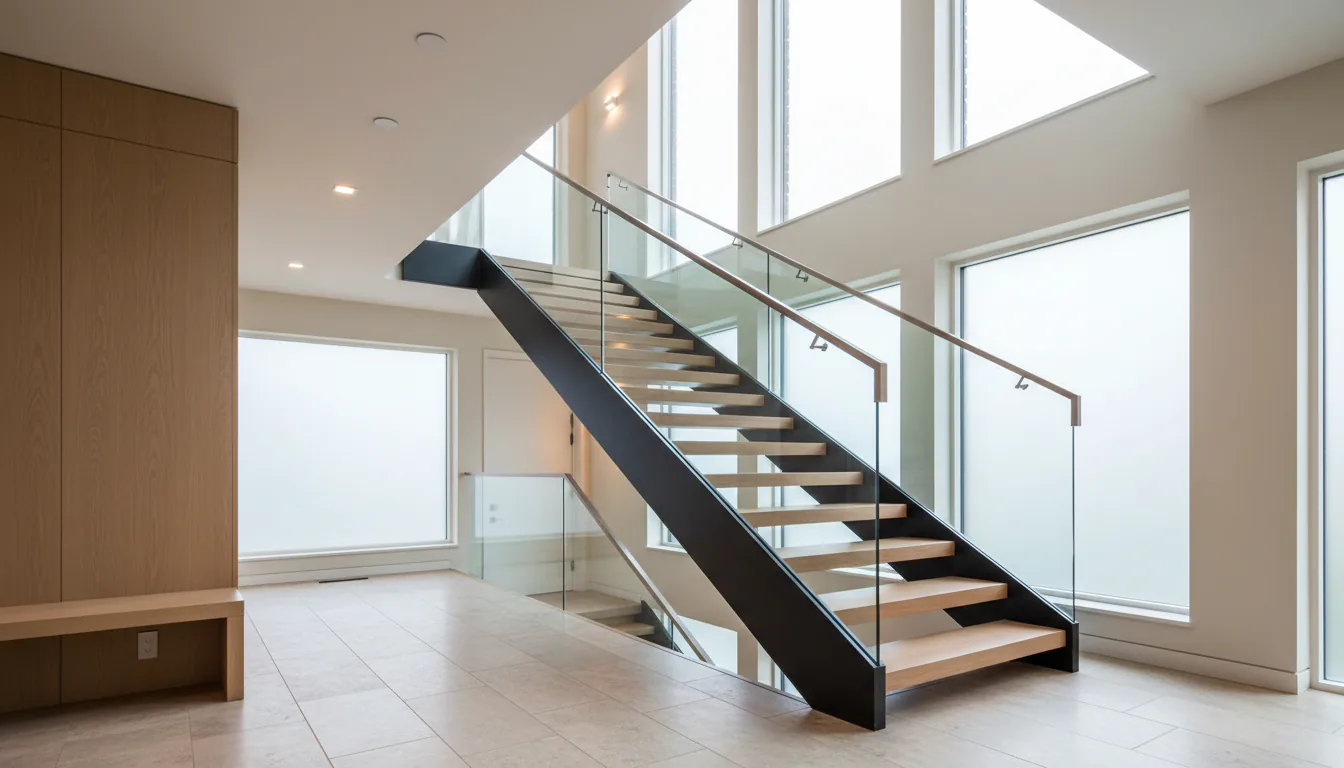
Residential Staircase
Designed for Coquitlam sites, pricing, local planning notes, and finish guidance on the product page.
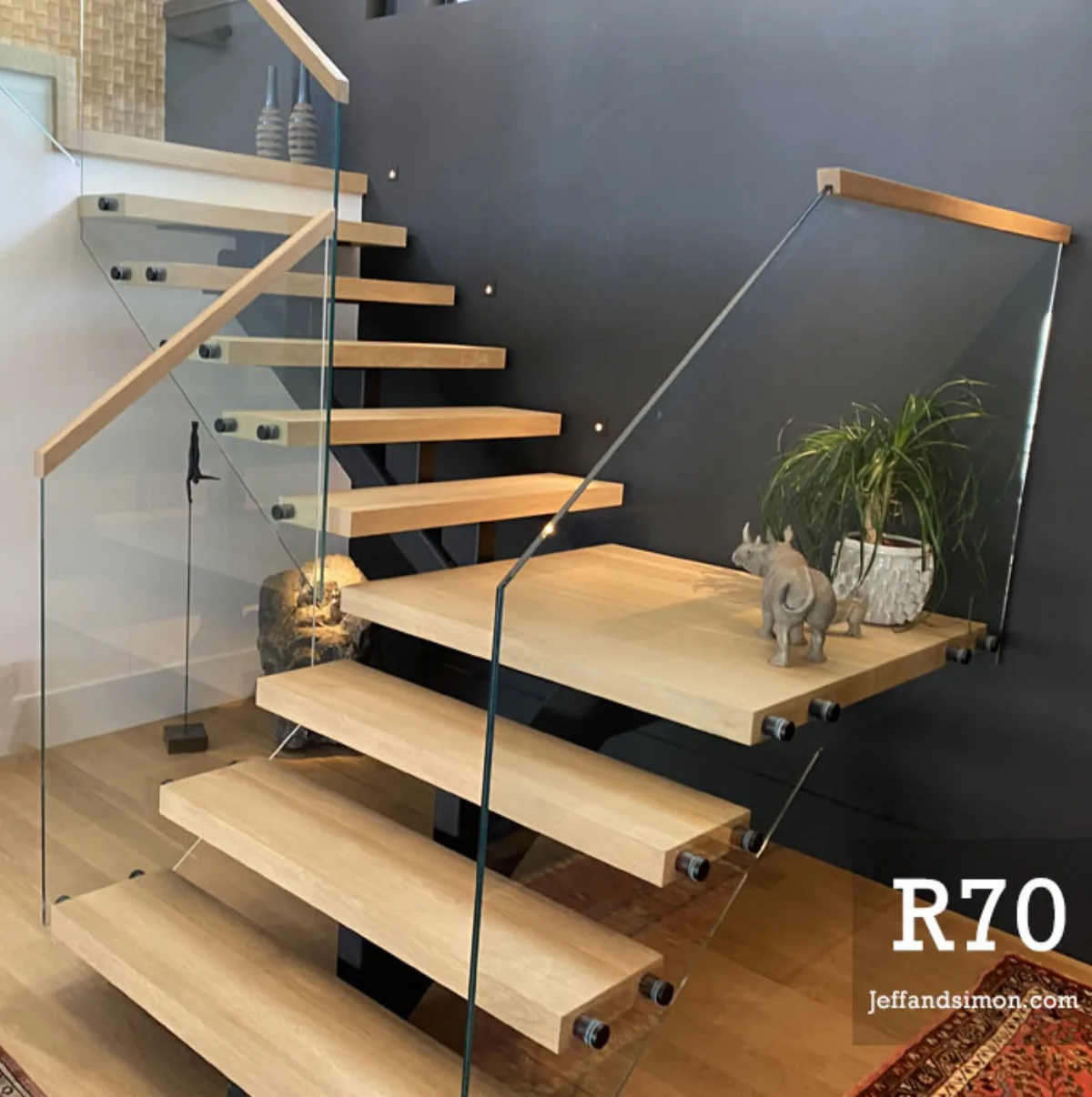
Mono Stringer Staircase
Designed for Coquitlam sites, pricing, local planning notes, and finish guidance on the product page.
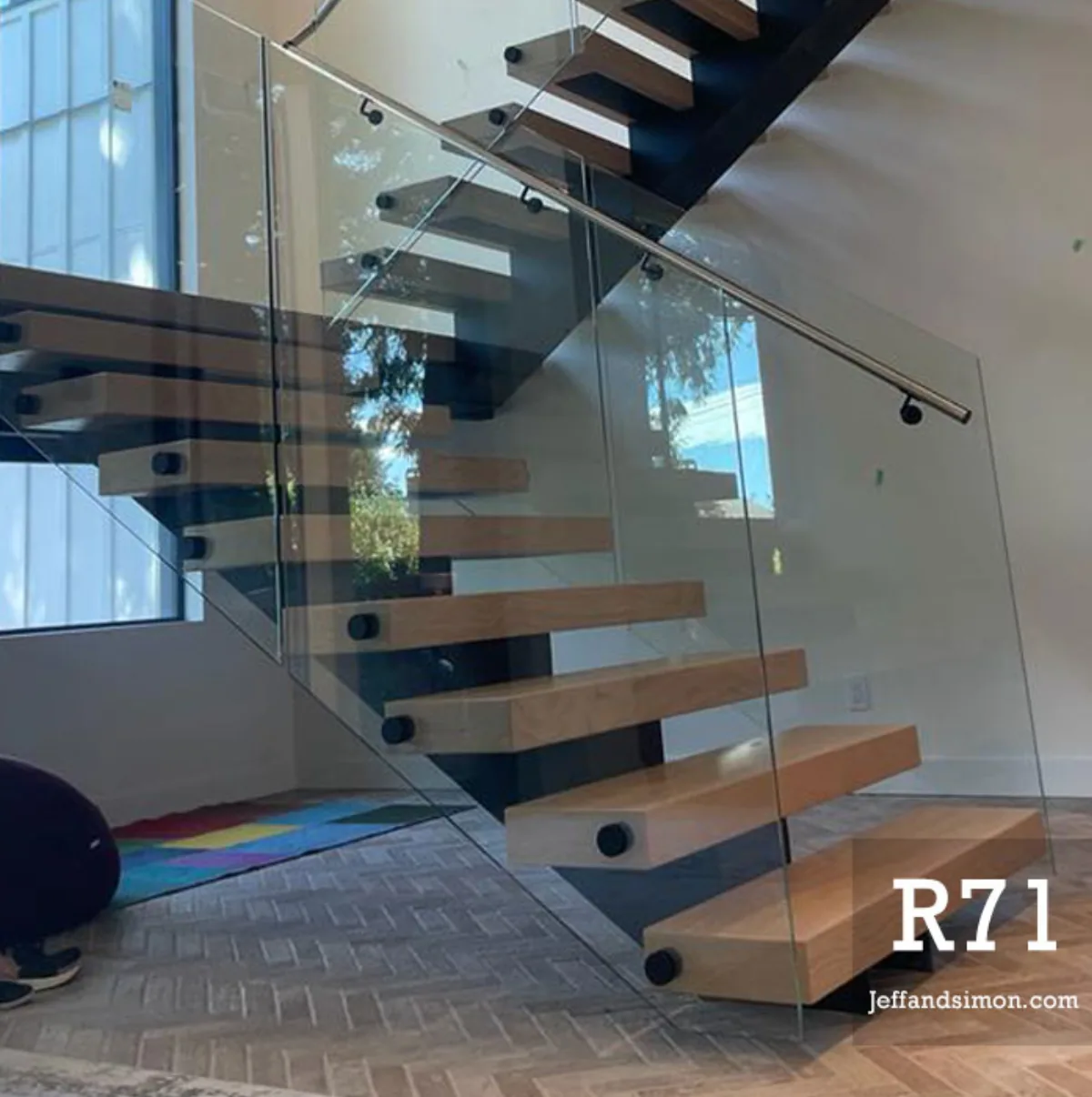
Floating Staircase
Designed for Coquitlam sites, pricing, local planning notes, and finish guidance on the product page.
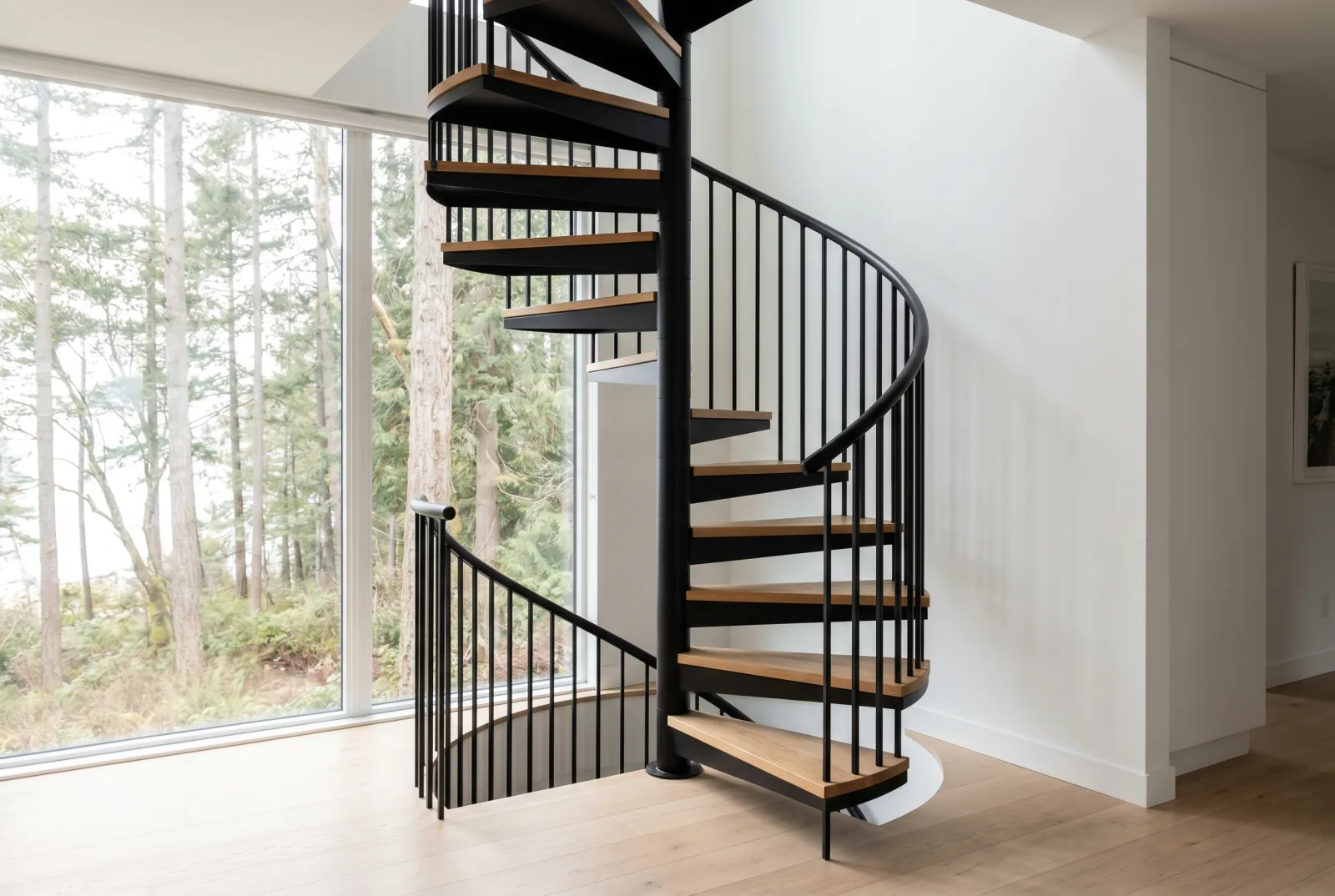
Spiral Staircase
Designed for Coquitlam sites, pricing, local planning notes, and finish guidance on the product page.
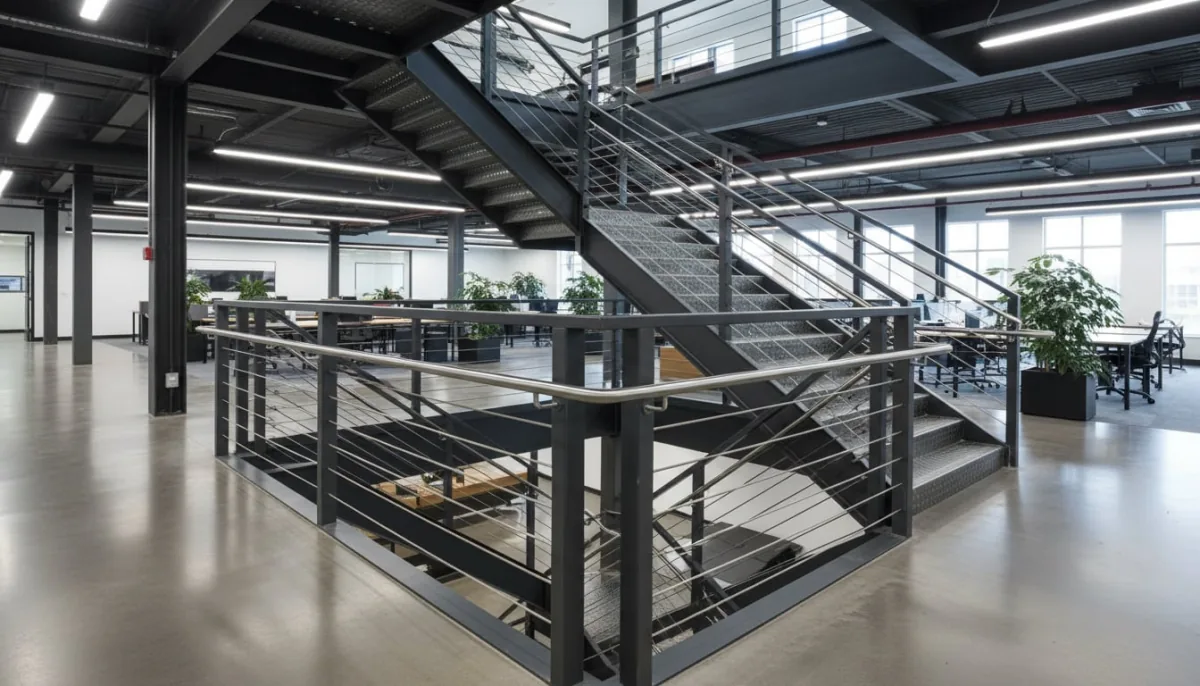
Cable Railings
Designed for Coquitlam sites, pricing, local planning notes, and finish guidance on the product page.
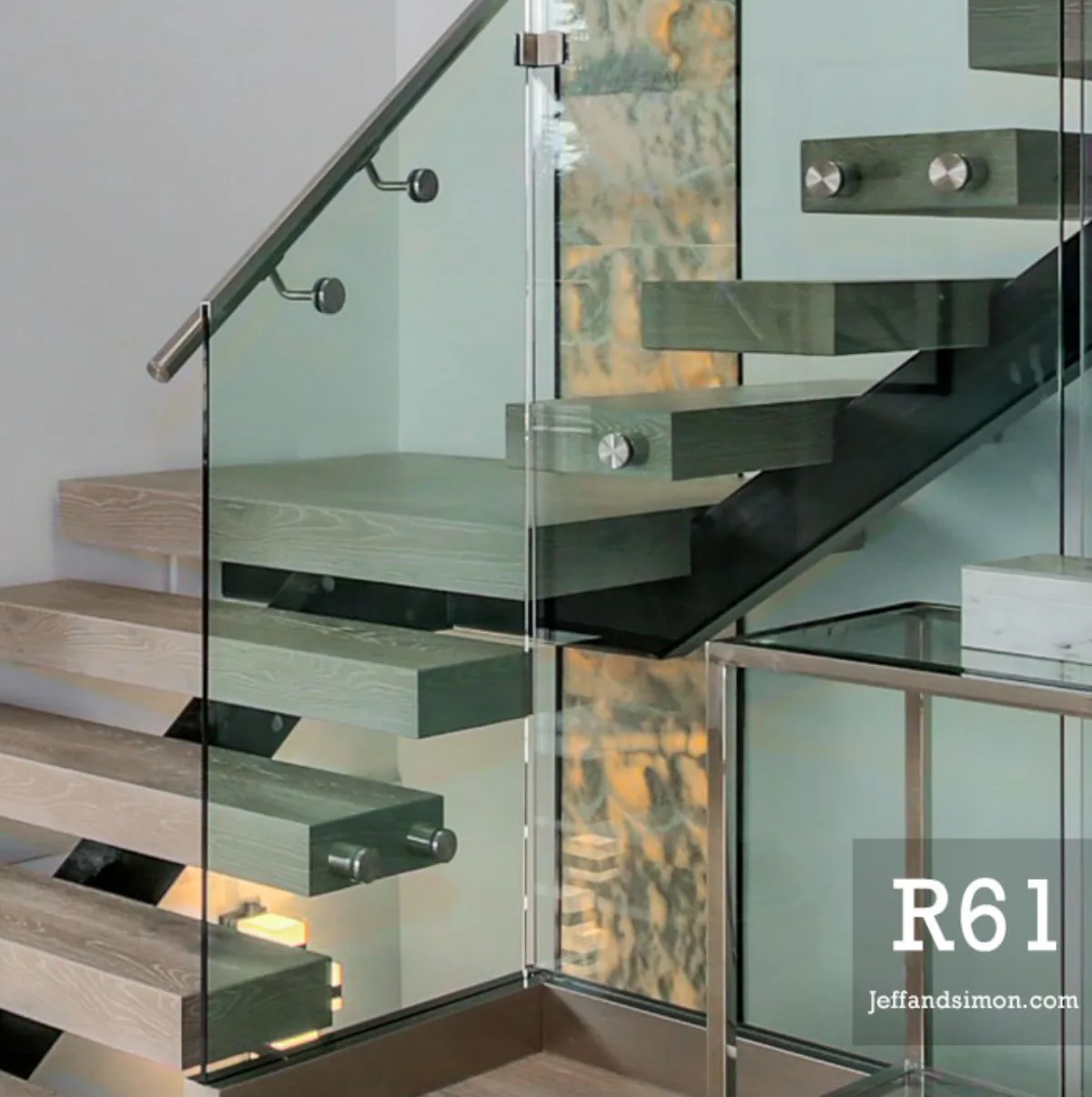
Glass Railings
Designed for Coquitlam sites, pricing, local planning notes, and finish guidance on the product page.
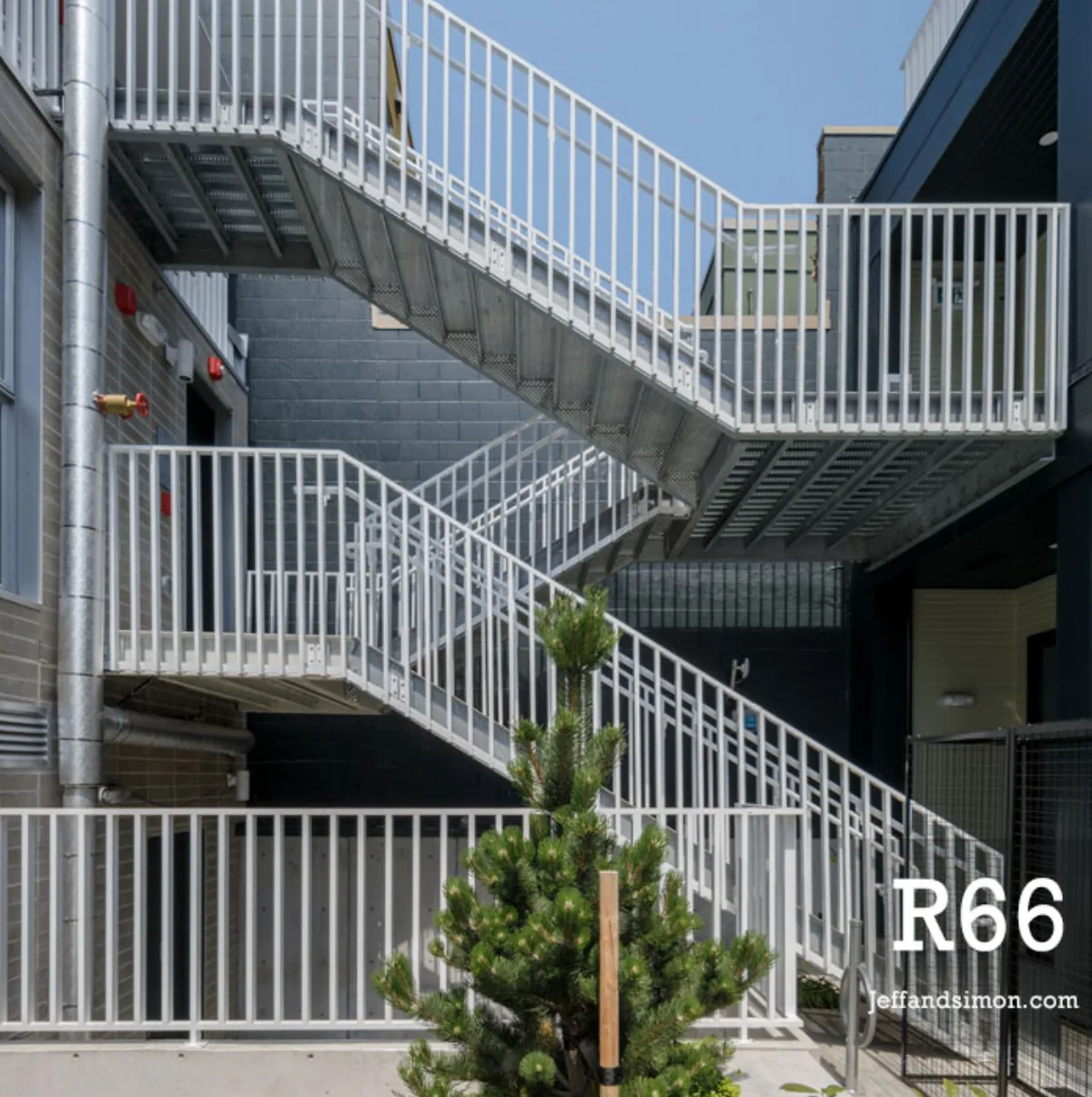
Strata Railings
Designed for Coquitlam sites, pricing, local planning notes, and finish guidance on the product page.
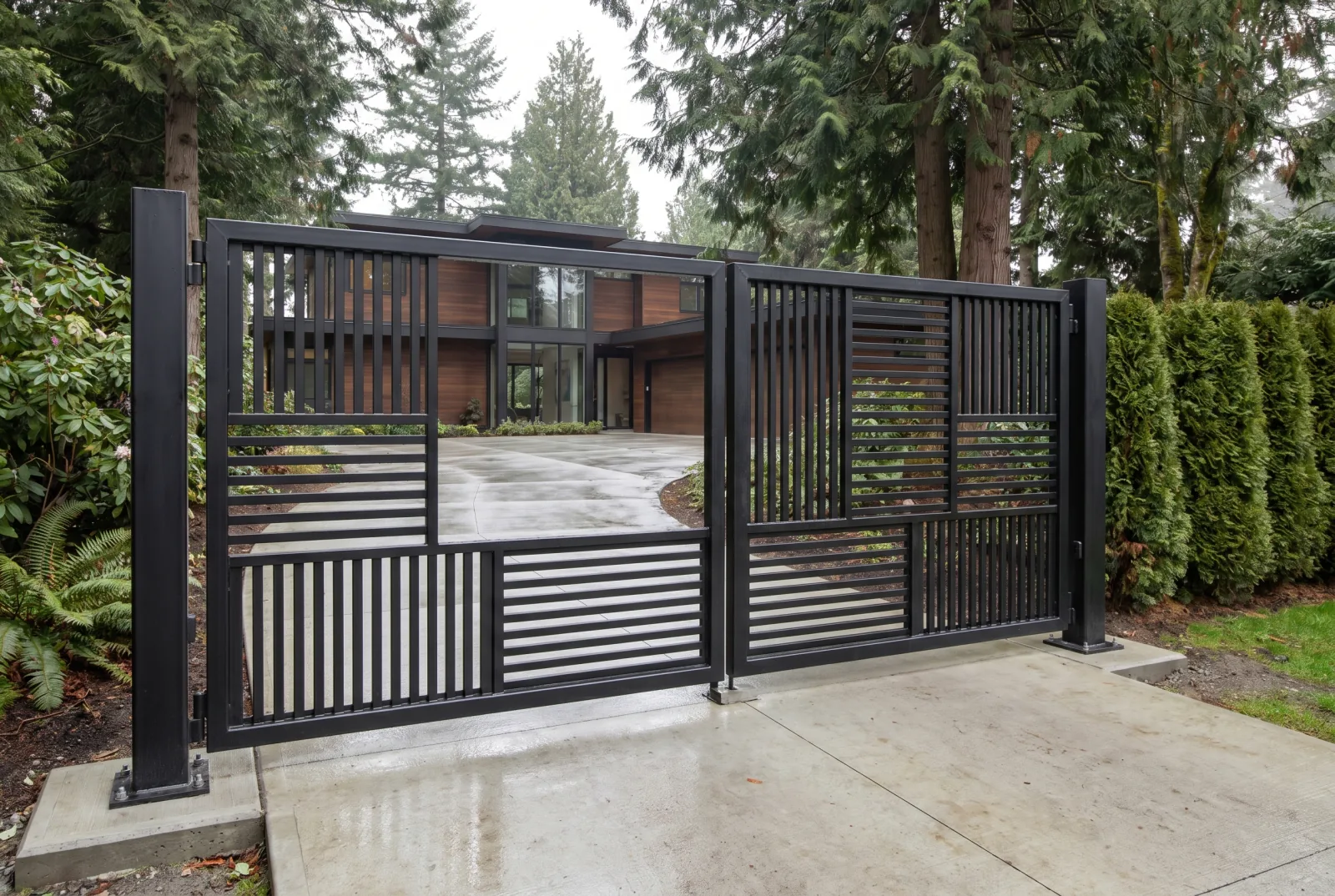
Driveway Gates
Designed for Coquitlam sites, pricing, local planning notes, and finish guidance on the product page.
Coquitlam project questions.
How does Burke Mountain's active construction market affect project timelines?
Burke Mountain moves quickly, framing crews, interior trades, and finishing contractors often overlap, and stair delivery timing matters. We recommend starting shop drawing coordination when framing is underway, not after the interior finishing schedule is already set. Early engagement prevents the stair from becoming the last trade on site.
Does Vancouver Stairs handle both residential and commercial stair projects in Coquitlam?
Yes. Coquitlam has a mix of residential new builds, strata complexes, and commercial or institutional projects. The documentation and code requirements differ between residential and commercial, we identify the applicable standard during the quote and scope shop drawings accordingly.
What are the permit requirements for stair work in Coquitlam?
Structural stair changes, guard replacements, and exterior stair additions generally require a City of Coquitlam building permit and sometimes engineer review. We coordinate permit submission and flag when stamps are required, standard for most structural stair and exterior work.
Other areas we serve.
Vancouver Stairs fabricates and installs from our Burnaby shop across the Lower Mainland, North Shore, Tri-Cities, Fraser Valley, and Sea-to-Sky.
Planning guides for your project.
Plan a metal stair or railing project in Coquitlam
Send drawings, photos, or a rough scope and we will help define the practical next step.