Strata Railing Cost in Vancouver: What Multi-Family Projects Pay
Cost breakdown for strata railing replacement and installation in Metro Vancouver, price per linear foot, per-unit project ranges, and how strata programs work.
Strata railing replacement in Metro Vancouver typically runs $90–$300 per linear foot installed, with per-unit project costs of $5,500–$13,000 depending on system type, building height, and access conditions.
Strata railing replacement is a different project from residential stair railing. The quantities are larger, access is more complex, building engineering and permit coordination are mandatory, and the client is a strata corporation working through a depreciation schedule rather than a homeowner working off a renovation budget.
What strata railing costs in Vancouver
Strata railing replacement in Metro Vancouver typically runs $90–$300 per linear foot installed, depending on the railing system, the building type, and how the project is structured.
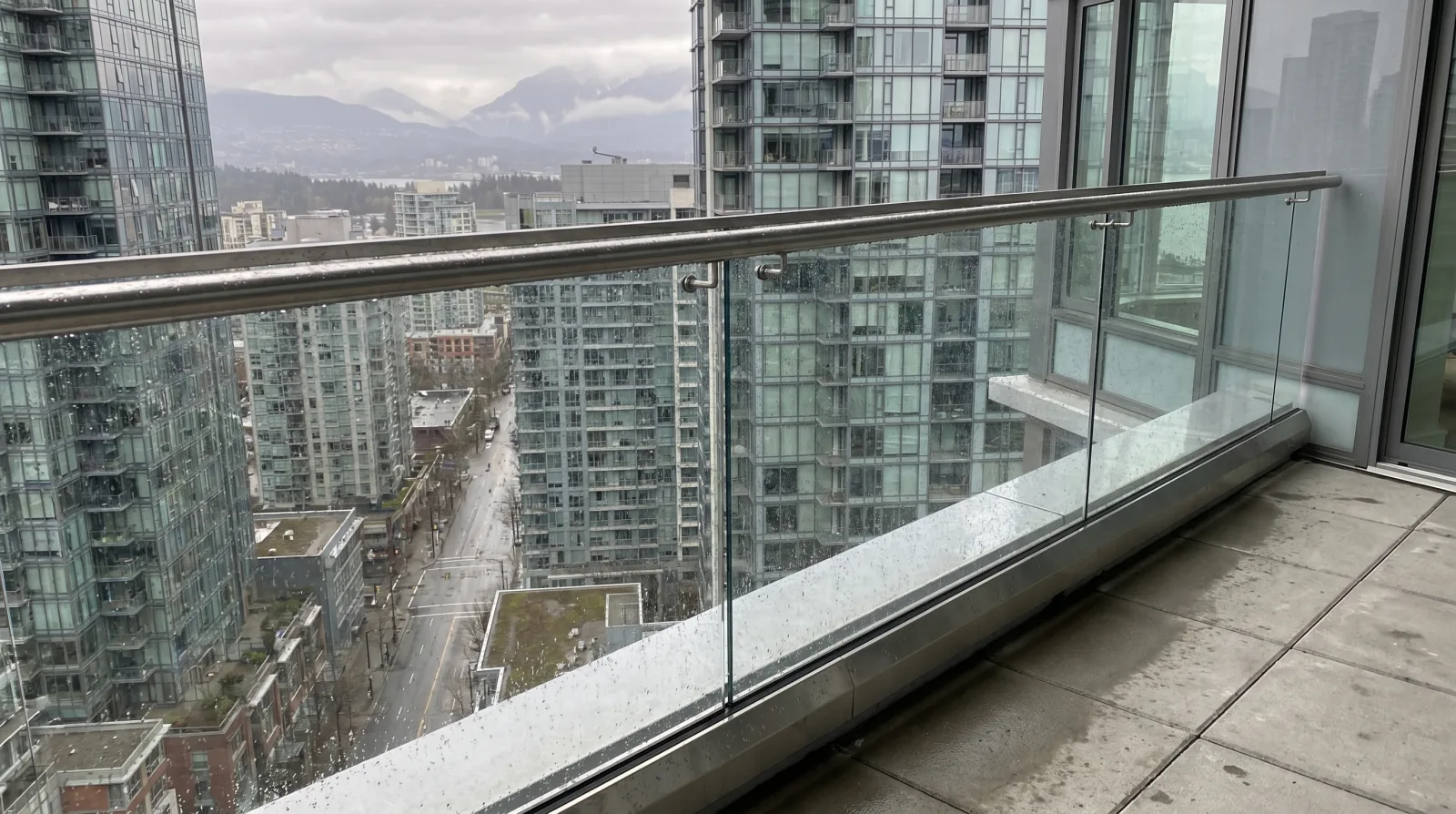
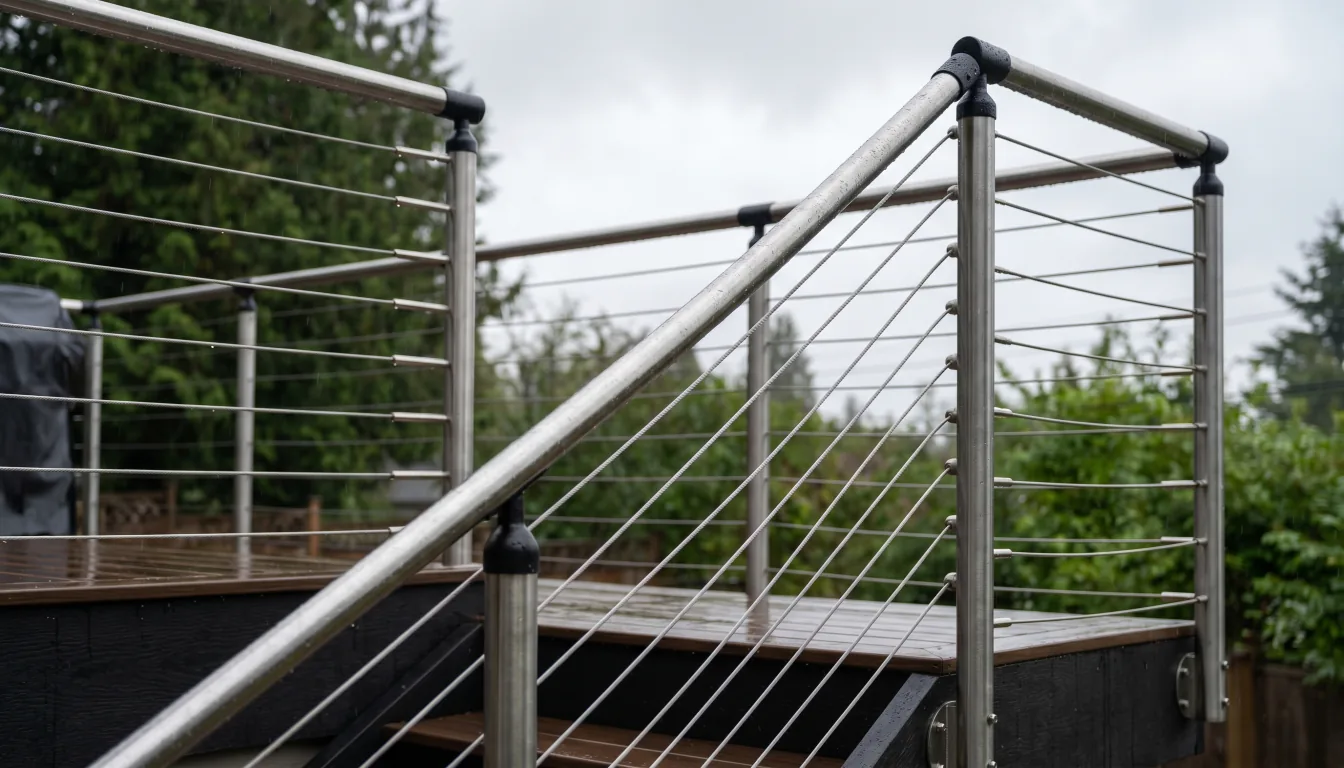
A flat infill replacement, removing deteriorated tube-and-picket railing and installing a new steel and glass or steel and cable system of similar geometry, sits at the lower end when the scope is large and access is straightforward. A full replacement that includes new post bases, new anchors, new coping connections, and a glass-and-steel system on a high-rise balcony with scaffolding access sits at the upper end.
Why strata railing costs differently than residential
Volume changes the per-unit price. A 200-unit building with 20 linear feet per balcony is 4,000 linear feet of railing. At that scale, material pricing, fabrication scheduling, and mobilization costs are spread over enough scope to bring the per-foot cost down significantly compared to a single-unit project.
Access drives the largest cost variables. Low-rise walk-up buildings allow direct balcony access from the exterior, which is fast. Mid-rise buildings may need a swing stage or elevating work platform, which adds significant mobilization cost. High-rise buildings with limited exterior access or proximity to adjacent buildings are at the upper end of cost.
Post anchor condition matters. Older balcony guard systems in Metro Vancouver were often set with anchors that corrode over time. When the replacement scope includes core-drilling new anchors into the balcony slab, the cost per foot increases versus replacing systems where existing anchors are intact.
Stainless hardware vs. powder-coated steel affects both the installed cost and the long-term maintenance cost. Buildings within 1.5 km of salt water, North Shore, Kitsilano, Coal Harbour, Richmond waterfront, typically require stainless hardware and fixings to prevent accelerated corrosion.
Typical scope structures for strata programs
Full building replacement programs cover all balconies, common stairwells, and exterior walkway guards in one contract. These are typically driven by a depreciation report finding that the guard system has reached end of life.
Phased programs replace a portion of the building each year over a multi-year window, aligned with the strata’s depreciation reserve draw schedule. Phased programs cost slightly more per foot than single-phase because mobilization costs repeat.
Emergency replacement, triggered by a failed inspection, structural corrosion finding, or AHJ notice, typically carries a premium because the timeline is compressed and the scope may not be fully defined before mobilization.
Permit and engineering requirements
Every strata railing replacement that touches a guard system requires a building permit in Metro Vancouver. The permit will require:
- Structural drawings showing the new railing system and its connection to the building structure.
- Engineer’s confirmation that the new system meets guard loading requirements under the applicable code.
- Inspection by the AHJ at installation.
The strata corporation is typically the permit applicant. The fabricator prepares the drawings and coordinates with the project engineer. Allow 6–10 weeks for permit approval in most Metro Vancouver municipalities.
Getting an accurate quote for a strata program
To get an accurate quote for a strata railing replacement, the fabricator needs:
- Total linear footage of all railings to be replaced.
- Building height and access method (direct, swing stage, scaffolding, etc.).
- Photos or drawings of the existing system and the anchor conditions.
- Desired new system type (steel and glass, steel and cable, steel pickets).
- Project timeline and phasing preferences.
- Any existing engineering or depreciation report findings.
Large strata programs are best quoted after a site walkthrough with the strata manager. A one-day site visit with accurate measurements is more useful than a square-footage estimate from building drawings.
Per-unit cost benchmarks for Metro Vancouver
Industry data on strata railing replacement programs in Metro Vancouver points to these per-unit ranges:
| Building type | Per-unit cost range | Notes |
|---|---|---|
| Low-rise walk-up (3–4 storeys) | $5,500–$8,000 | Direct balcony access, standard scope |
| Mid-rise (5–12 storeys) | $7,000–$11,000 | Swing stage or elevating work platform |
| High-rise (13+ storeys) | $9,000–$13,000 | Complex access, marine-grade spec common |
| North Shore waterfront (any height) | Upper end of range + 10–15% | Marine-grade stainless required |
These figures include engineering coordination, fabrication, installation, and AHJ inspections. They exclude structural repair contingency, which is typically budgeted at 10–15% of the base scope and drawn only if concealed damage is found at anchor points.
Volume is the most powerful cost lever. A program covering 30 or more units in a single phase will typically price 15–25% lower per unit than the same scope split into smaller phased contracts, because engineering, site setup, and fabrication scheduling costs are spread over more output.
Depreciation report alignment
Most strata railing replacement programs are triggered by a depreciation report finding that the guard system has reached its expected service life. Under BC’s Strata Property Act, strata corporations with five or more units in BC are required to obtain and update depreciation reports.
The depreciation report will identify the anticipated replacement year and the estimated cost in current dollars. If the report estimate is more than two years old or was written before material and labour cost escalations of recent years, it may understate the current cost by 20–40%. Getting a current fabricator quote during the next depreciation report update cycle is worth doing.
For the physical installation side of strata railing work, access sequencing, anchor assessment, and building protection, the strata railing replacement Burnaby guide covers the operational detail.
Sources
- BC Strata Property Act, Depreciation Reports, Part 6, Section 94: requirement for strata corporations to obtain and update depreciation reports
- BC Building Code 2018 Division B Section 9.8, Guards, guard height, loading, and attachment requirements for balcony railing systems
- CHOA, Condominium Home Owners Association of BC: Depreciation Reports, guidance on reserve fund planning for strata railing replacement programs
- National Research Council Canada, NBC 2020 Structural Commentary, guard loading requirements referenced by BC engineers
Related questions
How much does strata railing replacement cost per linear foot?
Strata railing replacement in Metro Vancouver typically runs $90–$300 per linear foot installed, depending on railing system type, building height, balcony access conditions, and total scope. Larger programs unlock better pricing per unit versus a single-unit residential installation.
What is the per-unit cost for a strata railing replacement in Metro Vancouver?
Per-unit project costs typically run $5,500–$13,000 in Metro Vancouver, with North Shore waterfront buildings (requiring marine-grade specs) at the upper end and standard mid-rise replacements landing $6,500–$11,000. These figures include engineering, fabrication, installation, and inspection.
Does the strata or unit owner pay for railing replacement?
That depends on the strata bylaws and the depreciation report allocation. Guard and balcony railing systems are typically considered common property maintained by the strata corporation. Confirm the allocation with the strata manager and the strata's legal documents before the scope is defined.
Do strata railing replacements need a building permit?
Yes. Replacing or modifying a guard system on a multi-family building requires a building permit in most Metro Vancouver municipalities. The permit requires structural drawings and engineer's sign-off and is typically obtained by the strata corporation or its contractor.
How long does a strata railing replacement program take?
From council decision to completed work, expect 12–24 months total: engineering and assessment (2–4 months), scope development and bidding (2–3 months), owner approval and funding (2–6 months), fabrication (2–4 months), and on-site installation (8–20 weeks depending on building size and access method).