Cable Railing Cost Vancouver 2026: $175–$425/Linear Foot Explained
Cable railing in Metro Vancouver costs $175–$425 per linear foot installed. What moves the price: post spacing, stainless spec, hardware grade, and site conditions, from a local fabricator.
Vancouver Stairs installs cable railing across Metro Vancouver for $175–$425 per linear foot, depending on post spacing, hardware spec, and site conditions.
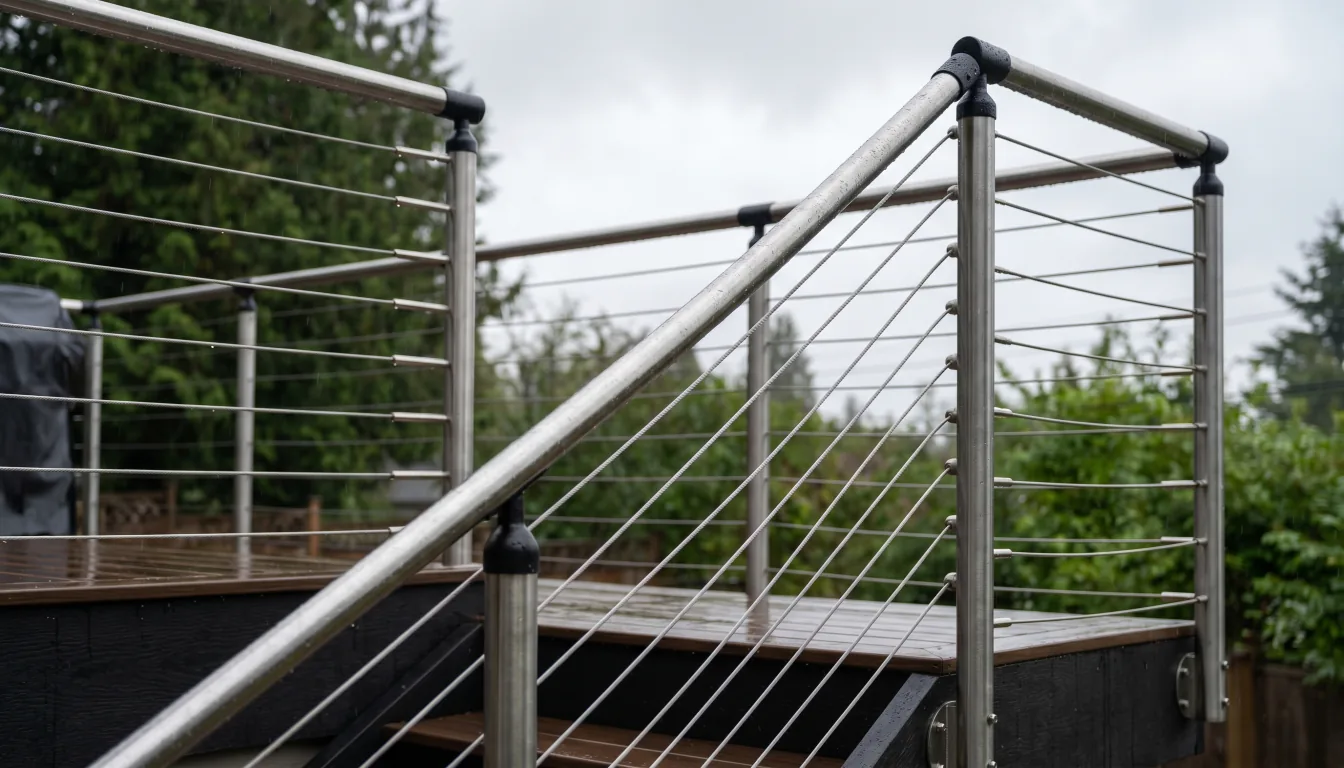
Cable railing is the most popular railing choice for Vancouver decks, stairs, and balconies where cost, durability, and a clean modern look all matter. It costs significantly less than glass, requires minimal maintenance, and handles BC’s rain and coastal salt air without corrosion issues when the hardware is correctly specified. Vancouver Stairs fabricates and installs cable railing across Metro Vancouver, see our cable railings Vancouver service page for project details and specifications.
What cable railing costs in Vancouver
Cable railing in Metro Vancouver typically runs $175–$425 per linear foot installed, covering posts, hardware, cable, and labour. The range is wide because several factors drive the price up or down.
A simple system, wood posts, basic swage fittings, standard cable, lands at the lower end. A fully engineered deck system with round stainless posts, tensioner fittings, and corner posts with radius bends lands in the middle. An architecturally designed interior stair with custom stainless hardware, tight post spacing, and intermediate cable posts sits at the upper end.
The main cost drivers
Post material and profile is the single largest variable. Round stainless steel posts are the premium option, they read clean, require zero maintenance, and match the cable hardware. Mild steel posts with powder coat are a solid mid-range choice. Wood posts are the most affordable post system but require periodic maintenance.
Post spacing affects both material and labour cost. The longer the span between posts, the more cable deflection must be managed, either with intermediate posts or with tensioner hardware at the intermediate span. Tight post spacing reduces cable sag and keeps the railing looking taut, but adds fabrication cost.
Fittings and end hardware, the swage fittings, tensioners, and through-posts, are visible in the finished railing and drive the hardware budget. Standard imported fittings are lower cost; branded stainless fittings with locking mechanisms cost more and last longer.
Corner posts and transitions add cost on any railing with direction changes. A cable that turns a corner needs a corner post engineered to handle the lateral load of cable tension in two directions.
Site access affects installation time. Second-floor decks, sloped sites, and tight access to balconies all add labour.
Typical total project costs
Most residential cable railing projects in Metro Vancouver, a deck or staircase railing, range from $4,000 to $18,000 total installed. A simple 20-linear-foot deck railing with standard hardware and wood posts lands at the lower end. A 60-linear-foot deck-plus-stair system with round stainless posts and premium fittings lands at the upper end.
Stair railings are typically more expensive per linear foot than deck railings because stair railing requires angled post connections, handrail continuity, and post spacing that accounts for the stair geometry.
Cable vs. glass: the cost comparison
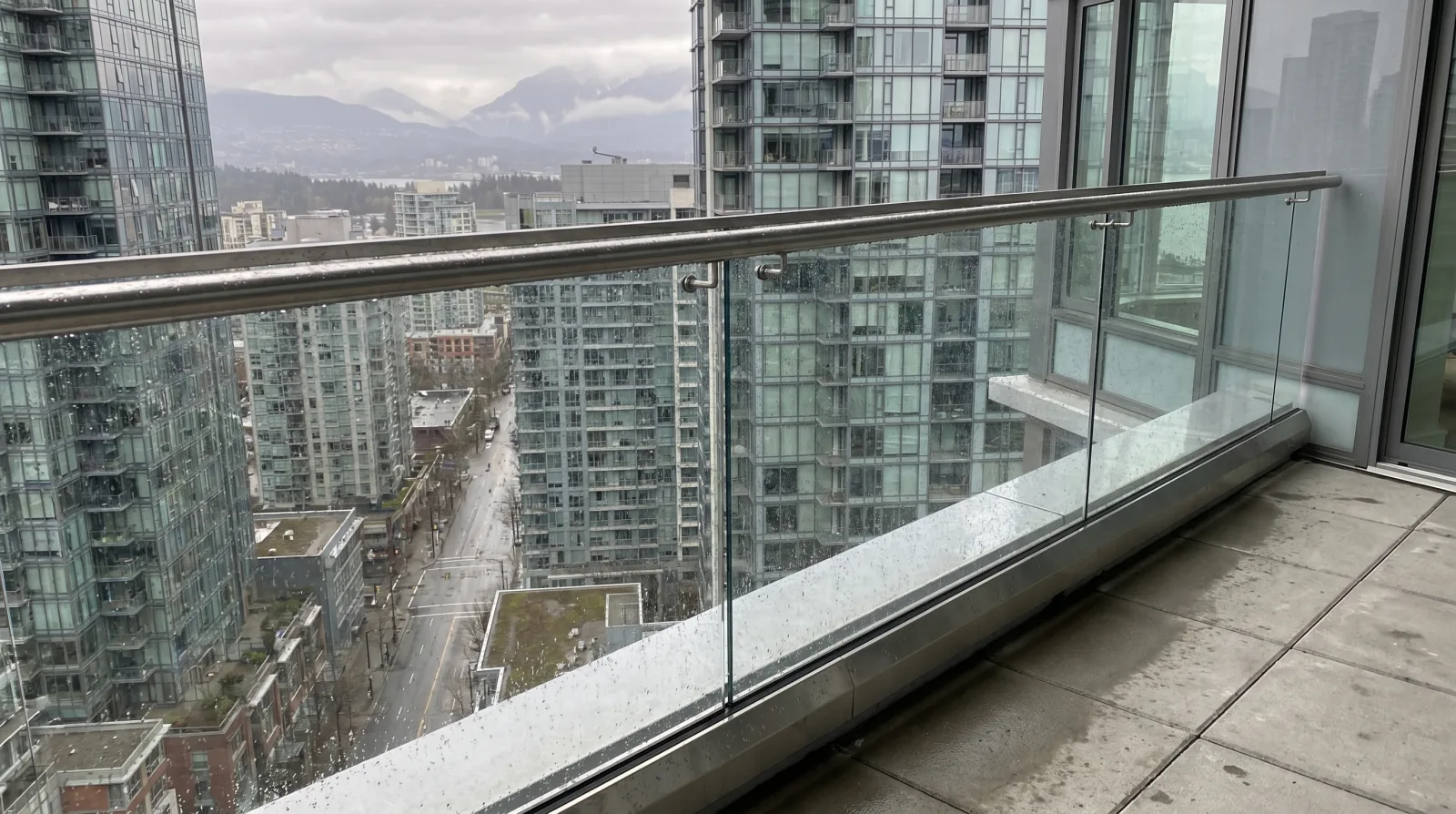
Cable railing is typically 40–60% less expensive than glass railing for a comparable post system, a range that reflects fabrication pricing across most projects in the shop, though the gap narrows on simpler glass systems and widens on premium cable hardware. Glass guards carry the cost of the glass panels, the standoffs or U-channel base, the glass-to-post connection hardware, and the separate graspable handrail that BC code requires even with a glass guard.
Cable railing is the right choice when the priority is a clean contemporary look, the view beyond the railing is less important than the view through or below it, or budget is a significant constraint.
What to include in a cable railing quote
A complete cable railing quote for Metro Vancouver should cover: posts and base plates, cable, fittings and hardware, labour (installation and tensioning), any engineering required for guard loading, and applicable permits. Ask the contractor to break these out, the line items will tell you where the quote is priced tightly and where there may be negotiation room.
All cable railing systems in BC must comply with the BC Building Code sphere-passage requirements for the guard. Confirm the post spacing and cable layout against the applicable code edition for your project before fabrication.
Related reading: the cable railing specification guide for Vancouver decks and stairs, the glass railing cost in Vancouver, and the custom metal stair cost guide.
Cable railing on stairs vs decks
Stair cable railing is priced differently from deck cable railing. Stair systems require angled post connections, continuous handrail, and post spacing engineered to handle the stair geometry and the 100 mm sphere-passage requirement under BC code. The cable must be evaluated at deflection, not just at rest, to confirm the cable spacing is compliant.
Most fabricators price stair cable railing at a 20–35% premium over equivalent deck railing for the same linear footage, reflecting the added connection complexity and inspection requirements.
Coastal and site-specific cost factors
Vancouver’s marine climate affects material choices and pricing in ways that matter for any exterior cable railing:
Within 1.5 km of salt water (Kitsilano Beach, Coal Harbour, West Vancouver waterfront, North Shore), stainless cable and stainless fittings are not optional, they are the only system that will perform for more than a few years without corrosion. Marine-grade 316 stainless hardware costs 20–40% more than 304-grade or mild steel alternatives.
North Shore hillside properties face steeper site access conditions and longer cable runs on sloped terrain, which drives post spacing and tensioning calculations. Long cable runs on sloped decks need intermediate tensioners that add both hardware and labour cost.
Maintenance cost over time
Cable railing has lower lifecycle maintenance cost than wood or painted steel, the cable and stainless fittings don’t need repainting. But periodic re-tensioning and fitting inspection matters.
Most quality cable systems can be re-tensioned by the homeowner with a hand tool; annual inspection of cable tension is worth building into the deck’s maintenance schedule. The swage or wedge connection at each post is worth checking every two to three years, fittings that were overtensioned at installation can fatigue over time. Powder-coated steel posts in sheltered exterior applications typically hold well for ten to fifteen years before re-coating is needed; coastal exposure shortens that window.
Permits and inspections for cable railing in BC
Whether cable railing requires a permit depends on the scope and jurisdiction.
New installation on a new deck or stair: Typically covered under the deck or stair permit. The railing system is reviewed as part of the deck structure, not separately.
Replacement of an existing guard system: Most Metro Vancouver municipalities require a permit when the structural attachment method changes or when post bases are relocated. Replacing like-for-like hardware on the same post bases is generally maintenance, not a permit scope.
Residential Part 9 projects in the City of Vancouver: The City of Vancouver requires a building permit for any guard replacement on a residential project where the guard system is being substantially altered. This includes changing post spacing or anchor type.
Strata or commercial properties: Always require a building permit. The structural drawings must be prepared by or coordinated with a professional engineer, and the installation is subject to AHJ inspection.
Allow 4–8 weeks for residential permit processing in most Metro Vancouver municipalities. Vancouver and North Vancouver typically run longer; Burnaby and Coquitlam have faster typical turnaround on residential permits.
What to have ready before getting a cable railing quote
A useful cable railing quote requires specific inputs. Having these ready before contacting a fabricator shortens the quoting cycle and produces a more accurate number:
- Total linear footage of railing required, measured along the top rail line including any stairs
- Post locations and spacing, or confirmation that the fabricator will determine these from BC code requirements and the site geometry
- Surface the posts will attach to, deck boards (surface mount), concrete slab, wood framing, steel beam, or masonry
- Whether the site is within 1.5 km of salt water, triggers 316 stainless hardware specification
- Stair configuration, if the cable continues from a deck railing onto a stair, note the stair rise, run, and number of steps
- Corner configurations, note any 90-degree or angled transitions
- Post preference, wood, mild steel powder coat, or round stainless
The more of these inputs available at first contact, the faster a fabricator can produce a number that holds through engineering and fabrication.
Common questions from homeowners on cable railing cost
Can I install cable railing myself?
The cable and fittings are available as a DIY kit from suppliers like Muzata, Feeney, and Atlantis Rail, but BC code requires that the completed guard system be able to resist a 0.5 kN point load (roughly 110 lbs of force on the top rail) without failure or excessive deflection. If the installation is unpermitted and a failure occurs, liability falls to the homeowner. For a deck over 600 mm above grade, most homeowners are better served by a professional install that comes with shop drawings and warranty.
Does cable railing affect home resale value?
In Metro Vancouver markets where clean contemporary outdoor design is valued, Kitsilano, Point Grey, Dunbar, West Vancouver, North Vancouver, cable railing on a well-maintained deck is a neutral to positive feature at resale. It signals recent renovation and modern taste without the maintenance baggage of painted wood. In markets where buyers skew conservative, a glass railing alternative may carry stronger perceived value. Cable railing does not negatively affect assessed value.
How long does cable railing last?
Marine-grade 316 stainless cable and fittings specified correctly for the exposure level will outlast the deck structure they are attached to. The cable itself, typically 1×19 or 7×7 construction in 3.2 mm (1/8 in) diameter, has a design life of 25+ years in exposed coastal conditions when the fittings are 316 stainless and tension is maintained. Posts and base plates are the first components to show wear on a powder-coated steel system; plan for re-coating or replacement at the 10–15 year mark on coastal exposures.
Sources
- BC Building Code 2018 Division B Section 9.8, Guards and Handrails, sphere-passage requirements for guard systems
- How Much Does Cable Railing Cost? 2026, HomeGuide, national cost ranges for context
- Cable Railing Cost Per Foot (2026), Senmit Deck Design Guide
- City of Vancouver, Building Permits for Decks and Exterior Guards
Related questions
How much does cable railing cost per linear foot in Vancouver?
Most cable railing projects in Metro Vancouver run $175–$425 per linear foot installed, depending on post material, hardware spec, post spacing, and site access.
Is cable railing cheaper than glass railing?
Yes. Cable railing is typically 40–60% less expensive than glass railing per linear foot for comparable post systems. The visual result is lighter and more open-looking than glass for most homeowners.
Does cable railing need tensioning over time?
Yes. Stainless cable can lose tension over months of use, especially on long horizontal runs. Adjustable fittings allow retensioning. Most quality cable systems are easy to re-tension with a hand tool.