Metal Stair and Railing Maintenance in Vancouver: What Actually Needs Doing
Practical maintenance guide for custom steel staircases, cable railings, glass railings, and exterior metalwork in Metro Vancouver's climate.
Steel stairs need far less maintenance than wood, but they are not zero-maintenance. Here is what actually requires attention and how often.
This guide covers routine maintenance tasks for custom steel staircases and railings. Any finding that suggests structural movement, weld failure, or load-bearing component damage should be assessed by a qualified professional, do not attempt structural repairs without a CWB-certified welder.
One of the practical advantages of a custom steel staircase over wood is that maintenance requirements drop dramatically. A steel stair does not warp, creak, swell, or need refinishing. But it is not a zero-maintenance product. Here is what actually requires attention in Metro Vancouver’s climate, and how often.
Interior steel staircases
An interior powder-coated steel staircase in good condition needs very little beyond regular cleaning. Wipe down the steel with a damp cloth and a mild non-abrasive cleaner. Abrasive scrubbing pads, bleach, and acidic cleaners scratch and dull the powder coat finish, so avoid them. Dry the surface after cleaning to prevent water spotting on the steel and on any glass panels nearby.
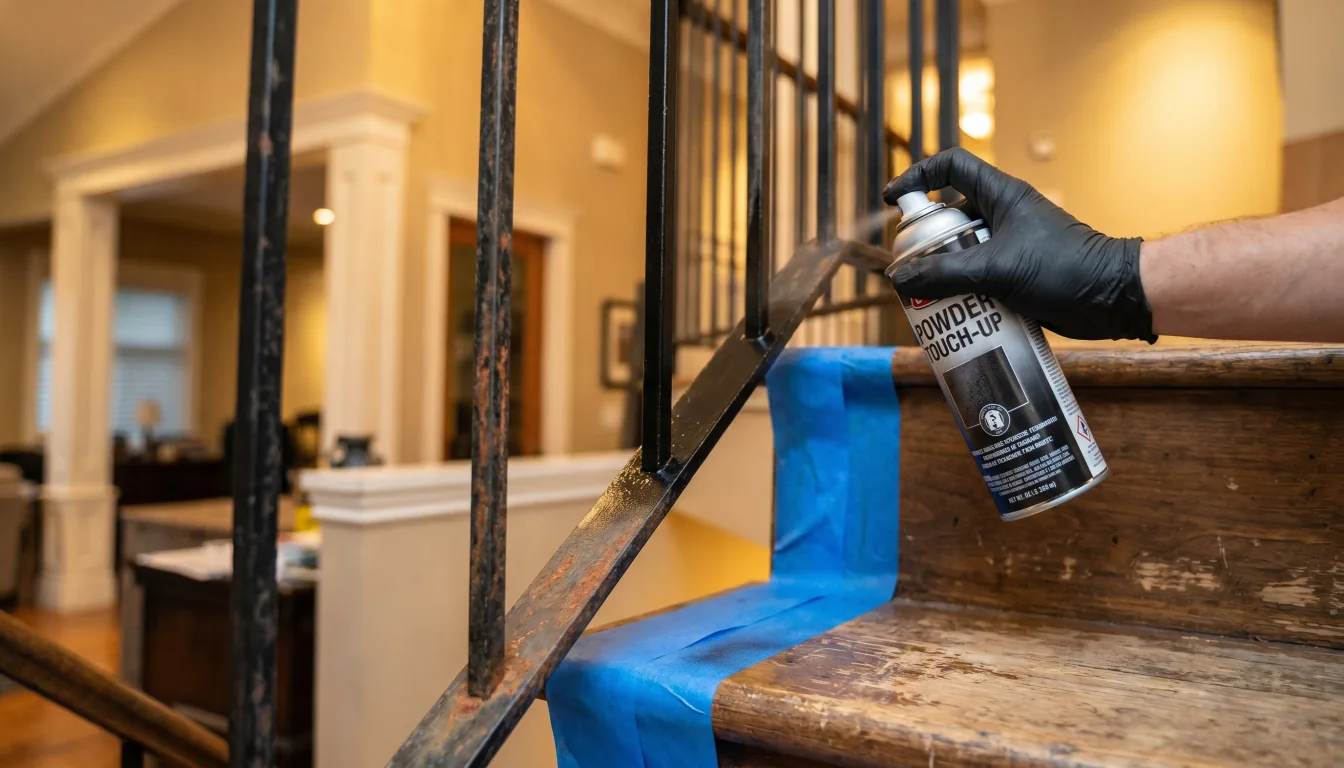
Powder coat is durable but chips under impact from furniture or tools. Most fabricators provide a small amount of matching touch-up paint at the completion of a project. Apply touch-up paint to any exposed steel within a few weeks of discovering the chip, bare mild steel corrodes quickly in humid conditions, and a small chip becomes a larger corrosion patch quickly.
Check handrail brackets and railing post fasteners once a year. Vibration and seasonal building movement gradually loosen bolts. Tighten any loose fasteners before they work loose far enough to create railing movement.
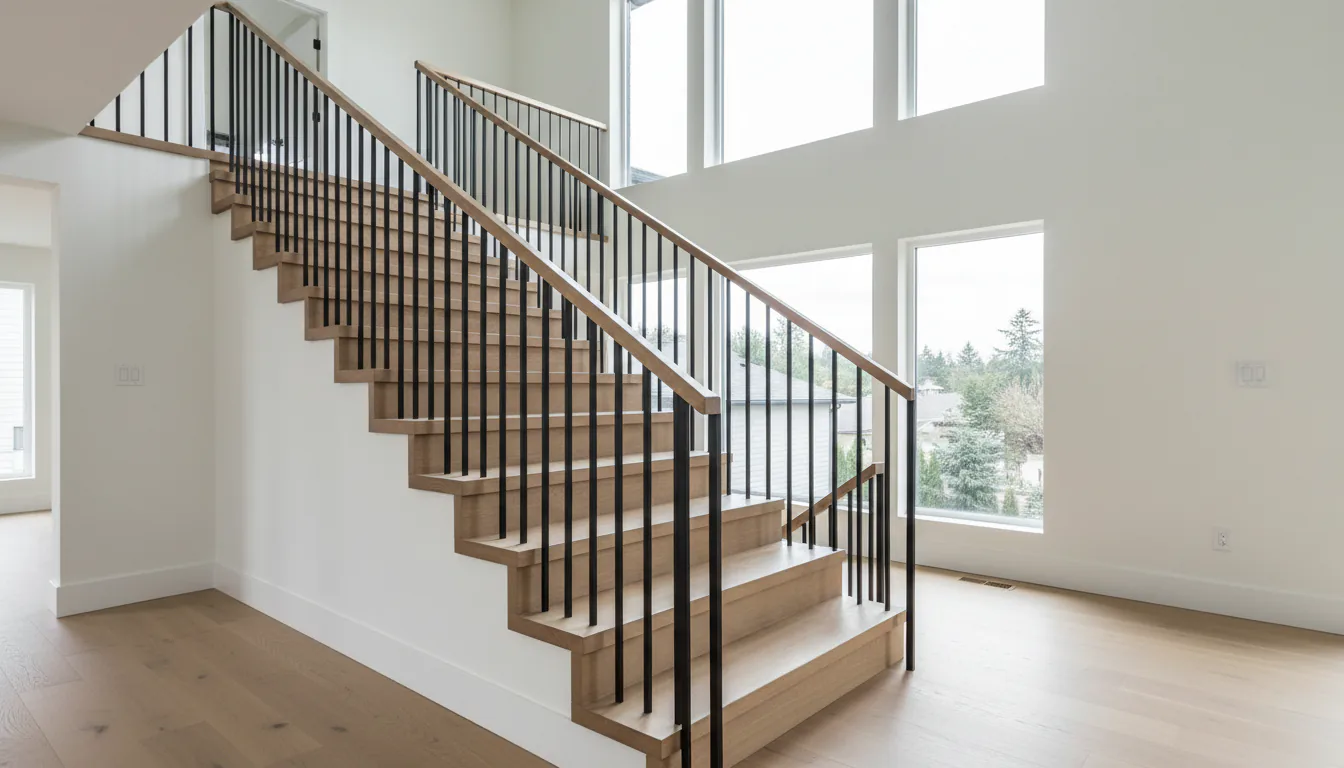
Wood tread surfaces wear normally over time. Depending on the wood species and finish, wood treads may need light refinishing after a decade or more of heavy use. Steel-pan treads with grip coating are maintenance-free in normal residential use.
Cable railing
Cable railing has one maintenance item specific to its system: tension.
New cable railing systems often lose noticeable tension in the first six to twelve months after installation as the cable stretches slightly under load and the fittings seat into their connections. In our shop, we find this initial settle is predictable on most systems. Most quality systems come with adjustable tensioner hardware that allows the homeowner or the fabricator to retension the cable with a hand tool. If the railing was installed with non-adjustable swage fittings, retensioning requires the fabricator to return.
After the initial settle, cable railing needs an annual inspection to confirm that tension is within the acceptable range, that horizontal openings between cables still comply with the guard sphere-passage requirement under BC code, and that end fittings and tensioners show no signs of corrosion. At coastal properties in West Vancouver, North Vancouver, and Squamish, check for corrosion on all stainless hardware each year.
Cable railing post base plates are anchored to the deck or stair with fasteners. Check that base plate bolts are snug annually, particularly on exterior systems where wood decking movement can loosen anchors.
Glass railing
Glass railing maintenance focuses on the glass surface and the hardware connections.
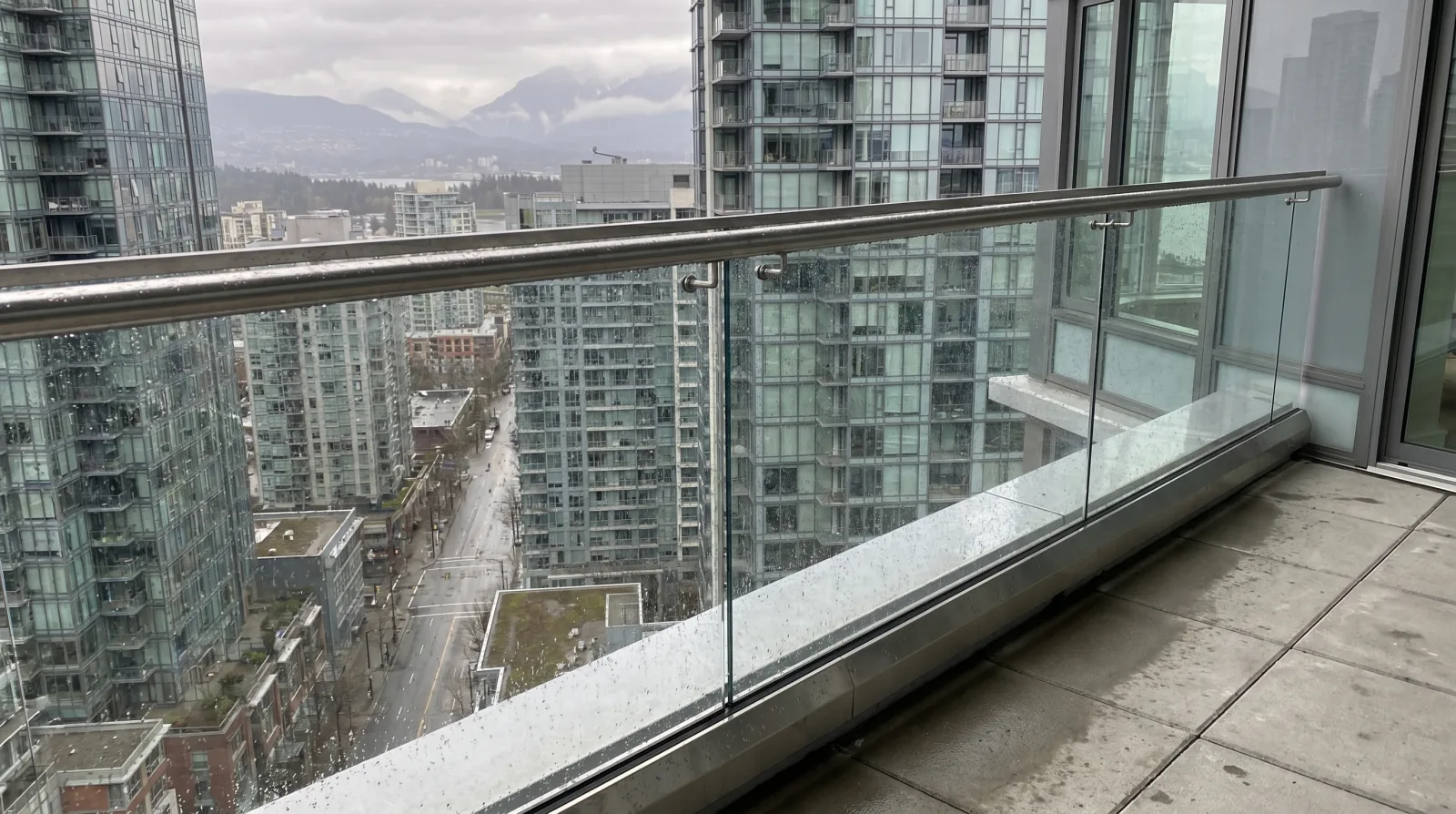
Glass panels require regular cleaning to look their best. Standard glass cleaner or a mild soap-and-water solution works well. Avoid abrasive cleaners on glass. Frameless glass railings show fingerprints and water spots more readily than semi-frameless systems because the glass is more exposed.
Frameless glass railings use standoffs (point-fixed bolts) or a continuous base shoe to carry the glass panels. Check that all standoff hardware is torqued to spec annually. Loose standoffs allow glass movement, which adds stress to the glass and the surrounding sealant. If any standoff shows corrosion or movement, have it inspected by the fabricator before it progresses.
Semi-frameless systems use rubber or neoprene gaskets between the glass and the aluminum channels. These seals degrade over time, in our experience, quality rubber gaskets typically hold up for a decade or more before replacement becomes necessary. Replace deteriorating gaskets before they allow water ingress into the channel; degraded gaskets may also allow glass rattling in the wind.
Exterior metal stairs and handrails
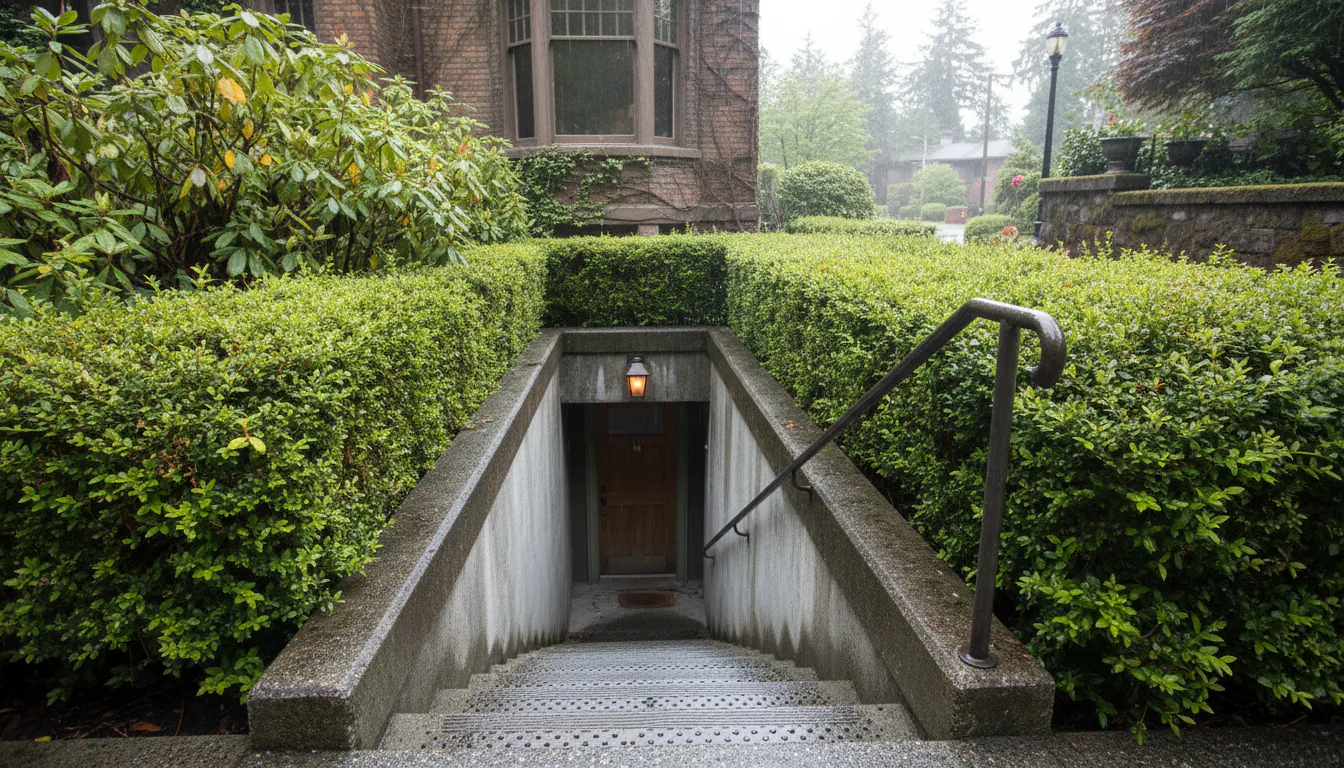
Exterior steel in Metro Vancouver’s coastal climate needs more attention than interior steel.
Check the finish annually for worn areas, particularly on horizontal surfaces (landings and nosings) where standing water collects, on transition areas where foot traffic accelerates wear, and on connection hardware (post bases, anchors, and field-bolted connections). Document each inspection so finish wear is tracked year over year.
Powder-coat finish on exterior steel typically lasts well before a full repaint is cost-effective, but touching up worn areas annually prevents the bare steel from corroding to the point where a patch is not enough and a full strip-and-repaint becomes necessary.
On galvanized exterior stairs, look for white rust (zinc corrosion product) on horizontal surfaces and for red rust at any areas where the galvanizing was damaged during installation or by impact. White rust is normal and not a structural concern. Red rust means the zinc has been lost and the base steel is exposed, touch up red-rust areas with a zinc-rich repair paint promptly.
Check that drainage holes in hollow stringers and posts are clear. Standing water inside a hollow section accelerates internal corrosion that is invisible from the outside until structural failure.
When to call the fabricator back
Some conditions are worth getting the original fabricator or a qualified inspector involved in directly: a railing that shows movement under guard loading (the standard test is body-weight pressure applied to the top rail); a post base plate that is visibly corroded, cracked, or has pulled away from the surface it is anchored to; cable tension that cannot be restored to the acceptable range with the adjustable hardware; glass panels showing cracking, delamination (in laminated glass), or chipped edges; and any structural weld or connection point showing visible corrosion or cracking.
The fabricator’s involvement at any of these points is much cheaper than addressing the problem after it has progressed. A small corrosion patch is a touch-up job. The same area ignored for two more wet seasons is a replacement weld.
Seasonal maintenance schedule for Metro Vancouver
Vancouver’s climate is mild but persistently wet. Rain falls from October through April, summers are dry but can include salt-laden sea breezes on coastal properties. A seasonal schedule keeps maintenance from becoming a large project.
October (before heavy rain season):
- Inspect all exterior steel for finish wear, particularly on horizontal surfaces where standing water accumulates (landings, tread nosings, post tops).
- Touch up any bare steel exposed by chips or wear with matching touch-up paint before the wet season. Once bare mild steel starts corroding under six months of winter rain, the patch area expands significantly.
- Clear drainage holes in hollow steel members.
- Check cable tension on any exterior cable railing before the expanded temperature range of winter contracts the cable further.
April (end of wet season):
- Full visual inspection of exterior metalwork after six months of rain exposure.
- Document any new corrosion on galvanized surfaces. White rust (zinc corrosion) is normal and benign; red rust on a galvanized surface means the zinc has been compromised.
- Clean glass railing panels after winter algae and mineral deposits. A mild oxalic-acid-based glass cleaner removes hard water deposits without scratching.
- Tighten all fasteners on post base plates and handrail brackets. Seasonal expansion and contraction of the building gradually loosens bolts over winter.
Ongoing (monthly during summer for exterior stairs):
- Wipe down stainless hardware on coastal properties with a mild stainless cleaner or even plain warm water. Salt film on stainless can cause crevice corrosion on 304-grade hardware if left long enough, 316 stainless is more resistant but not immune.
Metro Vancouver climate factors that affect steel maintenance
Burnaby and inland Metro Vancouver: Moderate humidity, minimal salt exposure. Powder-coat interior steel requires essentially no maintenance. Exterior powder coat on sheltered surfaces holds well; horizontal surfaces (landings) wear faster from foot traffic and water pooling.
Kitsilano, False Creek, Coal Harbour, Richmond waterfront: Within 1–3 km of Georgia Strait or the Fraser River outlet. Salt air is intermittent but present. Marine-grade 316 stainless hardware should be specified on any cable or glass railing system in these neighbourhoods. Powder coat on mild steel posts in these zones typically degrades faster than inland properties, plan re-coat at 7–10 years rather than 12–15.
West Vancouver, Ambleside, Horseshoe Bay: Directly exposed to Georgia Strait salt air. This is the highest-corrosion-risk category for exterior metal in Metro Vancouver. If the original installation used 304 stainless fittings or powder-coated steel cable hardware, budget for replacement sooner than the label suggests. The cost of hardware replacement is small relative to the cost of repainting or replacing a post that has corroded through.
North Shore hillside properties (Lynn Valley, Deep Cove, Edgemont): High rainfall, significant moisture from adjacent forest cover. Interior steel is not materially affected. Exterior stairs on hillside lots collect more moisture at the base, check base plate condition and drainage annually.
Surrey and Langley: Lower salt exposure, similar humidity profile to Burnaby. Lowest-maintenance category for exterior steel. Standard powder coat on exterior stairs typically performs 12–15 years before re-coat is warranted.
Finish warranty and fabricator expectations
Most reputable custom steel fabricators provide a limited warranty on their powder coat finish, typically one to three years against adhesion failure under normal conditions. This warranty covers manufacturing defects (poor adhesion, outgassing, contamination in the substrate prep) not damage from impact, abrasion, or inadequate maintenance.
Understanding what falls inside and outside that warranty helps homeowners plan maintenance correctly:
- Covered: Finish peeling, bubbling, or delaminating from the steel within the warranty period without physical damage.
- Not covered: Chips from furniture or tool impacts, finish wear on high-traffic horizontal surfaces, or corrosion at bare steel exposed by impact damage that was not touched up promptly.
After the warranty period, the finish is the homeowner’s maintenance responsibility. A well-maintained powder coat finish on an interior steel stair can last 20+ years. An exterior finish on a coastal property that receives no maintenance might need full strip-and-repaint within 8–10 years.
Sources
- BC Building Code 2018 Division B Section 9.8, Guards and Handrails, structural requirements for handrails and guards
- ASTM A123, Specification for Zinc (Hot-Dip Galvanized) Coatings on Iron and Steel Products, galvanizing thickness and inspection standard referenced in BC commercial stair specs
- CSA G164, Hot Dip Galvanizing of Irregularly Shaped Articles, Canadian galvanizing standard for custom fabricated steel
Related reading: the exterior steel stairs coastal Vancouver finish guide, the North Shore exterior stair and deck considerations, and the steel staircases hub.
Related questions
How much maintenance does a steel staircase require?
A well-finished interior steel staircase requires almost no maintenance beyond cleaning. Exterior steel stairs need an annual inspection for finish wear and hardware corrosion. Cable railing needs periodic retensioning. Glass railing needs cleaning and an annual check of standoff torque and seals.
How do you clean a powder-coated steel staircase?
Wipe down with a damp cloth and a mild non-abrasive cleaner. Avoid abrasive pads or acidic cleaners, which can scratch or dull the finish. Dry after cleaning to prevent water spotting.
How often does cable railing need retensioning?
Most cable railing systems settle in the first 6–12 months after installation and may need one retensioning pass during that period. After the initial settle, annual inspection is usually sufficient unless the railing sees heavy use.