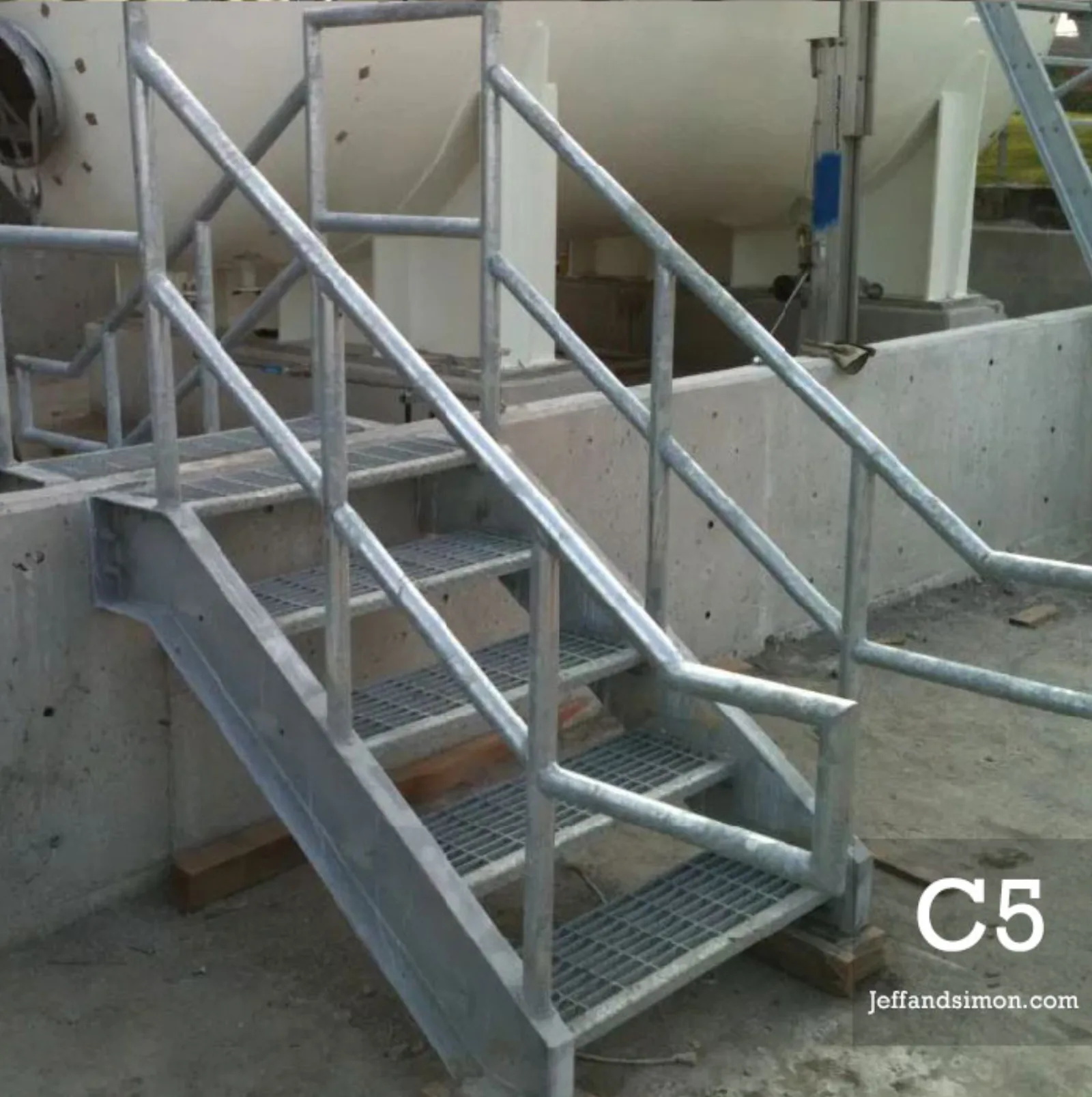
Commercial stair treads are not a finish decision, they are a fabrication decision. Pan-formed treads need a concrete pour after install. Bar grating ships finished. Perforated steel and checker-plate sit between the two. Each tread system carries a different schedule, a different drainage and slip story, and a different long-term maintenance picture.
Pan-formed concrete-fill treads
Pan-formed treads are sheet-steel pans welded to the stringers, then filled with concrete on site after the stair is installed. The finished tread reads as concrete with a steel nosing. The look is durable and quiet underfoot, which is why pan-formed treads are common in mid-rise residential and commercial egress stairs.
- Pan steel and stringers ship as one welded assembly.
- Concrete fill is poured by another trade after the stair is set and braced.
- Cure time stretches the schedule before the stair can take traffic.
- Edge nosing is usually a separate ferrous component, sometimes with a contrasting colour for visibility.
Bar grating treads
Bar grating treads are factory-finished welded steel grids. They ship galvanized, drop into the stringer brackets, and take traffic as soon as the stair is installed. Grating drains, breathes, and tolerates outdoor exposure better than most alternatives. The trade-off is the visual, grating reads industrial, and small heels pass through the openings.
Perforated steel and checker-plate treads
Perforated steel and checker-plate treads sit between pan-formed and grating. They look more finished than grating, drain better than pan-formed, and ship in one piece. Perforated treads read modern in commercial lobbies and parkade stairs; checker-plate reads industrial in service stairs and rooftop access. Both are typically galvanized for exterior use.
Slip resistance is part of the tread spec
Every commercial tread system needs a slip-resistance strategy. Pan-formed treads use a textured concrete finish or a separate non-slip nosing. Grating relies on serrated bars or a non-slip insert. Perforated steel treads usually pair with a textured topcoat or an embossed pattern. Confirm the slip-resistance requirement against the building's program before specifying the tread system.
Match the tread to the exposure
Interior conditioned spaces tolerate any of the tread systems. Exterior, parkade, and rooftop access stairs almost always default to galvanized grating or galvanized perforated steel because both drain and dry. Pan-formed concrete-fill treads can work outdoors, but only with proper drainage detailing and a finish system that handles freeze-thaw.
Related questions
Which tread system is fastest to install?
Bar grating is the fastest because it ships finished and takes traffic immediately. Pan-formed treads add a concrete pour and cure cycle on site, which usually delays the date the stair can be used. Perforated steel and checker-plate treads land between the two.
Do pan-formed treads always need concrete?
Almost always. The pan is a structural form-pan filled by another trade after install. Some lighter pans are designed for self-leveling fill or specialty toppings, but the standard commercial detail is poured concrete with a steel nosing.
Are grating treads acceptable for required egress?
Often yes for service, exterior, and industrial egress, depending on the occupancy and the AHJ. Public-facing commercial spaces sometimes specify perforated steel or pan-formed treads instead of grating for accessibility and heel-passage reasons. Confirm the requirement with the architect of record.
Can tread systems be mixed on one stair?
Sometimes. A common pattern is grating treads on the exterior portion of a stair and pan-formed treads on the interior conditioned portion. Mixing tread systems on a single flight is unusual because it complicates the stringer and bracket detail.
Continue planning
- Commercial stairs hub overview
- Commercial egress stairs (single page)
- Commercial stair services
- Commercial staircase design (Trends)
Plan pan-formed vs grating treads on commercial stairs for a real Vancouver project
Send drawings, photos, or a rough scope and we will help define the practical next step.