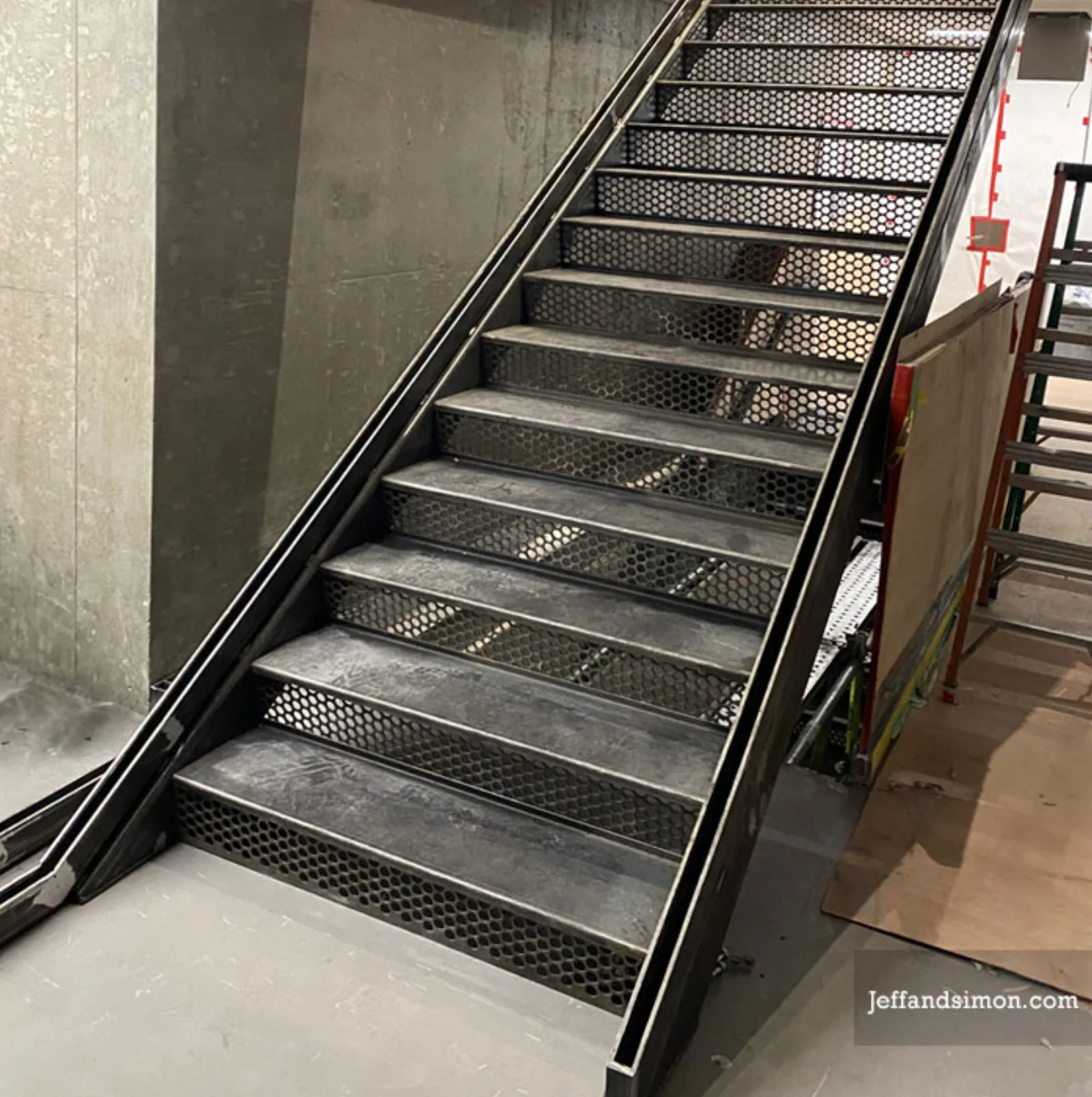
A tenant improvement stair drops into a building that is already operating. Floor finishes are in. Ceilings are in. Sprinkler heads, ducts, and fire alarm wiring are coordinated around the existing core. Anything the stair package missed shows up as on-site rework. This checklist is the conversation we have with the GC, the architect, and the engineer before fabrication starts.
Confirm the scope and the code path early
A tenant improvement stair can be a required exit stair, a feature stair, or a non-required service stair. Each category carries different code, fire-rating, and inspection rules. Settle the scope with the architect of record at the start of the project so the steel fabricator is not designing into the wrong code package.
- Required exit stair vs feature stair vs non-required service stair.
- Occupancy classification under BCBC Part 3 or VBBL.
- Whether the stair is inside a fire-rated shaft or in an open atrium.
- Whether the AHJ has any project-specific letters or amendments on file.
Lock the structural drawings before fabrication
The fabricator needs sealed structural drawings, the engineer's connection schedule, and confirmed floor-to-floor heights before steel is cut. Tenant improvement projects often discover surprises in the existing slab, embeds, conduits, or thickness variations. Confirm the as-built conditions in writing before the shop drawings are approved for fabrication.
Coordinate the fire-rated interface
Stairs inside a fire-rated shaft need a clean interface with the rated wall assembly, the rated landing, and the fire-rated door at each level. The wall is built by another trade. The fabricator delivers the steel. Confirm interface dimensions, door swing, hardware requirements, and inspection windows with the architect and the GC before fabrication.
Plan the install window and the access
Most tenant improvement stairs install during a narrow window, overnight, on a weekend, or during a phased shutdown. The install plan has to account for door widths, elevator dimensions, freight elevator capacity, finished floor protection, and the lift method. Discover an access problem in the planning phase, not on install night.
- Door and elevator dimensions for the largest pre-assembled component.
- Floor protection over finished surfaces along the install path.
- Crane, hoist, or telehandler access if the stair lands at upper floors.
- Coordination with security, building management, and tenants below.
Confirm the inspection schedule
Commercial stair installs almost always need engineer-of-record review and AHJ inspections. Schedule those inspections before the install window so the work can be signed off without holding the GC's schedule. Drywall, fire-rated assemblies, and finishes installed over un-inspected steel are the most common avoidable rework on a TI stair.
Document the as-built
Every TI stair becomes part of the building's record. The fabricator's documentation package, shop drawings, mill certs, weld documentation where applicable, and installation reports, is what the building's owner inherits. Deliver the package as part of project closeout, not as a follow-up.
Related questions
How much lead time should a TI stair carry?
Lead time varies with the engineer review cycle, the finish system, and the shop load. Galvanized exterior stairs add coating lead time; pan-formed treads add a separate concrete pour cycle on site. Confirm the schedule with a current quote that lists each step from drawings to install.
Who arranges the engineer on a TI project?
On most TI projects with a structural engineer of record, that engineer reviews the stair scope. Where there is no project engineer, the stair scope often needs its own sealed structural review. We coordinate with the project engineer or define the information an engineer needs to review the stair package.
Can a TI stair install during business hours?
Sometimes, but most occupied buildings require overnight or weekend installs because of noise, dust, freight elevator access, and tenant impact. The install plan should be coordinated with the GC and the building manager early, install timing affects the entire project schedule.
What documentation does the AHJ usually want at closeout?
Sealed shop drawings, the engineer's review letter, mill certs for structural steel, weld documentation where the project requires it, and installation reports. Specific requirements vary by AHJ and by occupancy. Confirm the closeout package at the permit application stage so nothing is missing at occupancy.
Continue planning
- Commercial stairs hub overview
- Commercial egress stairs (single page)
- Commercial stair services
- Commercial staircase design (Trends)
Plan tenant improvement stair coordination checklist for a real Vancouver project
Send drawings, photos, or a rough scope and we will help define the practical next step.