Site templating
Template the exact stair pitch, deck edge profile, and post positions before any glass is ordered, glass panels are cut to the template and cannot be adjusted on-site.
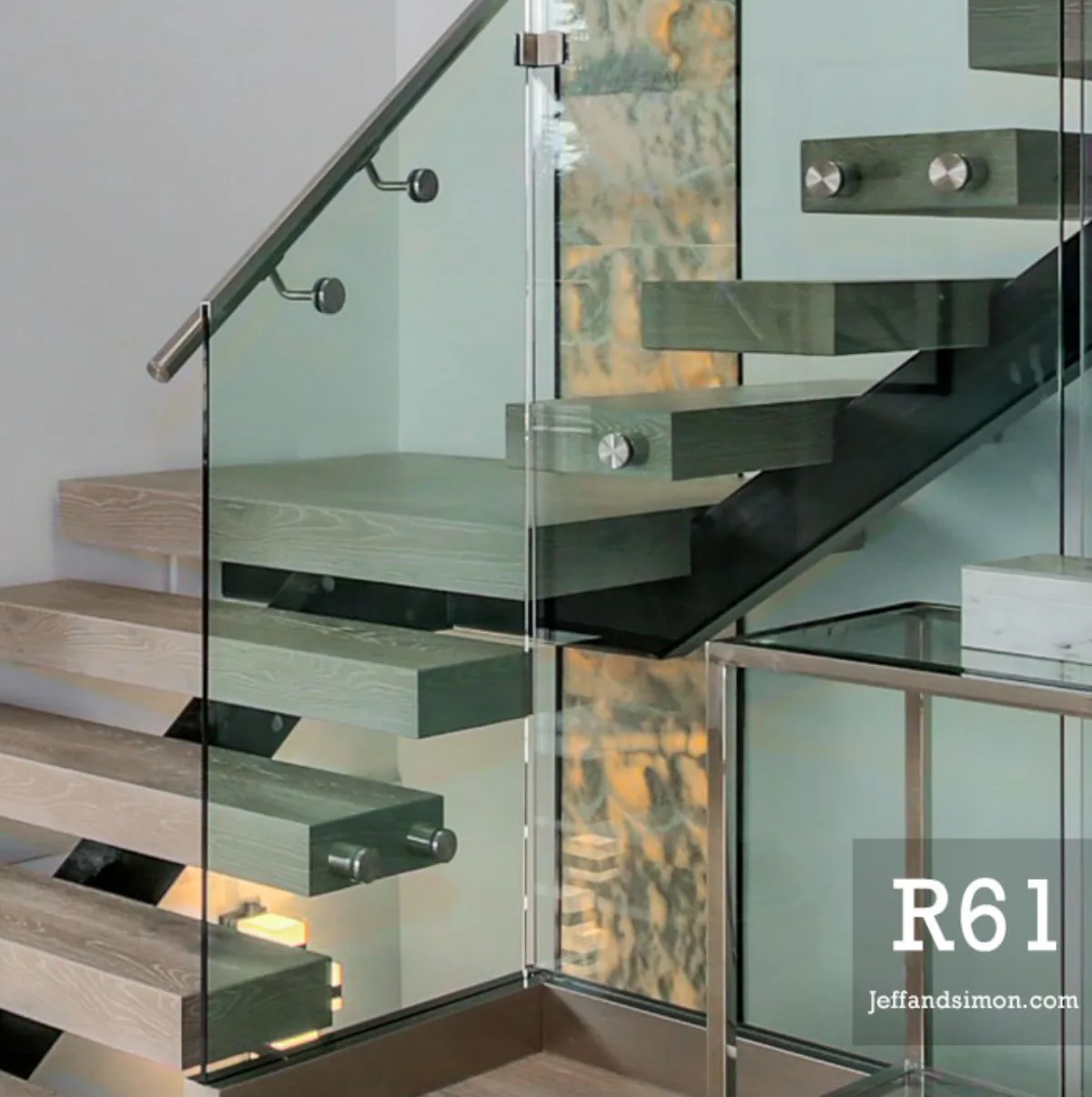
North Vancouver glass railing work serves view homes from Lower Lonsdale to Deep Cove where the goal is unobstructed sightlines that handle higher rainfall and occasional salt exposure near the inlet.
Glass railings suit view lots, feature stairs, balconies, and commercial interiors. The clean look depends on accurate templating, correct glass thickness (12–15 mm), and hardware specified for the coastal exposure level of the site.
North Vancouver stair and railing work often serves steep lots, view homes, wetter weather, and waterfront exposure.
| Scope | Typical range | Notes |
|---|---|---|
| Semi-frameless glass railing | $225-$350/linear ft | Steel posts and glass panels |
| Frameless glass railing | $300-$525/linear ft | Hardware and panel sizes drive cost |
| Stair glass railing | $325-$575/linear ft | Angled templating and installation time |
Template the exact stair pitch, deck edge profile, and post positions before any glass is ordered, glass panels are cut to the template and cannot be adjusted on-site.
Specify base shoe or standoff system, glass thickness (typically 12 mm for residential, 15 mm for commercial), and hardware finish (stainless, powder-coated, or anodized).
Fabricate steel or stainless base shoe and any welded posts in the shop; finish before glass delivery so the panels can be installed immediately.
Order tempered safety glass panels to the confirmed templates; coordinate delivery timing around the installation window and site access for panel handling.
Set glass panels into base shoe or clamp systems, confirm guard height and panel-to-panel gap compliance, and install top rail or capping.
1.8 kPa reference value for early planning. Final engineering confirms project-specific assumptions.
high exposure. Finish and hardware choices should follow the exact site conditions.
District and City requirements differ; structural changes, guards, and canopies commonly need review.
The glass itself handles rain without issue, it's the metal hardware that determines long-term performance. North Vancouver's higher rainfall and moderate coastal exposure near the Burrard Inlet mean drainage is important in base shoe design, and properties near the water benefit from stainless hardware. Inland Lynn Valley and Deep Cove are less demanding than inlet-facing sites but still see more rainfall than central Metro Vancouver, a better-spec primer on the base shoes pays back over time.
Yes. The glass itself is unaffected by rain. The hardware and base shoe need to be specified for the exposure, stainless steel and proper drainage details keep the system performing over time.
Glass Railings pricing depends on dimensions, railing type, finish, access, and engineering. Current planning ranges on this page run from $225-$350/linear ft depending on scope.
Most glass railings projects run 6–10 weeks from a confirmed order: 1–2 weeks for shop drawings and engineer review, 3–5 weeks in fabrication, and 1–2 weeks for finishing and installation scheduling. North Vancouver site access and permit timing can shift that window, so starting the quote early gives the most flexibility.
Floor-to-floor height or linear footage, site photos, any existing drawings, finish preference, and whether a permit has been applied for. For North Vancouver's high coastal exposure, confirming the hardware specification early avoids changes after shop drawings are approved.
Send drawings, photos, or a rough scope and we will help define the practical next step.