Support strategy confirmation
Determine whether the stair uses a mono stringer, wall brackets, or concealed side plates, this depends on what the existing or planned structure can realistically carry.
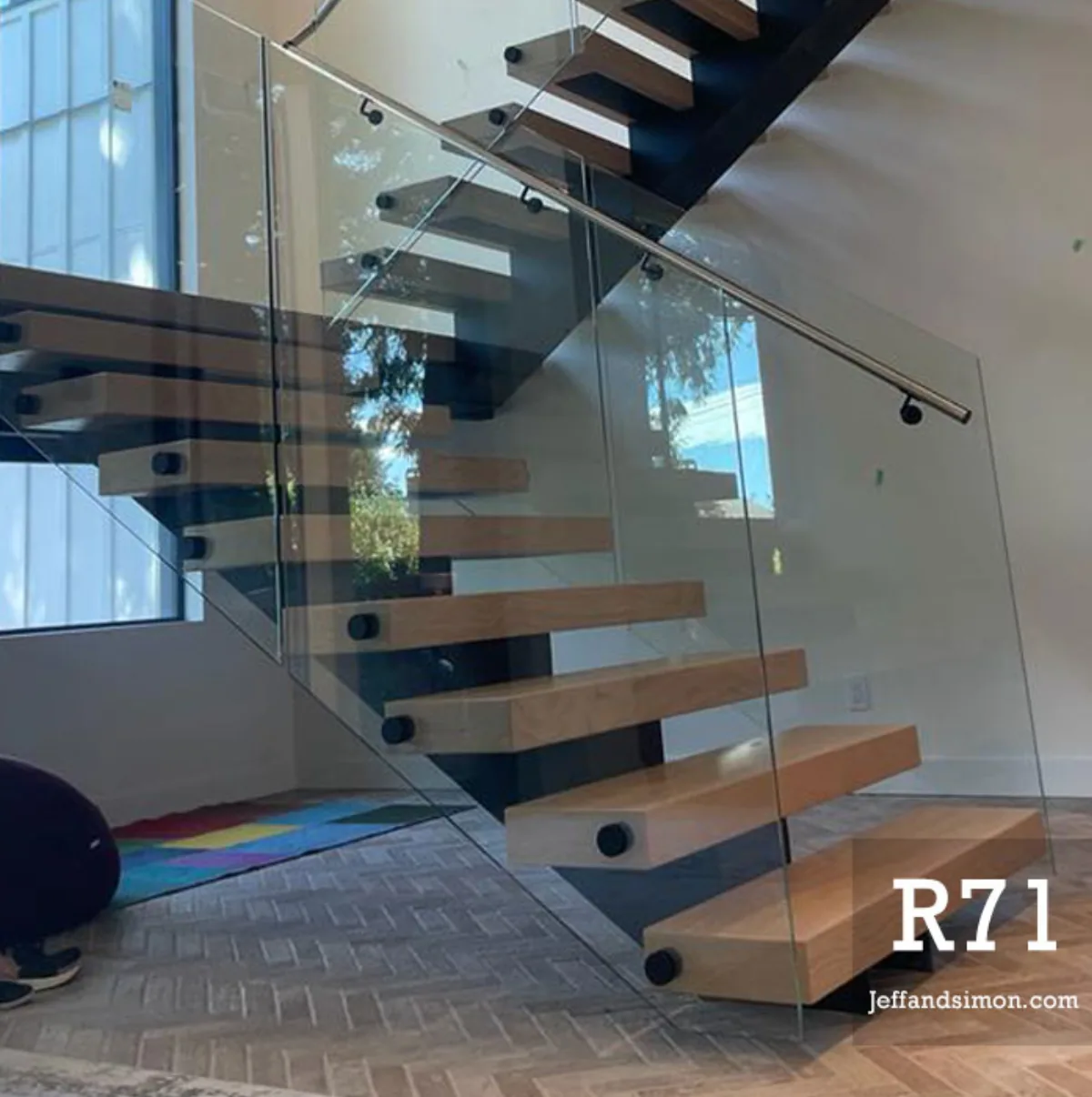
Port Moody floating stairs serve view-oriented homes in Heritage Mountain and inlet-facing properties in Moody Centre where open sightlines to Burrard Inlet are the point of the renovation. The wetter inlet climate and split-level lots that are common throughout Heritage Mountain mean the support strategy, mono stringer, wall bracket, or side plate, needs to be confirmed against the actual structure before any design is locked.
Floating stair is an umbrella term. Some use a visible mono stringer; others rely on wall structure, side plates, or hidden brackets. We define the support strategy early so the finished stair is buildable and code-aware.
Port Moody projects often pair view-focused railings with modern residential metalwork in wet, inlet-adjacent conditions.
| Scope | Typical range | Notes |
|---|---|---|
| Open-riser floating stair | $20,000-$34,000 | Common residential configuration |
| Cantilevered or concealed support | $34,000-$70,000+ | Requires early structural planning |
| Glass guard upgrade | $275-$475/linear ft | Depends on hardware and layout |
Determine whether the stair uses a mono stringer, wall brackets, or concealed side plates, this depends on what the existing or planned structure can realistically carry.
Assess wall framing, slab, or beam capacity for the chosen support method; prepare shop drawings with connection details reviewed by an engineer if wall-anchored or cantilevered.
Fabricate the support structure, tread brackets, and connection hardware to the confirmed support strategy; open-riser design is checked in the shop before finish.
Finish the steel (powder coat, clear coat, or primer) before installation; tread material is templated after the steel is set so fit is exact.
Steel structure is installed first, treads are cut to the template and fitted on-site, guard follows once treads are confirmed.
1.8 kPa reference value for early planning. Final engineering confirms project-specific assumptions.
moderate exposure. Finish and hardware choices should follow the exact site conditions.
Waterfront, guard, and structural attachment details can add review requirements.
They can, but split-level floor configurations add variables. Non-standard floor-to-floor heights change tread count and riser dimensions, and some Heritage Mountain framing has limited header depth at the stair opening. We confirm the structure before committing to a support strategy so the design and structural solution are aligned from the start.
Floating Staircase pricing depends on dimensions, railing type, finish, access, and engineering. Current planning ranges on this page run from $20,000-$34,000 depending on scope.
Most floating staircase projects run 6–10 weeks from a confirmed order: 1–2 weeks for shop drawings and engineer review, 3–5 weeks in fabrication, and 1–2 weeks for finishing and installation scheduling. Port Moody site access and permit timing can shift that window, so starting the quote early gives the most flexibility.
Floor-to-floor height or linear footage, site photos, any existing drawings, finish preference, and whether a permit has been applied for. For Port Moody's moderate coastal exposure, confirming the hardware specification early avoids changes after shop drawings are approved.
Send drawings, photos, or a rough scope and we will help define the practical next step.