Site templating
Template the exact stair pitch, deck edge profile, and post positions before any glass is ordered, glass panels are cut to the template and cannot be adjusted on-site.
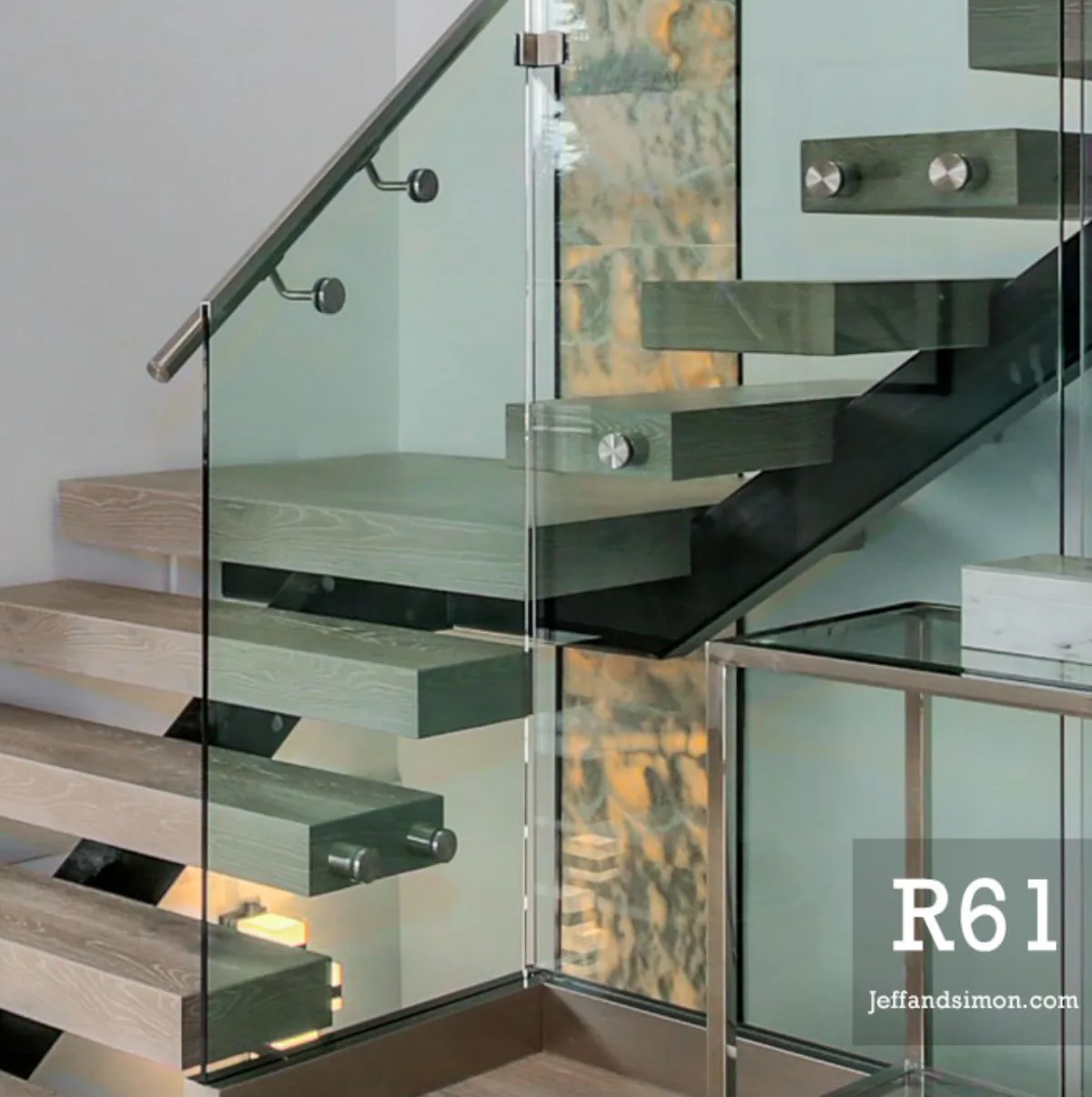
Squamish glass railing projects need hardware that handles the mountain climate, higher wind loads, heavier rainfall, and larger temperature swings than Metro Vancouver. The views of Stawamus Chief and Howe Sound that glass railings are usually protecting are worth specifying the hardware correctly from the start.
Glass railings suit view lots, feature stairs, balconies, and commercial interiors. The clean look depends on accurate templating, correct glass thickness (12–15 mm), and hardware specified for the coastal exposure level of the site.
Squamish projects need mountain-weather thinking: durable coatings, site access planning, and snow or wind assumptions that suit the specific lot.
| Scope | Typical range | Notes |
|---|---|---|
| Semi-frameless glass railing | $225-$350/linear ft | Steel posts and glass panels |
| Frameless glass railing | $300-$525/linear ft | Hardware and panel sizes drive cost |
| Stair glass railing | $325-$575/linear ft | Angled templating and installation time |
Template the exact stair pitch, deck edge profile, and post positions before any glass is ordered, glass panels are cut to the template and cannot be adjusted on-site.
Specify base shoe or standoff system, glass thickness (typically 12 mm for residential, 15 mm for commercial), and hardware finish (stainless, powder-coated, or anodized).
Fabricate steel or stainless base shoe and any welded posts in the shop; finish before glass delivery so the panels can be installed immediately.
Order tempered safety glass panels to the confirmed templates; coordinate delivery timing around the installation window and site access for panel handling.
Set glass panels into base shoe or clamp systems, confirm guard height and panel-to-panel gap compliance, and install top rail or capping.
2.4 kPa reference value for early planning. Final engineering confirms project-specific assumptions.
moderate exposure. Finish and hardware choices should follow the exact site conditions.
Snow load and site access details should be resolved before fabrication commitments.
Possibly. Squamish has higher wind loads than Metro Vancouver in some locations, which can push glass panel thickness and base shoe attachment into territory that needs an engineer's sign-off. We review the site conditions early and flag when engineering is likely required so there are no surprises at the permit stage.
Glass Railings pricing depends on dimensions, railing type, finish, access, and engineering. Current planning ranges on this page run from $225-$350/linear ft depending on scope.
Most glass railings projects run 6–10 weeks from a confirmed order: 1–2 weeks for shop drawings and engineer review, 3–5 weeks in fabrication, and 1–2 weeks for finishing and installation scheduling. Squamish site access and permit timing can shift that window, so starting the quote early gives the most flexibility.
Floor-to-floor height or linear footage, site photos, any existing drawings, finish preference, and whether a permit has been applied for. For Squamish's moderate coastal exposure, confirming the hardware specification early avoids changes after shop drawings are approved.
Send drawings, photos, or a rough scope and we will help define the practical next step.