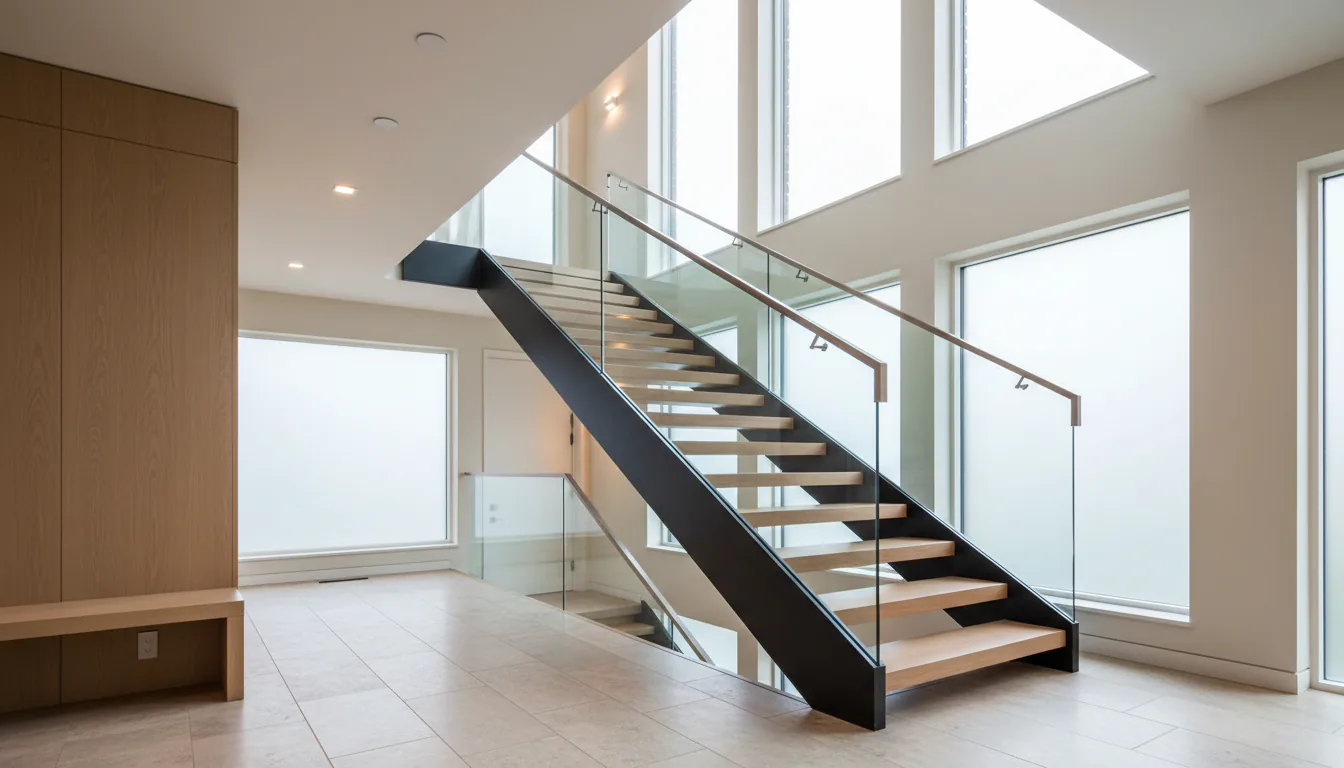
Vancouver Stairs, CWB-Certified Fabrication ShopUpdated May 2026
A residential staircase is usually the most-used custom feature in a home, so it has to be comfortable, safe, and built to last as well as look right. We design the stair around how the household actually lives, the daily traffic, the sightlines, the structure that's already there, then fabricate and install it to BC Building Code Part 9.
What matters in Port Moody
Port Moody projects often pair view-focused railings with modern residential metalwork in wet, inlet-adjacent conditions.
- Waterfront and hillside connection assumptions should be reviewed before fabrication.
- Moderate inlet marine influence means exterior steel near the water should be galvanized or upgraded hardware specified.
Common configurations
- Mono stringer and floating open-riser feature stairs
- Straight-run and L-shaped stairs with steel or wood treads
- Basement, loft, and secondary-access stairs
- Integrated glass, cable, or steel guards with matched handrails
Budget ranges
| Scope | Typical range | Notes |
| Straight-run or secondary stair | $12,000-$24,000 | Basement, loft, or secondary access; compact straight runs and spirals |
| Main feature stair (mono stringer or floating) | $18,000-$34,000 | Open-tread modern main-floor stair with steel or wood treads |
| Architectural feature stair | $38,000-$65,000+ | Complex geometry, premium treads, integrated glass or cable guards |
Process
01 Design and stair-type consultation
Walk through how the stair will be used, the look the home is after, and which stair type fits, mono stringer, floating open-riser, straight-run, or a feature stair. We match the structure to the space rather than starting from a fixed product.
02 Measure and structural review
Measure the floor-to-floor height and the opening, then check that the existing or planned framing can carry the stair and the guard. Older Metro Vancouver homes often need a framing review before the steel is sized.
03 Shop drawings and engineer coordination
Prepare shop drawings showing the stringer, tread brackets, guard anchorage, and floor connections, coordinated for BC Building Code Part 9 residential requirements. Engineer involvement is arranged when the design calls for it.
04 Fabrication and finish
Cut and weld the stair in the shop, fit-check before finishing, then apply powder coat, clear coat, or primer. Tread material, white oak, walnut, steel, or stone, is confirmed before the brackets are set.
05 Delivery and installation
The stair is delivered in manageable sections where access requires it, set and connected on-site, then treads and guard are fitted and aligned. We confirm guard height and code compliance before sign-off.
Local conditions
Snow load signal 1.8 kPa reference value for early planning. Final engineering confirms project-specific assumptions.
Coastal exposure moderate exposure. Finish and hardware choices should follow the exact site conditions.
Permit notes Waterfront, guard, and structural attachment details can add review requirements.