Open-Riser Stairs and the BC Building Code: What 'Unprotected Opening' Actually Limits
Open-riser stairs are popular in Vancouver homes, but BC building code limits where they can go and how big the openings can be. Here's what the code actually says.
Open-riser stairs read clean and let light through, but BC building code limits the gap between treads in any stair a small child could reach. Knowing where the line sits is the difference between a permit and a redesign.
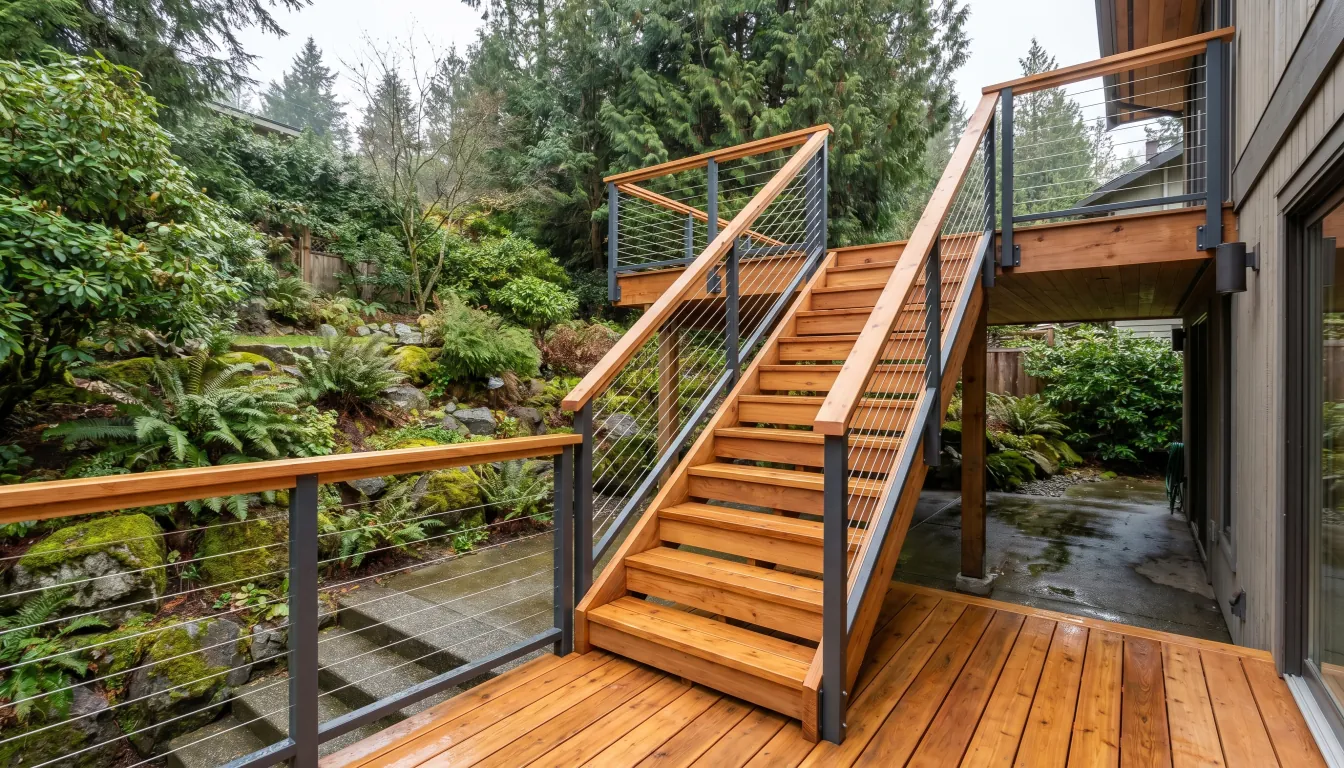
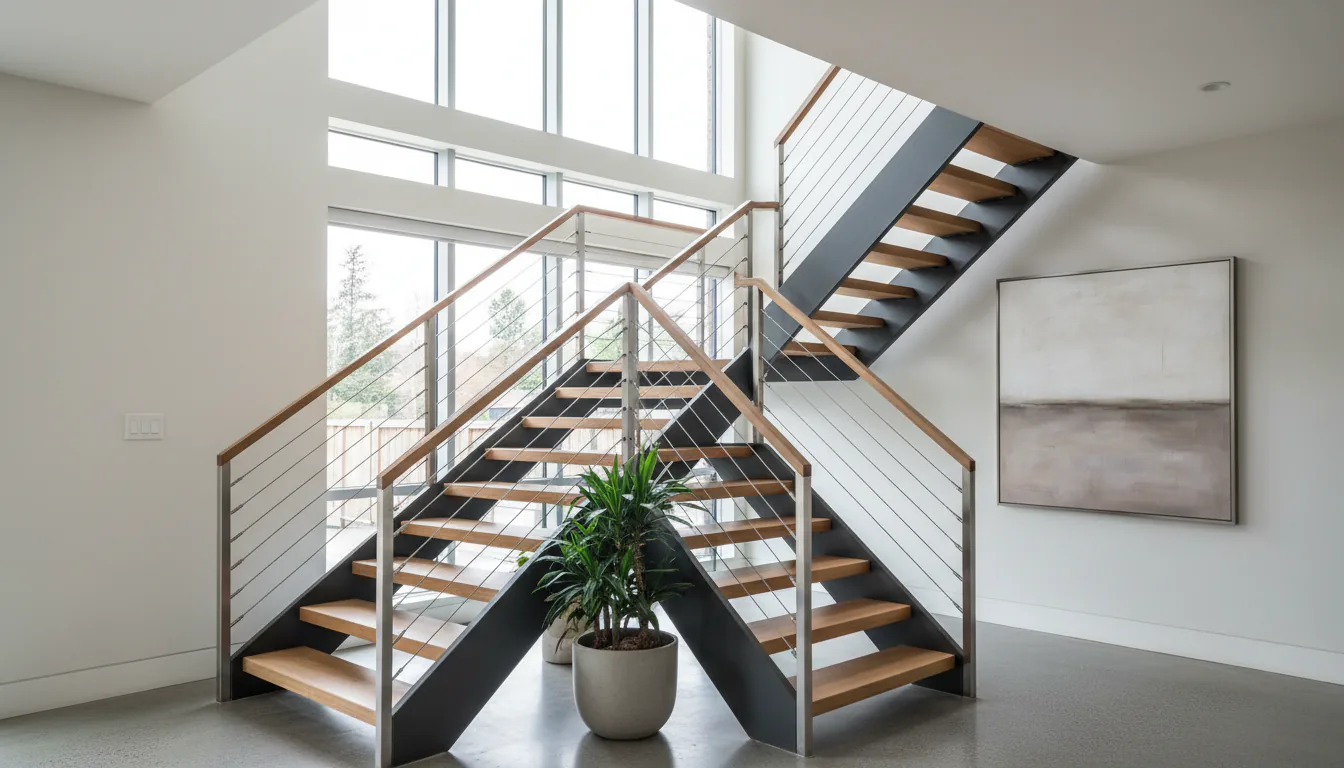
Open-riser stairs are one of the strongest visual moves in a modern Vancouver home, light passes through the stair, the treads read as floating planes, and the rest of the room stays connected through what would otherwise be a wall of risers. The BC Building Code does not ban that look, but it does set the size of the gap between treads, and the gap limit is where most open-riser designs win or lose at permit.
What “open riser” actually means in code language
In drawings and conversation, “open riser” describes a stair without a vertical board between successive treads. From a code perspective the same stair is a stair with an unprotected opening between treads, and any unprotected opening on a stair where small children could reach it is subject to a dimensional limit, the same way guards are.
The relevant provisions sit in the BC Building Code Part 9 stair requirements for housing and small buildings, with parallel rules in Part 3 for larger occupancies. The exact section numbers and limits depend on the edition (2024 BCBC is the current reference for most active projects), and the AHJ, usually the City of Vancouver, North Vancouver District, or whichever municipality issues the permit, is the final word on interpretation.
The 100 mm sphere rule, applied to risers
The dimensional limit that drives most open-riser designs is the 100 mm sphere rule. The rule originated in guard provisions and has carried into the riser opening limit for the same reason: a 100 mm sphere is the proxy for a small child’s head. If the opening between two treads is large enough to pass a 100 mm sphere, code treats it as a fall or entrapment hazard.
For a typical residential stair geometry, a 178 mm riser, a 280 mm run, a 50 mm tread thickness, the open gap between treads is approximately 128 mm, which exceeds the limit. The standard fixes are to thicken the treads (a 75 mm thick tread with the same riser closes the gap), to reduce the riser height where the floor-to-floor will allow it, or to add an infill panel behind the treads. For a deeper read on tread thickness in the floating stair context specifically, our floating stair tread thickness and sizing guide walks through the structural side of the same decision.
Where the rule does and does not apply
The opening limit applies to stairs where a small child could reach. In a single-family dwelling, that is effectively every stair in the home. In a commercial occupancy classified for adult use only, a mechanical penthouse, a back-of-house service stair, the AHJ may accept a wider opening, but the default assumption in our office is that the limit applies until the engineer of record and the AHJ confirm otherwise.
Egress stairs in commercial buildings are a separate story. The National Research Council’s guidance on egress stair design is a useful reference for understanding why required exit stairs in larger buildings carry stricter rules than feature stairs in the same building, the exit stair has to perform under fire and evacuation conditions, and closed risers are part of how it does that. A feature stair from the lobby to a mezzanine in the same building, where the egress route is somewhere else, often has more latitude.
Infill panels are a design choice, not just a code fix
When tread thickness alone won’t close the gap, the standard remedy is an infill, a horizontal panel behind each open riser that brings the unprotected opening below 100 mm. The panel can be steel, glass, perforated plate, or wood, and its visual weight changes the stair character completely.
A 6 mm clear glass infill keeps almost all of the open-riser feel and reads as an invisible plane in section. A perforated steel infill in a matte black powder coat reads industrial and is forgiving on tolerances. A solid steel plate infill, sometimes only 50 mm tall, mounted to the back of each tread, closes the gap with minimal visual weight if the steel is detailed cleanly. The right infill is usually decided alongside the railing system because the two read together when the stair is finished.
Tread thickness is the lever that disappears
The cleanest way to close the riser opening is to thicken the tread until the gap disappears on its own. A 75 mm or 90 mm tread profile, especially in solid hardwood or a steel pan with poured fill, can bring a typical residential stair geometry under the limit without adding any visible infill. The trade-off is structural and visual: thicker treads weigh more, change the bracket detail, and may push the mono stringer beam to a heavier section to hold the geometry stiff.
Engineered hardwood manufacturers like Mafi’s solid timber stair tread offerings publish tread thicknesses in the 60–90 mm range for exactly this design pattern. Solid wood at that thickness is heavy, costly, and beautiful, three things that need to land in the budget early.
Coordinate the rule before the floor plan locks
The mistake we see most often is treating the open-riser rule as a permit-stage problem instead of a design-stage one. By the time a homeowner has approved a clean open-riser visual in a rendering, the floor-to-floor height, the tread count, the tread thickness, and the railing language are already committed. Discovering at permit that the geometry needs an infill or a thicker tread can mean reopening decisions the homeowner thought were settled.
In our shop we flag the opening limit in the first design review on any open-riser project. The conversation is short, does the chosen tread thickness close the gap on its own, will an infill be needed, and is the infill style consistent with the railing, but having it early saves the redesign loop later.
What the AHJ actually checks
When the stair drawings reach the AHJ, the reviewer checks three things on the open-riser detail. First, the dimensional gap between treads at the worst case, usually drawn in section. Second, the infill detail if one is shown, including how it connects to the tread and the structure behind it. Third, the guard detail at the open side of the stair, because the open-riser rule and the guard infill rule overlap visually but are governed by different code sections.
A clean stair drawing makes the reviewer’s job easy. We typically include a dimensioned section through the worst-case treads, a callout on the infill material and thickness, and a guard detail at full height. When all three are on the page, the open-riser stair clears review in one pass.
The open-riser limit is one clause among several that shape a custom stair. For the full picture, riser, run, headroom, guard height, and handrail dimensions in one place, see our BC Building Code stair requirements guide.
Sources
- BC Building Code (BC Codes portal, 2024 edition)
- National Research Council Canada, egress stair design research
- Mafi, solid timber stair treads
This article is not a substitute for code review by the authority having jurisdiction. Open-riser stair compliance should be confirmed by the engineer of record and the local building official on your project.
Related questions
Are open-riser stairs allowed under the BC Building Code?
Yes, in many residential and commercial contexts, but the code restricts the size of the opening between treads where small children could reach the stair. Open risers are commonly limited so a 100 mm sphere cannot pass through the opening on stairs in dwelling units, similar to the sphere rule for guards. The exact reference and limits depend on the occupancy and edition. Vancouver Stairs does not replace AHJ review.
What is the 100 mm sphere rule?
It's the dimensional limit used in BC and most Canadian guard and stair provisions: no opening in the guard or between treads can allow a 100 mm sphere to pass. The intent is to prevent a small child from getting their head or body through. Open-riser stairs that exceed that gap typically need an infill panel.
Can a commercial stair have open risers?
Sometimes, egress stairs in many commercial occupancies need closed risers under the relevant Part 3 provisions, while feature stairs serving the same floor often have more latitude. The occupancy classification and whether the stair is a required exit drive the rule.
What if my design exceeds the opening limit?
Three common fixes: increase the tread thickness so the gap closes naturally, add a steel or glass infill behind the open risers, or change the geometry. We usually evaluate all three at the design stage so the chosen fix matches the look the homeowner is after.