Steel Staircase Maintenance Vancouver: Annual Checklist and Care Guide
How to maintain a custom steel staircase in Metro Vancouver, annual inspection checklist, powder coat care, rust prevention in the coastal climate, and when to call for repair.
A custom steel staircase requires almost no maintenance, if it was finished correctly. Here is what to actually check each year and how to extend the finish life in Vancouver's climate.
This guide covers visual inspection and routine maintenance tasks. Any finding that suggests structural movement, weld failure, or load-bearing component damage should be assessed by a qualified professional, do not attempt structural repairs without a CWB-certified welder and, where required, engineering review.
A custom steel staircase is sold on the promise of low maintenance. That promise is largely true, but “low” is not “zero,” and in Metro Vancouver’s coastal climate there are a few things worth checking once a year. This guide covers what to inspect, how to care for the most common finish systems, and the signs that something needs professional attention rather than a weekend fix.
The case for low maintenance, and its limits
Interior steel stairs with a shop-applied powder coat finish are genuinely low maintenance. Powder coat is a thermoset polymer coating applied electrostatically and cured in an oven. It forms a hard, continuous film over the steel that does not peel, does not chalk, and does not need waxing or repainting on any predictable cycle. A well-applied powder coat on a residential interior steel stair can go 15–25 years before the coating itself degrades.
The failure modes for powder coat are almost all mechanical: impact damage from hard objects, abrasion at edges and corners, chips from fastener removal, and moisture intrusion through untreated bare metal at cut ends. In Vancouver’s climate, consistently damp, with heavy rainfall from October through March, bare steel exposed through a coating failure will begin to rust within one to three seasons.
The annual inspection is about finding those failure points before rust gets a foothold.
Annual inspection checklist
Go through this list once a year, spring after the wet season is the practical timing for Vancouver residences.
Coating and finish
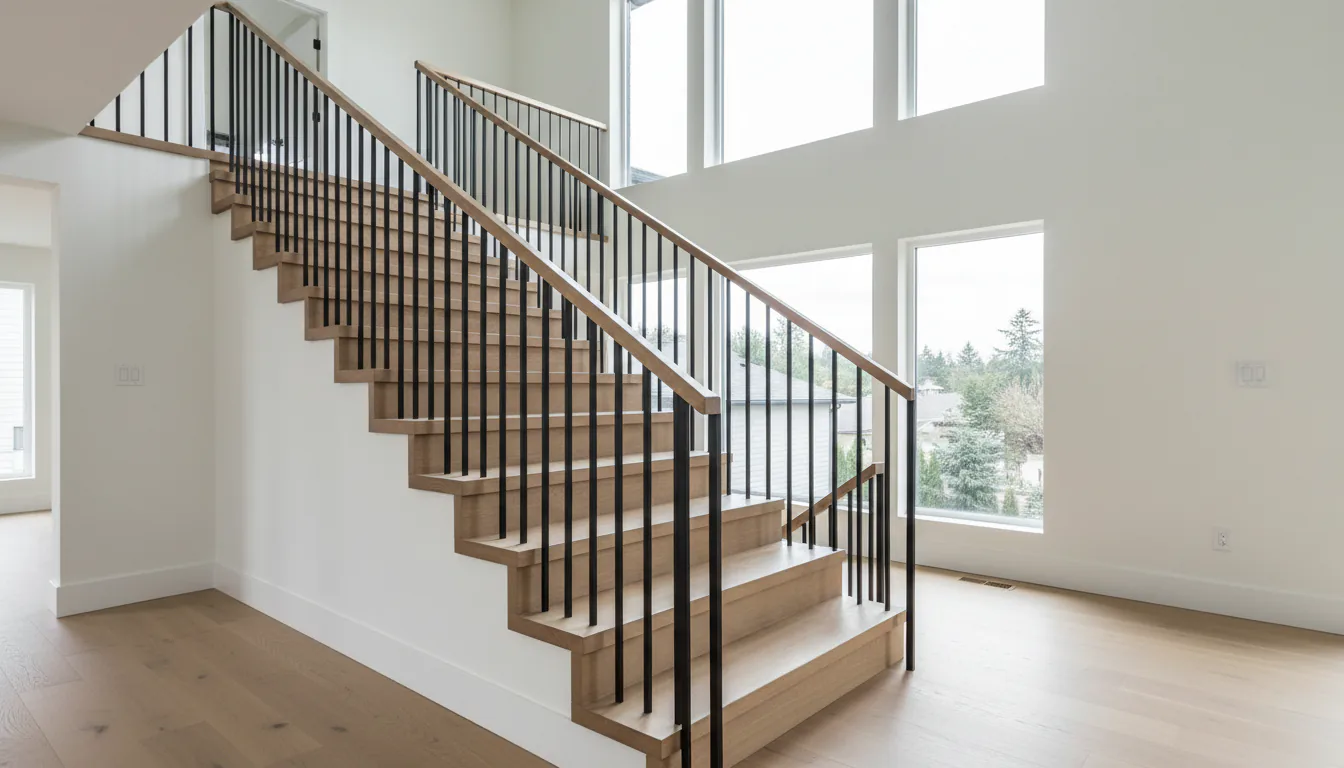
- Walk the full length of the stair and look for chips, scratches, or bare metal. Pay attention to tread nose edges (highest wear area), railing post bases, and any threaded fastener locations. Even a small chip exposes bare steel.
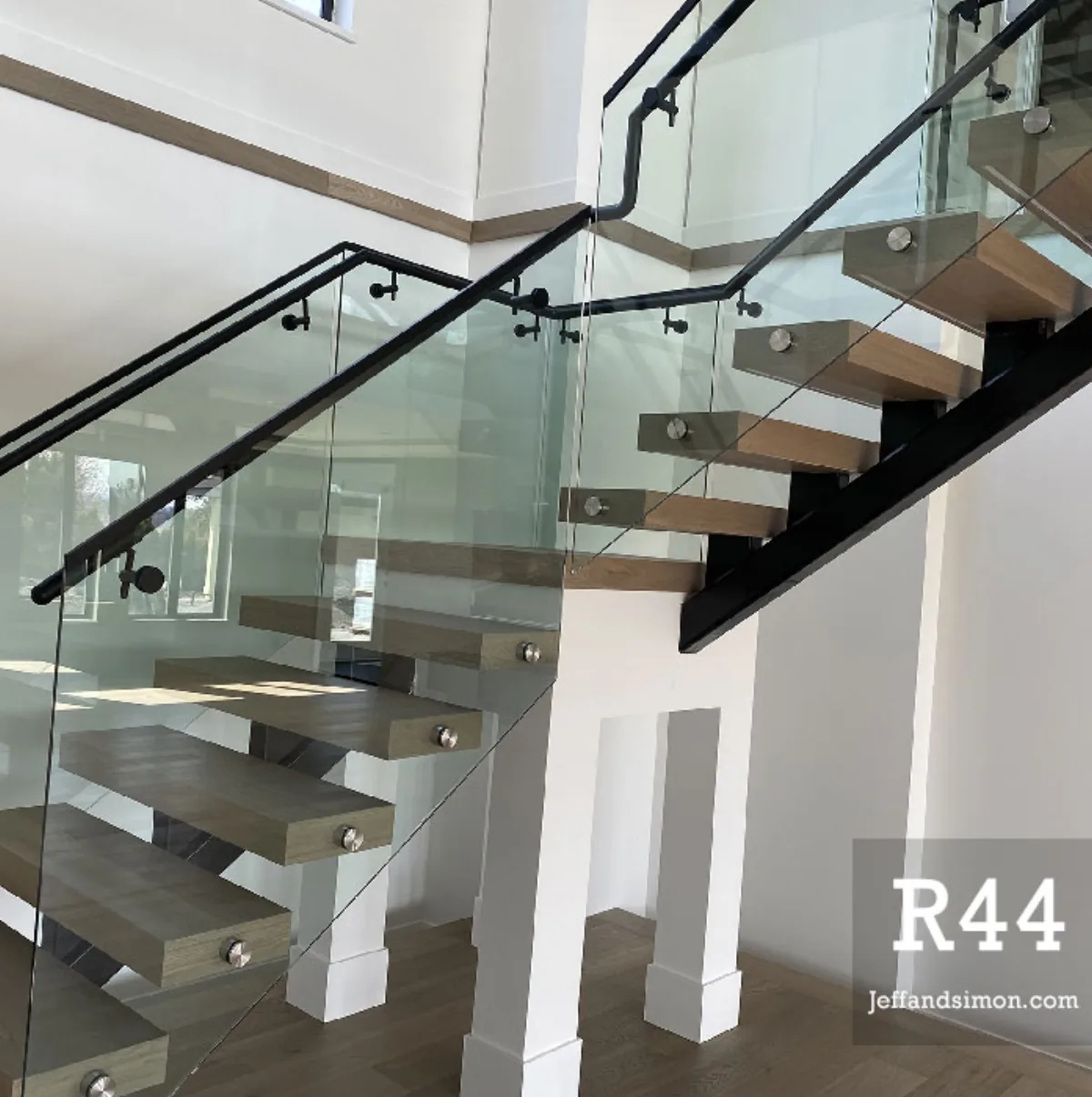
- Check tread-to-bracket connections. If treads are wood on steel brackets, look at where the bracket meets the underside of the tread. Any dark staining or surface rust here usually means moisture is trapped between the wood and the steel, address the source before treating the rust.
- Look at the base plate. The bottom connection between the stringer or post and the floor is a moisture trap if not properly sealed. Check for rust weeping from beneath the base plate, which indicates water is sitting against bare steel.
- Inspect the handrail return to the wall. The wall rosette or return fitting often gets painted over by painters and chipped by maintenance, check that the steel underneath is still covered.
Structural connections
- Apply lateral force to each railing post. A properly welded and anchored post should not deflect visibly or make any sound when you apply hand pressure sideways. Any movement means either the weld has cracked, the anchor has loosened, or the substrate has failed. Do not defer this, a railing post that moves under hand pressure will not hold a fall.
- Check bolted connections. If any railing components are bolted rather than welded, common at wall-mounted handrail brackets and at some tread-to-bracket connections, check that the fasteners are still snug. Thermal cycling and vibration can loosen fasteners over time.
- Listen as you walk the stair. A squeak or creak on a steel stair almost always comes from a wood tread rubbing against its bracket as it expands and contracts. It is not structural, but it indicates the tread fastening needs attention before the movement causes abrasion damage to the coating.
Wood treads (if applicable)
- Check tread faces for cracks or splitting. Solid hardwood treads in heated homes are subject to seasonal movement. Cracks along the grain at the ends of the tread, or gaps opening between the tread and a closed riser, indicate movement that needs to be managed with appropriate fastening.
- Check the finish. Pre-finished wood treads with a factory topcoat hold up well for 5–8 years under normal residential use, then start to show wear at the nosing. Re-finishing treads is a flooring trade task, not a fabricator task, but coordinate the timing so the tread fasteners are backed out and re-driven correctly when the treads are sanded.
- Look for darkening at tread edges. Darkening or staining at the edge of a wood tread where it meets steel usually means moisture is transferring between the steel and the wood. Check the coating on the steel underneath and re-seal the contact point.
Glass railing (if applicable)
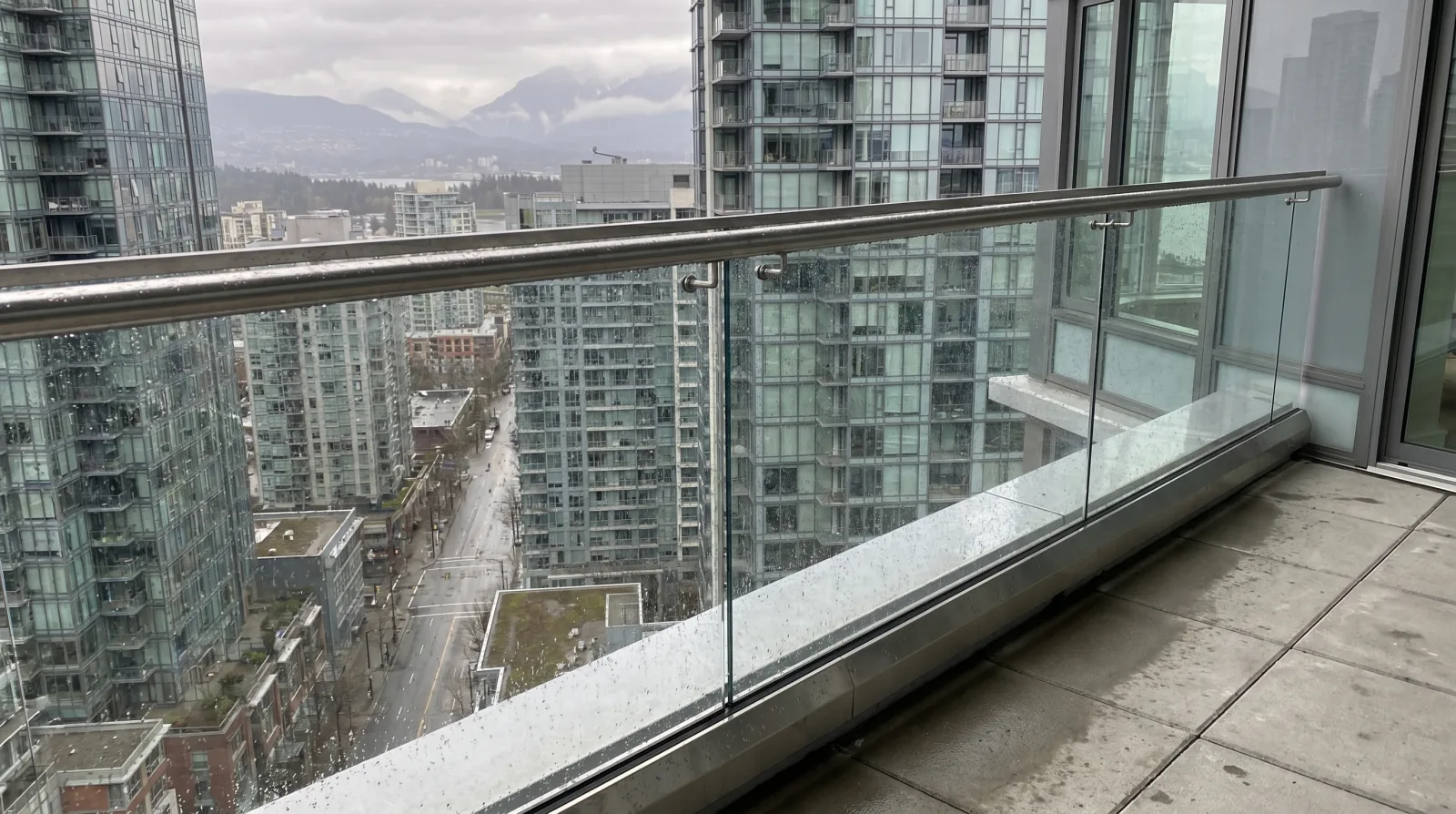
- Check glass panels for chips or cracks at the bottom edge. Bottom edge damage on a glass panel compromises the panel’s structural integrity. A chipped bottom edge is not just cosmetic, glass panels carry load through the base channel or base shoe, and damage at that edge warrants professional assessment.
- Check the base shoe or channel for debris. Base shoes that collect water and debris accelerate corrosion of the metal channel and eventually allow water to migrate to the floor structure. Clear the channel annually.
- Check standoffs and hardware for corrosion. Stainless hardware in Vancouver’s climate is generally durable, but marine-adjacent locations (West Vancouver, North Van, Coquitlam River valley) see more corrosion stress. 316-grade stainless is standard for coastal exposure; 304-grade hardware in those locations may show tea staining or pitting over time.
Cleaning: what works and what damages the finish
For powder coat: Mild soap and water is all you need. A soft cloth or non-abrasive sponge. Rinse. Dry. Do not use abrasive pads, abrasive powders, or solvent cleaners, they damage the coating surface and dull the sheen. Avoid high-pressure washing on powder-coated stairs: the pressure forces water into micro-cracks and behind the coating at edges.
For blackened steel (waxed) finishes: Interior blackened steel is typically finished with a paste wax or oil. Re-apply wax once a year or when the finish starts to look dry or patchy. Use the same product specified by the fabricator, Renaissance Wax and Minwax Antique Oil are common. Avoid water contact on bare blackened steel, it will rust. This finish is not suitable for exterior or high-moisture applications.
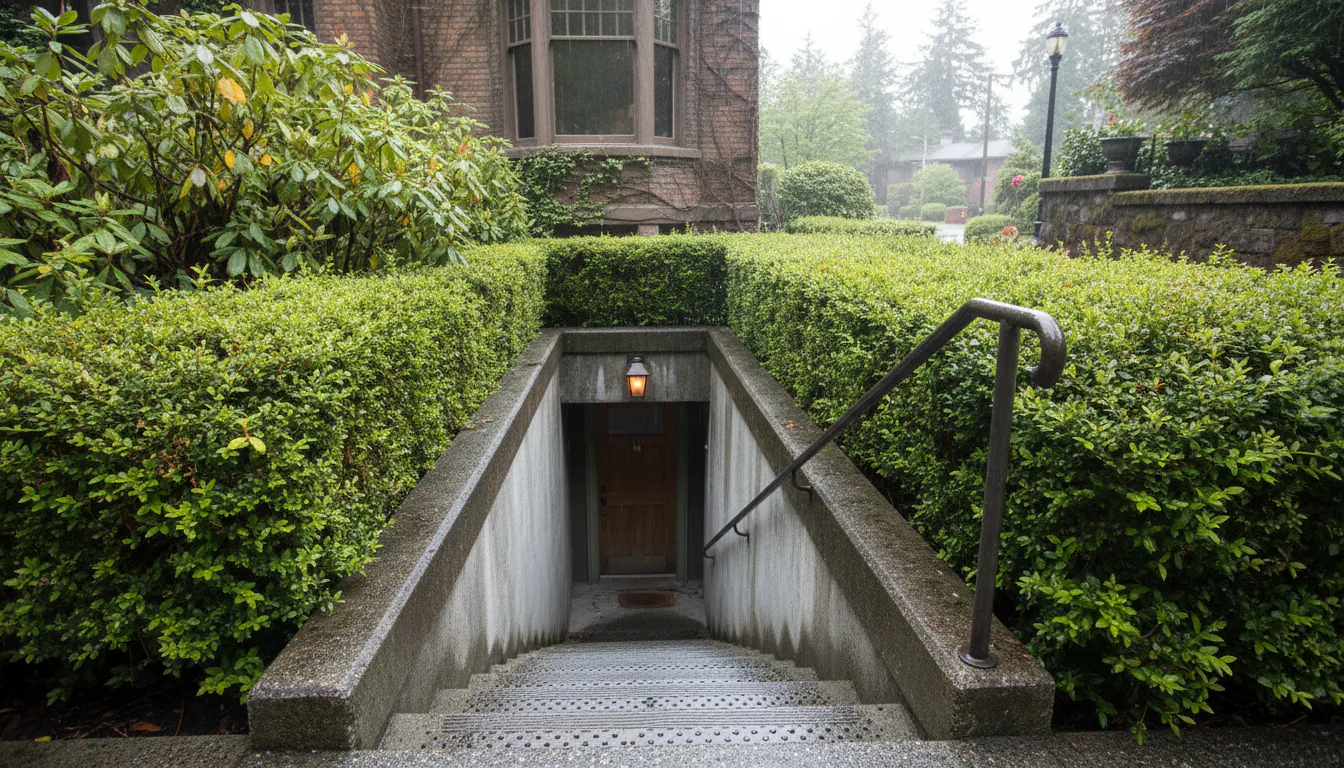
For hot-dip galvanized (exterior stairs): Galvanized steel is the most durable exterior finish for BC’s climate. It requires essentially no maintenance for the first 10–20 years. When white zinc corrosion products (“white rust”) appear, clean with a mild detergent and rinse, do not abrade. If the galvanizing is penetrated to bare steel (typically from mechanical damage), a zinc-rich primer (Galvit or equivalent) applied immediately prevents the corrosion from spreading.
For wood treads: Follow the floor finish manufacturer’s recommendations. Most pre-finished hardwood recommends a pH-neutral hardwood cleaner. Avoid water saturation of the tread surface, it causes grain raise and finish adhesion failure.
When to call a professional
The annual checklist identifies problems that need professional attention. These are the ones not to defer:
Call immediately:
- Any railing post with visible movement under lateral hand pressure
- A weld crack visible at a tread bracket or stringer connection
- A glass panel with bottom-edge damage or a through-crack
Call this season:
- Rust weeping from beneath a base plate or from an untreated chip
- Wood tread fasteners that are loose enough to allow the tread to lift
- A handrail that has detached from a wall bracket
Schedule for annual service:
- Powder coat touch-up on chips and edges where bare steel is exposed
- Re-tightening of bolted connections if any have worked loose
- Wax reapplication on blackened steel interior stairs
The 25-year view
A steel staircase finished correctly and inspected annually will outlast the building renovation cycle in Metro Vancouver. The finish system, not the steel, is what requires care. Catching coating failures at the chip stage costs a can of touch-up paint and an hour. Catching them after three seasons of Vancouver rain costs a complete re-coat or a replacement component.
The stair is not complicated to maintain. It just needs to be looked at.
For the finishes and support strategies behind these maintenance choices, see our overview of custom steel staircases in Metro Vancouver.
Questions about your existing steel staircase? Contact Vancouver Stairs with photos and we will advise on whether the condition warrants repair or is within normal maintenance tolerance.
Related questions
How much maintenance does a steel staircase require?
Very little. A properly finished interior steel staircase needs an annual visual inspection and occasional cleaning. The main maintenance risk is edge impact damage to powder coat, touch up exposed bare steel within a season to prevent rust from forming.
Can a powder coat finish rust on a Vancouver steel staircase?
Powder coat resists rust very well, but damage to the coating, chips, edge abrasion, fastener holes, creates an entry point for moisture. In Vancouver's damp climate, a bare steel patch that sits untreated will surface rust within one to three seasons. Clean and touch up any exposed bare steel promptly.
How do I touch up damaged powder coat on a steel staircase?
For small chips, clean the bare area with isopropyl alcohol, apply a rust-inhibiting primer (Rustoleum or equivalent), then apply a matching powder coat touch-up paint in a rattle can or brush. Full colour matching requires a sample chip sent to a coating shop. For significant damage, re-coating the affected component is the cleaner repair.
How do I know if my steel staircase needs re-welding?
Warning signs: a railing post that moves when you apply lateral force, a tread bracket that has visible cracking at the weld toe, or any audible creak at a bolted connection. These warrant a professional assessment, not a DIY fix. Welded structural connections should not be attempted without a CWB-certified welder.