Drainage on Outdoor Steel Stairs in Vancouver: Snow, Rain, and the Detail That Lasts
Drainage details for outdoor steel stairs in Vancouver: tread selection, landing slope, base detail, and the choices that prevent rust and standing water.
An outdoor stair lives in standing water more than people realize. The drainage detail is the difference between twenty years of service and five.
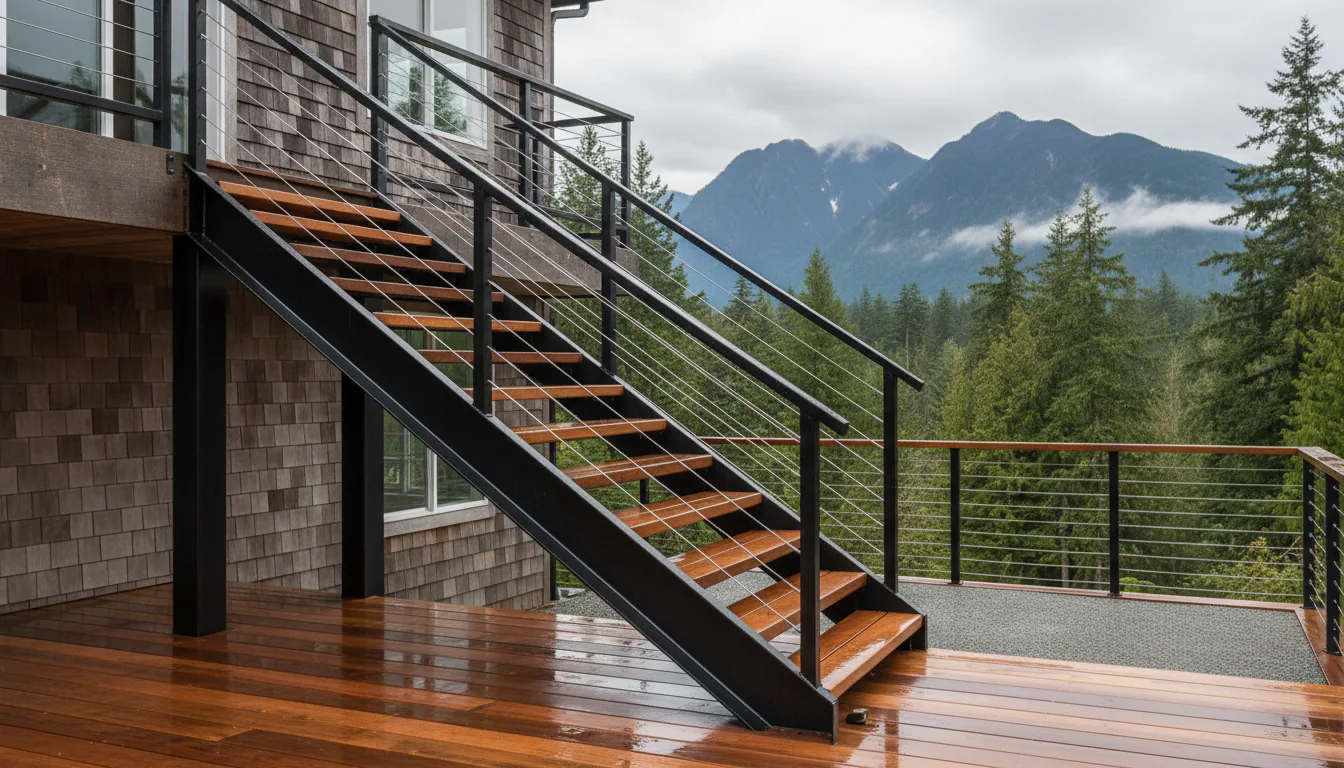
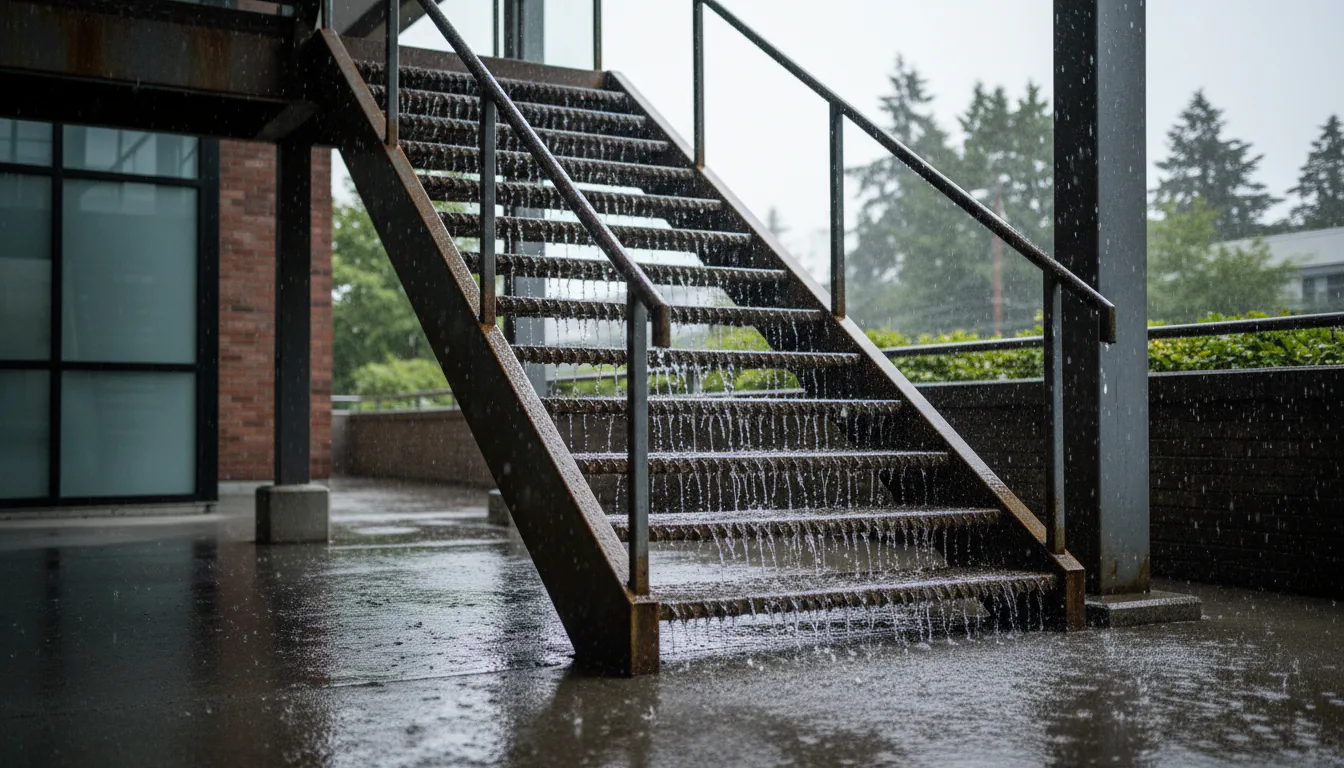
An outdoor steel stair in Vancouver spends a remarkable amount of its life in or near standing water. The Pacific Northwest rain falls steadily for half the year. The snow that does come usually arrives wet and sits on horizontal surfaces while it melts. The freeze-thaw cycle works whatever was wet the night before. By a reasonable count, an exterior stair has a wet surface more days than a dry one in any given Vancouver winter.
The drainage detail on a stair like this is not optional. It is the single largest factor in how long the stair lasts before refinishing or replacement, and it is the detail that we see most often missed on stairs we are asked to refurbish or replace.
The tread is the first drainage decision
The tread is the horizontal surface that water and debris encounter first. The tread material decides what happens next.
A solid steel plate tread accumulates water across its surface, with the worst pooling at the corners where the tread meets the side stringers. Leaves, pine needles, and other organic debris pile against the upstand of the stringer and create a permanent wet zone. The corrosion starts at this wet zone, propagates along the bottom face of the tread, and over time delaminates the finish system from below.
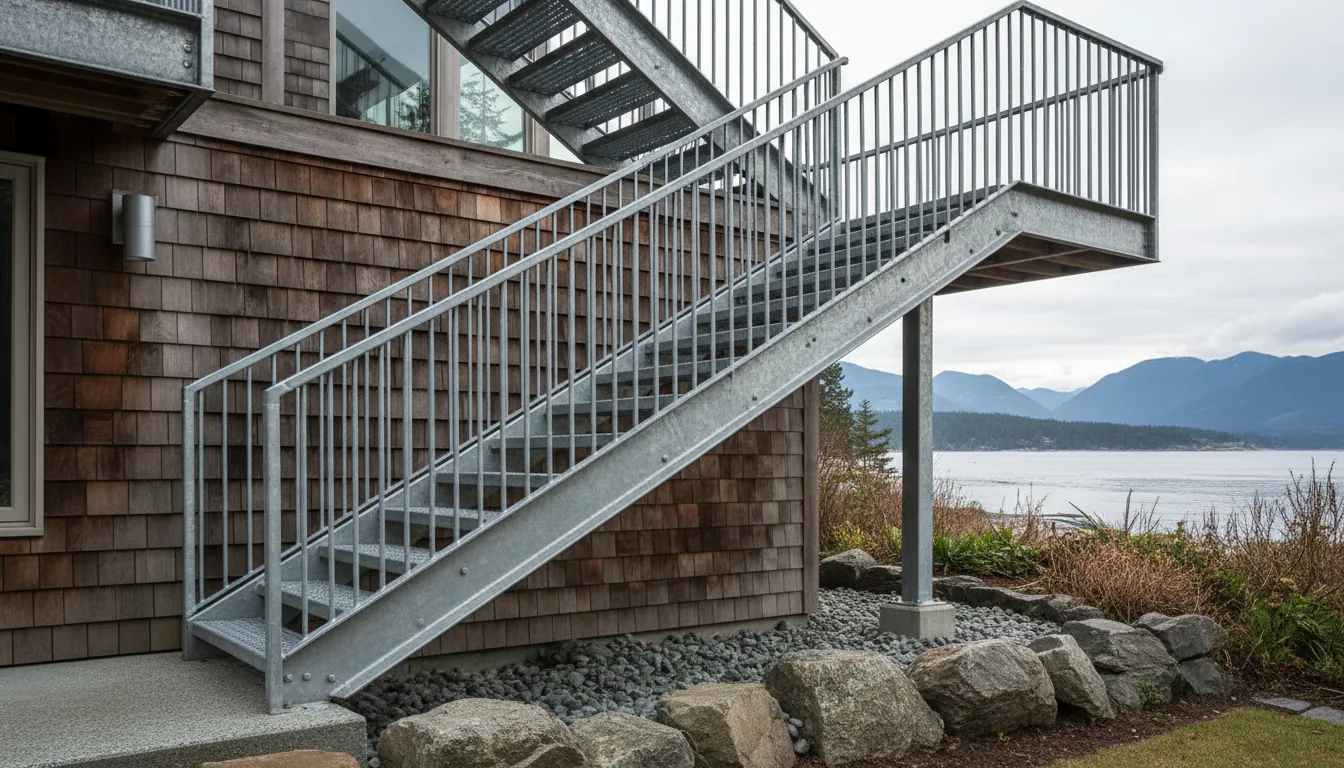
A drainage tread, serrated bar grating, expanded mesh, or perforated steel, allows water and debris to fall through to whatever drainage surface is below. The tread surface stays clear of standing water; the debris reaches a sweeping zone below where it can be cleared or naturally washed away.
On every outdoor stair we design, the tread is a drainage tread unless there is a specific reason it cannot be. The visual reading of a grating tread is industrial; on stairs where the visual is the priority, an embossed plate with intentional drainage at the corners is a compromise. On most utility stairs, the grating is the right answer.
The landing slope, toward away from the building
The landing on an outdoor stair is a horizontal surface that collects all the water from the stair above. Where that water goes is determined by the landing slope.
A landing that slopes away from the building directs the water off the structure and away from the foundation. A landing that is flat allows water to pool. A landing that slopes back toward the building, surprisingly common in field-built stair retrofits, directs water against the foundation wall and into the building envelope.
We default to a slope of 1 to 2 percent away from the building on every exterior landing. The slope is small enough that the user does not feel it but enough to drain water reliably. The slope is documented in the shop drawings and confirmed at install with a level.
The landing surface itself can be solid plate (with the slope managing the drainage) or grating (with the through-drainage managing the drainage). Either works as long as the path from the landing to the surrounding ground is clear and the water does not pool against the building.
The base detail, off the ground
The bottom of the stair stringer is the most vulnerable location for corrosion. The stringer end sits at or near the ground surface where standing water, splash from below, and ground moisture all concentrate. A stringer end set directly on a concrete pad or paving stone gets the worst of this exposure.
The right detail elevates the stringer end off the standing water. A stainless or galvanized spacer of at least 20 to 25 mm between the stringer base and the supporting surface gives the bottom of the stringer a chance to dry between rain events. The supporting pad is sloped away from the stringer so any water that does collect drains off rather than puddling at the base.
The base plate connection to the supporting pad uses hardware appropriate for the exposure, stainless steel anchors at minimum, with the anchor pattern sized for the structural load and the corrosion exposure. The base plate itself is detailed with drainage holes or with a perimeter gap that prevents water from pooling on top of the plate.
For broader context on related exterior finish work, see our pieces on the hot-dip galvanizing for exterior stairs on the North Shore and the exterior steel stairs coastal Vancouver finish piece.
The cut detail, sealing the bare metal
Every cut in galvanized steel exposes bare carbon steel at the cut line. The galvanizing was applied to the steel after the original cut, and any modification (drilling, cutting, grinding) breaks the coating.
The right detail brushes the cut to remove burrs and slag, applies a zinc-rich primer (specifically formulated for galvanizing repair), and overcoats with the project finish. The zinc primer chemically continues the protection that the galvanizing was providing.
A galvanized stair with unfinished cuts rusts at the cut lines first. The corrosion propagates from the cut into the surrounding galvanizing layer over time. The fix is much harder once the corrosion has started than it is at fabrication, where the cut can be properly prepared and coated.
We document the cut detail in the shop drawings and confirm at quality control that every cut has been sealed before the stair leaves the shop.
Snow shedding from the structure above
On stairs that live below a roof line that sheds snow, the snow load on the stair includes both the falling snow and the snow that comes off the roof. A two- to three-storey home sheds snow off the roof onto whatever is below it, and a stair in that path can see meaningful snow drift loads.
The structural design accounts for this. The stair members and railings are sized for the snow drift load in addition to the live load. The railing in particular has to take the impact of snow shedding from above, and a cable or glass railing under a roof line is more vulnerable than a picket or panel railing.
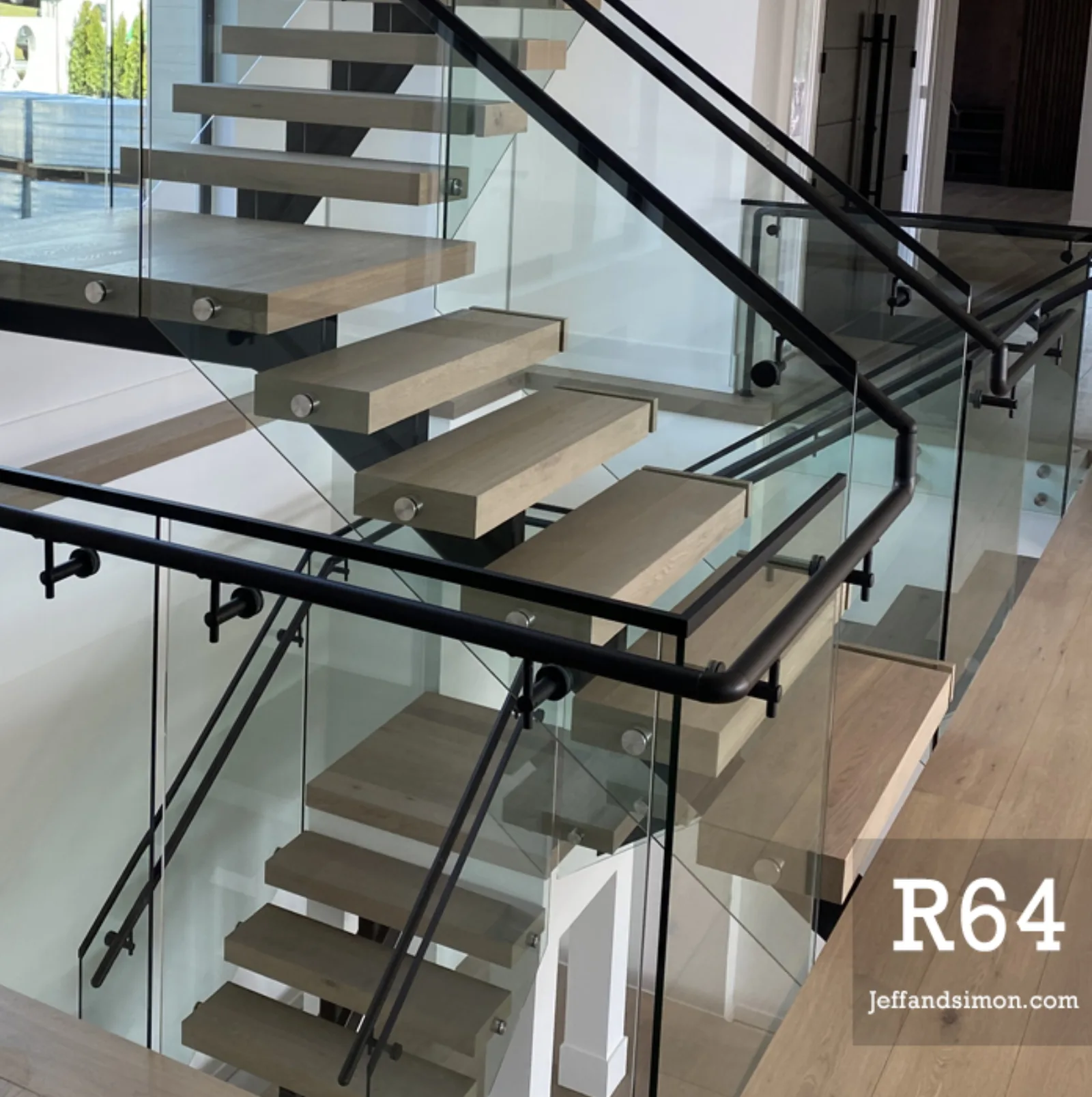
For homes where snow shedding is a significant issue (particularly North Shore homes above the snow-line contour), we recommend picket or perforated panel railings under any roof line that sheds snow. The railing takes the impact without damage; the maintenance is much lower than refurbishing cable or glass after each winter.
For broader context on the snow exposure considerations on North Shore properties, see our piece on the Upper Lonsdale and Grouse staircase guide.
Drainage on the upper landing
The upper landing of an outdoor stair is where the stair meets the home, usually at a door or a transition to an upper floor. The drainage at this location is critical because pooling water at the door threshold can drive moisture into the building envelope.
The right detail slopes the landing away from the door, provides a drainage gap or slot at the landing edge, and detail flashes the threshold with the door manufacturer’s recommended detail. The landing is set at the right elevation relative to the door threshold (typically slightly below the threshold to prevent water from running across into the home).
The door supplier’s literature is the reference for the threshold and flashing detail. We coordinate the landing elevation and edge detail with the door supplier and the architect at the shop drawing stage so the installed assembly works as a continuous water management system rather than as a set of independent components.
The seasonal maintenance question
Even a well-detailed outdoor stair benefits from seasonal maintenance. The recommended cycle:
- Spring: clear leaves and debris from grating treads, drainage holes, and corners. Wash down the stair to remove accumulated salt from winter exposure. Inspect the finish for damage from winter weather.
- Mid-summer: inspect bolts and connections for any movement. Wash down again if salt exposure was heavy in the spring.
- Fall: clear leaves before the wet season begins. Confirm drainage paths are clear and water flows away from the structure.
The maintenance is minimal compared to the cost of refinishing a corroded stair. The homeowner who keeps up the seasonal maintenance gets twenty-plus years of service from a well-detailed exterior stair. The homeowner who ignores it pays for refinishing or replacement at year ten.
Sources
- ISO 12944, Corrosion protection of steel structures by protective paint systems
- American Galvanizers Association, repair of damaged hot-dip galvanized coatings
Related reading: the hot-dip galvanizing for exterior stairs on the North Shore piece, the exterior steel stairs coastal Vancouver finish piece, and the stair tread anti-slip finishes Vancouver exterior piece.
Related questions
Why do solid steel treads fail on outdoor stairs?
Solid treads accumulate water and debris that hold moisture against the steel. The corrosion starts at the edges where the tread meets the stringer, propagates along the bottom face, and over time delaminates the finish system. Freeze-thaw cycles accelerate the failure by mechanically loosening the corroded layer. Drainage treads avoid this by letting water and debris fall through.
How important is the landing slope?
Critical. A landing that does not slope away from the building directs all the water from the stair into the foundation. Even a small back-slope toward the building pushes moisture into the wall over time. We default to a slope of 1 to 2 percent away from the building on every exterior landing.
What's the minimum gap between the stringer base and the ground?
Enough to prevent the stringer end from sitting in standing water at any point. In practice, we use a stainless or galvanized spacer of at least 20 to 25 mm and detail the support so water can drain off the bearing surface. On concrete pads or paving, a sloped pad away from the stringer is a better long-term detail than a flat pad.