Picket Railing vs Cable Railing on Vancouver Stairs: A Working Cost Comparison
Picket vs cable railing on Vancouver custom stairs: cost, visual reading, maintenance, code compliance, and which system fits each application.
Cable transparency or picket privacy. The decision is rarely about cost and almost always about what the homeowner actually wants the stair to feel like.
The picket vs cable railing question comes up on almost every Vancouver residential stair conversation. The two systems look fundamentally different, behave differently in service, and signal different aesthetic intentions. Most homeowners arrive at the conversation thinking one or the other is meaningfully cheaper. In practice, they are usually within a small margin of each other on a fair comparison.
This post walks through the actual cost comparison, where the cost differences live, and where the decision should land based on what the project is trying to achieve.
What each system actually is
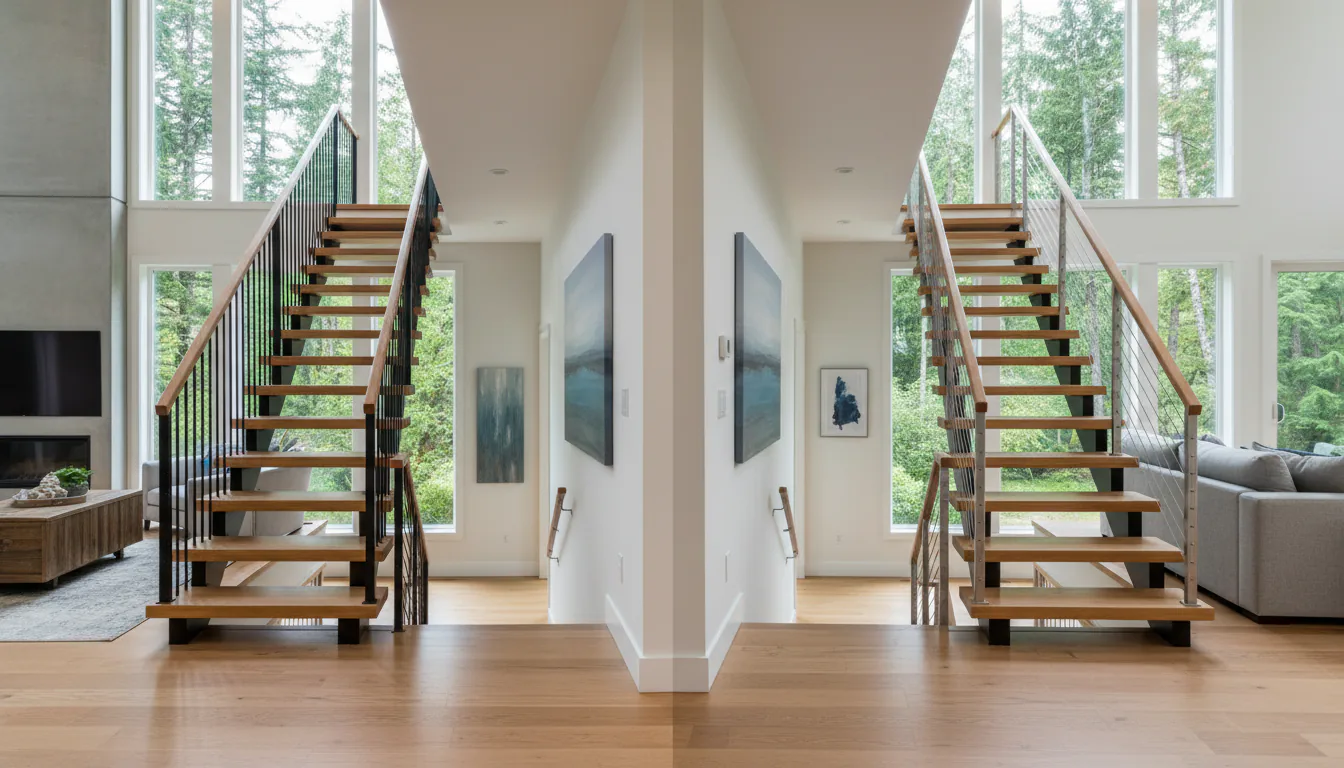
A picket railing is a vertical infill of repeating elements (pickets) between a top rail and a bottom rail or directly to the tread. The pickets are typically square steel tube (12 to 16 mm), round bar, or decorative profiles. The spacing is set so the opening between pickets meets the BC code 100 mm sphere test. The visual reading is a series of vertical lines repeating along the railing length.
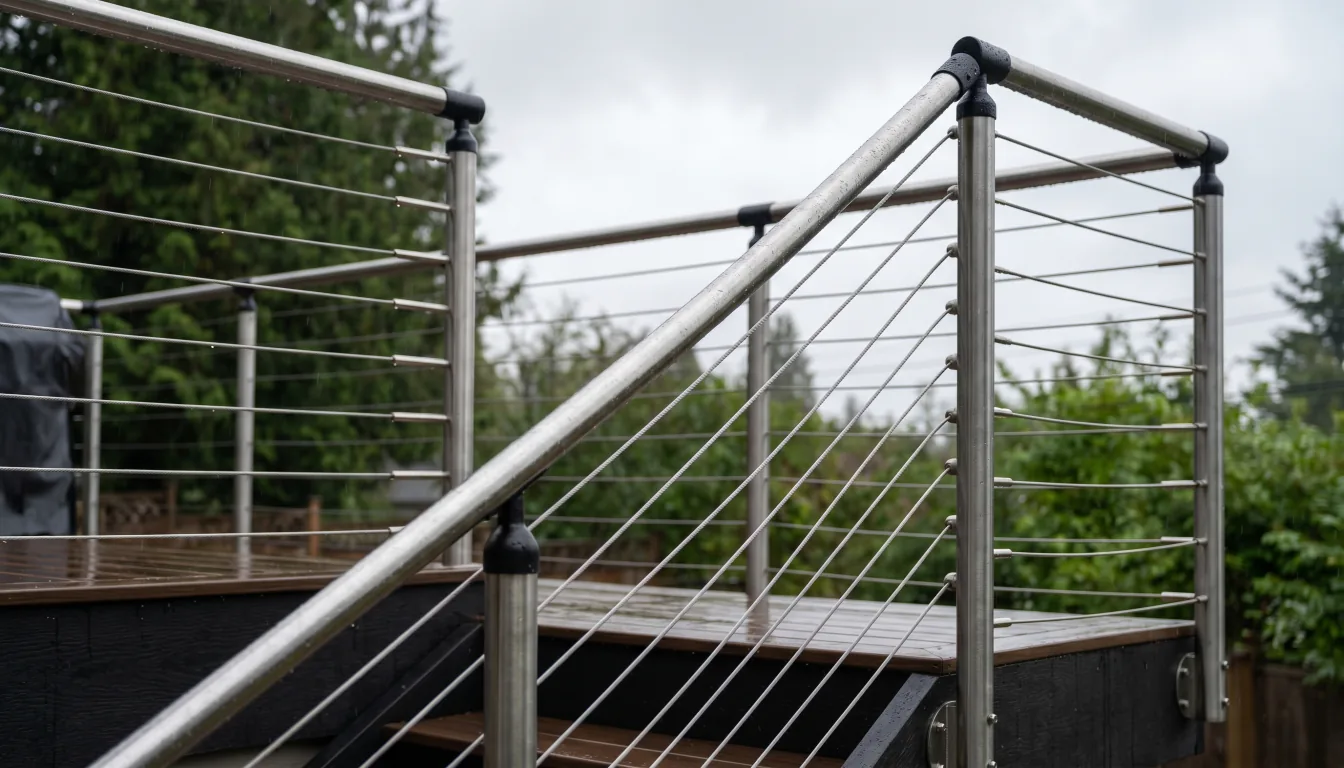
A cable railing is a horizontal infill of stainless steel cables tensioned between posts. The cables are typically 3 to 6 mm in diameter (1x19 construction is the standard), spaced 75 to 100 mm apart on residential railings. The visual reading is a near-transparent horizontal line pattern, with the posts at intervals carrying the cable tension.
Both systems require a top rail (graspable handrail) that meets the code provisions for continuity and graspability. The top rail is independent of the infill choice.
This article is not a substitute for code review by the authority having jurisdiction, an architect, or an engineer.
The cost comparison, apples to apples
A fair cost comparison requires equivalent quality on both systems. Comparing a premium cable system with grade 316 hardware against a budget picket system with thin-wall tube and basic finish is not a fair comparison.
A well-specified picket railing on a typical Vancouver residential stair includes:
- 12 to 16 mm square or round pickets in carbon steel
- A continuous top rail in 38 mm round profile
- Posts at code-compliant spacing
- Powder coat or quality wet paint finish
- Coordinated brackets and hardware
A well-specified cable railing on the same stair includes:
- 4 to 5 mm 1x19 stainless cable in grade 316
- Grade 316 stainless end fittings and turnbuckles
- A continuous top rail compatible with the post system
- Posts at the cable manufacturer’s spacing recommendation
- A finish on the carbon steel posts and top rail (if not stainless)
The cost per linear foot of the two systems is comparable when specified at this level. The variables that move the cost are post spacing (cable systems often require closer post spacing to maintain cable tension and meet deflection limits), hardware grade (316 vs 304 matters on coastal projects), and total cable length (longer runs need more tensioning hardware).
On most projects we quote, the price difference is small enough that it should not drive the decision. The deciding factors are the visual intent and the homeowner’s tolerance for maintenance.
For broader context on the cable specification, see our piece on the cable railing specification for Vancouver decks and stairs and the cable railing cost Vancouver piece.
The visual difference
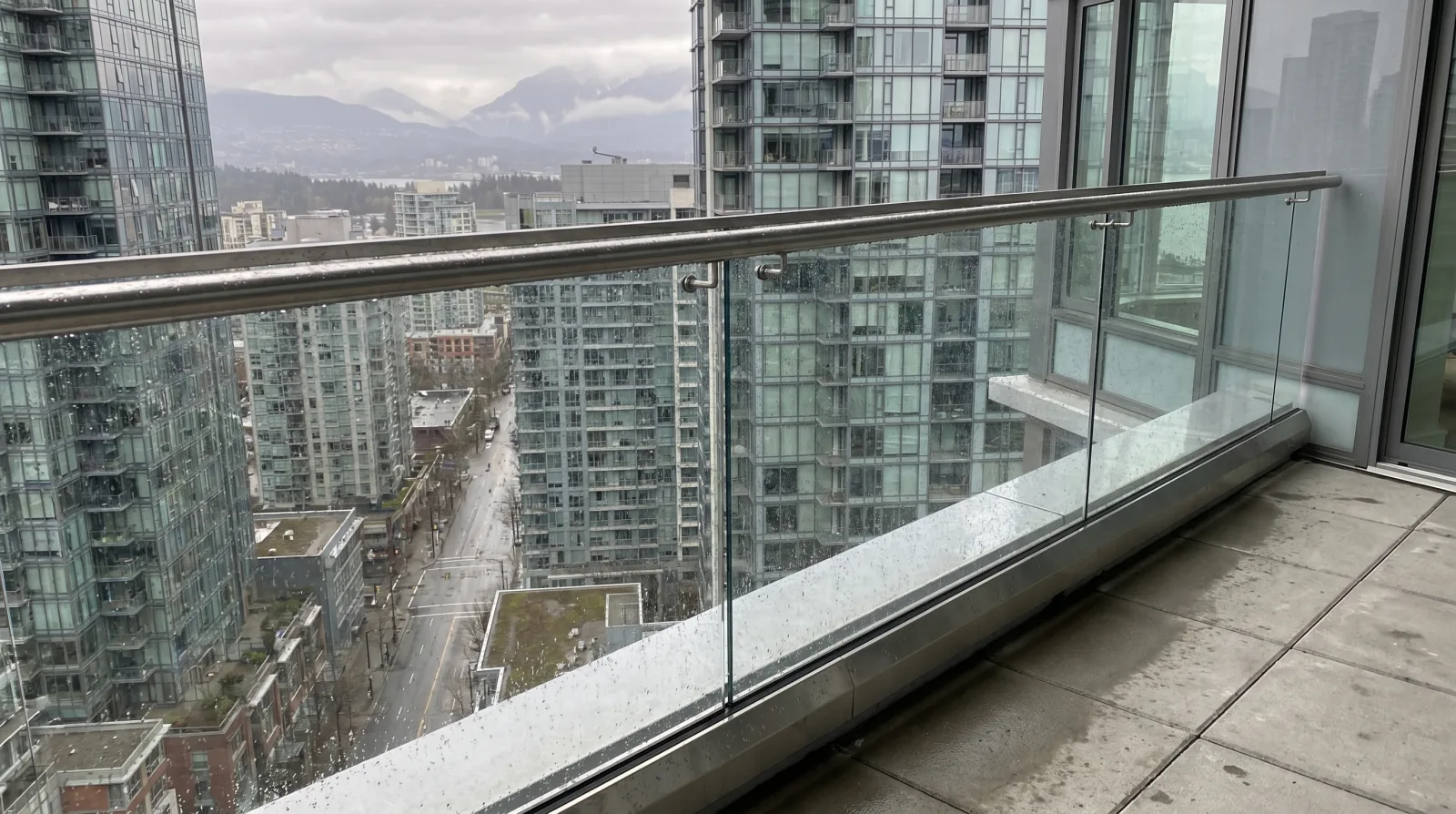
Cable railing is for views. The horizontal stainless wires read nearly invisible at any reasonable viewing distance, preserving the sightline through the railing. On a stair landing facing a view, a cable railing maintains the view in a way no other infill can. On a lofted space where transparency adds to the perceived volume, cable lets the architecture breathe.
Picket railing is for character. The vertical pattern reads more solid, more traditional, and more rhythmic. The pattern itself is a visual element that defines the railing rather than disappearing. On character homes, on stairs where the railing is the visual feature rather than the view behind it, and on projects where the homeowner wants a less industrial reading, picket is the right answer.
The intermediate option, vertical cables or thin vertical rods, exists and reads between the two. It is less common than either extreme.
The maintenance difference, and it is real
Cable railings have a real maintenance overhead. The cables stretch slightly over time under their own weight and the daily handling. The tensioning has to be checked periodically and the cables retensioned with the turnbuckles. Loose cables read sloppy and increase the deflection under load.
The end fittings need visual inspection for corrosion, especially on coastal projects. Grade 316 hardware delays the inspection interval but does not eliminate it. A cable end with surface corrosion is usually still serviceable but should be cleaned and treated.
The cables themselves collect dust that has to be cleaned periodically. The post bases collect debris that can hold moisture.
Picket railings have essentially no maintenance overhead for the life of the finish. The pickets sit in their pattern without movement. The finish on the pickets and the top rail eventually needs refreshing, typically every 10 to 15 years on a well-applied powder coat, but there is no ongoing adjustment required.
For homeowners who want a stair they do not have to think about, the picket railing is meaningfully easier. For homeowners who accept the maintenance trade-off for the visual return, cable is the right answer.
Code compliance, where they diverge
The picket railing code path is simpler. The opening between pickets has to pass the 100 mm sphere test, the picket has to be structurally adequate, and the spacing has to be consistent. The climbable-guard provisions do not generally affect a vertical picket pattern.
The cable railing code path is more nuanced. The opening between cables has to pass the same 100 mm sphere test (or the appropriate provision for horizontal members). The climbable-guard provisions affect horizontal cables, the AHJ has to interpret whether the cable spacing presents a climbable hazard on guards above the threshold height.
In practice, most BC AHJs accept horizontal cable on residential stairs and landings where the fall height is below the climbable threshold, or where the home does not have child occupant loads. The cable specification, spacing, tension, post location, is documented in the shop drawings and confirmed with the AHJ before fabrication.
For broader context on the code provisions, see our piece on the stair railing baluster spacing BC code piece.
Where cable is the right answer
Cable railings make the most sense on:
- Stairs adjacent to a view, where preserving the sightline is the priority
- Modern and contemporary homes where the industrial reading matches the rest of the design
- Lofted or open-plan interiors where transparency adds to the spatial reading
- Projects where the architect’s intent is minimal visible structure
Where picket is the right answer
Picket railings make the most sense on:
- Character and heritage homes where the visual vocabulary matches the rest of the home
- Stairs where the railing is the design feature rather than the view behind it
- Homes with young children where the maintenance overhead of cable is unwelcome
- Projects where the budget is tight enough that the lower maintenance cost matters over time
- Projects under a roof line that sheds snow, where cable can be damaged by impact
The honest budget conversation
The actual price difference on a typical Vancouver residential stair, comparing apples to apples on quality, is small enough that the decision should be made on the visual and functional grounds rather than the cost. A homeowner who has narrowed the choice to cable vs picket has usually made the broader design decisions; the railing is one element supporting those decisions.
We provide quotes that include both systems where the homeowner wants to see the actual numbers side by side. The numbers usually surprise homeowners who expected one to be meaningfully cheaper. The decision usually lands on the visual and maintenance grounds once the cost difference is shown to be small.
Sources
Related reading: the cable railing specification for Vancouver decks and stairs piece, the cable railing cost Vancouver piece, and the stair railing baluster spacing BC code piece.
Related questions
Is cable railing more expensive than picket railing on a typical Vancouver stair?
Comparable when both are specified to the same quality. A cable railing with grade 316 hardware and proper post engineering runs roughly in line with a well-detailed steel picket railing per linear foot. Cheaper cable systems with lower-grade hardware exist but they do not perform on coastal exposures. Cheaper picket systems exist but they read flat next to a custom-detailed one.
Does cable railing require more maintenance than picket?
Yes. Cables stretch over time and require periodic retensioning. End fittings need visual inspection for corrosion (especially on coastal projects). The cables and posts collect dust that has to be cleaned. Picket railings are essentially maintenance-free for the life of the finish, with no moving parts to adjust.
Are there code issues with cable railing in BC?
BC code's climbable-guard provisions limit horizontal members at certain heights on guards above a defined fall threshold. Most BC AHJs accept horizontal cable on residential stairs below the threshold height; many do not above it. The architect confirms the AHJ's position before fabrication.