Commercial Egress Stair Cost in Vancouver: What Drives the Number
Commercial egress stair cost in Vancouver: design, engineering, fabrication, finish, and the coordination overhead between baseline and premium quotes.
An egress stair cost is rarely about the steel. It is about everything around the steel, the engineering, the coordination, the inspection, and the schedule.
The question we get most often from commercial GCs and developers on Vancouver projects is some version of “what does an egress stair cost”. The honest answer is that an egress stair quote has more variables than almost any other item on the project, and a number quoted without drawings is a number that is going to move.
This post walks through how a commercial egress stair quote is built up, where the cost actually lives, and which decisions move the budget materially up or down.
The five cost buckets
A commercial egress stair quote breaks down into five buckets, in approximately this order of dominance:
- Engineering, the structural review, the seismic detail review, the rated-assembly coordination, the stamp on the drawings.
- Coordination, the architect coordination, the shop drawing cycle, the door supplier coordination, the framer coordination, the inspection coordination.
- Fabrication, the actual cutting, welding, finishing, and assembling of the steel.
- Finish, the powder coat, paint, or galvanizing system applied to the finished steel.
- Install, the rigging, the placement on site, the bolting, the punch walk, the inspection sign-off.
On a typical Vancouver commercial egress stair, the engineering and coordination buckets together often account for as much or more than the raw fabrication cost. This surprises clients who frame the cost as “steel” but is what an honest quote actually contains.
Engineering, the bucket clients underestimate
On any commercial egress stair, the structural engineer is reviewing:
- The gravity load on the stair members
- The seismic load on the stair structure and its connections to the building
- The rated-assembly intersection at the shaft walls
- The connection detail at every floor landing
- The guard and handrail load resistance
- The fire-rating coordination with the architect’s listed assembly
Each of these reviews takes engineering time, and the deliverable is a stamped set of structural drawings that authorize the fabrication. On a multi-storey rated egress stair, the engineering line item is significant.
The fabricator’s job is to provide the engineer with clear shop drawings, accurate load assumptions, and timely revisions when the architect’s design changes. A project where the architecture is still being refined while the engineer is trying to finalize the structural drawings extends the engineering bucket substantially.
For broader context on the structural decisions that interact with engineering, see our piece on the steel stair connection details Vancouver.
Coordination, the bucket that grows on complex projects
Coordination is the bucket that grows when the project has more stakeholders, more interfaces, and more revisions. On a simple two-storey rated egress stair in a small commercial building, coordination is a contained line item. On a multi-storey rated egress stair in a large commercial building with multiple architects, multiple engineers, multiple GCs, and a complex shaft assembly, coordination can be the largest single bucket.
The specific coordination activities include:
- Multiple shop drawing review cycles with the architect
- Engineering review and revision cycles
- Door supplier coordination for landing dimensions and threshold details
- Framer coordination for backup framing and rough openings
- Inspector coordination for the rated assembly verification
- Project schedule coordination with the GC’s broader build schedule
The coordination overhead does not scale linearly with the project size. A project with twice the stair length does not double the coordination cost; a project with twice the stakeholders frequently does.
Fabrication, the bucket clients overestimate
Most clients think the fabrication bucket is the largest. On most commercial egress stairs, it is not. The fabrication itself, the cutting, welding, finishing, and assembling, is a well-understood process with predictable productivity and material costs.
The variables in the fabrication bucket are:
- Raw steel cost (which moves with the material market)
- Welding hours (which depend on the joint quantity and the welding standard)
- Connection complexity (more bolted connections add fabrication time)
- Tread fabrication (pan treads with topping coordination add complexity)
- Quality control and CWB compliance documentation
On a standardized rated egress stair, the fabrication is repeatable and the productivity is high. The cost per linear foot of stair is well known and predictable.
Finish, the variable that often surprises
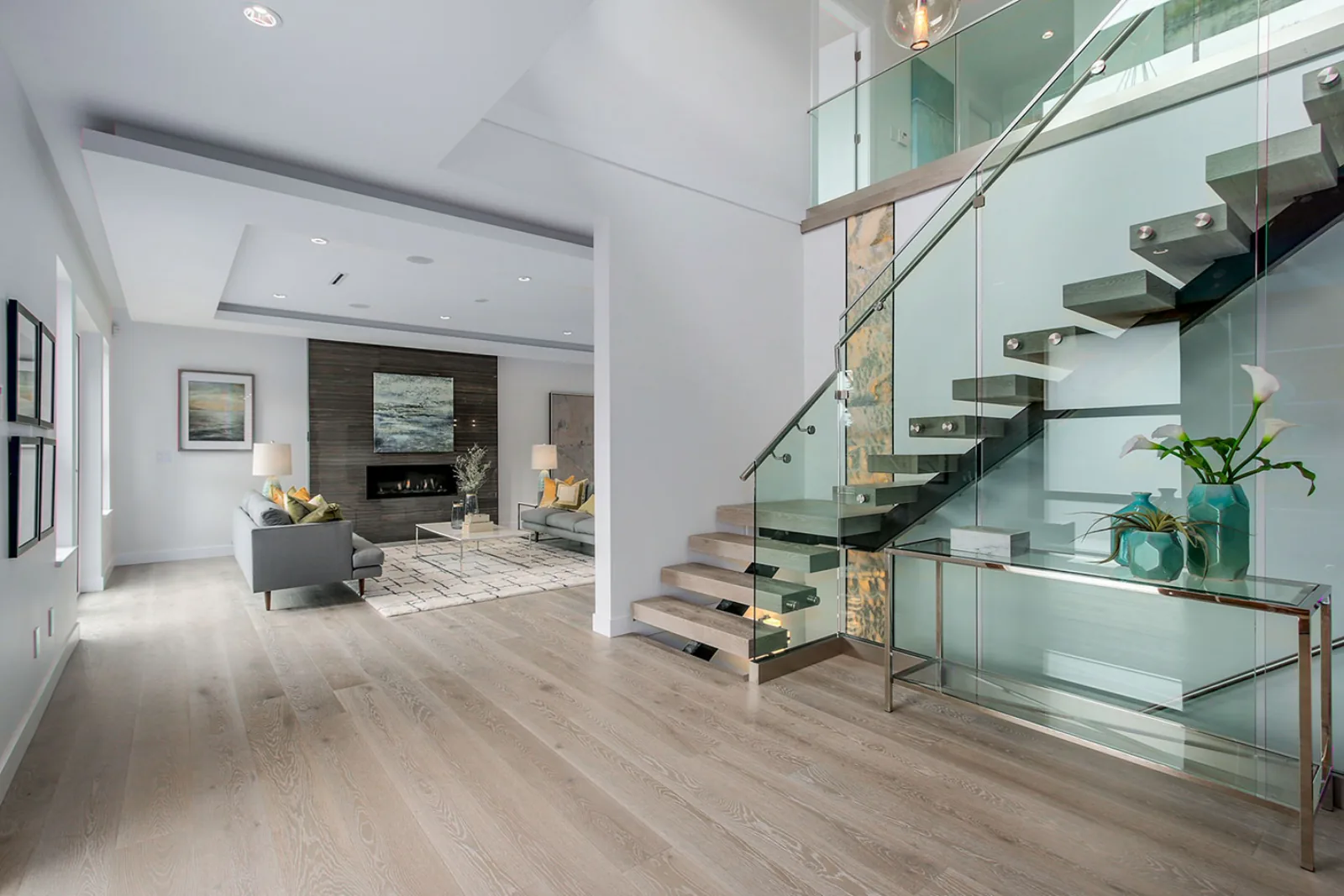
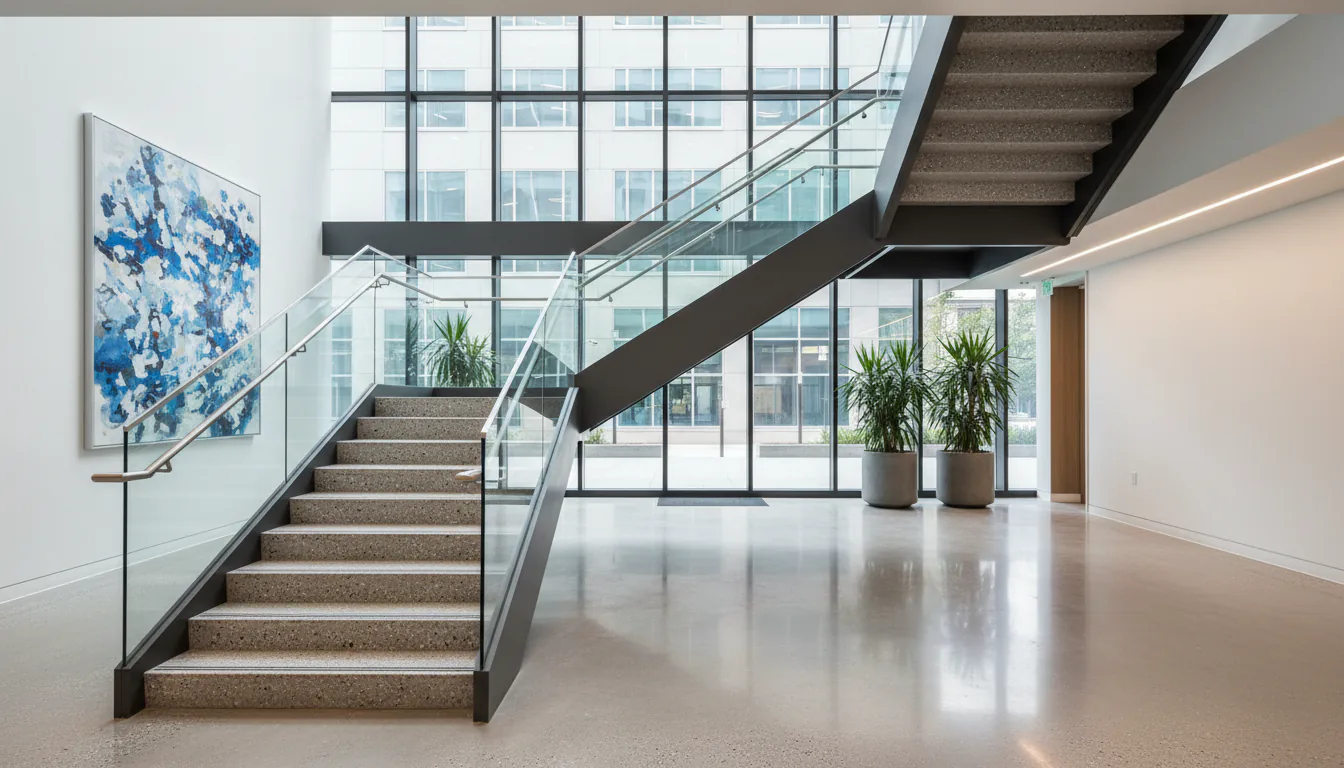
The finish bucket varies enormously based on the architectural specification. A standard egress stair finished in safety yellow alkyd paint is a contained cost. The same stair finished in a designer powder coat colour, with custom riser inserts, with a poured terrazzo topping on the treads, with a stainless handrail system, can be three or more times the painted version.
The structural performance is identical. The code compliance is identical. The finish carries the difference.
For developers and architects optimizing the budget, the finish bucket is the most accessible target. Reducing the finish specification reduces the cost without affecting the structural performance or the code compliance. Increasing the finish specification produces a more architectural result but the cost goes up correspondingly.
We help clients understand the finish budget by providing tiered quotes, utility finish, architectural finish, premium architectural finish, so the budget decision can be made on the basis of actual numbers rather than assumptions.
Install, the bucket on the project schedule
Install is the bucket on the project schedule, not just the budget. A well-coordinated install takes one to three days on a typical multi-storey egress stair. A poorly-coordinated install can take a week or more because of return trips, coordination gaps, and remedial work.
The install bucket includes rigging (often crane work on multi-storey stairs), the placement of the major assemblies in the shaft, the bolting of the field connections, the railing install, and the punch walk. Each of these can be standardized on a well-coordinated project.
The install cost is generally a smaller bucket than the engineering or fabrication buckets on most projects, but it is the most visible cost on the project schedule and can disrupt the broader build if it goes wrong.
What moves the number significantly
In approximate order of how much they move the quote:
- Stair height (storey count). Each additional storey adds engineering time, fabrication time, finish material, and install time.
- Rated assembly specification. A two-hour rated shaft stair costs meaningfully more than a one-hour rated shaft stair because of the intumescent coordination and the assembly detail.
- Finish specification. Architectural finishes vs utility finishes move the cost substantially.
- Architectural intent. A standard egress stair vs a stair that is also a feature in a public lobby move the cost substantially.
- Schedule pressure. A project on an accelerated schedule with overtime fabrication and rush coordination is meaningfully more expensive than the same project on a standard schedule.
For broader context on related cost work, see our pieces on the custom metal stair cost guide and the commercial staircase design Vancouver piece.
The honest budget conversation
The egress stair budget conversation we have with most commercial GCs and developers is the same one. The client has a target number from a feasibility study, the target number is based on a per-storey assumption from a different project, and the actual project has variables that the target number did not anticipate. Our job is to quote based on the actual project, not the target.
The quote we provide is itemized into the five buckets so the developer can see where the money is going. The quote includes a clear scope of work, a clear finish specification, a clear engineering specification, and a clear install plan. The quote is firm for a stated period and assumes the design does not change.
A developer who treats the quote as a starting point for negotiation usually ends up with one of two outcomes: a fabricator who reduces scope to meet the negotiated price (and the building suffers), or a fabricator who walks away from the project (and the developer starts over). A developer who treats the quote as an accurate read of the project usually gets the stair on schedule and within budget.
For egress width, switchback geometry, and Part 3 review detail, see our overview of commercial stairs in Metro Vancouver.
Sources
- BC Building Code Part 3, Fire Protection, Occupant Safety and Accessibility
- Engineers and Geoscientists BC, practice resources
- CSA W47.1, Certification of companies for fusion welding of steel
Related reading: the commercial staircase design Vancouver piece, the custom metal stair cost guide, and the fire-rated steel stairs in BC multifamily piece.
Related questions
What's the cost range for a commercial egress stair in Vancouver?
Cost varies enormously with the building height, the rated assembly requirements, the architect's finish specification, and the engineering complexity. A baseline two-storey rated egress stair with utility finishes runs significantly less than a multi-storey feature egress stair with architectural finishes. We do not quote without project drawings because the variables move the number too much.
Why does the engineering cost so much on a commercial stair?
The structural engineer is reviewing seismic load, gravity load, the rated-assembly intersection, the connection to the building structure, and the load path through every connection. On a multi-storey stair this involves reviewing every floor connection, every landing, and every guard load. The engineer's time is meaningful and the deliverable (stamped drawings) is what authorizes fabrication.
Is there a way to reduce the cost without compromising the code compliance?
Yes, by simplifying the architectural intent. A rated egress stair with utility finishes (painted steel, pan treads with topping, painted handrails) costs significantly less than the same stair with architectural finishes (powder coat in a designer colour, terrazzo treads, stainless handrails). The structure and the code compliance are identical; the finish carries most of the variable cost.