Wood Species for Steel Stair Treads in Vancouver: A Working Comparison
White oak, walnut, maple, and ash as treads on a Vancouver steel stair: hardness, finish behaviour, stability, and where each species fits.
Every tread species behaves differently under feet, sun, and Vancouver humidity. The right wood for a feature stair is decided in the shop, not in the brochure.
The wood tread is the only part of a feature stair the user touches every single time. The species choice is one of the few decisions on the project where the brochure does not match the experience after a year of use. A species that looked rich on the showroom sample can shift, darken, dent, or move with the seasons in ways that surprise a homeowner who expected the tread to behave like the steel underneath it.
This post is a working comparison of the four wood species that come through the shop most often as treads on Vancouver custom steel stairs, plus the decisions that go with each one.
White oak, the working default
White oak is the most common tread species on Vancouver custom homes right now and it earns the position. The wood is hard enough to take household traffic without showing every footfall, the grain reads architectural rather than busy when it is rift-sawn or quarter-sawn, and the colour sits in a warm neutral range that pairs well with both blackened steel and powder-coat white stringers. The Janka hardness rating for white oak puts it well above maple in dent resistance and well above walnut in surface durability, which matters on a high-use feature stair.
The grain orientation matters more than the species name. Plain-sawn white oak has cathedral grain figures that some clients love and some find busy on a long tread. Rift-sawn and quarter-sawn white oak read as straight parallel lines along the tread length and produce a calmer, more architectural surface. Rift-sawn is more expensive because the yield from a log is lower, but on a feature stair the difference is often worth it.
The wood is also relatively dimensionally stable across seasons in Vancouver’s humidity range, though no wood tread is fully stable. We allow a small expansion gap at the side stringers and at the riser interface on every species, including white oak, because a tread that is tight in summer can crack a wall finish in winter when it shrinks.
Finish behaviour on white oak is straightforward. Hardwax oil, penetrating oil, and water-based polyurethane all work. The finish choice affects the apparent colour, oil deepens the wood, water-based polyurethane keeps it lighter, and the maintenance schedule.
Walnut, the design statement
Walnut is the second-most-common feature tread we see, almost always on a darker palette where the design driver is contrast against a blackened steel stringer and a warmer wood tone against a cool architectural backdrop. The grain is more open than oak and reads chocolate to purple-brown depending on the harvest.
Walnut is softer than oak. The Janka rating is meaningfully lower, which translates to more visible dents from dropped objects and chairs, more wear in high-traffic spots, and a finish that has to be more attentively maintained. On a residence with young children and dogs and a busy stair, walnut shows the use within a year or two. On a primarily-adult home with lower traffic, walnut develops a beautiful patina without looking damaged.
The colour also shifts in Vancouver’s UV exposure. Walnut lightens over the first few years as it loses some of the deeper browns, and the published expectation in wood movement and aging references is consistent across hardwoods of this family. Clients who want the as-installed look frozen are setting themselves up for disappointment; clients who want the wood to evolve are usually pleased with how walnut ages.
Walnut is also more expensive than oak per board foot, and the difference is meaningful at tread thicknesses of 50 to 60 mm. The species choice should be made with the actual material cost on the table, not estimated.
Hard maple, the bright, harder option
Hard maple is harder than white oak and the closest-grained of the four. It produces a tread that takes wear very well and reads bright, almost white when finished with a water-based clear. On modern interiors that want a light, almost pale stair against a darker surrounding palette, maple is a strong choice.
The downside is the appearance. Maple’s tight grain reads as nearly featureless on a long tread, which some clients read as “clean” and others read as “plain”. Stains do not penetrate maple as evenly as they do oak; the wood blotches under most pigment systems, which means a stained maple tread often needs a conditioner and a careful finishing process to come out uniform.
Dimensional stability is similar to oak. Movement across seasons is small but not zero. The expansion allowance on a maple tread is the same as on an oak tread.
Maple sees less use as a tread species in Vancouver custom homes than its hardness would suggest, and that is largely a stylistic decision rather than a performance one. On the projects where it does land, it performs well over time.
White ash, the underrated alternative
White ash sits between oak and maple in hardness and has a similar grain pattern to oak with slightly different colour. The wood reads slightly lighter and more golden than white oak, which can be the look the client was after when they thought “oak”. Ash is also slightly less expensive than premium oak in some market conditions.
The reason ash does not appear on more Vancouver stairs is supply. Some of the eastern North American ash supply has been disrupted by the emerald ash borer over the past decade, which has affected availability and pricing in ways that change year to year. When ash is available at a competitive price, it is a credible alternative; when the supply tightens, white oak is the substitute. The fabricator’s job is to track the supply at quote time.
Ash takes finish similarly to oak and behaves similarly under traffic. The dimensional stability is comparable. The biggest difference is the grain reading slightly straighter and lighter, which some clients prefer on a feature stair.
Tread thickness, the question that crosses species
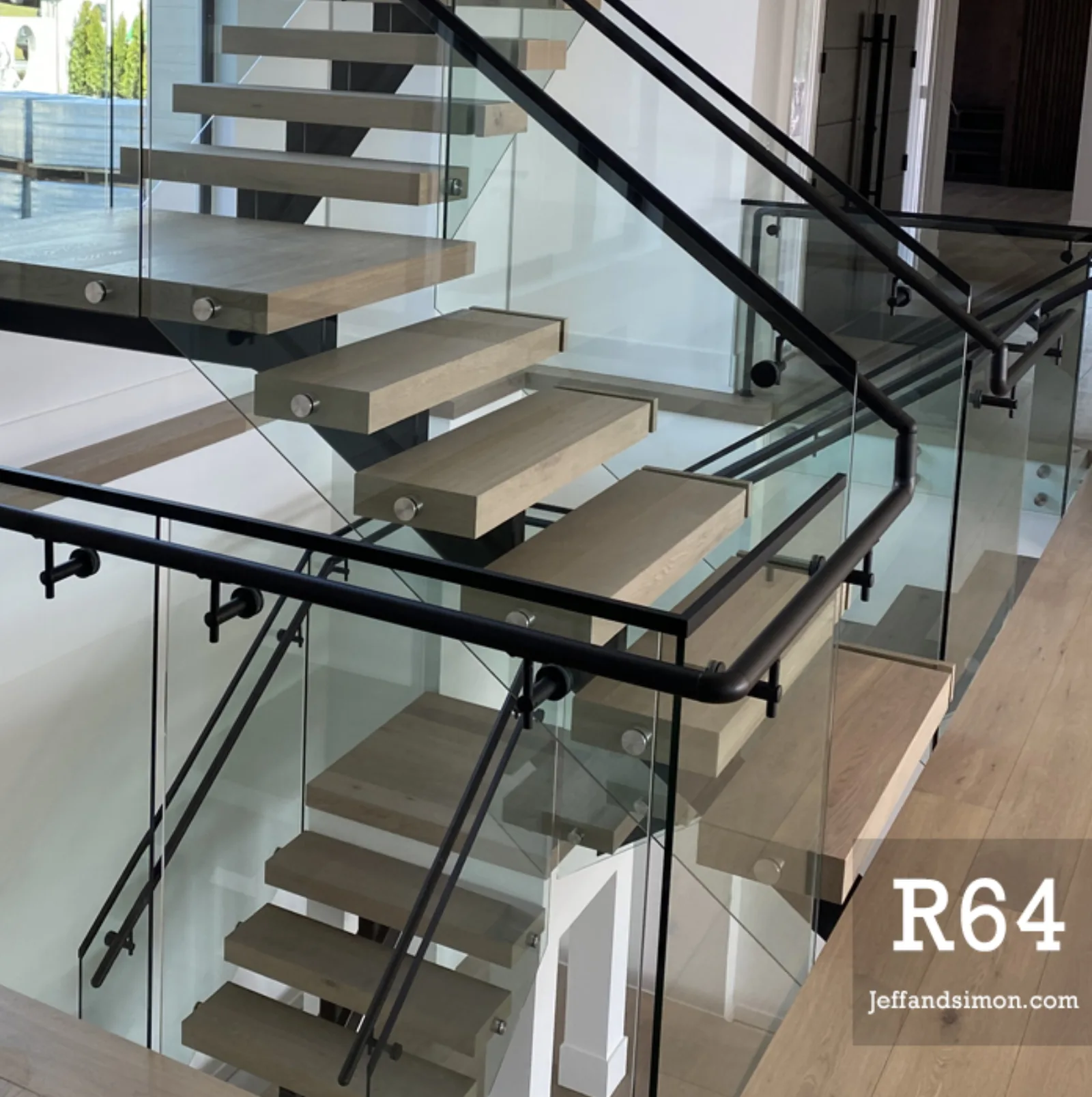
Tread thickness on a steel stair is a decision that has visual, structural, and cost implications. Thinner treads, in the 25 to 32 mm range, work well on traditional closed-stringer stairs where the tread is visually a horizontal surface, not a sculptural element. On a mono stringer or floating stair where the tread is the visible architectural element, thicker treads in the 50 to 60 mm range read in proportion to the beam.
The thickness also interacts with the bracket detail. A 60 mm tread on a small cantilever bracket can look heavy. A 32 mm tread on a large bracket looks underdone. The bracket plate is sized in the shop to match the tread thickness, and changing one without the other after fabrication is expensive.
For a closer look at how the tread thickness drives the rest of the floating stair detail, see our piece on floating stair tread thickness and sizing.
Finish system per species
The finish system is the third variable. We default to two finish families:
- Hardwax oil for clients who want a warm, natural appearance and accept maintenance every two to five years. The finish penetrates the wood, deepens the colour, and is easily spot-repaired with the same product.
- Water-based polyurethane for clients who want a more durable surface, a longer maintenance interval, and a cooler appearance that does not deepen the wood as much. Spot repair is harder; a worn area generally requires sanding back the whole tread.
Both finishes are available in matte, satin, and gloss sheens. We default to matte on tread surfaces because gloss reflects the lighting in ways that fight with the steel and accentuate every footprint.
Stains are available on most species but are rarely the right answer. Stained wood looks stained; the warmth of an oiled natural wood is what most clients are actually after when they specify a “dark walnut” finish. We pull samples in the shop and let the client see the difference before any finish is committed.
How the species decision actually gets made
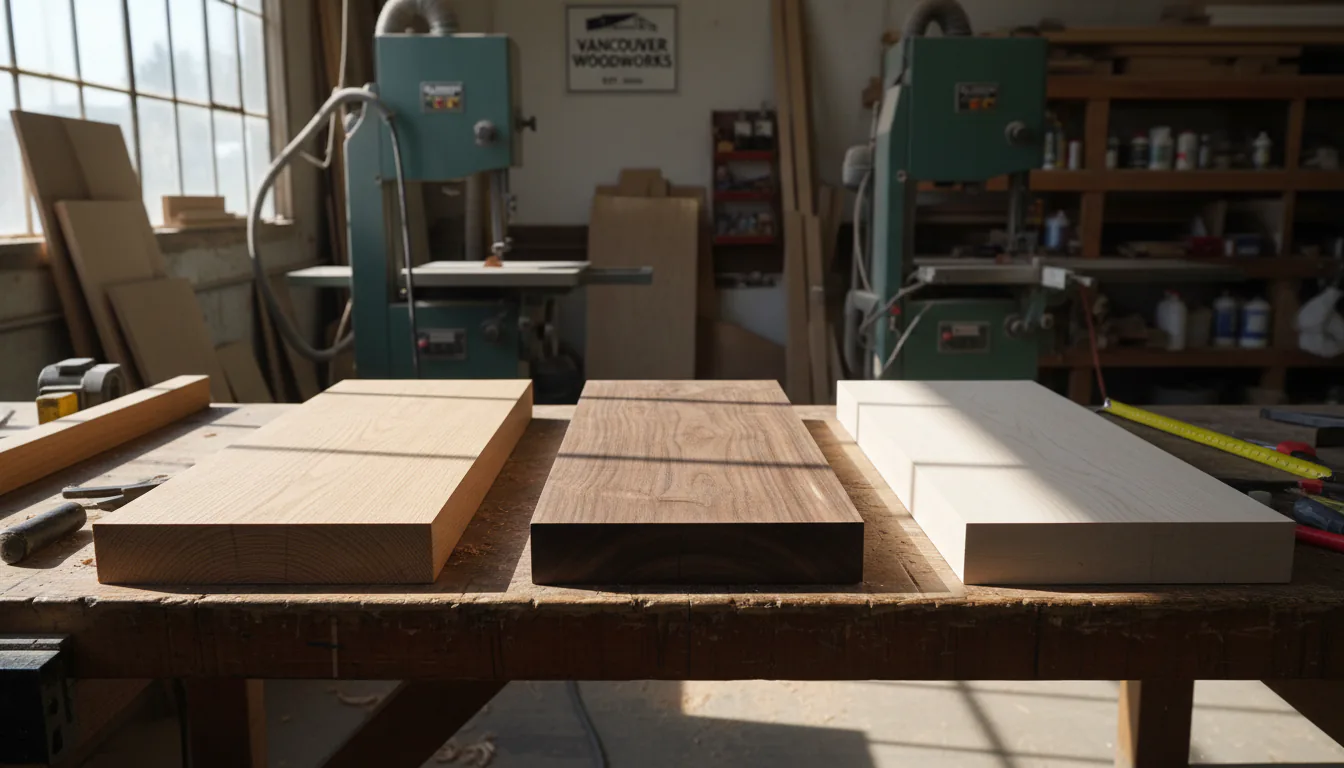
The shortest path to the right species: build a shop bench with four 600 mm tread samples in white oak, walnut, hard maple, and white ash, finished in the same family, and let the client step on each one in actual light next to a piece of the steel stringer finish. The decision moves from a brochure conversation to a sensory one, and it sticks. We do this for every feature stair where the species has not been pinned down by the architect, and the species the client picks is rarely the species they walked in expecting.
Sources
- Wood Database, White Oak and adjacent species pages
- FPInnovations, Canadian wood research and movement data
Related reading: the floating stair tread thickness and sizing piece, the luxury stair trends 2026 Vancouver post, and the mono stringer staircase deep-dive.
Related questions
What is the most popular tread species in Vancouver custom homes right now?
White oak by a wide margin. Most feature stairs coming through the shop in 2026 specify rift-sawn or quarter-sawn white oak in thick treads. Walnut is the second-most-common choice, usually on darker palettes where the contrast with a blackened steel stringer is the design driver.
Does the wood species affect how the tread connects to the steel?
Yes, in two ways. Harder species need slightly different fastener selection and slower pilot speeds during install. Species with different shrinkage rates need different gap allowances at the riser and at the side stringers. We adjust the connection detail per species in the shop drawings.
How thick should a tread be on a mono stringer?
Most mono stringer feature stairs in Vancouver use treads in the 50 to 60 mm range. Thinner reads visually light against the beam; thicker reads heavy. The thickness has to be confirmed against the bracket detail because a heavier tread shifts the cantilever load.