Belmont and Shaughnessy Staircase Renovation: A Working Guide for Vancouver Heritage Homes
Staircase renovation in Belmont and Shaughnessy, Vancouver: heritage code, structural surprises, and steel railing details that look period-appropriate.
A Shaughnessy stair renovation is two projects in one: a heritage restoration that honours the period and a code upgrade that satisfies the City of Vancouver.
A staircase renovation in Belmont or First Shaughnessy is a different project than a staircase renovation in a 2010 South Granville modern. The home is on the Vancouver Heritage Register, the staircase is often original, the City of Vancouver heritage planner has an opinion, and the geometry was set in 1912 before the current code existed. The renovation has to satisfy three constituencies at once: the homeowner who wants the stair to be beautiful and current, the heritage program that wants the character intact, and the building inspector who wants the as-built to meet today’s code.
This post walks through what those constituencies actually ask for, where the conflicts live, and how the fabrication detail resolves them.
What Belmont and Shaughnessy stairs typically look like
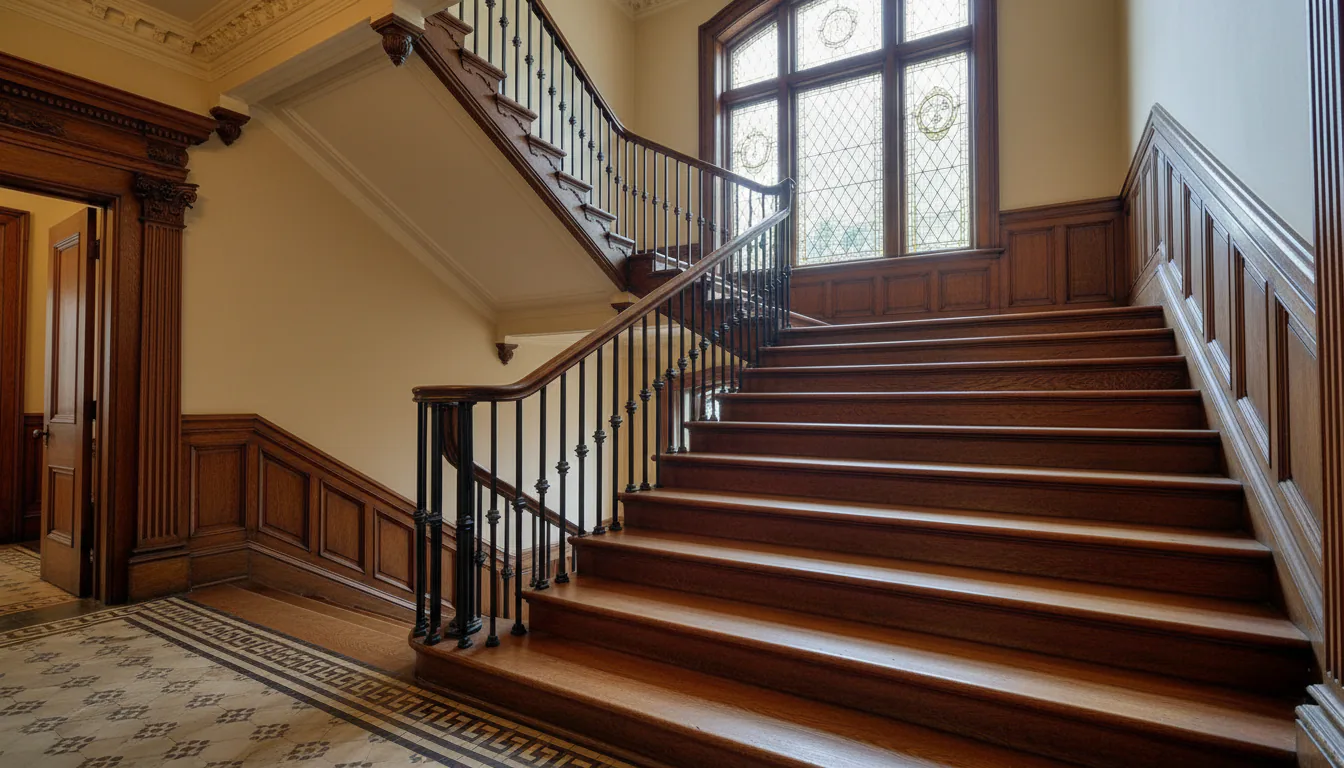
The original staircases in these neighbourhoods, particularly First Shaughnessy and the Belmont blocks on the upper West Side, share a vocabulary. A grand entry stair off the foyer, typically with a half-landing or a quarter-turn. Wide treads in fir, oak, or sometimes maple. A heavy newel post at the bottom, often turned or carved. A continuous handrail in wood that returns to a wall mounted block or to the newel. Balusters that are usually turned wood, sometimes wrought iron with decorative elements, set at a spacing that would not pass today’s opening test.
The materials are mostly intact even in homes that have been renovated multiple times. Owners over the decades have kept the stair because removing it requires undoing the floor plan around it and because the stair is one of the few unambiguously period elements left in many of these homes.
Heritage review, what is actually allowed
First Shaughnessy is governed by the First Shaughnessy Official Development Plan, which sets character-area design guidelines and triggers a First Shaughnessy Advisory Design Panel review for many alterations. The Belmont blocks are similarly subject to the heritage planning framework on the West Side. What the design panel and the heritage planner look at on a stair renovation is whether the character is preserved, the visual reading of a period stair, not whether every original component is kept.
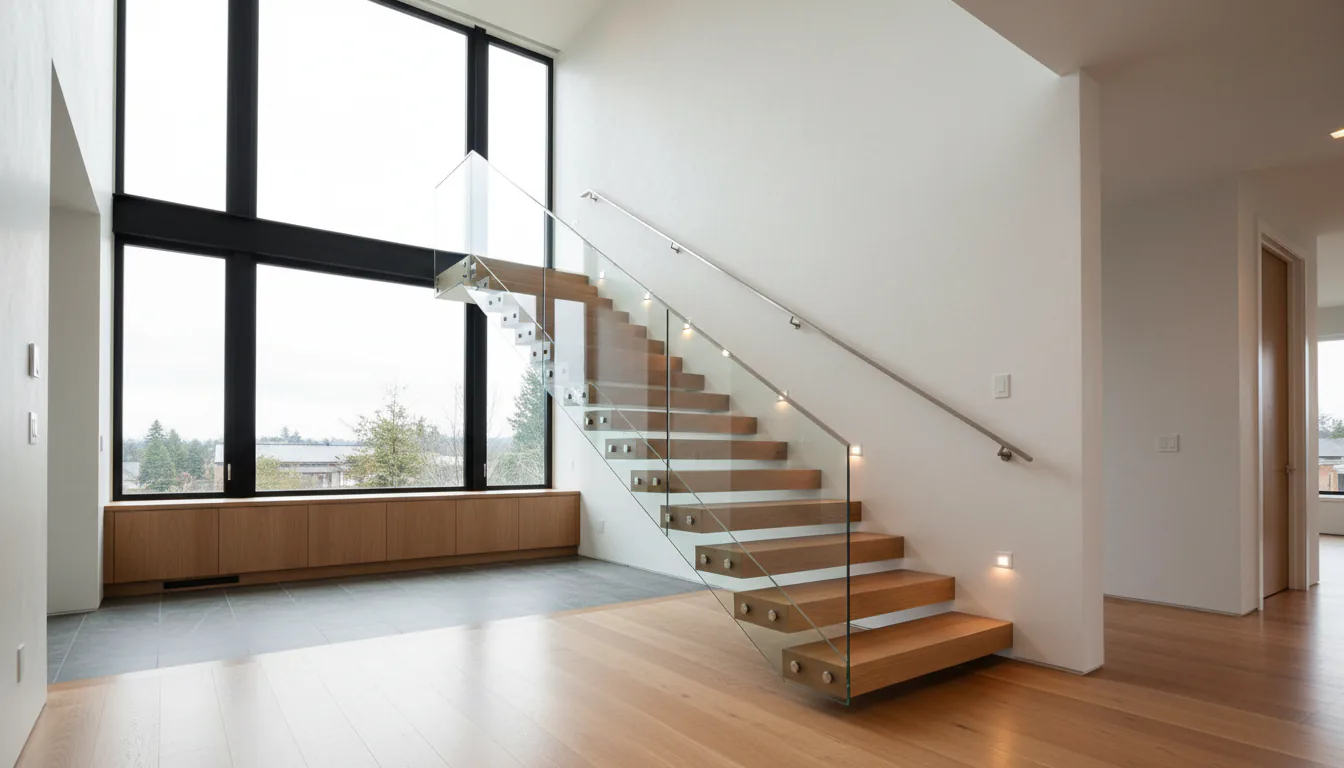
That distinction matters in fabrication. A homeowner can usually replace a baluster that is failing structurally with one that matches the period profile. A homeowner can usually upgrade a guard height on an upper landing by adding a discreet new section that reads as period rather than modern. A homeowner usually cannot rip out the entire stair and install a steel mono stringer where a turned wood newel used to live. The heritage program is reasonable about restoration; it is not reasonable about replacement that erases the character.
This article is not a substitute for code review by the authority having jurisdiction, an architect, or an engineer.
The code upgrades that have to happen
Three code issues come up on almost every Belmont or Shaughnessy stair renovation we work on.
First, the guard height on the upper landing is usually below the current 900 mm minimum specified for guards inside a dwelling unit in BC Building Code 9.8. Original landings were often guarded by a low picket section at 800 mm or less. The fix is to add height, either through a taller top rail on the existing balusters, a new picket section on top of the existing guard, or a fully replaced guard at the right height that matches the period vocabulary.
Second, the baluster spacing on landings above the threshold height usually allows openings larger than the current 100 mm maximum, especially where original turned balusters have decorative elements that create wider gaps. The fix is to add intermediate pickets, ideally in a profile that reads as period, between the existing balusters.
Third, the handrail returns are usually missing. Original wood handrails often terminate at a newel post with a flat cut or a small decorative curl that does not return the rail back to the wall or the post. The fix is to add returns in matching material, either by extending the existing rail with a new section in the same profile or by fabricating a discreet return that integrates with the original work.
Each of these can be resolved without disturbing the character-defining elements of the stair. The work is small, careful, and visible only to someone looking for it.
Structural surprises behind the finishes
Belmont and Shaughnessy stairs were built when framing was generous, and the structure is usually in better shape than a comparable post-war stair. The surprises tend to be in the connections rather than the members.
The most common: an original newel post that is decorative on top and structurally connected to nothing meaningful below the finish floor. The post carries lateral load on the handrail and is bolted to a small joist with hardware that would not pass a current load review. The renovation usually adds a structural backup at the base of the newel, a steel plate under the floor finish, a sister joist, or a new connection to the rim board, that takes the load without changing the visible part of the post.
A second common surprise: rot or insect damage at the bottom riser where the stair meets the original foundation floor, particularly on homes where a basement renovation has changed the moisture environment around the stair base. The fix is to replace the affected riser and treads with matching material and to address the moisture source before the new work goes in.
We do not start the visible work until the structural backup is set. A beautiful new railing on a stair that flexes laterally feels wrong to the user and signals trouble to the next inspector.
Wrought iron railing, restoration vs new fabrication
Many Belmont and Shaughnessy stairs have original wrought iron pickets, often with decorative scrollwork. The pieces are not actually wrought iron in the modern sense, they are forged or cast steel that has been painted multiple times over a century. The restoration question is whether to strip and refinish the existing pieces, replace failed pieces with matching new fabrication, or replace the entire railing with new work in the period vocabulary.
The answer is project-specific. If the existing pickets are structurally sound and the corrosion is surface only, stripping to bare metal, treating with a rust-inhibiting primer, and recoating in a powder coat finish matching the original colour is the right path. If the corrosion is deep or several pickets have failed, fabricating replacement pieces to match, using forging or cold-forming, depending on the original technique, produces a stronger result than continuing to repair.
The replacement pieces have to match the original at a level the design panel will accept. A new picket that is “close” to the period profile reads wrong on a stair where the rest is original. We pull the original profile, dimension it, and reproduce it as the basis for any new work. The pieces install with the same spacing as the originals where the original spacing meets current code, and with intermediate pickets where it does not.
For a broader view of related Vancouver heritage neighbourhood stair work, see our pieces on Point Grey staircase renovation and Dunbar and Kerrisdale staircase renovation.
Powder coat as the right finish on heritage stairs
The original finish on most of these iron railings was an oil-based enamel paint, applied in multiple coats over the decades. The original colour is rarely the colour the homeowner wants today, it is usually a thick layer of black or dark green hiding decades of touch-ups.
We default to a powder coat finish on restored iron railings because it gives a durable, even surface that holds up over the next several decades and does not require the maintenance touch-ups that paint does. The colour can be matched to a sample provided by the homeowner or the architect; black is the most common selection but anthracite, bronze, and matte dark grey all read appropriate on a period stair.
For a closer look at the finish decision between powder coat and wet paint on interior steel, see our piece on powder coat vs wet paint for interior steel stairs.
Timeline and budget realities
A Belmont or Shaughnessy staircase restoration with new railing fabrication typically runs eight to twelve weeks from site measurement to install. The drivers are the permit pathway (a heritage alteration permit if the work triggers one), the shop drawing approval cycle with the homeowner and the architect, and the lead time on any heritage-correct components that have to be custom forged or cast.
The budget runs higher per linear foot than a comparable modern stair because of the level of detail and the matching work. The number is small relative to the property values in these neighbourhoods, but it is rarely the lowest bid that produces the best result. The shop that has done this work before knows how the design panel reads a profile and what the planner will accept.
Sources
- City of Vancouver, First Shaughnessy Official Development Plan
- Vancouver Heritage Register
- BC Building Code Section 9.8, Stairs, Ramps, Landings, Handrails and Guards
Related reading: the Point Grey staircase renovation guide, the Dunbar and Kerrisdale staircase renovation guide, and the powder coat vs wet paint comparison.
Related questions
Can the original staircase be kept in a Shaughnessy heritage home renovation?
Often yes, with restoration. The City of Vancouver's heritage management program treats Shaughnessy and Belmont properties carefully, and removing or replacing an original staircase can trigger a heritage review. We default to restoration where the original treads and railing are sound and only replace components that cannot meet current code through restoration alone.
What code issues come up most often on these renovations?
Three: guard height on the upper landing not meeting the current 900 mm minimum, baluster openings wider than the current 100 mm maximum on landings above the threshold height, and handrail returns missing at both ends. We resolve these in fabrication so the inspector sees compliant geometry without losing the period character.
How long does a Shaughnessy staircase restoration take?
Restoration of an existing stair with new railing fabrication typically runs eight to twelve weeks from site measurement to install, depending on the railing complexity and the lead time on any heritage-correct components. A full replacement runs longer because of the permit pathway. We confirm the schedule with the GC at first site visit.