Fort Langley and Walnut Grove Staircase Guide: Custom Stairs East of the Fraser
Custom steel staircases in Fort Langley and Walnut Grove: heritage context, farmhouse and modern styles, and fabrication details that fit each home.
A Fort Langley stair sits in a different design conversation than a downtown Vancouver stair. The character is warmer, the lots are larger, and the brief is rarely a sculpture stair.
The drive from the Burnaby shop to a Fort Langley project takes about an hour on a Tuesday morning, and the design conversation that lands at the other end is a different conversation than the one that happens on a West Side renovation. The lots are larger, the homes are warmer in character, and the design briefs trend toward fabricated furniture rather than sculptural object. The stair is still a custom piece of steel and wood, but the vocabulary is calmer.
This post walks through how we approach custom staircases in Fort Langley and Walnut Grove, what differs from the inner-Vancouver projects, and the small decisions that make a stair feel native to the village rather than imported.
The Fort Langley village character
Fort Langley is one of the oldest continuously-inhabited sites in BC, and the village character along Glover Road and the heritage blocks around the National Historic Site reflects that age. The buildings are wood-framed, the proportions are residential rather than monumental, and the material palette runs to warm wood, fieldstone, and painted siding rather than to concrete and steel.
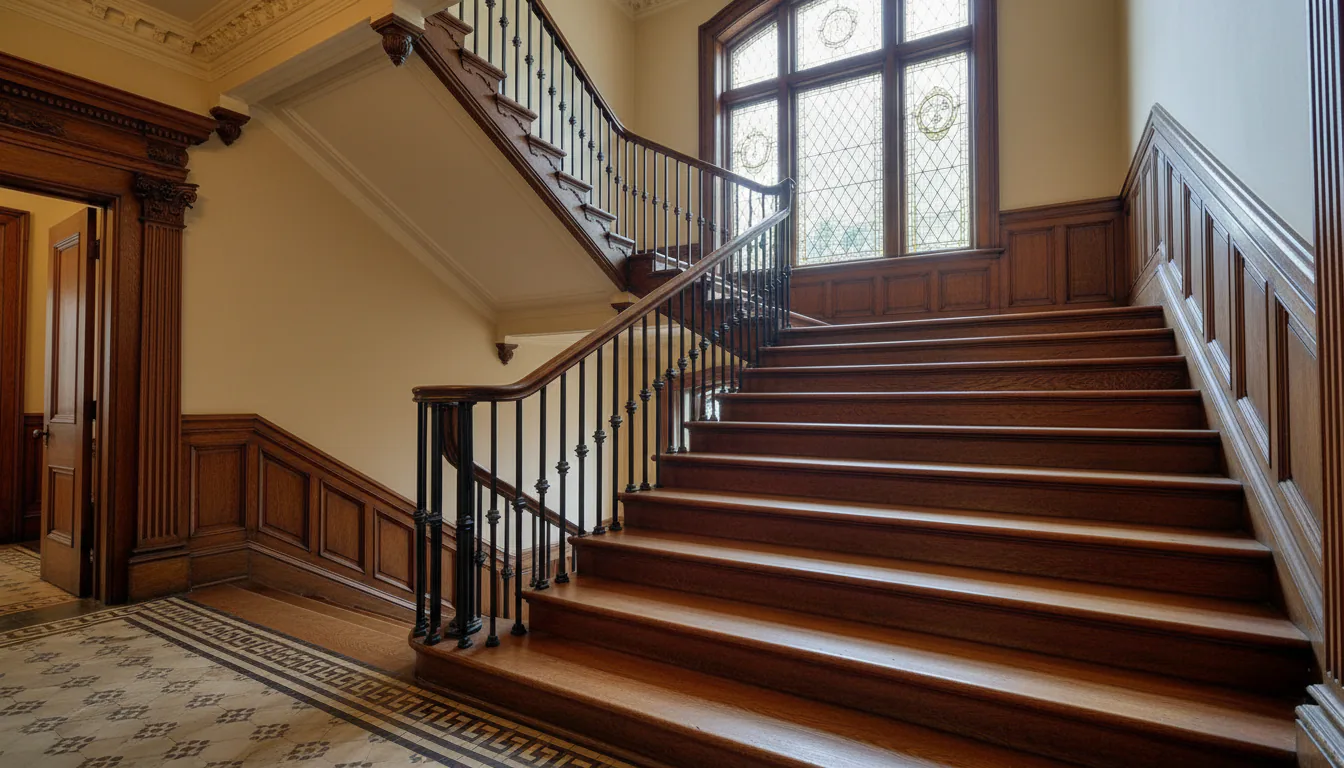
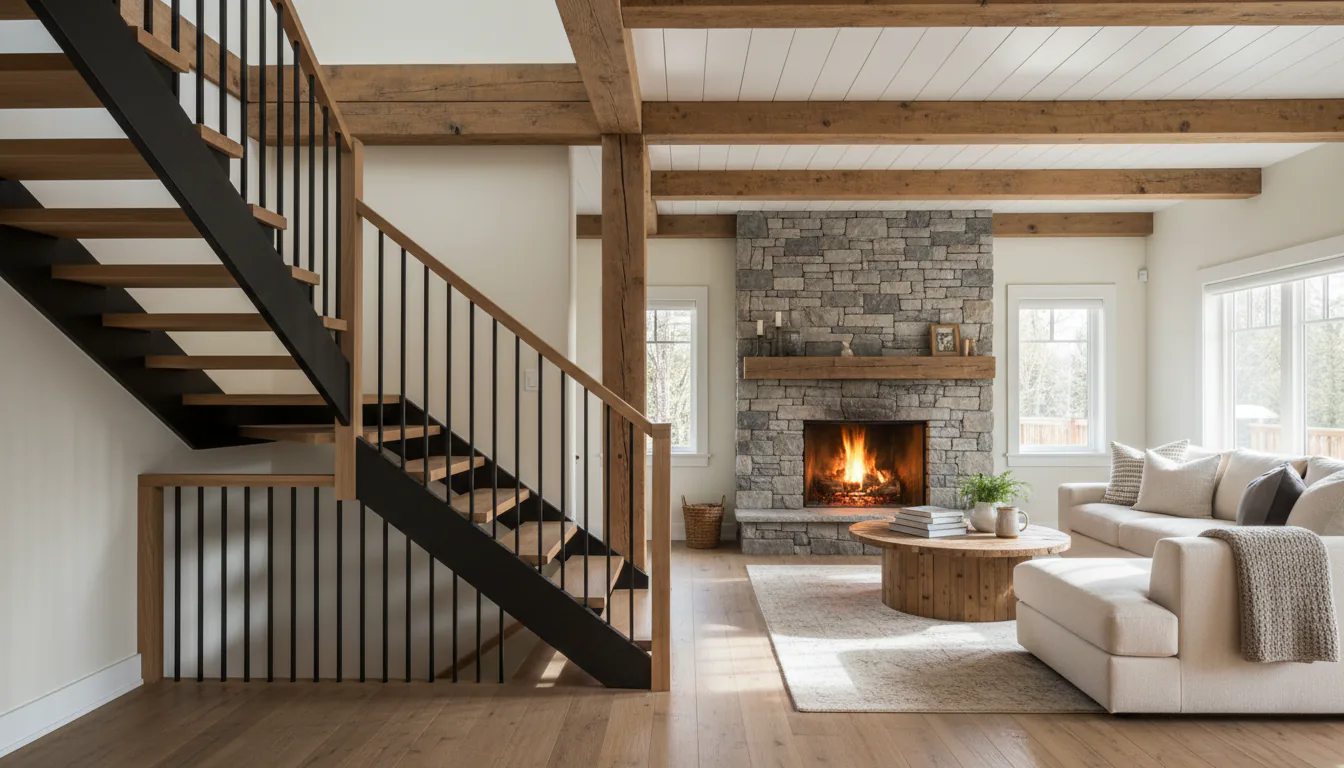
A staircase that fits this character is fabricated, not industrial. The structure can absolutely be steel, square tube, mono stringer, or traditional double stringer in a blackened or anthracite finish, but the visual reading is warmer than a downtown sculpture stair. The treads are thick solid wood in a species native to the region or familiar from the village vocabulary (white oak, fir, sometimes maple). The railing is more often picket than cable, more often a defined top rail than a flat architectural cap, and more often visible fasteners that read as honest fabrication than concealed hardware that reads as architectural.
The Township of Langley’s heritage program governs the village character zone and any renovation within the heritage core may trigger a character-area design review. The review is not as restrictive as a First Shaughnessy review in Vancouver, but it does set expectations about visible material and proportion that we incorporate into the design at the first conversation.
This article is not a substitute for code review by the authority having jurisdiction, an architect, or an engineer.
Walnut Grove and the newer custom build
A mile west of Fort Langley village, Walnut Grove has a different building stock. The neighbourhood was developed largely from the 1980s onward, the lots tend to be larger, and the homes are mostly newer construction. The design briefs we see from this area lean more contemporary, open great rooms with two-storey volumes, large windows toward the surrounding green space, and floor plans organized around a central living space rather than a formal entry.
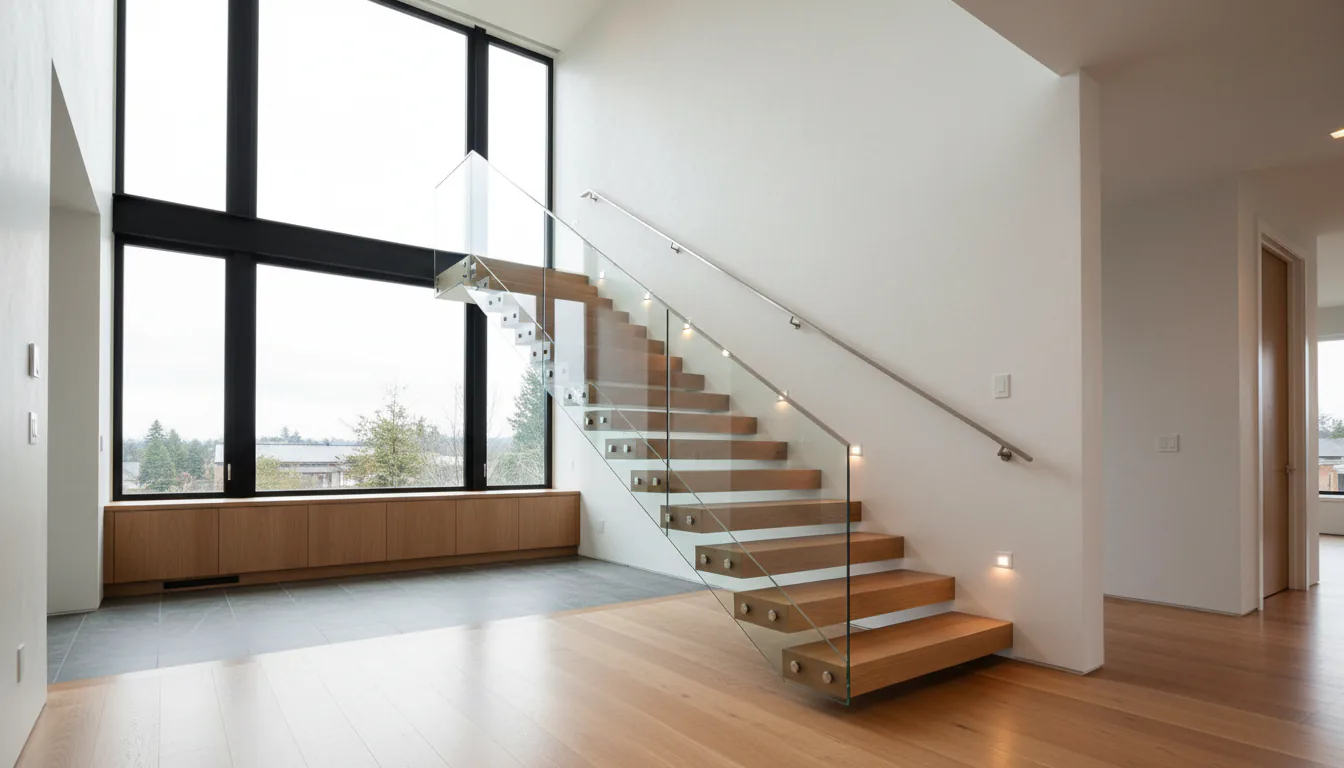
The stairs that fit these homes are the more familiar mono stringer, floating, and feature designs that show up across the Lower Mainland market. White oak treads, blackened steel structure, cable or glass railings on the open side of the stair. The difference from a Vancouver West Side equivalent is mostly proportional, the rooms are larger, the stairs can be wider, and the structural premise is usually simpler because the floor framing is newer and more predictable.
The Township of Langley permit process applies to both Fort Langley and Walnut Grove. The structural review and the building inspections run on Township timelines and the inspectors are familiar with both the heritage village context and the newer custom-build context.
Material palette, warmer than the city
The material palette that fits Fort Langley and Walnut Grove projects runs warmer than the typical Vancouver feature stair. White oak is still the most common tread species, but the surrounding context, wood ceiling beams, fieldstone fireplaces, painted shiplap walls, pushes the species selection toward warmer finishes. We see more clients choose a slightly oxidized, oiled white oak rather than the cooler clear-finished version that suits a downtown modern interior.
Walnut treads are also more common on these projects than on the West Side equivalent, partly because the surrounding palette accepts the deeper colour and partly because the design vocabulary is less concerned with the cool architectural reading.
Steel finishes lean black or near-black. Polished stainless and high-gloss finishes are rarely the right answer on these homes, the surrounding vocabulary is matte and warm, and a shiny stair fights the rest of the interior. We default to a matte black powder coat, a satin anthracite, or a chemically blackened steel that develops a slightly variable surface that reads as fabricated.
The picket railing in this context
Cable railings appear on the more contemporary Walnut Grove projects, but the most common railing detail on Fort Langley village homes is a picket railing, square tube or round bar pickets in a black finish, set at the code-compliant spacing, with a defined wood or steel top rail. The visual is more traditional and matches the rest of the home’s vocabulary better than a more transparent railing would.
The picket detail has fewer moving parts than a cable or glass railing and is correspondingly easier to maintain. The cost is usually lower per linear foot than cable. The decision is more about character than budget, and most clients who choose a picket railing for the look are also pleased with the maintenance overhead.
The dimensions matter. A picket spacing of 100 mm on centre meets the code opening test but reads as busy on a long railing. We typically space pickets so the opening (not the centre-to-centre) is just below the maximum, which produces a more refined look without compromising the code position. The top rail diameter is sized for graspability in the published range, see our handrail continuity piece for the details.
Lot size and the feature stair opportunity
The larger lots in this area support a different scale of feature stair. A 4,000-square-foot home on a half-acre lot in Walnut Grove has room for a wider feature stair, a longer landing, and a more generous opening than a comparable home on a 33-foot Vancouver lot. The architectural brief often takes advantage of the room.
What this means in fabrication: the structural members can be more substantial without looking heavy, the tread width can be more generous (1100 to 1300 mm rather than the 900 mm minimum), and the railing can step back from the stair edge slightly to give the user more clear floor area. The stair becomes a piece of furniture in the room rather than a circulation element squeezed into a corner.
The risk with the larger scale is over-design. A feature stair that wants to be a sculpture in a room that wants to be a great room can read as decorative rather than purposeful. We pull back on the most sculptural impulses in this context and let the stair be a well-fabricated piece of furniture rather than the architectural statement of the home.
Coordination with the timber framing
Many newer Fort Langley and Walnut Grove homes have exposed timber framing as a character element, Douglas fir beams, post-and-beam great rooms, or hybrid timber-and-steel construction. The stair has to coordinate with this framing both structurally and visually.
Structurally, the floor framing that supports the upper landing of a feature stair has to be sized for the stair load. Timber framing has different deflection characteristics than steel framing, and a stair anchored to a timber floor frame may need additional support to limit live-load deflection. The structural engineer for the building usually coordinates this with the stair fabricator at the structural drawings stage.
Visually, the steel of the stair and the timber of the framing should read as complementary, not competing. Matching the steel finish to the dark tones of an oiled timber, or contrasting deliberately with a blackened steel against a lighter timber, both work. What does not work is choosing a stair finish in isolation and discovering at install that it fights the timber. We pull samples of both materials before the finish is committed.
For broader context on related Fraser Valley projects, see our pieces on related neighbourhood guides and the steel stair landings and half-landings piece for the technical landing detail that comes up often on these multi-flight stairs.
The schedule and the drive
A Fort Langley or Walnut Grove project adds about an hour each way to the install day compared to an inner-Vancouver address. We plan the install around that, with a slightly earlier start and a slightly extended day. The site coordination before delivery follows the same rules as any other project, opening confirmation, structural backup confirmation, finish floor elevation confirmation, route clearance, and the additional drive does not change the schedule risk on the install itself.
The lead time on the steel and the finishes is the same as on any other Lower Mainland project. The Township of Langley permit pathway runs in parallel with the design and shop drawing cycle. The total schedule from first design conversation to install on a typical custom feature stair runs three to five months, in line with comparable projects elsewhere in the region.
Sources
- Township of Langley, Heritage Program
- Township of Langley, Building Permits
- BC Building Code Section 9.8, Stairs, Ramps, Landings, Handrails and Guards
Related reading: the handrail continuity piece, the steel stair landings and half-landings piece, and the Coquitlam Burke Mountain staircase guide.
Related questions
What style of stair fits a Fort Langley character home?
The Fort Langley village character favours warmer, less industrial steelwork, square tube pickets in a black or anthracite finish, wide solid wood treads in white oak or fir, and traditional handrails rather than wide flat top rails. The stair reads as fabricated furniture rather than as a sculptural object.
Are there local heritage rules in Fort Langley?
Fort Langley's village core is within a designated heritage character area under the Township of Langley's planning framework, and renovations in the village can trigger character-area design review. We confirm with the Township at first site visit whether the property is subject to the review and adjust the design vocabulary accordingly.
How does Walnut Grove differ from Fort Langley for stair design?
Walnut Grove has more newer custom builds on larger lots and the design briefs lean more contemporary, open-plan great rooms, taller ceilings, and the kind of feature stairs that suit a mono stringer or floating design. Fort Langley village briefs tend toward character finishes and traditional vocabularies.