Perforated Metal Stair Treads in Vancouver: Where They Fit
What perforated metal stair treads are, how they drain and read visually, their slip resistance, indoor and outdoor use, finish options, and where they beat solid or wood treads.
A perforated metal tread is a steel plate with a pattern of holes punched through it. It drains, it sheds debris, and it has a specific industrial look that works on some Vancouver stairs and fights others.
A perforated metal stair tread is a metal plate with a pattern of holes punched through it. That one change decides whether the tread drains, how it reads to the eye, and whether it belongs on a Vancouver front stair or only on the back-of-house run.
This post explains what a perforated tread is, how it drains and how it looks, what its slip resistance really depends on, where it fits indoors and outdoors, what finishes suit the wet coastal climate, and how it compares to solid steel and wood treads.
A perforated tread is a plate full of holes
A perforated metal tread starts as a flat metal plate. A press punches a repeating pattern of holes through it, then the plate is folded or framed into the shape of a tread. The result is a step you can see through, that lets water and small debris pass, and that weighs less than the same solid plate.
The metal is usually steel, but stainless steel and aluminum are common too, which matches the three material options a manufacturer like SLIPNOT lists for its perforated plate treads. Steel is the workhorse for strength and cost. Stainless suits corrosive or wet settings where you want no coating. Aluminum is lighter, which helps where weight or a large removable panel is a factor.
The hole pattern is not one fixed thing. Hole size, spacing, and whether the holes sit in straight or staggered rows all change the tread. A smaller, tighter pattern keeps more surface underfoot and passes less debris. A larger, more open pattern drains and sees through more, but it is harder on bare feet and can catch a thin heel. The pattern is a design choice made for the job, so it is set before the plate is punched.
Drainage is the main reason to choose one
The strongest argument for a perforated tread is water. On a solid steel tread, rain sits on the surface as a film, then freezes or grows slippery. On a perforated tread, the water falls straight through the holes, so the walking surface stays clearer. SLIPNOT frames its perforated plate as a middle ground: the hole pattern lets water, oil, and air filter through instead of pooling the way a solid plate does or dropping everything through the way open grating does.
In Vancouver, that drainage is not a small detail. The wet coastal climate keeps exterior steel damp for much of the year, and a stair that drains on its own stays usable and safer than one that holds standing water. The same holes shed grit, leaves, and the slush from a wet winter, so the tread cleans itself as people use it.
The tradeoff is what falls through. On a stair over a walkway, a door, or a work area, the debris and drips land below. That is fine over a garden bed or a drain, and a problem over a doorway or a parked car. Where the runoff lands is a question to settle before the stair is built, not after.
The holes change how the stair reads
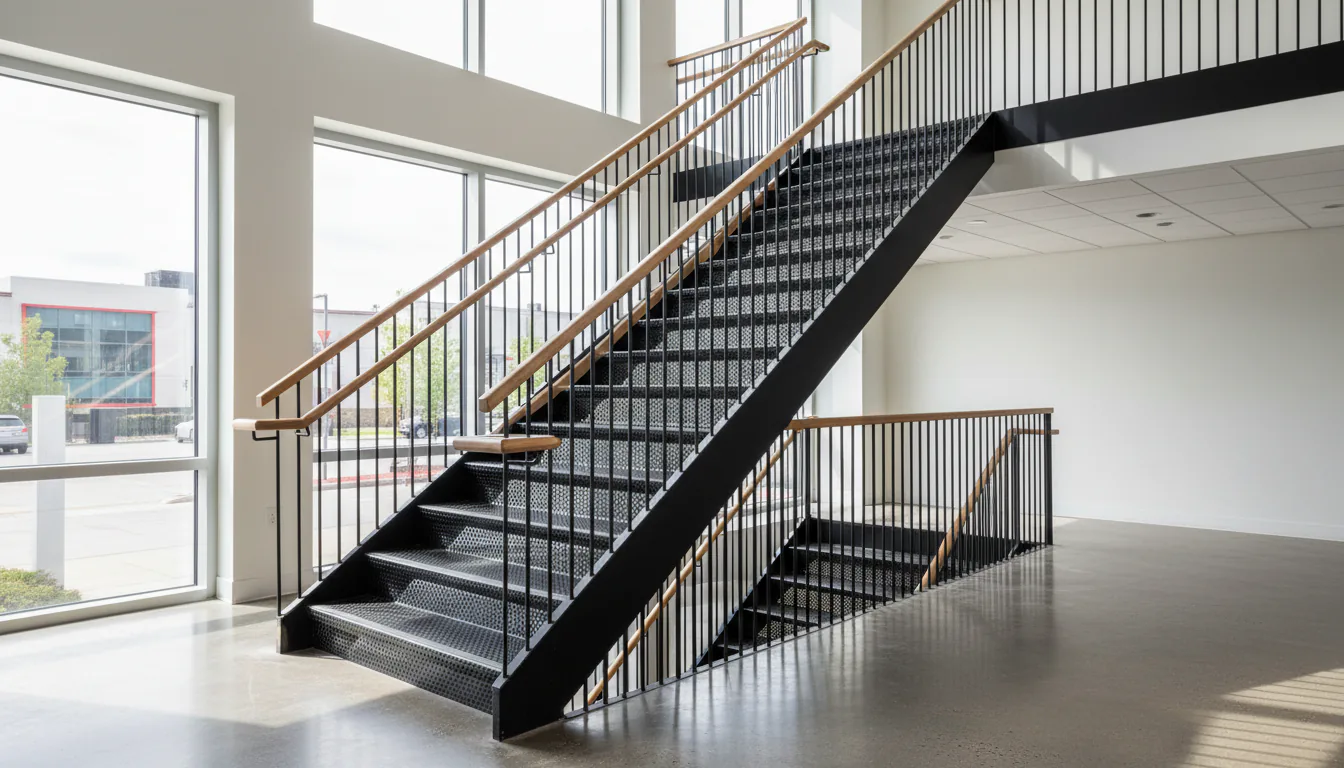
A perforated tread does something for the eye as well as the water. Light passes through the holes, so the tread looks lighter and less solid than a full plate. On an open steel stair, you can see the floor through the steps, which keeps the whole run feeling airy instead of heavy.
That look has a clear home and a clear mismatch. In a loft, a workshop, a parkade, or a modern commercial lobby, a perforated tread reads correct because exposed, honest steel is part of the design. Our overview of commercial staircase design in Vancouver covers where that industrial language fits a building. In a soft, traditional home, the same tread can read cold and out of place, and a wood or solid tread suits the room better.
A solid steel plate reads heavy and closed. A perforated plate reads light and open. Neither is right or wrong on its own. The tread should match the stair and the space around it, which is a decision to make with the designer, not a default.
Slip resistance is a finish decision
It is tempting to assume the holes make the tread grippy on their own. They help, because a punched edge gives a foot something to catch, but the pattern alone is not a slip-resistance guarantee. OSHA does not mandate a fixed value, yet it points to a static coefficient of friction of about 0.5 as a guide for walking and working surfaces, and it notes a higher value may be needed when people carry loads or use ramps.
On a stair used in the rain, that guidance matters. A bare, smooth perforated plate can still be slick when wet. The common fix is a slip-resistant surface: a coated grit finish, a dimpled or embossed texture, or a nosing with an anti-slip insert at the front of each tread. Our guide to anti-slip finishes for exterior stair treads in Vancouver walks through the finish options that hold up in this climate.
In our shop, slip resistance is treated as its own line item, decided with the exposure and the traffic in mind, not left to the hole pattern to solve. A perforated tread on an exterior stair almost always gets a slip texture as well.
This article is not a substitute for code review by the authority having jurisdiction, an architect, or an engineer.
Indoor and outdoor use pull in different directions
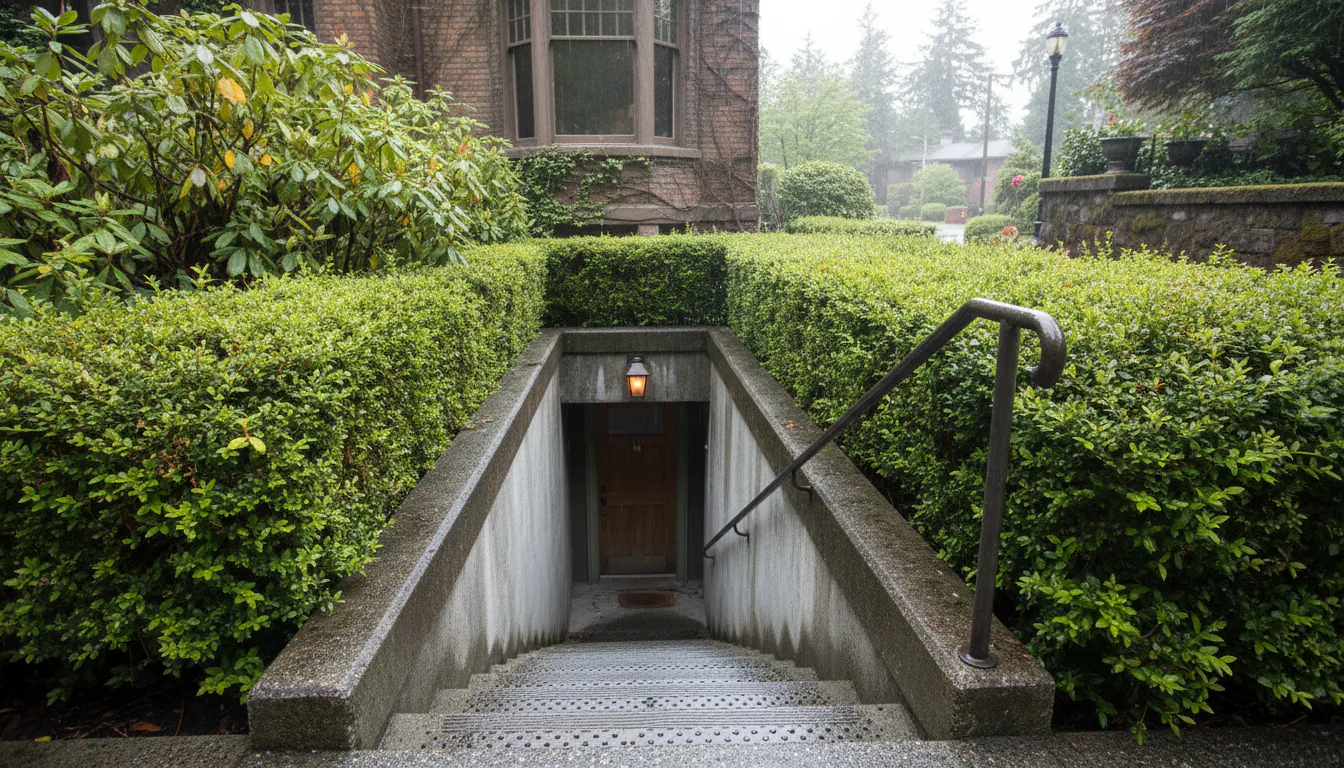
Where the tread lives changes the whole decision. Outdoors, the perforated tread is often the right call. It drains, it sheds snow melt and grit, and paired with the right coating it stands up to the wet climate. Parkade stairs, rooftop access, fire escapes, and back-of-house exterior runs are natural homes for it.
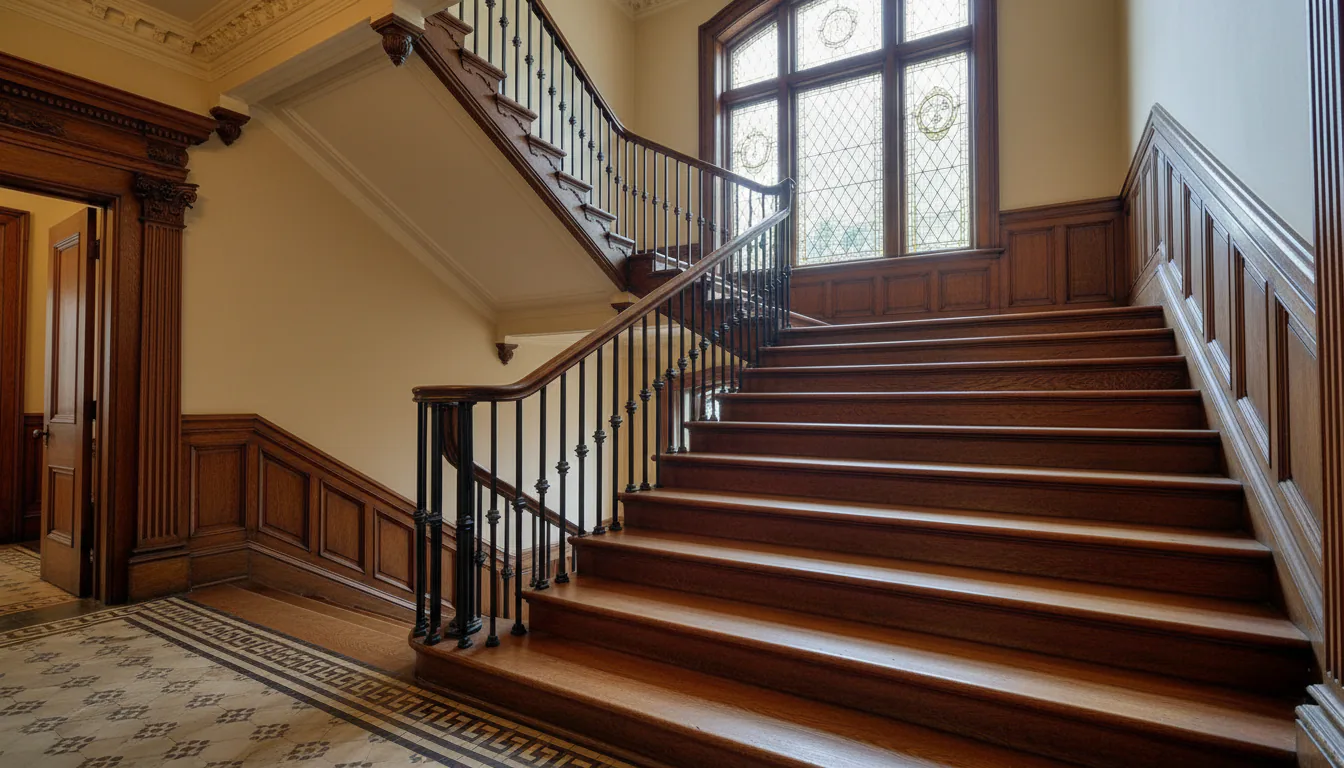
Indoors, the case is narrower. A perforated tread suits an industrial or open-plan interior where exposed steel belongs. On a main residential stair, it fights the room. It reads industrial, it can feel hard on a bare foot, and a large hole can catch a thin heel or a small pet’s paw. For a warm indoor family stair, wood or a solid clad tread usually wins, which our comparison of wood tread species for Vancouver stairs gets into.
There is also sound. A thin metal tread can ring or feel hollow if it is not supported and stiffened. That matters in a quiet home far more than on an industrial stair, so the framing and gauge are chosen to keep an indoor metal tread solid underfoot and quiet.
Finish protects the tread in the wet climate
For any exterior steel tread in Vancouver, the finish is what keeps it from rusting. Bare steel does not last outdoors here. The usual protection is hot-dip galvanizing, sometimes on its own for an industrial look, and often with a powder coat over the galvanizing where colour or a cleaner finish is wanted. The galvanizing does the corrosion work, and the coat does the appearance.
Stainless steel and aluminum treads take a different path. Stainless can be left bare in a corrosive or wet setting, which is why it shows up on coastal and marine stairs. Aluminum is naturally corrosion resistant and light, so it suits removable panels and weight-sensitive installs. Both can still take a slip texture where the stair sees rain.
Interior treads have more freedom. A powder coat in black or a dark grey is the common look, but the colour is open because the tread is not fighting the weather. The point across all of these is simple: choose the finish for where the stair actually lives, and confirm it against the exposure before the steel is ordered.
Perforated, solid, and wood each own a setting
The tread choice comes down to matching the material to the job. A perforated metal tread drains, sheds debris, reads light and industrial, and holds up outdoors, which makes it strong for exterior, commercial, and industrial stairs. A solid steel tread reads heavy and closed, holds water on its surface, and suits a stair where a clean flat step and no see-through are wanted. A wood tread is warm, quiet, and residential, and it belongs on an indoor stair where people walk barefoot and the room is soft.
Grating sits near the perforated tread but drains and sees through more, at the cost of dropping small items and feeling more open underfoot. A perforated plate is the middle ground between solid steel and open grating: it drains without letting everything fall through.
The strongest projects settle the tread material at the same time as the stair structure, the finish, and the setting, because the tread affects all three. For an exterior or commercial stair that has to drain and take weather, a perforated tread is often the right answer. For a warm indoor family stair, it usually is not. Bring the setting, the exposure, and the look you want to the fabricator before the tread is chosen, and the rest of the stair is drawn around a tread that fits.
Sources
- SLIPNOT, Anti-Slip Perforated Plate Stair Treads (drainage, materials, hole patterns)
- OSHA, Static coefficients of friction for walking/working surfaces (2003-03-21 interpretation)
Related reading: the guide to anti-slip finishes for exterior stair treads, the wood tread species comparison, and the overview of commercial staircase design in Vancouver.
Related questions
What is a perforated metal stair tread?
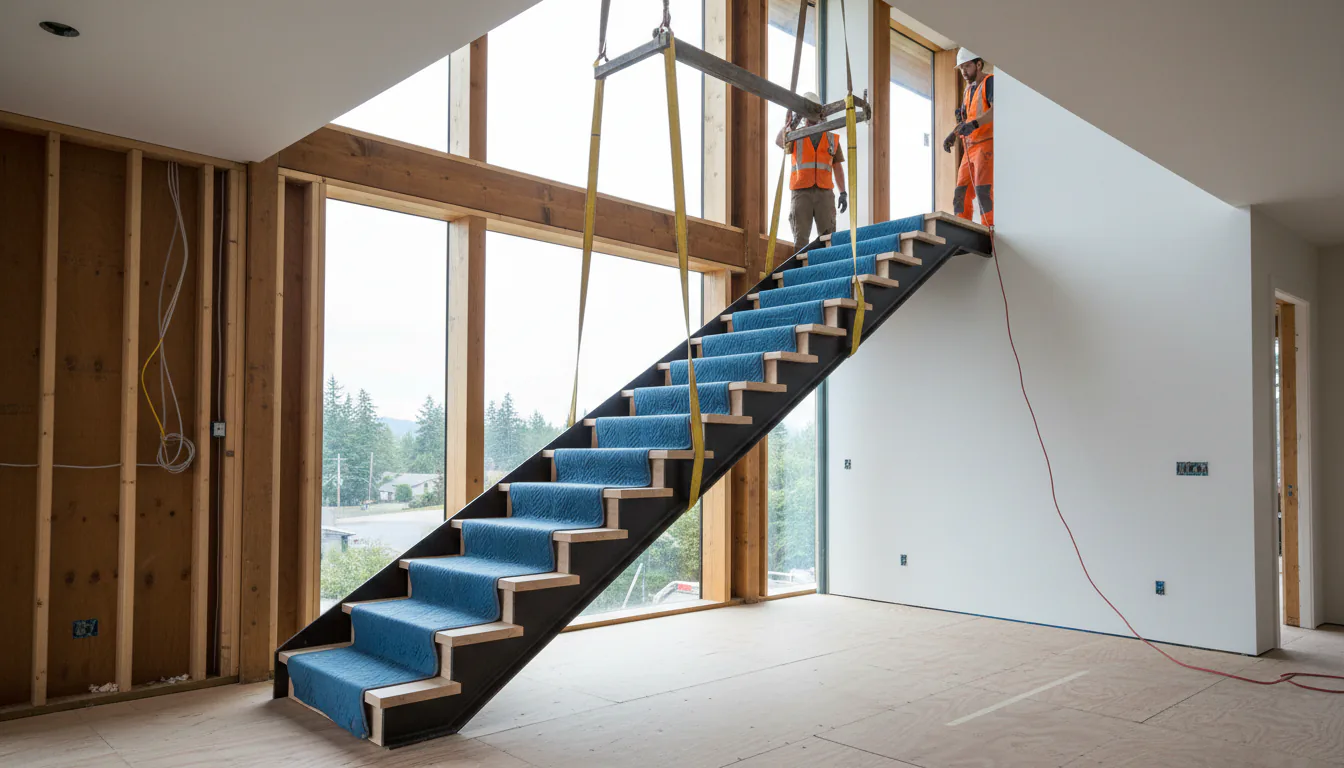
A perforated metal stair tread is a metal plate, usually steel, stainless steel, or aluminum, with a pattern of holes punched through it. The holes let water, dirt, and light pass through the tread instead of sitting on top. The tread is then framed into the stair like any other tread, carried on a stringer, a mono stringer spine, or a bracket.
Do perforated metal treads drain water?
Yes. Draining is the main reason to use them. The holes let water fall straight through the tread instead of pooling on the surface, which is the point manufacturers like SLIPNOT make about perforated plate treads. On an exterior Vancouver stair that sees rain most of the year, a draining tread stays usable longer than a solid plate that holds a film of water.
Are perforated metal treads slip resistant?
They can be, but the pattern alone is not a guarantee. The punched holes give a foot edges to grip, and OSHA references a static coefficient of friction of about 0.5 as a guide for walking surfaces. For a stair used in the rain, a coated or textured perforated tread is the safer choice. In our shop, we treat slip resistance as a finish decision, not something the holes handle by themselves.
Can you use perforated treads indoors?
Yes, but the look is industrial. Perforated treads read at home in a loft, a commercial lobby, a workshop, or an open-plan modern interior where exposed steel is part of the design. In a traditional or soft residential home, a perforated tread can feel out of place, and wood or solid plate usually suits the room better. The material fits the setting more than the stair type.
Are perforated treads uncomfortable to walk on barefoot?
They can be. A punched hole has an edge, and a bare foot or a thin sock feels that edge, especially with larger holes. This is one reason perforated treads are less common on a main residential stair where people walk barefoot, and more common on exterior, commercial, or industrial stairs where everyone wears shoes. Hole size and edge finish change how it feels underfoot.
What is the difference between perforated treads and bar grating?
Bar grating is made from steel bars set on edge with open gaps between them, so it has a lot of open area and a strong see-through look. A perforated tread is a solid plate with holes, so it drains and passes light but keeps more surface underfoot and a smaller opening. Grating drains more and can drop small items through; a perforated plate is a middle ground between grating and a solid tread.
What finishes work on a perforated metal tread?
For an exterior Vancouver stair, hot-dip galvanizing or a galvanize-plus-powder-coat system protects the steel against the wet climate. Interior treads are often powder coated in a chosen colour, commonly black or a dark grey. Stainless steel or aluminum treads can be left bare or given a slip texture. The finish decision depends on where the stair lives, so confirm it against the exposure before ordering steel.
Do perforated treads work on a mono stringer stair?
Yes. A perforated tread can sit on a mono stringer spine, a double stringer, or brackets, the same as a solid or wood tread. On a mono stringer, the perforated tread adds to the open, light look because you can see through the steps. The tread carrier and the fixing detail are drawn for the specific stringer, so the support is resolved before fabrication.
Are perforated metal treads good for outdoor stairs in Vancouver?
They are one of the better options for exterior steel stairs here. The wet coastal climate makes drainage a real advantage, and a perforated tread sheds rain, grit, and snow melt instead of holding it. Paired with a galvanized or galvanized-and-coated finish and a slip-resistant surface, a perforated tread suits parkade, rooftop, fire escape, and back-of-house exterior stairs.
Can perforated treads meet stair code in BC?
A perforated tread has to meet the same rise, run, uniformity, and slip-resistance expectations as any other tread under the BC Building Code, and the hole size and open pattern can matter for the authority having jurisdiction. This is a detail to confirm early, not assume. This article is not a substitute for code review by the authority having jurisdiction, an architect, or an engineer.
How do perforated treads compare to wood treads?
Wood treads are warm underfoot, quiet, and read residential, which is why they suit indoor family stairs. Perforated metal treads are industrial, drain on their own, and hold up outdoors where wood would need constant maintenance. The choice follows the setting: wood for a warm interior stair, perforated metal for an exterior or commercial run that has to drain and take weather.
Do perforated treads make noise when you walk on them?
Metal treads can ring or clang more than wood, and a thin perforated plate can flex and sound hollow if it is not supported and stiffened well. Good framing, a heavier gauge, or a stiffening rib under the tread reduces the noise and the bounce. In a home this matters more; on an industrial stair it usually does not. The support detail is part of keeping the tread quiet.