Choosing a Powder Coat Colour for a Vancouver Steel Stair
How to pick a powder coat colour and sheen for a steel stair in Vancouver: matte vs satin black, custom RAL colours, how the finish reads in daylight, durability, and touch-up.
Most steel stairs get powder coated black, but black is a range, not one colour. The sheen you pick changes how the stair reads in daylight, how it hides dust, and how easy it is to touch up later.
Almost every steel stair the shop builds gets powder coated, and most of them get coated black. The catch is that black is a range of finishes, not one, and the sheen you pick changes how the stair reads in the room more than the colour ever will.
This post walks through the two real decisions in a stair finish: the colour and the sheen. It covers matte versus satin black, when a custom colour is worth it, how a finish reads under different light, what durability grade an exterior stair needs, and how touch-up works after the stair is installed.
Colour is the easy half of the decision
Black is the default for interior steel stairs, and for good reason. It sits quietly against wood, stone, glass, and white walls, and it does not date the way a trend colour can. Most shops start from RAL 9005, jet black, a deep neutral black in the RAL Classic colour system that is used across architecture and industry.
RAL is a European colour standard. The Classic range covers a bit over 200 shades, and named architectural powder lines such as Interpon carry the full range plus custom matches. So a custom colour is available if you want one. Greys, bronzes, off-whites, and deep greens all come up on custom stairs, usually to match a specific interior palette or a metal accent elsewhere in the home.
A custom or textured colour usually adds lead time and cost over a stock black, because the powder has to be ordered or matched. That is a real tradeoff, not a footnote. If the budget is tight, black is the safe, fast, and quiet choice. If the stair is meant to be a colour statement, price the custom powder before you fall in love with a swatch.
Sheen changes the stair more than colour
Here is the part people underestimate. Two stairs can be the exact same black and look completely different because one is matte and one is satin. Sheen, not colour, is what makes a finish read soft or crisp.
Sheen is measured on a gloss meter that shines light at the surface at a 60-degree angle and reads how much bounces back, on a scale of gloss units. A matte finish sits in roughly the 0 to 20 gloss unit range, and a satin in about 20 to 40 units. Semi-gloss runs higher, and a full gloss can reach 70 units and above. On a stair, matte and low satin are the two finishes that come up most.
A matte black reads soft and flat. It absorbs light, so it recedes into the room and hides small surface waves in the steel. That makes it a common pick for a minimalist floating or open-riser stair where the treads should be the focus. A satin black has a low, even shine that catches the edges of a beam or stringer, so it reads a little crisper and more defined. Neither is better. They are two different looks from the same colour.
Match the sheen to how the stair gets used
The look is only half of the sheen decision. The other half is practical, and it comes down to hands and dust.
A dead-matte black is beautiful in a photo, but on a surface people touch it shows more. Fingerprints, palm oil from a hand on the stringer, and dust all read more clearly on a flat matte, and matte is harder to wipe clean without leaving a mark. A satin finish has just enough surface to shrug off fingerprints and wipe down easily. In our shop, we often steer a high-touch stair, one with an integrated steel handrail or a stringer people brush past, toward a low satin rather than a full matte for that reason.
So the rule of thumb is simple. If the steel is a surface people touch every day, lean satin. If it is a feature people mostly look at, matte is on the table. This is the same maintenance logic behind our metal stair and railing maintenance guide, which covers how different finishes hold up to daily cleaning.
Check the finish under your own light
A powder chip is not a promise until you have seen it under the light where the stair will live. Light changes how a finish reads, and the change is bigger with low-sheen finishes.
Shop lighting is usually cool and bright, which flatters some colours and flattens others. A warm evening lamp at home makes the same chip look warmer and often darker. A matte black especially can look almost grey in low light and richer in daylight, because a matte surface scatters light instead of reflecting it cleanly. The chip that looked perfect in the shop can look washed out or muddy on the actual stair wall at night.
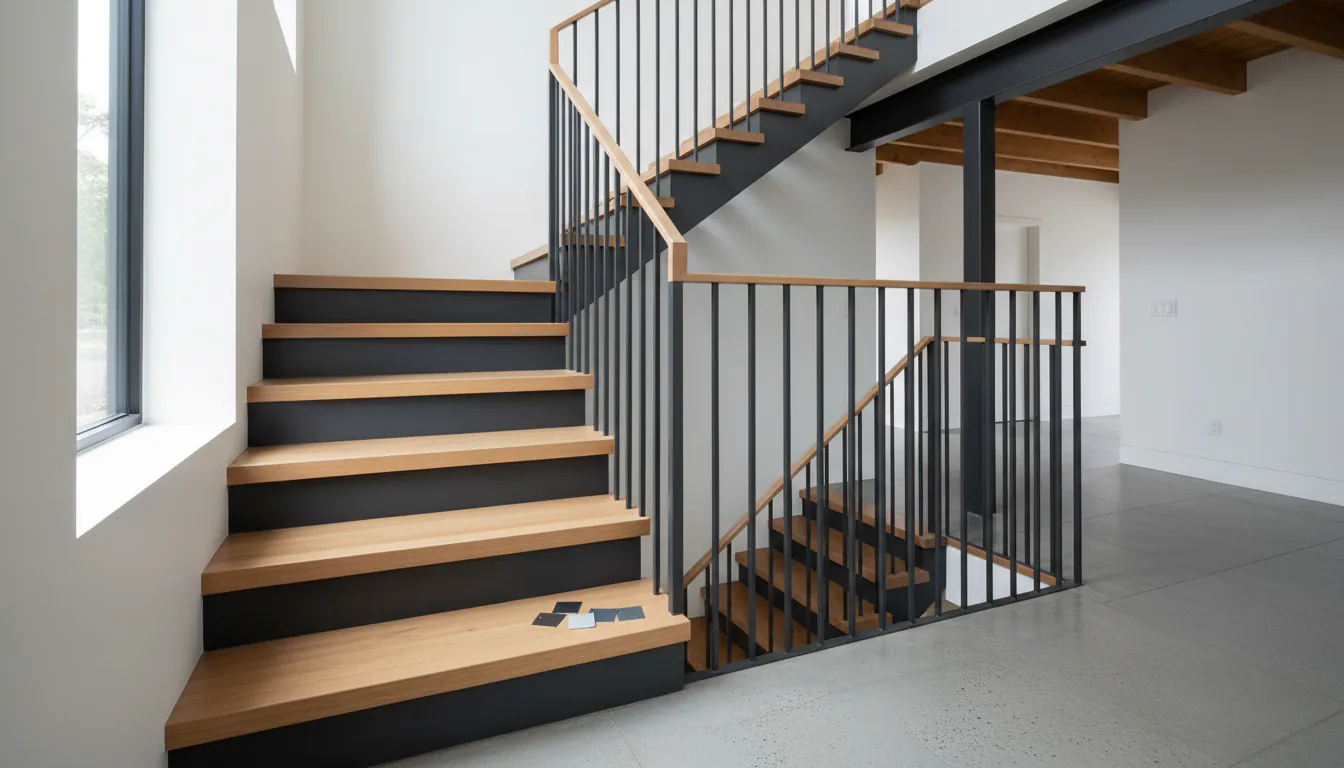
The fix costs nothing. Take the sample chip home. Hold it against the wall the stair will sit against, and look at it in daylight and again under the evening lights you actually use. Do this before you sign off, not after the steel is coated. A finish decision made under the wrong light is the kind of thing you only notice once the stair is installed and lit.
Durability depends on the system, not the colour
For an interior stair, a properly applied powder coat is a hard, factory-baked finish that resists chips and everyday wear better than a brushed or rolled wet paint. That is why finishing happens in a controlled booth and oven, not on site. The difference between powder and site-applied paint is covered in our comparison of powder coat versus wet paint for interior steel stairs.
Outdoors, colour becomes a smaller part of the decision and the coating system becomes the whole game. Vancouver’s wet coastal climate is hard on exterior steel, so the priority is corrosion protection under the topcoat: hot-dip galvanizing or a proper primer, not just the powder colour on top. The colour you pick will not save a stair that was not protected underneath.
For exterior or high-exposure architectural work, powder is sometimes specified to a weathering standard that tests how long the finish keeps its colour and gloss. AAMA 2604 requires at least 30% gloss retention after 5 years of Florida sun exposure, and the stricter AAMA 2605 is tested to 10 years of that exposure. Most interior stairs do not need either. Ask for the higher grade only when the stair lives outdoors and the finish has to hold for the long run.
Plan for touch-up before the stair ships
Powder coating is baked in an oven to cure, which is what makes it hard and even. That same fact means you cannot re-cure a scratch on site. Once the stair is installed, any repair is a field repair, and field repairs do not use powder.
The standard field fix is a liquid touch-up paint matched to the original powder colour, brushed on in thin layers over a clean surface. Named powder suppliers like TIGER Coatings make matched touch-up paints for exactly this. It works well for small chips and scratches from install or moving furniture. Larger damage, deep gouges, or peeling usually means the part has to go back to the shop to be stripped and recoated, which is a much bigger job.
The sheen you picked earlier decides how well a touch-up hides. A brushed liquid repair never perfectly matches the original baked powder, so on a high gloss the patch catches the light and stands out. On a matte or satin, there is less reflection to give the repair away, so it blends more easily. If you expect a working stair to take a few knocks over the years, that is one more reason to keep the sheen low rather than mirror-bright.
The order of decisions that saves rework
Powder is applied near the end of fabrication, in the shop, before the stair is installed. That means the finish has to be locked before the steel leaves for the booth. Changing your mind after coating means stripping and recoating, which adds cost and time to a project that was almost done.
This article is not a substitute for code review by the authority having jurisdiction, an architect, or an engineer.
The order that avoids rework is straightforward. Pick the colour first, usually a black unless the interior calls for something specific. Pick the sheen second, matching it to how the stair gets used, satin for high-touch and matte for a quiet feature. Check both the colour and the sheen under your own home lighting, in daylight and at night, before signing off. Then plan for touch-up, keeping the sheen low enough that a future repair will hide. Settle all of that during fabrication, not on install day, and the finish that arrives is the finish you chose.
Sources
- Understanding AAMA Specifications (Products Finishing), AAMA 2604 gloss retention and Florida exposure
- Understanding AAMA 2605 Standards for High Performance Coatings, 10-year exposure
- Powder Coating Gloss Levels Explained (Sundial), 60-degree gloss unit ranges
- RAL 9005 Jet Black, RAL Classic colour reference
- Interpon Architectural Powder Coatings, finishes and colour range
- TIGER Coatings, touch-up paints for powder-coated surfaces
Related reading: the powder coat versus wet paint comparison, the steel stair refinishing and blackening guide, and the metal stair and railing maintenance notes.
The strongest finish decisions get made with a physical sample in hand, held against the real wall under the real lights, weeks before the steel ships to the booth. A colour chosen on a screen or under shop light is a guess. Take the chip home first.
Related questions
What is the most common powder coat colour for a steel stair?
Black is by far the most requested. In the RAL colour system, most shops start from RAL 9005, jet black, which is a deep neutral black used widely in architecture and industry. It suits almost any interior and pairs with wood, stone, and glass. Black is a safe default, but the sheen you choose on top of that colour changes the look more than most people expect.
What is the difference between matte and satin black on a stair?
The colour is the same. The difference is how much light the surface reflects. Measured on a gloss meter at 60 degrees, a matte finish sits in roughly the 0 to 20 gloss unit range and a satin finish in about 20 to 40 units. Matte reads soft and flat and hides small surface waves. Satin has a low, even shine that wipes clean more easily and shows fewer fingerprints on a handrail or stringer.
Which sheen hides fingerprints and dust better?
Satin is usually the better choice on surfaces people touch. A dead-matte black looks great in photos, but on a stringer or handrail it shows fingerprints, palm oils, and dust more, and it is harder to wipe clean without leaving a mark. In our shop, we often steer high-touch stairs toward a low satin rather than a full matte for exactly this reason. It keeps the quiet look while staying practical.
Can I get a custom colour, not just black?
Yes. Powder is available in the full RAL Classic range, which is a European colour standard of a bit over 200 shades, plus custom-matched colours from suppliers. Named architectural powder lines such as Interpon offer satin, matt, and textured finishes across that range. Greys, bronzes, off-whites, and deep greens all come up on custom stairs. A custom or textured colour can add lead time and cost, so confirm the exact powder and finish with a current quote before you commit.
Why does the powder chip look different at home than in the shop?
Light changes how a finish reads. A cool white shop light makes a colour look one way, and a warm evening lamp at home makes the same chip look warmer and often darker. Matte finishes especially can look almost grey in low light and richer in daylight. Take the sample chip home, hold it against the actual stair wall, and look at it in daylight and at night before you sign off on the finish.
Is powder coating more durable than paint on a stair?
For most interior steel stairs, a properly applied powder coat is a hard, even, factory-baked finish that resists chips and wear better than a brushed or rolled wet paint. That is why the shop applies it in a controlled booth and oven rather than on site. Durability still depends on surface prep, coating thickness, and how the stair is treated during and after install. For a fuller comparison, see our guide on [powder coat versus wet paint for interior steel stairs](/trends/powder-coat-vs-wet-paint-interior-steel-stairs-vancouver/).
How do you touch up a scratched powder coat finish?
Powder coating is baked in an oven, so you cannot re-cure a scratch on site. Field repairs use a liquid touch-up paint matched to the original powder, brushed on in thin layers over a clean surface, as suppliers like [TIGER Coatings describe](https://www.tiger-coatings.com/about/tiger-blog/touch-up-paints-a-way-to-repair-powder-coated-surfaces). It works well for small chips and scratches. Larger damage, deep gouges, or peeling usually needs the part stripped and recoated in the shop.
Does a matte or satin finish touch up more cleanly?
A satin or matte finish hides a touch-up better than a high-gloss one. A brushed liquid repair never perfectly matches the original baked powder, so on a mirror gloss the patch catches the light and stands out. On a low-sheen matte or satin, the repair blends more easily because there is less reflection to give it away. If touch-up over the years matters to you, that is one more reason to avoid a very high gloss on a working stair.
What sheen should I pick for a floating or open stair?
It depends on how much you want the steel to disappear or stand out. A matte black tends to read quiet and recede, which suits a minimalist floating or open-riser stair where the treads should be the focus. A satin adds a subtle low shine that catches edges and can make a mono stringer beam look more crisp. Neither is wrong. Look at both sheens on a sample under your own lighting before deciding.
Does powder coat colour matter for an exterior steel stair?
Colour matters less than the coating system outdoors. Vancouver's wet coastal climate is hard on exterior steel, so the priority is corrosion protection: hot-dip galvanizing or a proper primer under the powder, not just the topcoat colour. For exterior architectural work, powder graded to a weathering standard holds colour and gloss far longer than a basic interior powder. Confirm the exact system with the fabricator, because exterior finish is a durability decision first and a colour decision second.
What is AAMA 2604 or 2605 and do I need it?
Those are architectural coating performance standards that test how long a finish keeps its colour and gloss under real weathering. Most interior stairs do not need them. They matter for exterior or high-exposure work. AAMA 2604 requires at least 30% gloss retention after 5 years of Florida sun exposure, while 2605 is tested to 10 years and is the stricter standard, [as coating references explain](https://www.pfonline.com/articles/understanding-aama-specifications). Ask for the higher grade only when the stair lives outdoors.
Can the treads be a different colour from the stringer?
Yes, and it is common. Many stairs pair a black or dark steel stringer with wood or stone treads, so the powder colour only covers the metal. If the treads are also steel, they can be powder coated the same colour as the stringer for a monolithic look, or a contrasting colour for a two-tone effect. Decide the tread material and finish early, because it changes both the fabrication and the powder scope.
When do I need to choose the powder colour and sheen?
Choose the colour and sheen before the stair goes for finishing, which is near the end of fabrication but well before install. Powder is applied in the shop, so the finish has to be locked before the steel leaves for the booth. Changing your mind after coating means stripping and recoating, which adds cost and time. Look at samples under your own lighting during fabrication, not on install day.