Handrail Bracket Types for Vancouver Steel Stairs: A Working Comparison
Handrail bracket types on a Vancouver custom stair: wall-mount, fascia-mount, top-mount, post-mount, and the decisions behind each choice.
The handrail bracket is small, often overlooked, and the single most common reason a railing reads wrong. The bracket choice belongs at the shop drawing, not at the wall.
This article is a fabrication-focused overview; load calculations and code compliance for a specific installation belong with the authority having jurisdiction (AHJ) and, where required, a licensed engineer.
The handrail bracket is the smallest visible component on a stair, and on most projects it is the component that decides whether the railing reads as a piece of fabricated furniture or as a piece of construction hardware. The structural job of the bracket is the same across every family, carry the lateral load from the rail into the wall, the post, or the structure, but the visual job varies enormously depending on the bracket family chosen.
This post walks through the five bracket families that come through our shop most often, when each one is the right answer, and the small details that separate a bracket that reads architectural from one that reads industrial.
Wall-mount brackets, the workhorse
A wall-mount bracket attaches a handrail to a vertical wall surface. The bracket is the most common type because most stairs have at least one rail mounted to a wall, and the bracket is the only way to support a continuous rail without posts in the run.
The structural job is to carry the rail’s lateral load (a horizontal force applied at the top of the rail) into the wall, then through the wall framing or backup into the structure. The bracket has to be sized for the load, the bracket spacing has to match the structural backup pattern, and the bracket-to-wall connection has to be appropriate for the wall type.
The visual job depends on the bracket’s profile, finish, and how often it appears along the rail. A bracket that is too large for the rail looks heavy. A bracket spaced too frequently looks busy. A bracket finished to contrast with the rail looks like hardware; one finished to match looks like an extension of the rail.
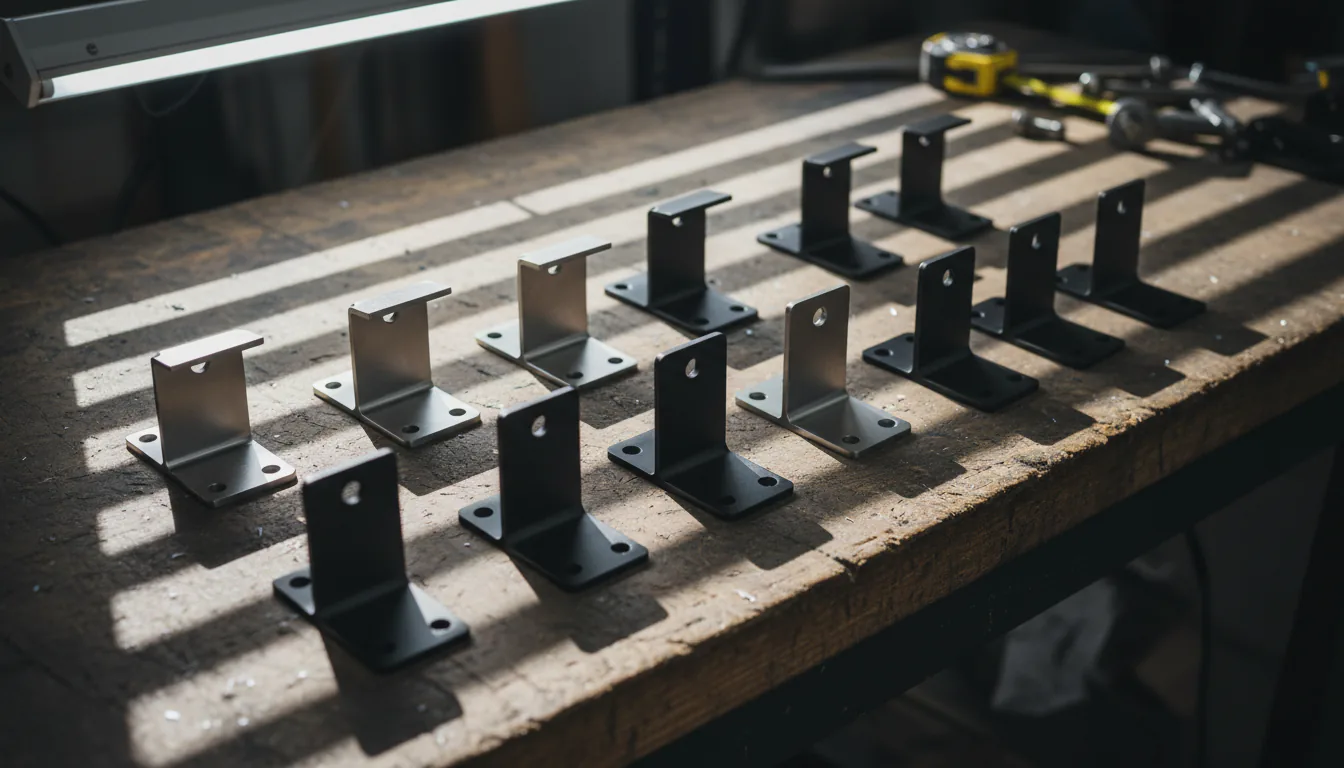
We default to a profile that is proportional to the rail diameter and a finish that matches the rail. For a 38 mm pipe rail in a matte black powder coat, the bracket is sized to a complementary section and finished in the same matte black. Visible only when the user is looking for it.
Fascia-mount brackets
A fascia-mount bracket attaches a handrail to the vertical face of an upper-floor edge or a stair opening side. The bracket bolts through the fascia (the visible side of the floor framing or a finish board) into the structural framing behind.
The advantage is the visual. The bracket hides into the fascia profile and reads as a smaller element than a wall-mount bracket because it is partially shielded by the fascia itself. The disadvantage is the structural coordination, the bracket has to anchor into something that can carry the lateral load, which usually means a backup plate or steel insert in the framing behind the fascia.
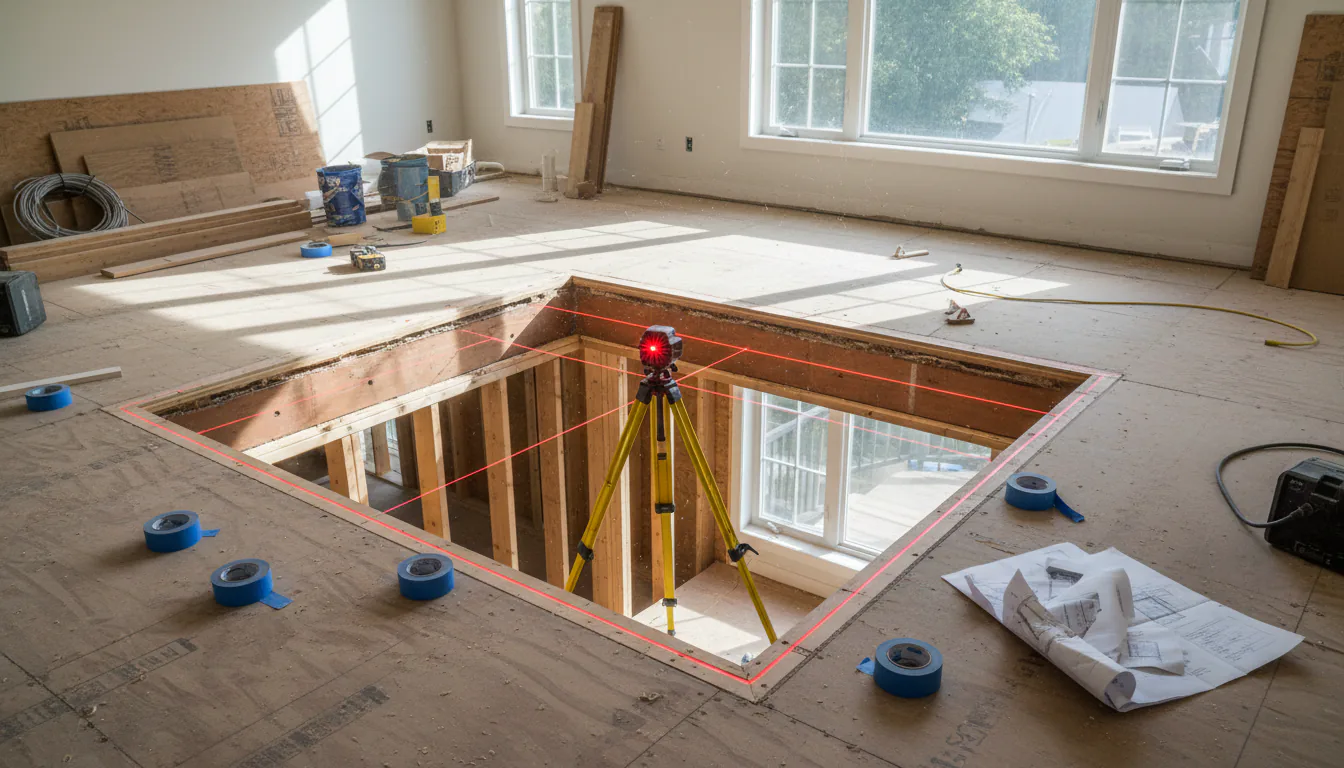
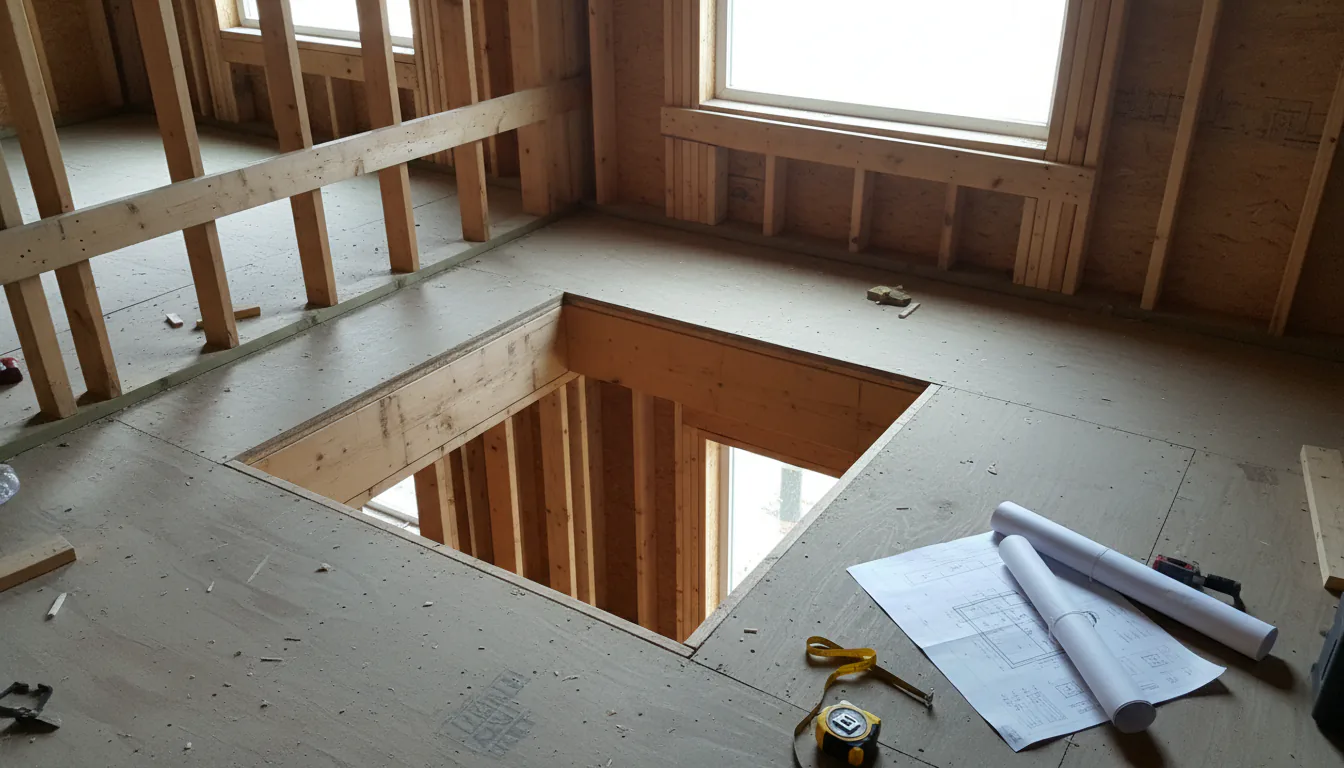
Fascia-mount brackets are common on stair openings in newer custom homes where the architect wants the rail to follow the upper floor edge with minimal visual hardware. We coordinate the bracket pattern with the framer at rough-in so the backup is in place before the fascia is closed up.
Top-mount brackets
A top-mount bracket attaches a handrail to the top of a post or a horizontal surface. The bracket has a flat base that bolts down to the supporting surface and a clamp or saddle that holds the rail.
The advantage is structural, the load path is direct, into the post or the structural surface, and the bracket can be designed for a wide range of loads. The disadvantage is the visual, the bracket is visible from below as well as from the side, and the user sees the bolt heads and the bracket profile clearly.
Top-mount brackets are common on commercial stairs and on residential stairs where the railing is mounted to a structural post system rather than a wall or fascia. The visual works when the bracket is part of a coordinated detail, matching post caps, matching bolt patterns, matching finishes, and reads industrial when it is chosen in isolation.
Post-mount or side-mount brackets
A post-mount bracket attaches a handrail to the side of a structural post rather than the top. The bracket extends from the side of the post and the rail bolts or clamps into the bracket.
The advantage is the visual disappearance of the bracket into the post. The user sees the post and the rail; the bracket is a small element between them. The disadvantage is the structural challenge, the bracket transmits the rail’s lateral load into the side of the post, which has to be sized for the resulting moment.
We use post-mount brackets on stairs where the post pattern is the dominant visual element and the rail is a secondary horizontal line. The detail works particularly well with a heavier rail profile and a slim post system.
Hidden or continuous brackets
The hidden bracket detail is what an architect specifies when the design intent is “no visible hardware”. The rail attaches to a steel insert welded into the rail body, and the insert mounts into the wall structure invisibly. The user sees a rail floating along the wall with no visible attachment.
The detail is the most expensive of the five families. It requires custom fabrication of the rail and the insert, careful coordination with the wall framing to provide the backup, and finish work that hides every joint between the insert and the rail. The structural load is the same as any other bracket, the rail still has to carry the code-required lateral load, but the detail conceals all of the supporting hardware.
On premium projects where the architectural intent is the cleanest possible reading, the hidden bracket is the right answer. On most projects where the budget is contained, a well-detailed wall-mount bracket in a matching finish gets 80% of the visual benefit at a fraction of the cost.
For broader context on the railing decisions that interact with the bracket selection, see our pieces on the handrail continuity under BC code and the banister replacement Vancouver piece.
The structural backup behind the bracket
A bracket is only as strong as the structural backup behind it. The most carefully chosen bracket fails if the wall behind it is not detailed to take the load.
On a stud wall, the bracket bolts have to land on a stud or on solid blocking. The blocking has to be installed at rough framing before the drywall closes up. We mark the bracket locations on the framing plan and the framer installs blocking accordingly.
On a concrete wall, the bracket bolts use mechanical or chemical anchors rated for the load. The anchor pattern is sized by the engineer.
On a steel structural surface (a hidden steel insert behind a finish wall), the bracket can weld directly or bolt through the finish to the steel.
The bracket choice and the structural backup are decided together at the shop drawing stage. A bracket pattern that arrives on site without the backup in place is a multi-day delay while the wall is opened and remediated.
Finish coordination
The bracket finish has to match the rail finish, and the match has to be exact. A powder coat black rail and a powder coat black bracket from different suppliers can read as two different blacks under the lighting in the home. We source the bracket and the rail from coordinated finish runs whenever possible.
Stainless brackets on stainless rails should match the brushed direction and the brushing texture. A bracket with a different brush direction from the rail reads as a different element.
For the underlying material choice, our piece on stainless steel railing 304 vs 316 covers the grade selection that applies to brackets as well.
When the bracket is the design feature
On some projects the bracket is the design feature itself. An exposed forged bracket in a heritage stair, a bronze bracket on a high-end residential project, a sculptural bracket designed as part of the railing, all of these reverse the normal hierarchy and make the bracket the visual focus.
When the bracket is the feature, the detail moves from catalogue selection to custom fabrication. The bracket profile is drawn at the design stage, the fabrication is coordinated with the rail, and the visible part of the bracket is finished to a higher standard than a hidden bracket would be.
We have produced custom brackets in patinated bronze, in waxed steel, in patterned cast iron, and in milled stainless. Each one was specified by the architect at the design stage as part of the overall railing concept, not chosen by us in isolation.
Sources
- BC Building Code Section 9.8, Stairs, Ramps, Landings, Handrails and Guards
- AISC Steel Construction Manual, connection design provisions
Related reading: the handrail continuity under BC code piece, the stainless steel railing 304 vs 316 piece, and the banister replacement Vancouver piece.
Related questions
Are wall-mounted handrails structurally weaker than post-mounted handrails?
Not inherently. Both can carry the same code-required lateral load when properly detailed. The wall-mounted rail's structural performance depends on the bracket spacing, the bracket's connection to the wall framing (blocking, studs, or backup steel), and the load path through the wall. A poorly-detailed wall-mounted rail can flex more than a poorly-detailed post-mounted rail, but the converse is also true.
What's the typical bracket spacing on a wall-mounted handrail?
Bracket spacing depends on the rail diameter, the lateral load, and the wall framing. We typically space brackets to land on every second stud (around 800 to 900 mm centre-to-centre) on a 38 mm pipe rail, with adjustments based on load calculations and structural backup. The end brackets are positioned to support the returns.
Can the bracket be hidden completely?
Yes, with a hidden or continuous bracket detail. The rail attaches to a steel insert welded into the rail body, and the insert mounts into the wall structure invisibly. The detail is more expensive and requires more careful coordination with the wall framing, but the visual result is the cleanest of any bracket family.