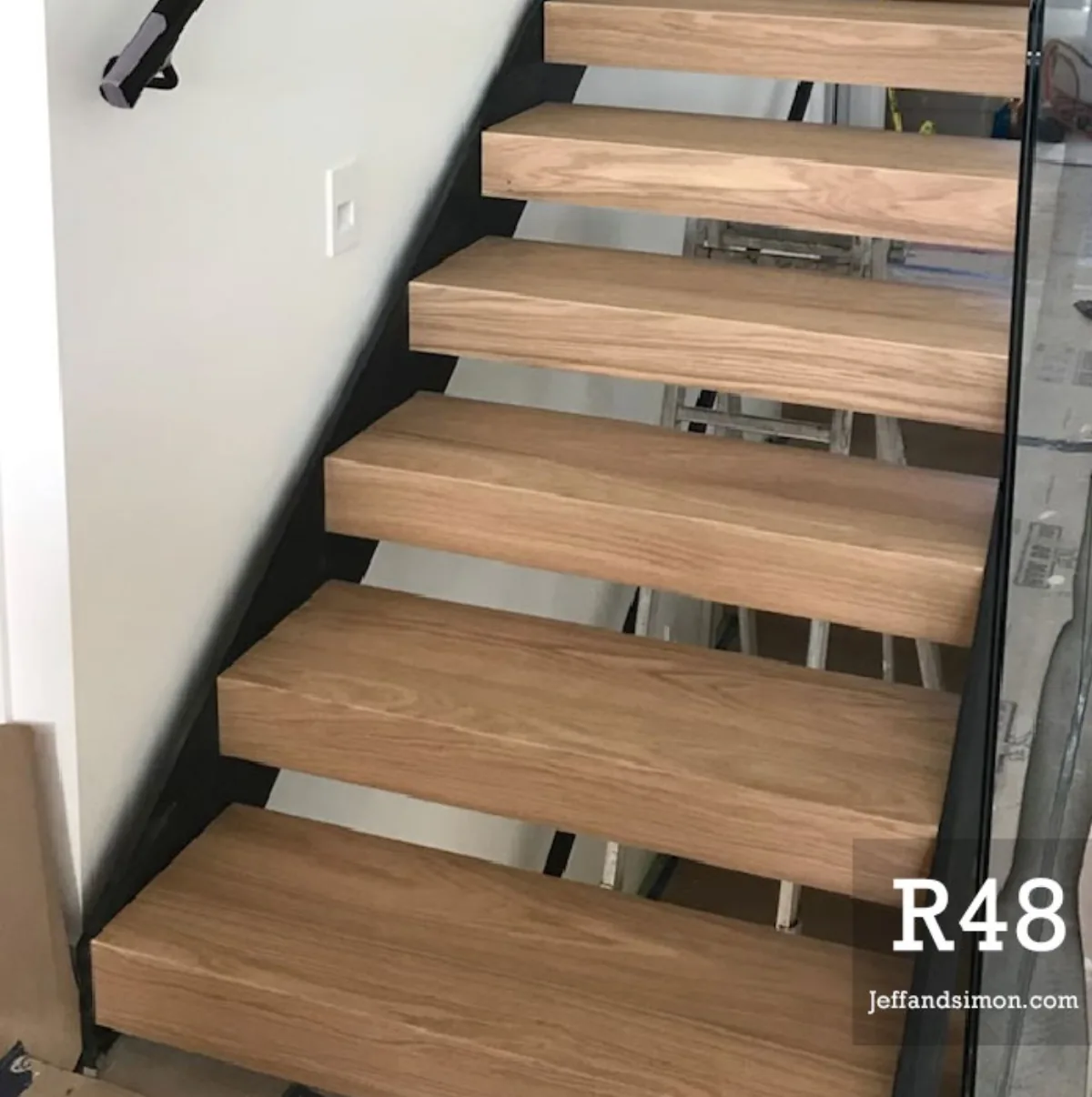
Tread material is the decision that shapes a staircase's budget, feel, and long-term maintenance requirements more than almost anything else. It also changes the bracket geometry, the structural detail, and the install sequence. Choose the tread material before the shop drawing starts, changing it mid-fabrication costs money and delays delivery.
White oak and walnut: the residential defaults
Solid hardwood treads, white oak most commonly, walnut for warmer tone, maple for a lighter Scandinavian look, remain the first choice for custom residential staircases in Metro Vancouver. They're warm underfoot, they age predictably, and they can be refinished. Tread thickness typically runs 50–75 mm (2–3 inches) so the steel bracket can be recessed and the tread profile reads as a clean slab.
- White oak: the most common choice, durable, stable, takes stain well, coordinates with most flooring.
- Walnut: warmer, richer tone; more expensive; availability can be longer lead.
- Maple: lighter, contemporary; shows scratches more readily on a high-traffic stair.
- Engineered cores with solid wear layers reduce seasonal movement, important in Vancouver's damp climate.
- Coordinate stain and finish with the floor finish before the tread is ordered, same species does not mean same colour.
Steel treads: contemporary and exacting
Pan-formed steel treads with a powder coat finish, solid plate treads, or perforated steel grating give a strong industrial or contemporary look. Steel treads are the most forgiving in terms of weight and bracket geometry, no moisture movement, predictable deflection. The tradeoff: every coating defect shows in raking light, and the surface is harder underfoot. Powder coat in matte black or dark grey is the most common finish; oil-rubbed or raw waxed steel is possible for interior applications with low wear.
- Pan-formed (pressed) steel: lightest profile, easiest to ship and install.
- Solid plate: more substantial, heavier, used when visual mass is part of the design.
- Perforated or grating: used in commercial and industrial applications for drainage and ventilation.
- For exterior stairs, powder coat alone is not sufficient, hot-dip galvanizing under a topcoat is the durable BC coastal answer.
Stone, porcelain, and engineered slab
Large-format porcelain, natural stone (quartzite, limestone, marble), and engineered quartz on a steel pan substrate give a heavy, monolithic look that reads as an extension of the floor rather than a distinct element. The structural demands are real: stone treads weigh significantly more than hardwood, the pan substrate must be engineered to prevent deflection, and the tile or stone must be installed over a fully stable base. Discuss slip resistance early, honed or polished stone can be hazardous on a residential stair.
Glass treads: maximum light, minimum margin for error
Laminated structural glass treads exist and they look exceptional in the right interior, light passes through the entire stair and the effect is unlike any other material. They require multi-ply laminated tempered glass (typically 3-ply minimum), engineered support points at each end, a built-in slip-resistant surface, and an owner who understands that the glass can be damaged and will need replacement planning. They represent a small fraction of projects but are a genuine option for a statement interior stair.
Concrete-look: the microcement question
Concrete-look finishes, microcement, polished concrete topping, concrete-look large-format tile, are currently one of the most requested finishes in custom Vancouver homes. They require a stable, non-flexing substrate. Microcement applied over a pan-formed steel tread will crack at the weld seams over time if the pan is not fully stiffened. The right approach is a rigid steel pan, properly cured, with the microcement applied by a specialist installer with experience in stair applications specifically.
How tread choice changes your cost and timeline
Tread material affects the overall project cost in two ways: the material cost itself, and the structural and install complexity it introduces. The order from lowest to highest cost impact is roughly: standard steel pan → engineered hardwood → solid hardwood → stone/porcelain on pan → glass. Timeline is also affected, solid hardwood treads often need to acclimate on-site before installation, and stone lead times through suppliers can push a project by two to four weeks.
- Steel pan or grating treads: included in the stair package, lowest incremental cost.
- Engineered hardwood: supplied by flooring contractor, coordinated with stair schedule.
- Solid hardwood (oak, walnut): higher material cost, longer acclimation, site-finished or factory-finished.
- Stone or large-format porcelain: highest material and install cost, longest supplier lead time.
- Glass: typically project-managed as a separate supply-and-install scope.
Related questions
What stair tread material is most popular in Vancouver custom homes?
White oak is the most common tread material on residential custom staircases in Metro Vancouver. It pairs well with most flooring schedules, takes stain well, and is available locally. Walnut is the second most common choice for projects where a warmer, richer tone is part of the design brief.
Can I match my stair treads to my existing hardwood floor?
Yes, but matching is harder than it sounds. Wood species, cut (quartersawn vs. flatsawn), stain, and finish sheen all affect the final colour. The best results come from having the tread stained and finished by the same flooring contractor using the same product as the floor, and accepting that a stair tread in use will wear differently from a horizontal floor.
Are wood stair treads slippery in Vancouver's climate?
Smooth-finished hardwood treads can be slippery, particularly in socks on an open-riser stair. Pre-finished treads with a matte or satin topcoat are less slippery than high-gloss finishes. For households with children or mobility concerns, a nosing with a contrasting slip-resistant strip is a simple and code-compliant addition.
How thick should a wood stair tread be on a custom steel stair?
For treads on a mono stringer or cantilevered floating stair, 50–75 mm (2–3 inches) is the standard range. Thinner treads expose the bracket and can feel springy underfoot; thicker treads look more solid but add cost and weight. The bracket geometry is designed around the specified tread thickness, finalize this before fabrication starts.
Do tread materials need to meet BC Building Code requirements?
Yes. BC Building Code requires that stair treads provide a slip-resistant walking surface. Smooth steel, polished stone, and glass treads all require surface treatment to meet this requirement. The code also specifies tread depth minimums and nosing requirements that affect how the tread is detailed at its front edge.
Discuss stair tread materials guide, vancouver 2026 for a real project
Send drawings, photos, or a rough scope and we will help define the practical next step.