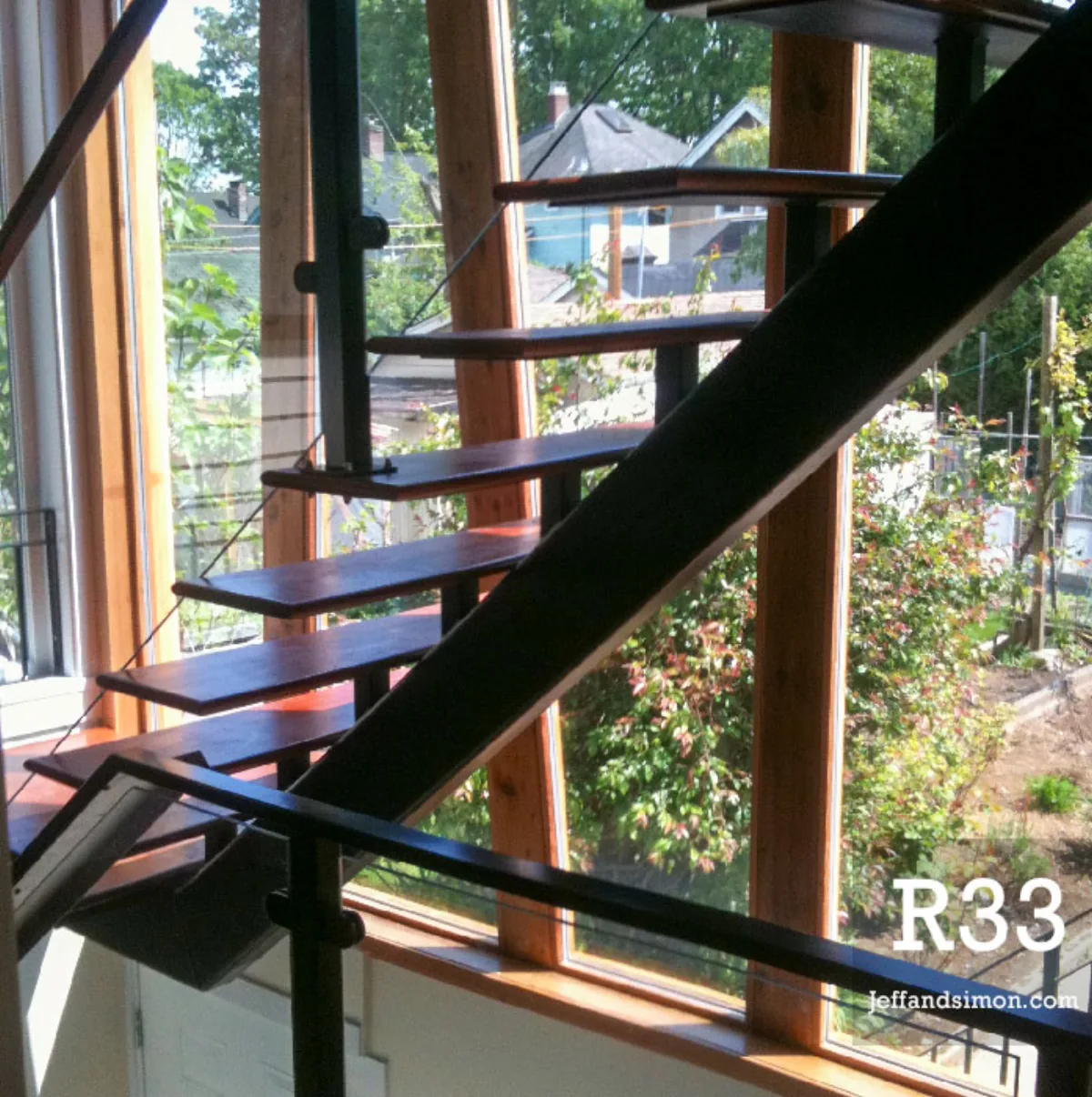
The railing on a steel stair carries as much of the look as the stair itself. The four systems we install most often in Metro Vancouver, structural glass, horizontal stainless cable, slim steel picket, and vertical rod, are not interchangeable. Each lands differently against the stringer, has different engineering scope, and reaches the project at a different point in the schedule. This page is the bridge from the stair hub to the railing product pages.
Structural glass railings
Glass guards give the highest transparency. The panels themselves act as the guard, so they are part of the structure. The hardware can be a slim base shoe, side-mounted clamps, or stand-offs into the stringer. Glass thickness, panel size, and edge condition are engineered against the loads in the BC Building Code guard requirements ([BC Building Code Part 9.8](https://free.bcpublications.ca/civix/document/id/public/bcbc2024/bcbc_2024dbp2s9)). In our shop we coordinate the glass shop drawings after the stringer is fabricated so the openings match the as-built stair, not the design drawing.
- Highest visual transparency, heaviest engineering scope.
- Hardware decision (base shoe vs clamps vs stand-offs) changes the visual.
- Panel layout has to follow the stringer geometry, not the other way around.
Stainless cable railings
Cable railings run horizontal stainless cables in tension between end posts. They are the lightest visual of the four systems and the most affordable, but they only work where the geometry lets the engineer verify cable tension and post stiffness. AGS Stainless and Feeney publish geometry rules for their cable systems ([AGS Stainless cable specifications](https://www.agsstainless.com/), [Feeney CableRail specifications](https://feeneyinc.com/products/cablerail/)) and Vancouver Stairs sizes the end posts to suit. Cable cannot be cut or re-tensioned in the field without the right hardware, so the field measurement has to be right the first time.
Steel picket and rod-infill railings
Slim steel pickets (square bar) or vertical rods give a modern read when the spacing is tight and the top rail is minimal. Both systems are easier to engineer than glass and slower to install than cable. The sphere-passage limit between pickets is set by the BC Building Code; verify with the AHJ before drawing the picket spacing.
- Square bar pickets read crisp and architectural when proportioned tight.
- Vertical rod (round bar) reads softer; common on staircases with curved stringers.
- Top-rail profile decides whether the railing competes with the stair or recedes.
How the railing meets the stair
The connection between the railing and the stair is the detail that decides whether the finished stair reads clean. A side-mount glass clamp on the outside of a mono stringer reads very differently from a top-mount base shoe sitting on the tread edge. Cable end-post locations move the visual weight to the post itself. Picket railings can land on the top of the tread or on the side of the stringer, and the choice changes how the stair photographs.
Coordination with city pages
Each railing system has a dedicated Vancouver-area page with pricing context, photography, and code notes. Use those pages when the project is committed to a system and you want the city-level detail; use this page when the stair design is still being chosen.
Related questions
Which railing system is cheapest for a residential steel stair in Vancouver?
Cable railing is typically the most affordable of the three modern systems for a straight-run residential stair, when the geometry suits cable tension. Steel picket is next. Structural glass is generally the most expensive because the glass panels themselves are engineered as part of the guard. Final pricing depends on stair geometry, panel or cable count, and finish.
Can I mix railing systems on the same stair?
Yes, a common combination is a glass guard on the open stair edge with a slim steel handrail mounted to a wall on the closed side. Mixing two systems on the same open run, however, rarely reads well and adds coordination time. We discuss the trade-off during the design review.
Do railings need separate engineering?
Structural glass railings almost always need engineered shop drawings. Cable railings need the end posts and the cable tension geometry verified. Steel picket railings are usually covered by the stair package's engineering as long as the picket spacing and top-rail size are confirmed against the BC Building Code guard requirements.
When in the project should the railing be chosen?
Before the stringer is fabricated. The railing system changes the connection details on the stringer, base-shoe pockets for glass, post baseplates for cable, picket weld locations for steel rail, and those details have to be on the shop drawings. In our shop, we will not start steel until the railing system is confirmed.
Discuss stair railing options for a real project
Send drawings, photos, or a rough scope and we will help define the practical next step.