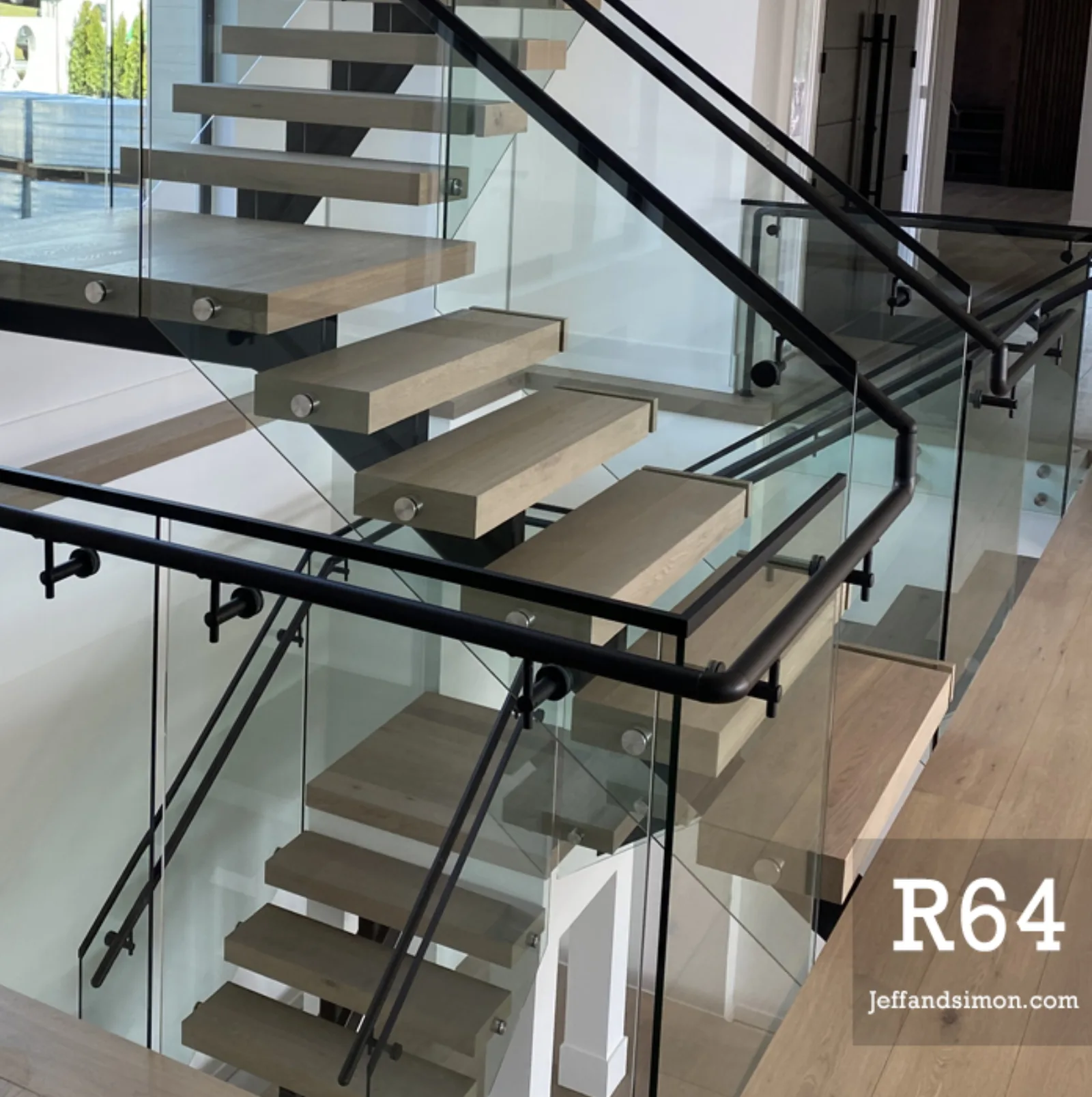
Stair terminology is loose. A mono stringer, a floating stair, and a cantilevered stair are three different things, but all three appear in the same search results and the same design inspiration boards. This guide separates the structural reality from the marketing language so the right system gets chosen before fabrication starts.
What is a mono stringer stair?
A mono stringer stair uses one central steel beam, the stringer, as the structural spine. The beam runs from the lower landing to the upper floor and carries all of the tread loads. Treads cantilever equally to both sides of the beam. There are no side stringers and no closed risers. The stair reads as open and floating, but the structural element (the beam) is visible.
What is a floating stair?
Floating stair is a visual category, not a structural method. It describes any open-riser stair where the treads appear to hang in space. A floating stair can be a mono stringer (beam visible), a cantilevered stair (no visible beam, wall does the work), a hidden double stringer (stringers concealed inside the tread profile), or a suspended stair (treads hang from above). When a client says they want a floating stair, the first conversation is which support strategy fits the building.
What is a traditional stair?
A traditional stair uses two outside stringers (side-stringers) that carry the treads. Risers are closed, there is a vertical panel between each tread. The structure is visible on the outside of both stringer faces. Traditional steel stairs are the standard for commercial egress (Part 3 buildings) and the most cost-effective path for residential applications where the sculptural look is not the priority.
- Mono stringer vs traditional: mono stringer is typically more expensive, more fabrication complexity, more engineering scope.
- Floating (cantilevered) vs mono stringer: cantilevered adds framing and engineering cost; mono stringer is usually more predictable.
- Floating (hidden stringer) vs traditional: hidden stringer is a middle ground, appears open, but is structurally closer to a traditional stair.
Side-by-side: which option for which project?
Choose mono stringer when the project wants a visible, design-led steel feature, when wall framing cannot accept structural embeds, and when budget predictability matters. Choose cantilevered when no visible support is acceptable, the wall is structural, and the framing schedule has time for embed coordination. Choose traditional steel stringers for commercial egress, exterior stairs with large spans, or any residential stair where cost is the primary driver and aesthetics are secondary.
- Mono stringer: $18,000–$65,000 installed (Metro Vancouver, 2026, project-quoted).
- Cantilevered floating: typically higher than mono stringer due to framing and engineering scope.
- Traditional side stringer: lowest cost, most straightforward for commercial egress.
Related questions
Which option is most cost predictable?
A straight mono stringer is usually the most predictable. The structural scope stays inside the stair package, beam, brackets, two anchor points, and the engineer can review everything from a single section drawing. A cantilevered floating stair pushes cost into wall framing, embed coordination, and a second engineering review of the wall itself.
Is a mono stringer the same as a floating stair?
A mono stringer is one specific support strategy that produces a floating appearance. Floating stair is a broader visual category that includes mono stringers, cantilevered stairs, hidden double stringers, and suspended stairs. Not all floating stairs are mono stringers, and not all mono stringers are referred to as floating stairs.
When should you choose a traditional stringer stair over a mono stringer?
Choose traditional side stringers when cost is the primary driver, when the stair is a required egress in a commercial Part 3 building, when the span or load requires a different structural form, or when the visual context does not call for an open-riser, sculptural stair.
Can a mono stringer stair have closed risers?
Technically yes, but it defeats most of the visual purpose. Closed risers on a mono stringer make the stair read more like a traditional stair with a central beam added. Most clients choosing a mono stringer want the open-riser look.
Discuss mono stringer vs floating vs traditional stairs for a real project
Send drawings, photos, or a rough scope and we will help define the practical next step.