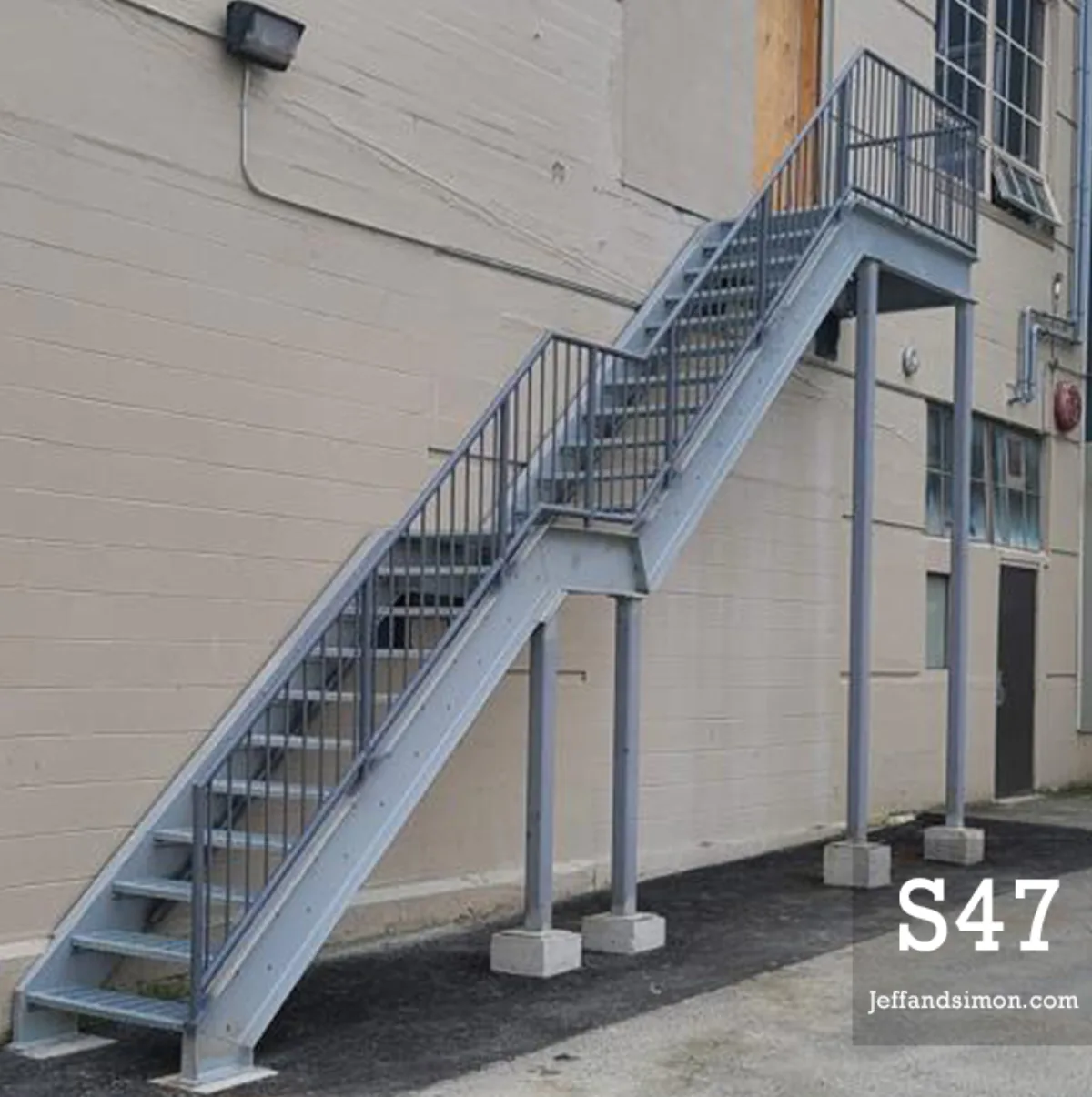
Exterior stairs in Metro Vancouver face 1,000–2,000 mm of annual rainfall, salt air within a few kilometres of the coast, and occasional snow loading in higher-elevation sites. Coating discipline is not an upgrade on an exterior steel stair, it is the design. Galvanizing, drainage detail, slip resistance, and field connection strategy should be resolved before steel is cut.
Duplex finish system: why galvanizing plus powder coat
A duplex finish (hot-dip galvanized to ASTM A123, then powder coated over a sweep-blast surface prep) gives exterior steel 30+ years of corrosion resistance in most Metro Vancouver environments. The galvanizing provides the primary barrier, zinc that sacrificially protects the steel even at cut edges and weld zones. The powder coat provides the secondary barrier and the colour. Neither alone performs as well as both together in BC's coastal climate.
- Hot-dip galvanizing: ASTM A123 is the standard for structural steel. Minimum 85 μm zinc thickness on structural sections.
- Surface prep before powder coat: sweep-blast the galvanized surface to create mechanical adhesion for the powder coat.
- Powder coat selection: outdoor-rated, UV-stable, minimum 60–80 μm film thickness for exterior use.
- Colour: galvanized grey is visible through lighter powder coats, specify accordingly.
Drainage and galvanizing details
Hot-dip galvanizing involves immersing the steel in molten zinc at 450°C. Hollow sections must have drain holes and vent holes at specific locations so the zinc can flood in, drain out, and allow the trapped air to escape without creating a steam explosion. These holes are a fabrication detail, not an afterthought, the galvanizer specifies their size and location based on the section geometry.
Slip resistance on exterior treads
An exterior steel tread that is safe in dry conditions can be dangerously slippery in rain. Standard options include galvanized open-bar grating treads (high drainage, maximum slip resistance), perforated steel plate with a swept or textured surface, and abrasive nosings on pan-formed treads. Standing water on a flat plate tread is a hazard; slope and drainage are part of the tread design.
Bolted vs welded field connections
Welded field connections on exterior stairs require the weld zone to be coated after welding, a field-applied zinc-rich primer plus a topcoat at minimum. Bolted connections avoid this problem: the stair arrives galvanized and powder coated, and field bolts with zinc-plated hardware connect the sections. For exterior switchback and fire-escape stairs, bolted field connections are usually the better long-term approach.
Related questions
Is powder coat enough for an exterior steel stair?
Powder coat alone is insufficient for long-term exterior exposure in Metro Vancouver. Powder coat is a surface coating, it does not protect cut edges, weld heat-affected zones, or damage sites. A duplex system (hot-dip galvanize first, then powder coat over a blast-cleaned galvanized surface) provides the redundant protection that wet, coastal climates require.
How long does a galvanized exterior steel stair last?
A properly specified and installed duplex-finish exterior steel stair, ASTM A123 galvanizing plus exterior-grade powder coat, can last 30–50+ years in Metro Vancouver conditions with normal maintenance (periodic inspection, touch-up of mechanical damage, cleaning). Coastal sites within a kilometre of salt water shorten that window unless marine-grade coatings and hardware are specified.
Do exterior stairs need an engineer in BC?
Most structural exterior stairs require at least a Schedule B engineer's letter for the building permit. Exterior egress stairs on commercial buildings require a Designated Structural Engineer. Confirm requirements with your local AHJ at the permit application stage.
Can an exterior galvanized stair be installed on a wood deck?
The steel stair itself can land on a wood deck, but the connection detail matters. The base plate sits on a pressure-treated blocking or a post cap, and stainless or hot-dip-galvanized hardware should be used at all contact points with the wood. Galvanized hardware in direct contact with some pressure-treated lumber chemistries can corrode, specify hardware accordingly.
Discuss exterior galvanized stairs for a real project
Send drawings, photos, or a rough scope and we will help define the practical next step.