The Double Stringer Steel Stair: The Quiet Default That Usually Wins
Why two side stringers remain the practical choice for most Vancouver steel stairs, and where the design gains and losses sit against a mono stringer.
The mono stringer gets photographed. The double stringer gets built, because on most openings it is simply the better answer.
The mono stringer is the stair that gets photographed. The double stringer is the stair that gets built, and on most real openings it is not a compromise but the better engineering answer.
Two load paths change what each member has to do
The structural difference is simple and it cascades through everything else.
With two stringers, load divides between them. Each beam can therefore be shallower than a single central beam carrying the same stair, which is the opposite of the intuition that two stringers means twice the steel. There is more total material, but the sections are lighter, and lighter sections are cheaper, easier to handle, and simpler to connect.
The treads change too. On a mono stringer the tread cantilevers out from a central beam on both sides, so the connection resists twisting on every off-centre footstep. With two stringers the tread spans between supports like a small beam, which is a far less demanding condition. Thinner treads work, and the tread-to-stringer connection has an easier job.
Redundancy comes as a bonus. If one connection is slightly less rigid than designed, the other side takes up some of the difference. A mono stringer has nowhere to redistribute to, which is why its section depth and its connections carry so much more consequence.
Where the stringers sit is the real design decision
Calling it a double stringer stair describes the structure, not the appearance, and the appearance varies enormously.
Stringers outboard of the treads, running as visible side members, give a defined edge to the stair and a solid, framed look. On a closed-riser stair with a deep plate stringer, that reads traditional and substantial.
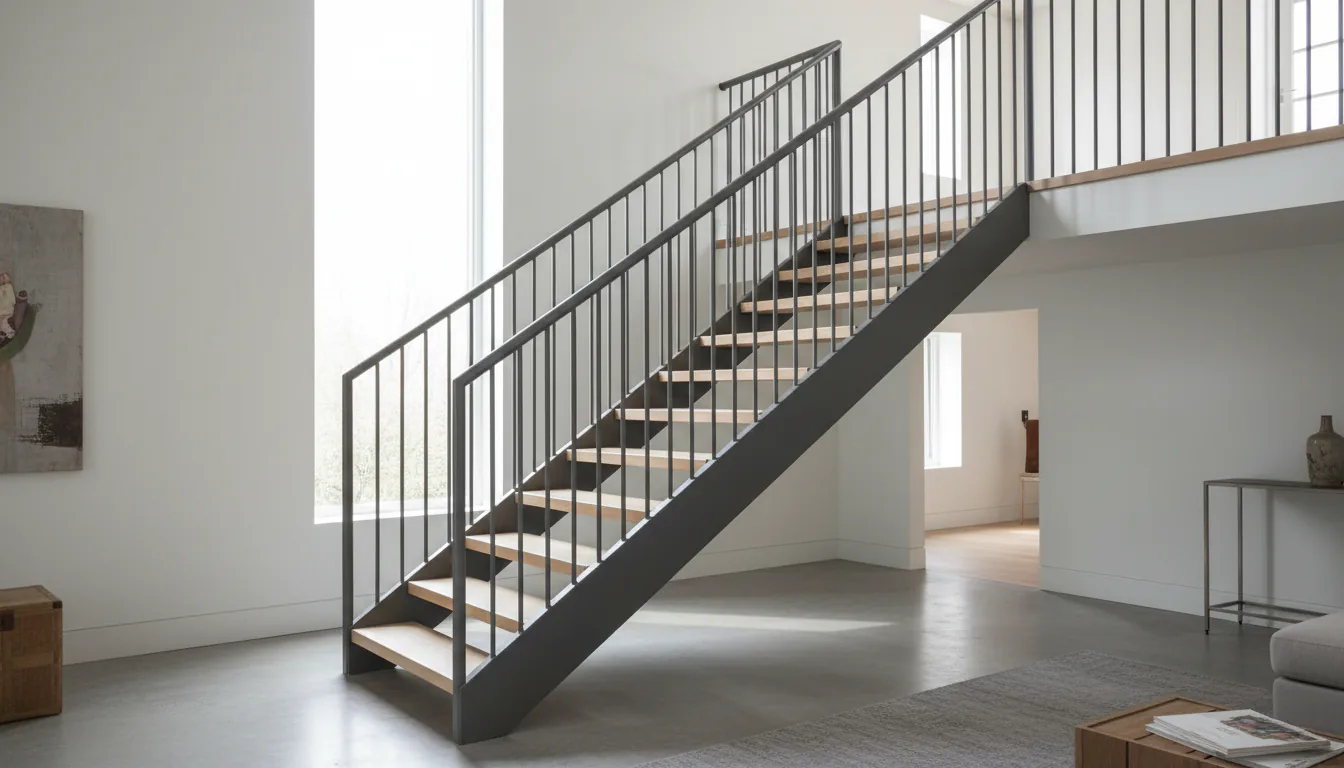
Stringers set in beneath the treads, with the treads oversailing them on both sides, produce something entirely different. From most viewing angles the supporting structure is largely hidden behind the tread edges, and the stair reads as a series of floating planks. It gets much of the visual lightness people want from a mono stringer while keeping the structural advantages of two beams.
That second arrangement is underused. Clients ask for mono stringers because they have seen the look and know the name; inset twin stringers frequently deliver a comparable result at lower cost and with less engineering risk. It is worth asking a fabricator to show both, whichever configuration ends up in a residential steel staircase.
Stringer position has code consequences
Where the stringers sit is not only aesthetic. On a stair near the minimum width it is a compliance question.
A stringer outboard of the treads occupies width on that side. Two of them consume width on both sides, and that width comes off the clear walking surface, not off the framed opening. On a stair framed tight to a minimum, that can be the difference between compliant and not.
Inset stringers avoid the problem entirely, since nothing projects into the walking surface at tread level. The arithmetic is set out in stair clear width under BC code, and it is worth doing before the opening is framed rather than after the stringers are cut.
Open risers work, with a caveat
Removing risers from any stair removes a structural contributor, because a riser fixed between treads stiffens the assembly.
A double stringer absorbs that loss better than a single beam does, which is why open-riser double stringer stairs are common and unproblematic. The stringers do more work than they would on a closed-riser stair, and they get sized accordingly.
The code provisions for open risers apply independently of the structure and are covered in open riser stairs under BC code. Structure and code are separate checks here, and satisfying one says nothing about the other.
Switchbacks strongly favour side stringers
Anywhere a stair turns, two stringers are easier than one.
A switchback has an intermediate landing, and a landing is a natural support point. Two stringers land on it at two points, which is a straightforward connection into a landing frame. A single central beam meeting a landing has to transfer everything through one point, and then a second beam has to start again on the other side.
This is why almost every commercial switchback stair uses side stringers. It is also why a residential mono stringer that has to turn usually gets more complicated and more expensive than the straight run people costed initially. The landing considerations are in steel stair landings and half landings.
Renovations tolerate asymmetry, and that is useful
Existing buildings rarely offer two identical support conditions, and a double stringer copes with that gracefully.
One side against a wall can be supported quite differently from the open side. One stringer might bear on a ledger fixed into framing while the other carries down to a post or connects to a beam. Asymmetric arrangements are normal, and they let the stair work with what the building actually offers rather than requiring the building to change.
That flexibility is a real renovation advantage. A mono stringer needs solid connections at exactly two points, and where the existing structure cannot provide them, reinforcement follows. Two stringers offer more places to land load and more ways to solve an awkward condition. The related structural questions are in steel stair weight and floor load.
Installation is usually more forgiving
Two stringers means the tolerances are less concentrated.
A mono stringer stair has to meet its floor and landing connections precisely, because those two connections are the whole load path and any play in them shows up as movement in the stair. With two stringers, small variations at one connection matter less, and shimming or adjusting one side is a normal part of installation rather than a problem.
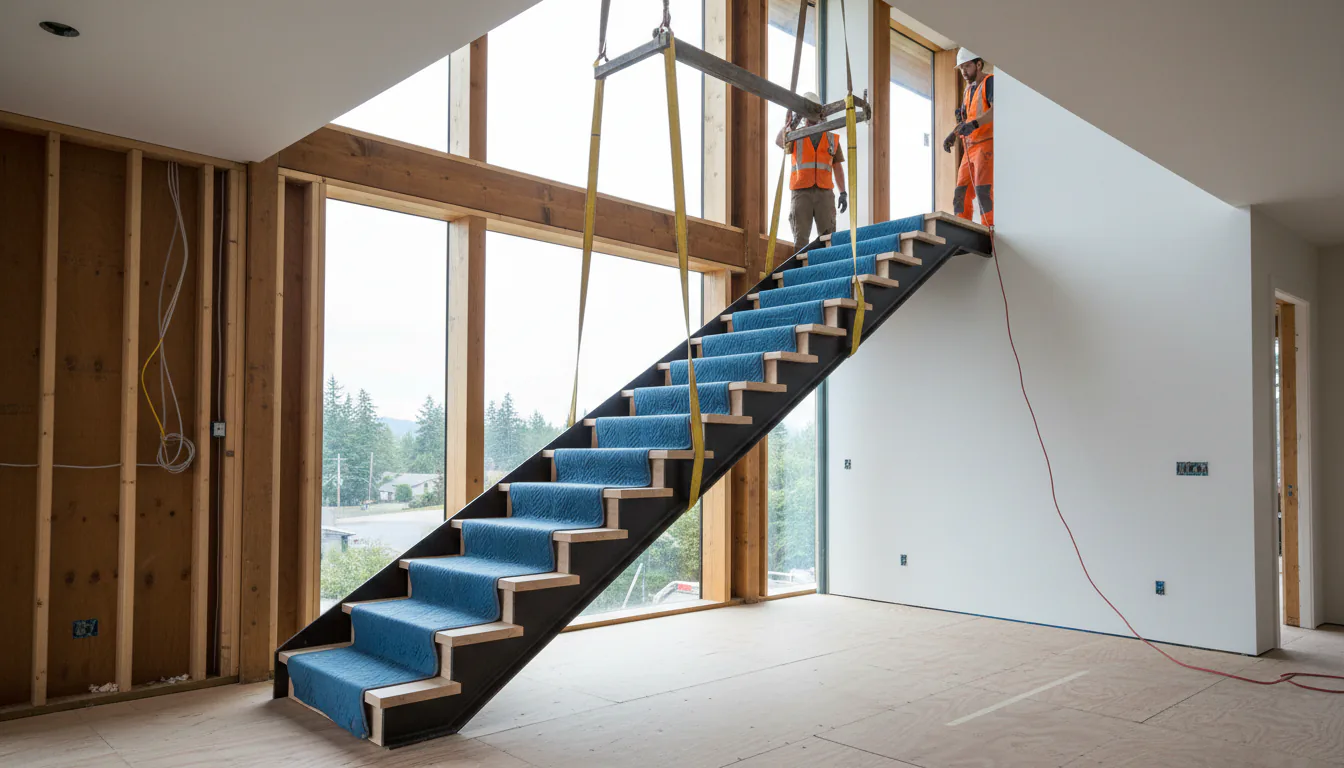
Handling is often easier too. Two lighter stringers can sometimes be brought in separately and assembled in place, which matters on renovations where access is the binding constraint. A single heavy central beam usually has to arrive as one piece. The access considerations are covered in crane versus manual installation.
When the mono stringer is genuinely the right call
None of this argues against mono stringers. It argues for choosing deliberately.
A mono stringer earns its place when the space beside and beneath the stair is the design. Where a stair sits in the middle of a room and needs to be visually transparent from every angle, a single central beam gives something two side beams cannot. Where the underside is on display from a lower floor, one clean beam reads better than two. Where the stair is genuinely a sculptural object rather than circulation, the extra engineering is buying the thing you actually want.
Where the stair runs between two walls, or against one wall with a guard on the other, much of that advantage evaporates because nobody sees the sides anyway. That is the case where a double stringer quietly wins, and it describes most stairs in most houses. The direct comparison is in mono stringer versus double stringer floating stairs.
Closed stringers are a different product again
Worth separating out, because the term double stringer covers two things that look nothing alike.
An open double stringer supports the treads from beneath or from the side, leaving the tread ends and the profile of the stair visible. This is the modern arrangement, and it is what most people picture.
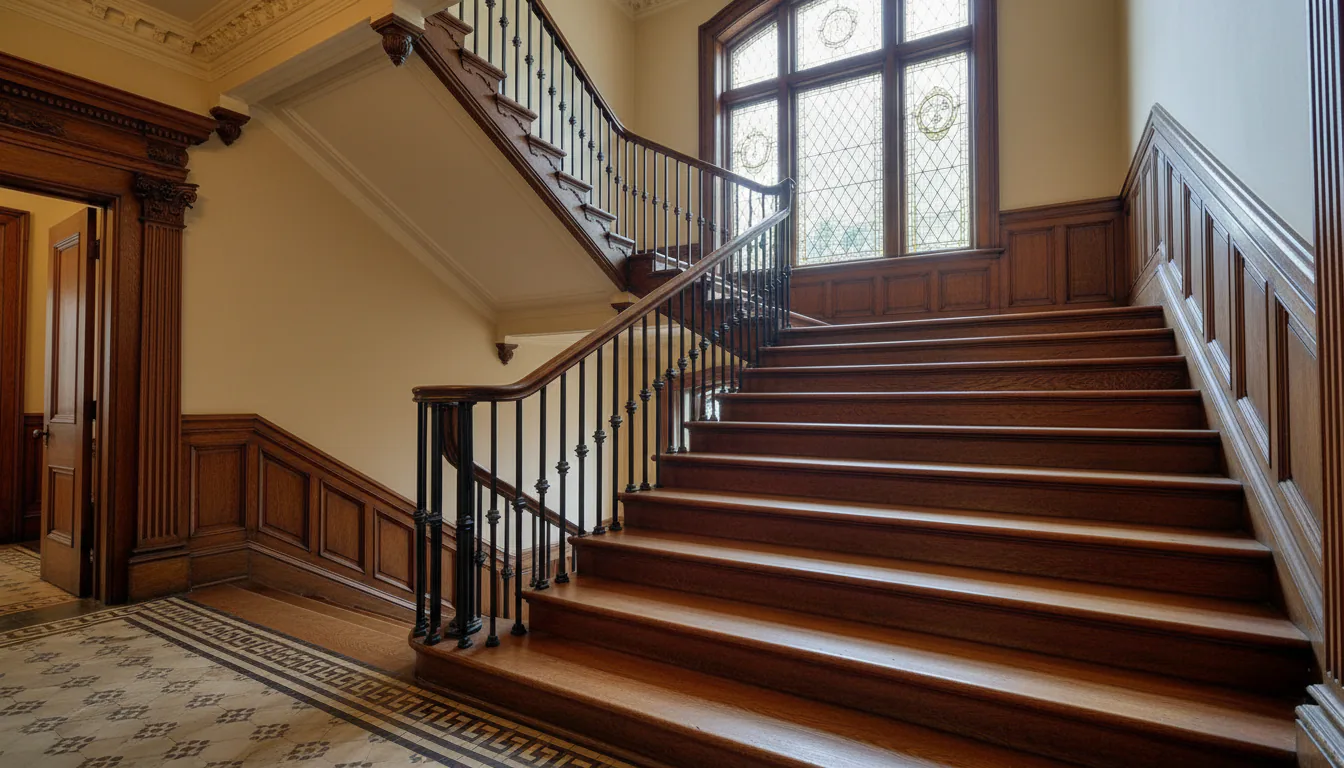
A closed stringer is a solid panel running the full depth of the stair, with the treads and risers housed into it so their ends are concealed. From the side you see a continuous plate rather than a stepped profile. It reads heavier and more traditional, and it hides the tread ends entirely, which is useful where the tread material has an end grain or an edge you would rather not display.
Structurally the closed stringer is usually stiffer for a given depth, because it is a deeper section working over its full height rather than a shallow member. It also encloses the side of the stair, which changes the acoustics slightly and removes any question about objects falling through the sides.
What it costs is weight, material, and the open look. It also makes the underside of the stair a closed soffit rather than an exposed structure, which may be an advantage or a loss depending on the design.
The choice between open and closed is genuinely a design one rather than a structural default, and it is worth asking to see both on the actual geometry. The range of stringer types is set out in mono stringer versus central spine terminology.
What to send to price one
The information is the same as for any custom stair, with one addition worth stating explicitly.
Send the measured floor-to-floor dimension, the opening size, whether the stair is open on one side or both, the intended tread material and thickness, the guard type, the finish intent, and photographs of the route into the building. Then add whether the stringers should be visible outside the treads or concealed beneath them, because that single preference changes the appearance, the clear width, and sometimes the price.
Double stringer stairs get treated as the option you settle for when a mono stringer is too expensive. On most openings that is backwards. Ask a fabricator to price both on your actual geometry, and look at inset twin stringers before assuming a single beam is the only way to get a light-looking stair.
Related questions
What is a double stringer stair?
A stair supported by two beams, one on each side of the treads, rather than by a single central beam. The stringers can sit outside the treads as visible side members, or under them as twin beams set in from the edges.
Is a double stringer stair better than a mono stringer?
For most openings, it is the more practical answer. Two load paths mean each stringer can be shallower than a single central beam would need to be, connections are less demanding, and the treads span between supports rather than cantilevering. A mono stringer wins where the clear space beneath and beside the stair is the point of the design.
Does a double stringer look heavier?
It can, and that is a detailing question rather than a fixed property. A deep plate stringer running the full length reads solid. Two slim stringers set in from the tread edges, with the treads oversailing them, can look remarkably light from most angles.
Is it cheaper than a mono stringer?
Often, though not always. There is more steel but the sections are lighter, the connections are simpler, and the tread brackets do less work. Engineering is usually more straightforward too. Confirm the difference against current quotes for both approaches on your actual geometry.
Can a double stringer stair have open risers?
Yes, and it is common. Removing the risers takes away some stiffness, so the stringers do more work, but two stringers absorb that better than one. The code provisions for open risers apply regardless of stringer configuration.
Does it take up more of the stair width?
If the stringers sit outboard of the treads, yes, they consume width on both sides. Setting them in beneath the treads avoids that. On a stair drawn close to the minimum width, where the stringers sit is a code-relevant decision, not only a visual one.
Which is stiffer underfoot?
A double stringer usually feels more settled, because load can share between the two beams and the treads span between supports instead of cantilevering. A well-engineered mono stringer is also solid; it simply has less margin for error because everything depends on one member.
Is it easier to install?
Generally yes. The connections are less concentrated, so the tolerances at the floor and landing are a little more forgiving, and the assembly is often easier to handle in sections. That matters most on renovations with tight access.
Can the two stringers be different from each other?
They can, and on renovations they often are. One side may sit against a wall and be supported differently from the open side. Asymmetric arrangements are normal; they just need to be drawn rather than assumed.
Does a double stringer work for a switchback?
Yes, and it suits them well. A switchback has landings that give natural support points, and two stringers connect into a landing more easily than a single central beam does. Most commercial switchback stairs use side stringers for this reason.
What tread materials suit a double stringer?
Most of them. Because the tread spans between two supports rather than cantilevering, tread thickness is usually less demanding than on a mono stringer of the same width. That opens up thinner timber and lighter steel treads.
What should I send a fabricator to price one?
The floor-to-floor dimension, the opening size, whether the stair is open on one side or both, the intended tread material, the guard type, and photographs of the access route. Whether the stringers should be visible outside the treads or hidden beneath them is worth stating, since it changes the look and the width.