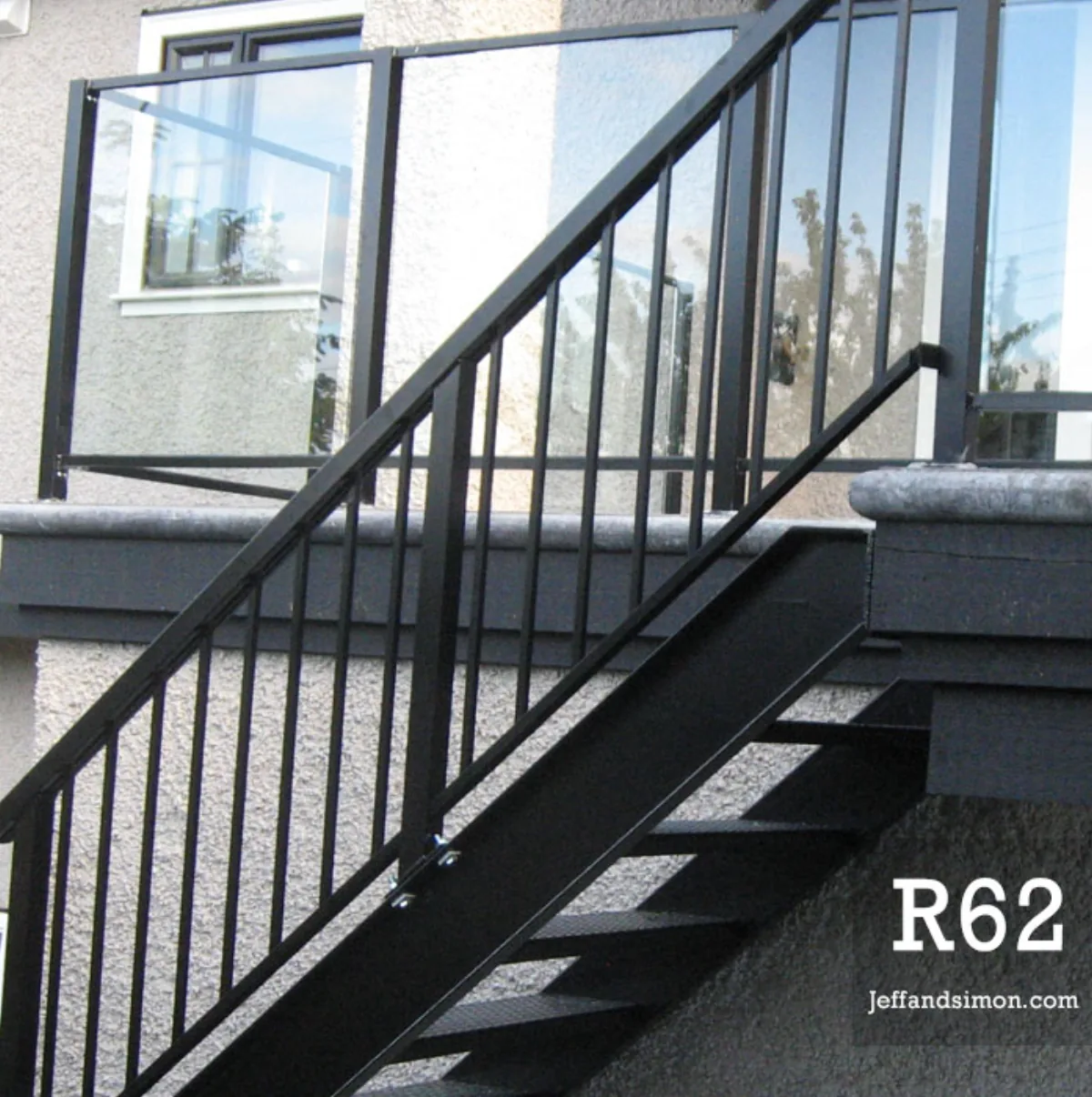
Exterior steel stairs at a Metro Vancouver house are a different design problem from an interior feature stair. The coastal climate, the finish exposure, the connection back to a wood-framed deck or a concrete slab, and the BC Building Code provisions for exterior stairs all push the decisions toward a smaller set of buildable answers. This page covers what changes when the stair lives outside.
Finish strategy decides service life
Vancouver's wet coastal climate drives finish decisions for any exterior steel. The two finish paths we run most often are hot-dip galvanizing followed by a powder coat (a duplex system) and high-performance liquid coatings (epoxy primer plus a polyurethane or fluoropolymer top coat). The American Galvanizers Association documents typical service life for galvanized coatings against atmospheric corrosivity categories ([AGA service-life resources](https://galvanizeit.org/corrosion/corrosion-resources)); Tnemec and Sherwin-Williams publish exterior-grade liquid coating systems with documented performance ([Tnemec product data](https://www.tnemec.com/), [Sherwin-Williams protective coatings](https://protective.sherwin-williams.com/)). In our shop the duplex system is the default for any North Shore or waterfront exterior stair.
- Hot-dip galvanized: thick zinc layer, dull grey finish, longest unfinished service life.
- Duplex (galvanized + powder coat): galvanizing plus a coloured topcoat, longest finished service life.
- Liquid epoxy/polyurethane: smoother visual finish, requires recoat cycles.
Open risers and drainage
Open risers on an exterior stair let water drain through the stair instead of pooling on each tread. Solid treads with a drainage detail (slot or drip edge at the rear of the tread) are the alternative when an open-riser stair is not preferred. Closed-tread exterior stairs without drainage detail are the most common source of long-term corrosion in our re-finish work. Confirm BC Building Code provisions for open risers on the specific occupancy and exposure before drawing the riser strategy ([BC Codes](https://free.bcpublications.ca/)).
Tread material outdoors
Exterior tread options are a smaller set than interior. Solid hardwood treads are not used on exposed exterior stairs in our climate. Common choices are steel checker plate, steel grating (bar grating or pressure-locked grating), perforated steel plate, and concrete-filled steel pans. Each has a different slip rating, drainage behaviour, and finish path.
- Bar grating: maximum drainage, industrial visual, code-compliant slip resistance with serrated bars.
- Checker plate: solid tread, raised pattern for slip resistance, requires drainage detail.
- Concrete-filled pan: heaviest, most stable feel underfoot, longest fabrication schedule.
Connections to wood deck or slab
The stair lands on either a wood deck (joist or beam) or a concrete slab. Each connection has its own corrosion-protection rules. Stainless or galvanized fasteners are required where the steel meets pressure-treated wood, because the copper in modern ACQ pressure treatment is aggressive on uncoated steel ([American Wood Council on fastener compatibility](https://awc.org/publications/)). At a slab, a baseplate with stainless anchors or galvanized anchors and a fully-coated baseplate edge is the default.
Snow, salt, and recoat planning
Stairs on the North Shore or in higher-elevation parts of the Lower Mainland see snow and de-icing salt several months a year. The finish system has to be specified against that exposure, and the design has to include a realistic re-coat plan. The American Galvanizers Association publishes recoat guidance for duplex systems; the liquid-coating manufacturers publish recoat cycles for their products. In our shop we hand the homeowner a written finish-care note with the project handoff.
Related questions
Is galvanizing enough on its own for an exterior residential stair in Vancouver?
Hot-dip galvanizing on its own gives a long unfinished service life in our coastal climate, but the finish is a dull industrial grey. Most homeowners specify a duplex finish, galvanizing plus a powder coat, to get both the long service life and a coloured architectural finish. Both options outperform a single-step liquid coating in a coastal exposure.
Can an exterior steel stair use the same design as an interior feature stair?
Sometimes the look can be carried outside, but the fabrication and finish strategy change. Wood treads, frameless glass guards with no drainage, and closed risers are usually replaced with steel/grating treads, glass with drainage detailing, and open risers for an exterior version of the same design intent. We resolve the visual translation in the design review.
Do exterior stairs need engineered drawings?
An exterior stair attached to a house or deck typically falls under the BC Building Code provisions for exterior egress and guards. Engineered sealed drawings are required by most Metro Vancouver municipalities for any custom steel stair tied to a building permit. Confirm with your authority having jurisdiction at the start of the project.
How long does an exterior galvanized stair take to fabricate?
The fabrication includes a galvanizing step at an external hot-dip galvanizer (in our region the nearest commercial galvanizing lines are well documented through AGA member directories). Adding a powder-coat step extends the schedule further. The project-specific schedule is on the quote.
Discuss exterior residential steel stairs for a real project
Send drawings, photos, or a rough scope and we will help define the practical next step.