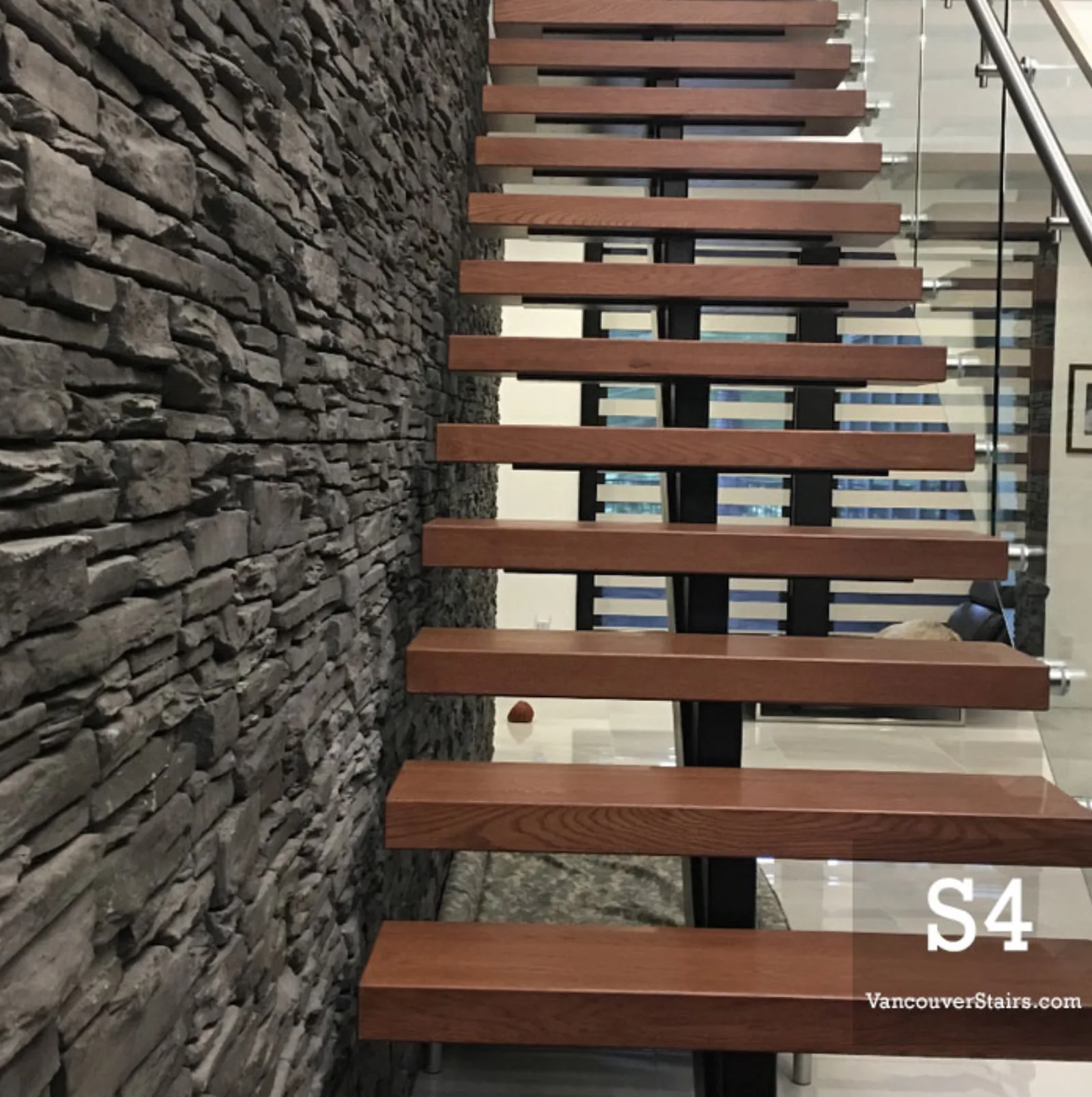
Wood-and-steel staircases are the most common configuration in Metro Vancouver custom home work. The steel stringer or spine provides the structure, fabricated, engineered, and finished in the shop. The hardwood treads provide warmth, acoustic softening, and coordination with the flooring. The result is a stair that reads as a designed feature rather than a contractor default.
Why the combination works
Steel and hardwood work together because they each do what the other cannot. Steel carries the structural load precisely, holds to tighter tolerances than timber framing, and can be detailed as a visual feature, a knife-edge mono stringer, a blackened plate riser, a hairpin base plate. Hardwood provides the walking surface that steel alone cannot: warm, quiet, and familiar. The junction between the two, tread bracket to steel, tread edge to riser, is where the design quality shows.
- Steel stringer or mono stringer as structural spine: fabricated to exact dimensions, finished in powder coat or blackened wax.
- Hardwood treads: white oak, walnut, or maple in 50–75 mm thickness, pre-finished or site-finished.
- Tread-to-steel connection: recessed bracket or through-bolt detail, the bracket is hidden in the tread when specified correctly.
- Riser options: open riser (most common for floating effect), steel plate riser (closed, more traditional), or wood riser (matches tread species).
White oak: the most common pairing
White oak on blackened or dark-powder-coat steel is the dominant combination in Vancouver custom residential work. Oak's neutral, warm tone works with a wide range of interior palettes. Its Janka hardness (around 1290 lbf) means it handles residential stair wear without denting under normal use. Quartersawn white oak, with tighter, straighter grain, is the premium specification; flatsawn is less expensive and more available locally.
Walnut: the warm alternative
Solid black walnut treads paired with a dark steel stringer read as a warmer, richer version of the same combination. Walnut's chocolate-brown tone ages well and coordinates with warmer wood flooring and cabinetry schedules. It carries a price premium over white oak and has longer lead times through local BC suppliers. It is most common in projects where the flooring is also walnut and the designer wants the stair to read as a seamless extension of the floor.
Detail decisions that separate good from great
The visible details of a wood-and-steel stair are where the quality gap between fabricators is clearest. The tread nose, how the front edge of the tread meets the riser or open air, is the most scrutinized detail on any stair. A sharp, tight nose with a clean chamfer reads as deliberate. A sloppy fit at the bracket, a visible fastener on the tread surface, or a railing post that doesn't align with the tread rhythm all undermine an otherwise well-built stair.
- Tread nose: chamfered or eased edge, minimum 6 mm radius per BCBC.
- Tread-to-riser fit: tight tolerance, open-riser stairs show the gap between tread underside and riser if not detailed correctly.
- Bracket visibility: confirm whether the bracket is recessed into the tread or surface-mounted, recessed is the premium detail.
- Railing post alignment: posts should land at tread division points, confirm the railing spacing against the tread layout before fabrication.
Coordinating wood and steel schedules
Wood and steel move on different timelines. The steel stringer is fabricated and installed first, this is the primary structural work and it requires engineering sign-off and permit approval. The hardwood treads are typically ordered after the stringer is in, acclimate on-site for a minimum of 48–72 hours, and are installed in a second site visit. If the treads are site-finished (sanded and stained after installation), plan a third visit for the finishing crew. Coordinating this with the GC's schedule early prevents the stair opening from becoming a hazard.
Related questions
What is the most common wood species used with steel staircases in Vancouver?
White oak is the most common choice, durable, locally available, and compatible with most Vancouver interior design palettes. Walnut is the premium alternative for projects with a warmer tone. Maple is occasionally specified for lighter Scandinavian or Japandi interiors.
Can I use engineered hardwood instead of solid on a custom steel stair?
Yes. Engineered hardwood with a solid wear layer of 4–6 mm is a practical choice for staircases in heated homes because it is more dimensionally stable than solid wood. The key specification is tread thickness, engineered treads in stair profiles are typically 40–50 mm total, compared to 50–75 mm for solid. Confirm the bracket geometry will accommodate the chosen tread thickness before fabrication.
How do I match the stair treads to my existing hardwood floor?
Have the stair treads stained by the same flooring contractor using the same stain product as the floor. Accept that a small colour difference is normal, tread wood and floor wood are often cut from different logs, have different grain exposure, and will wear differently. The goal is a close match, not an identical match.
Do wood treads on a steel stair creak?
A well-detailed stair with properly fastened treads should not creak. Creaking on a steel-and-wood stair is almost always caused by wood movement at the tread-to-bracket connection, usually from treads that were not fully acclimatized before installation, or fasteners that are too tight and do not allow for wood expansion. Both issues are avoided with correct installation practice.
Is a wood-and-steel staircase more expensive than an all-steel stair?
The steel structure cost is similar. The tread cost is additive, solid hardwood treads add cost versus pan-formed steel treads. For most custom residential projects, the total cost of a mono stringer or floating stair with white oak treads runs $25,000–$65,000 installed, depending on railing system and geometry.
Discuss wood and steel staircases vancouver for a real project
Send drawings, photos, or a rough scope and we will help define the practical next step.